
There is a moment many of us remember — the first time technology felt magical instead of complicated. A game that pulled us in so deeply we forgot the outside world. A digital space that felt alive, personal, welcoming. Over time, that magic faded, replaced by updates, pop-ups, fees, jargon, and systems that demanded we adapt to them instead of the other way around. Blockchain, for all its promise, often repeated that same mistake. It spoke loudly about freedom and ownership, yet whispered nothing to the human heart. Vanar exists because someone noticed that silence — and chose to answer it.
Vanar Chain was not born from the desire to build the fastest chain on paper or win debates on social media. It emerged from lived experience — from years spent inside games, entertainment ecosystems, and brand environments where attention is fragile and trust is earned, not assumed. The people behind Vanar have watched users leave the moment friction appears. They’ve seen excitement die because something felt confusing, slow, or emotionally empty. And they carried that knowledge into every line of code, every architectural choice, every product decision.
At its deepest level, Vanar is an attempt to restore dignity to the user. It starts from a simple but rare belief: people don’t want to learn blockchain — they want to feel something. They want joy, ownership, belonging, continuity. They want technology to disappear into experience. That belief reshapes everything. Instead of forcing users to understand gas, wallets, or chains, Vanar focuses on making those systems invisible, like plumbing behind a wall. You don’t admire the pipes — you appreciate the water flowing cleanly, reliably, without effort.
This is why Vanar leans so heavily into real-world verticals instead of abstract promises. Gaming is not a buzzword here; it is the emotional proving ground. Games are where people invest time, identity, and memory. If a blockchain fails there, it fails everywhere. Entertainment follows the same logic — it demands immediacy and immersion. Brands add another layer of pressure: trust, scale, reputation. Vanar doesn’t run from these demands. It builds for them, understanding that mass adoption is not about convincing people to care about decentralization, but about offering experiences that feel worth returning to. 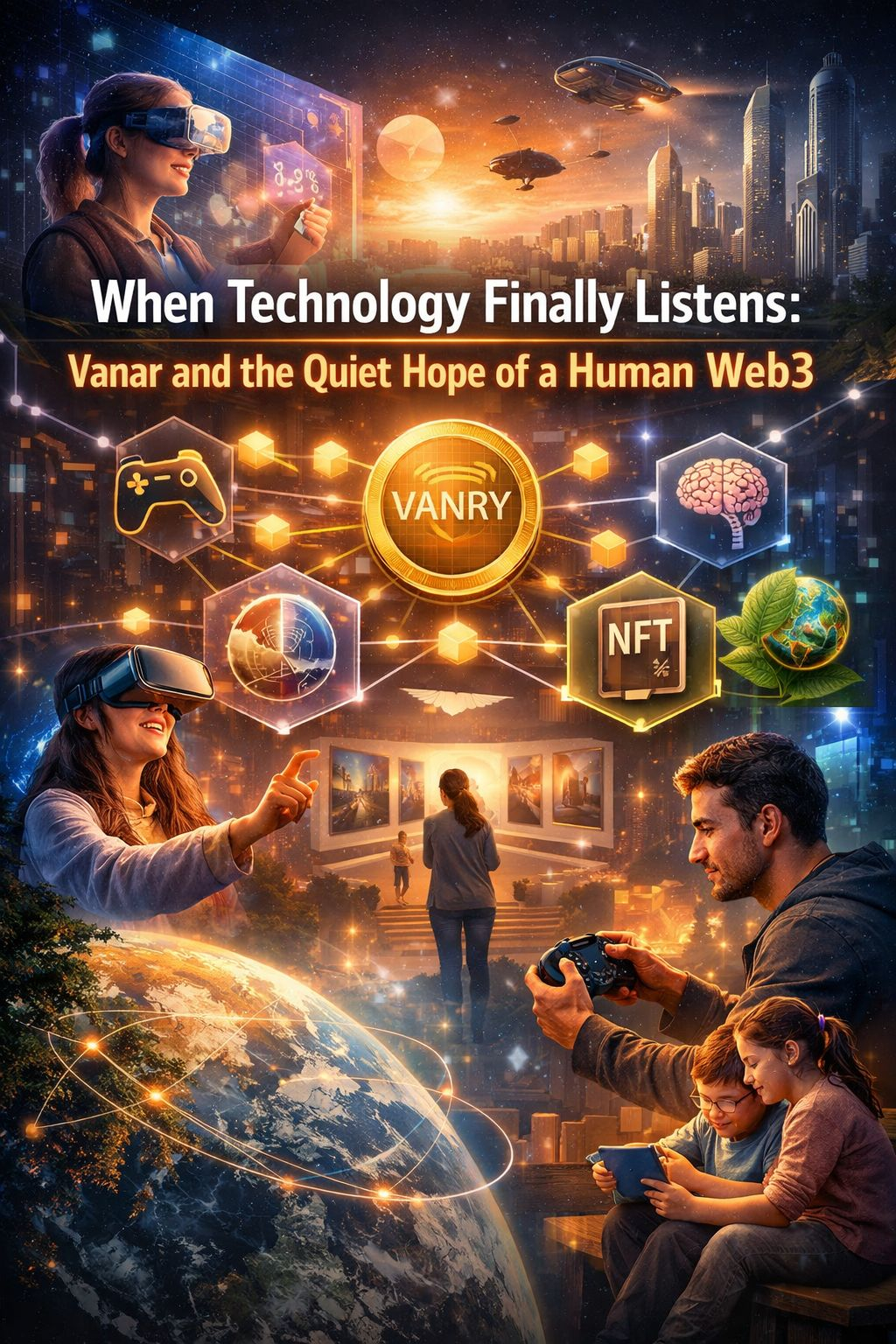
Artificial intelligence plays a quiet but powerful role in this story. Not as spectacle, not as hype, but as empathy at scale. By designing the chain to be AI-native, Vanar allows digital environments to respond, adapt, and feel alive. This matters more than most technical upgrades ever will. Intelligence brings warmth. It turns static worlds into conversations. It allows virtual spaces to remember, react, and evolve alongside the user. In a world where loneliness increasingly lives online, that responsiveness is not just technical — it is emotional infrastructure.
The ecosystem does not exist only in theory. The Virtua Metaverse stands as a living expression of what Vanar believes digital worlds can become: places where ownership feels natural, creativity is rewarded, and users are not treated as temporary visitors but as participants with memory and meaning. Alongside it, the VGN Games Network acts like connective tissue, allowing games to exist independently while still sharing a common economic and technical heartbeat. These products are not perfect, but they are honest. They are alive. They learn from real users, not theoretical ones.
The token that powers all of this is not framed as a lottery ticket, but as a utility that breathes through the ecosystem — paying for activity, securing the network, enabling movement between applications. Its value is meant to come from use, not illusion. In a space crowded with empty incentives, this restraint feels almost emotional in itself. It says: we care more about longevity than noise, more about trust than spikes.
Vanar’s inclusion of eco-conscious design and brand-ready solutions is another quiet signal of maturity. It acknowledges the fears people carry — about sustainability, about exploitation, about building on systems that might vanish or cause harm. Rather than dismissing those fears, Vanar integrates answers into its structure. That choice matters. People do not give their time and creativity to systems they do not trust. They may speculate on them, but they do not build lives inside them.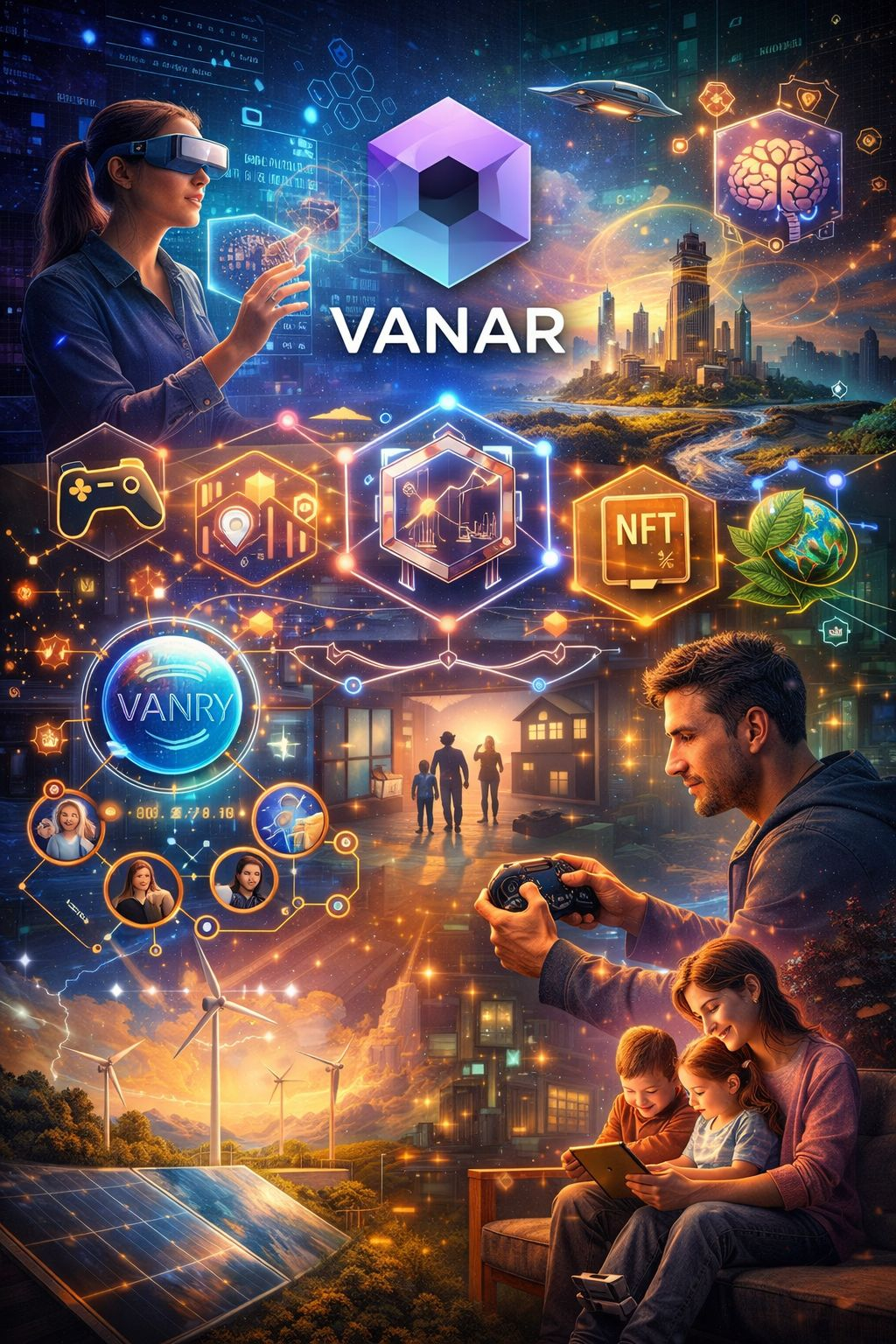
This is not a story of guaranteed victory. Adoption is slow. Growth is uneven. Attention is brutal. But Vanar does not promise perfection — it promises intention. It promises to keep listening, iterating, and aligning technology with how humans actually live and feel. In an industry obsessed with being early, Vanar is focused on being right — even if that takes longer.
What makes this project emotionally resonant is not just what it offers, but what it respects. It respects players as people, not metrics. It respects creators as partners, not content pipelines. It respects brands as stewards of trust, not cash machines. And it respects users enough to believe they deserve systems that feel intuitive, warm, and empowering.
If Web3 is ever going to stop feeling like a cold experiment and start feeling like a place people belong, it will be because projects like Vanar chose empathy over ego. Because they remembered that adoption is not won by convincing billions of people to change — but by changing the technology until it finally understands them.
And maybe that’s the most human idea of all: that the future doesn’t need to be louder, faster, or harsher — it just needs to feel like it was built with us in mind.
