

Crypto has spent more than a decade optimizing for possibilities. Faster chains. More composability. Bigger ecosystems. Yet the most widely used crypto product today is neither DeFi nor NFTs nor governance tokens. It is stablecoins.
Stablecoins are already behaving like global digital cash. They move across borders faster than banks, settle without intermediaries, and operate 24/7. But the infrastructure they run on was never designed specifically for them. Plasma exists because that mismatch is starting to matter.
The Hidden Friction in Stablecoin Usage
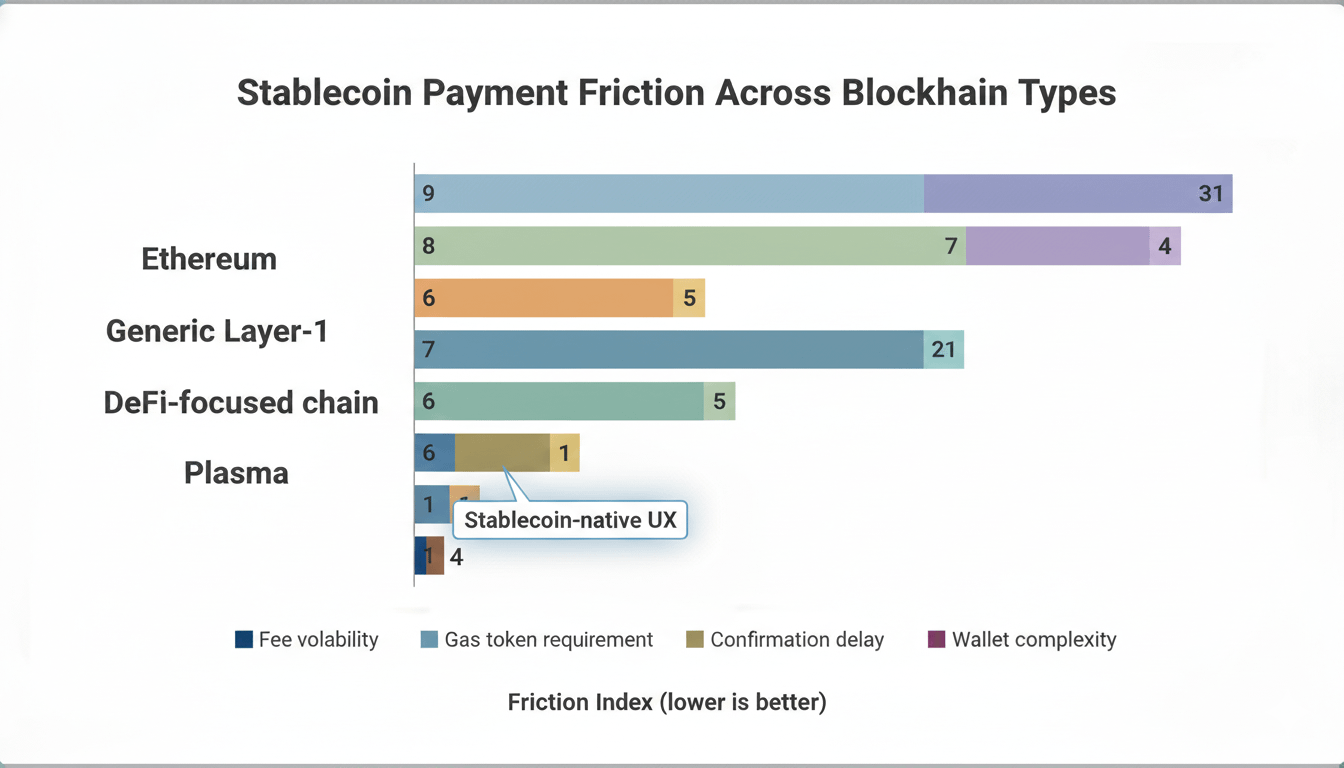
On most blockchains, stablecoins are guests, not natives. They inherit fee volatility, congestion risk, and UX complexity from networks optimized for smart contract generality rather than payment reliability. For casual users, this friction is tolerable. For large-scale payment flows, it becomes a bottleneck.
When fees spike unpredictably or wallets require native tokens just to move dollars, stablecoins stop feeling like money and start feeling like crypto again. Plasma starts from the opposite assumption: stablecoins are the product, not a by-product.
Plasma’s Core Design Choice: Payments First
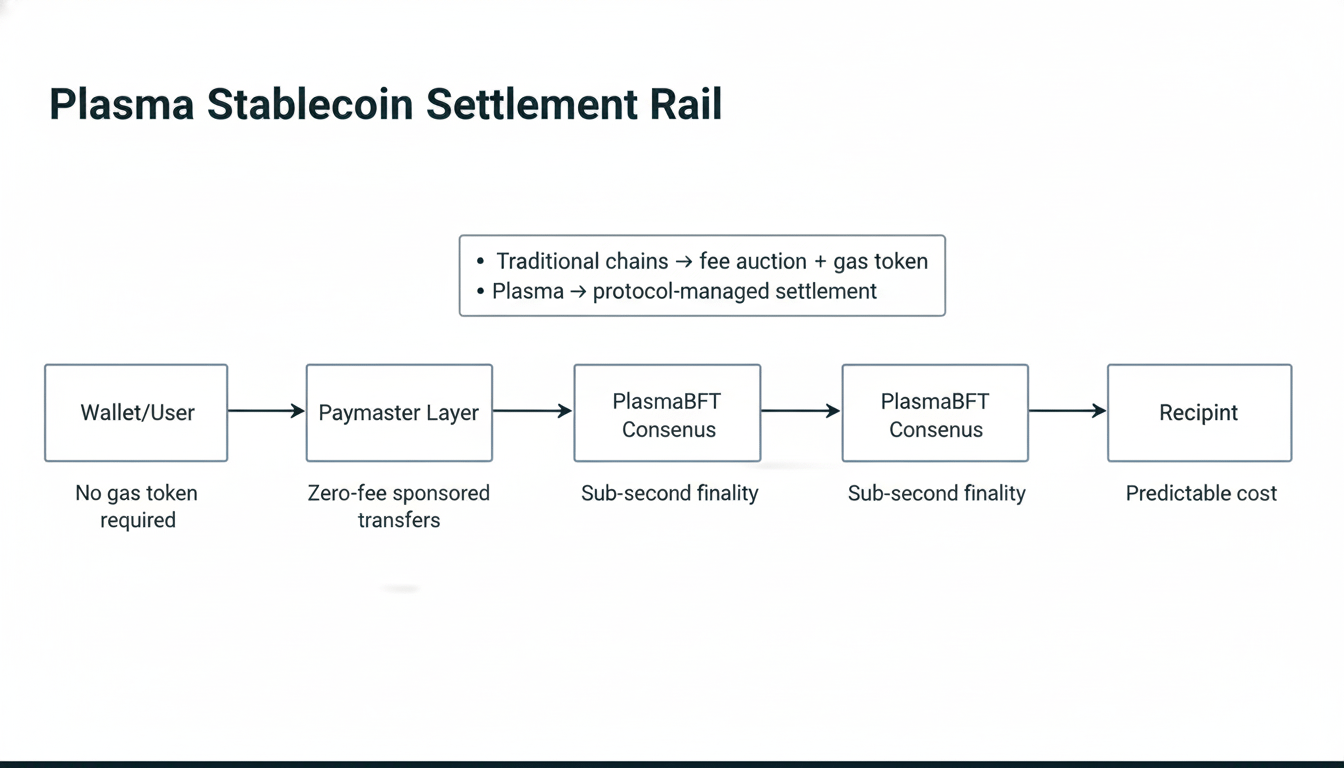
Plasma is not trying to compete with every Layer-1 narrative. It focuses narrowly on what stablecoins need to function as real settlement rails. Near-instant finality, predictable execution, and minimal user friction are treated as non-negotiables.
The network’s architecture is built to support high-frequency stablecoin transfers without requiring users to think about gas tokens or fluctuating costs. This isn’t a marketing decision; it’s an infrastructure one. Payments either feel reliable, or they don’t scale.
Why Zero-Fee Transfers Are Structural, Not Promotional
Zero-fee stablecoin transfers on Plasma are not a short-term incentive. They address a fundamental UX problem. If sending digital dollars costs money and mental overhead, adoption stalls at the edges.
By removing this friction, Plasma positions stablecoin transfers closer to email than on-chain transactions. Users focus on moving value, not on managing tokens or timing networks. That difference matters when stablecoins are used for payroll, remittances, and settlement rather than speculation.
Sub-Second Finality Changes Behavior
Payment systems are psychological as much as technical. Waiting for confirmations changes how people transact. Plasma’s fast finality aligns on-chain settlement with real-world expectations. When transfers settle almost immediately, users stop hedging against uncertainty.
This reliability encourages repeat usage. Stablecoin infrastructure doesn’t need to be exciting. It needs to be boring in the best possible way. Plasma leans into that.
Flexible Gas Models Reduce Cognitive Load
One of the quiet barriers to mainstream stablecoin usage is the requirement to hold native tokens for gas. Plasma’s paymaster and flexible gas design allows users to transact without constantly managing XPL balances for basic transfers.
That design choice removes an entire layer of friction that most crypto users have simply learned to tolerate. Removing friction doesn’t generate headlines, but it compounds adoption over time.
Where $XPL Fits in the Network
$XPL is not positioned as a meme asset or a pure speculation vehicle. Its role is infrastructural. It secures the network through staking, incentivizes validators, and supports more complex operations beyond simple transfers.
As stablecoin activity scales, demand for reliable execution and network security grows with it. $XPL’s relevance is tied to that usage rather than short-term narratives. This aligns the token more closely with infrastructure demand than with hype cycles.
Short-Term Noise vs Long-Term Utility
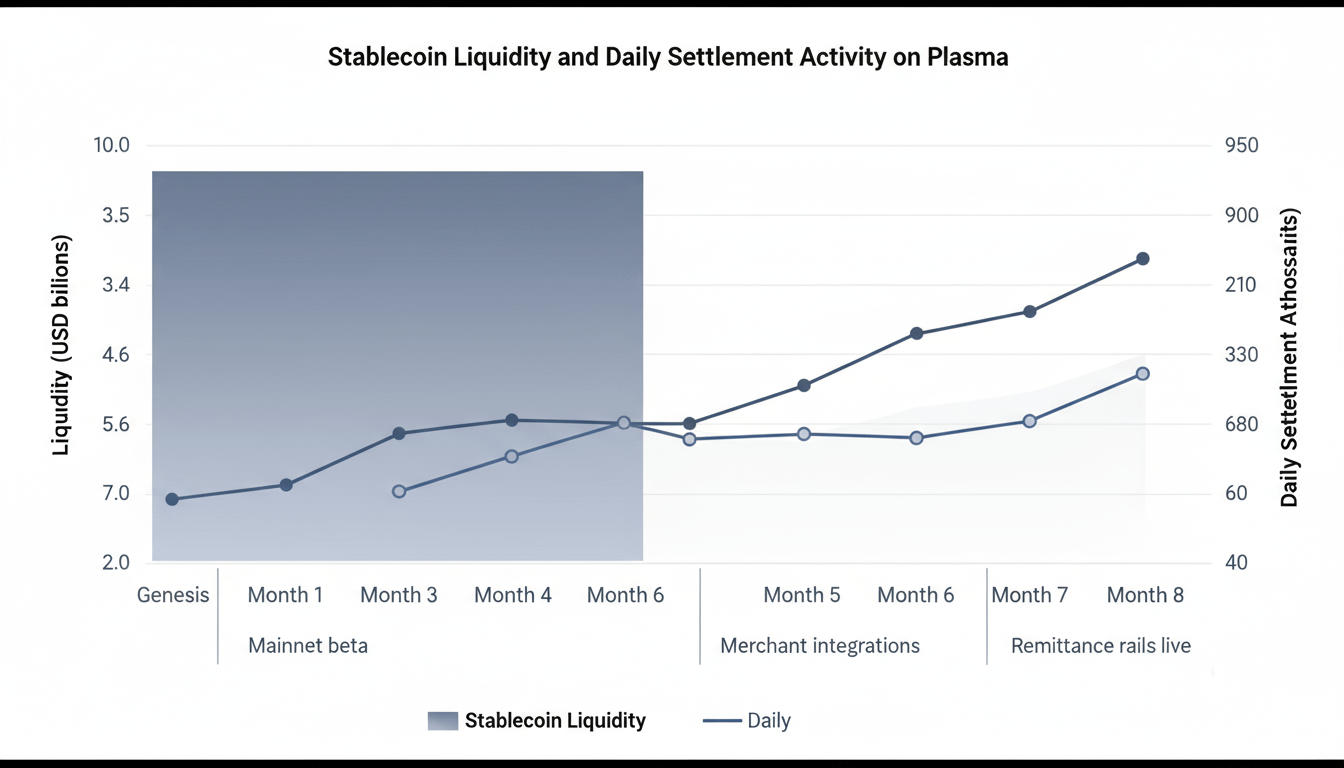
Infrastructure-first protocols often struggle in speculative markets. When attention shifts away from narratives, usage continues quietly. Plasma’s adoption curve reflects this reality. Periods of lower visibility do not necessarily signal failure; they often indicate that a network is being used rather than traded.
Stablecoin demand does not disappear during market downturns. In many cases, it increases. Remittances, settlements, and dollar-denominated flows are not cyclical in the same way DeFi yields are.
Why General-Purpose Chains Won’t Win Payments by Default
General-purpose blockchains excel at flexibility. Payments require reliability. Optimizing for everything often means optimizing for nothing in particular. Plasma’s narrow focus gives it an advantage where precision matters.
When stablecoin volumes grow large enough, even small inefficiencies become expensive. Chains that treat stablecoins as just another asset eventually feel that pressure. Purpose-built infrastructure absorbs it more cleanly.
The Bigger Picture
Stablecoins are not an experiment anymore. They are already embedded in global value transfer. The question is no longer whether they will be used, but what rails they will rely on at scale.
Plasma is betting that the future of on-chain payments will favor networks designed around stablecoins from day one. That bet may not generate immediate excitement, but it aligns closely with how financial infrastructure actually evolves.
Final Thought
Crypto doesn’t need more complexity to move dollars. It needs fewer obstacles.
As stablecoins mature into global settlement tools, infrastructure that prioritizes predictability, speed, and simplicity becomes harder to replace. Plasma’s design reflects that reality. It isn’t trying to redefine finance. It’s trying to make digital dollars work the way people already expect money to work.