
Introduction
Vanar marks a real shift in how we think about blockchain for finance.It doesn’t just chase the usual obsessions decentralized consensus,endless token launches.Instead, Vanar treats blockchain as a programmable execution layer,and it puts artificial intelligence right at the heart of operations. This isn’t an isolated trend.Across digital finance,we’re seeing a push to bring automation,compliance,and settlement together,rather than letting them operate in their own silos.
I see Vanar as one of the first serious attempts to treat blockchain not as a finished product,but as a coordination engine for intelligent financial activity.
AI as a Core Architectural Layer
Most blockchains run on fixed logic.Once you deploy the rules,that’s it they execute,no matter what’s happening in the world.Vanar flips this script.It lets AI driven systems join execution workflows,so now you have agents that can actually interpret rules,adapt to new circumstances,and work within set policy boundaries.
This matters.Modern finance doesn’t sit still. Payment terms shift,compliance rules change,and execution is rarely a straight line. By weaving AI into the infrastructure itself, Vanar lets financial logic bend and adapt,not just follow orders blindly.
Honestly,I think this is critical for real financial markets.Static automation just can’t handle the messiness of real markets without dragging in humans to patch the holes.

Agentic Execution and Financial Autonomy
Vanar’s infrastructure makes room for agentic systems software agents that initiate actions, check conditions,and settle transactions on their own.These agents don’t erase oversight or governance.They work inside the rules set by institutions.
What you get is controlled autonomy. Workflows speed up,but you don’t lose accountability.Reconciliation,settlement checks,and enforcement of rules all happen programmatically,but you still get a full audit trail.
To me,this feels like the connective tissue we've been missing something between old school finance and the wild experimentation of early blockchain.
Tokenized Value Beyond Issuance
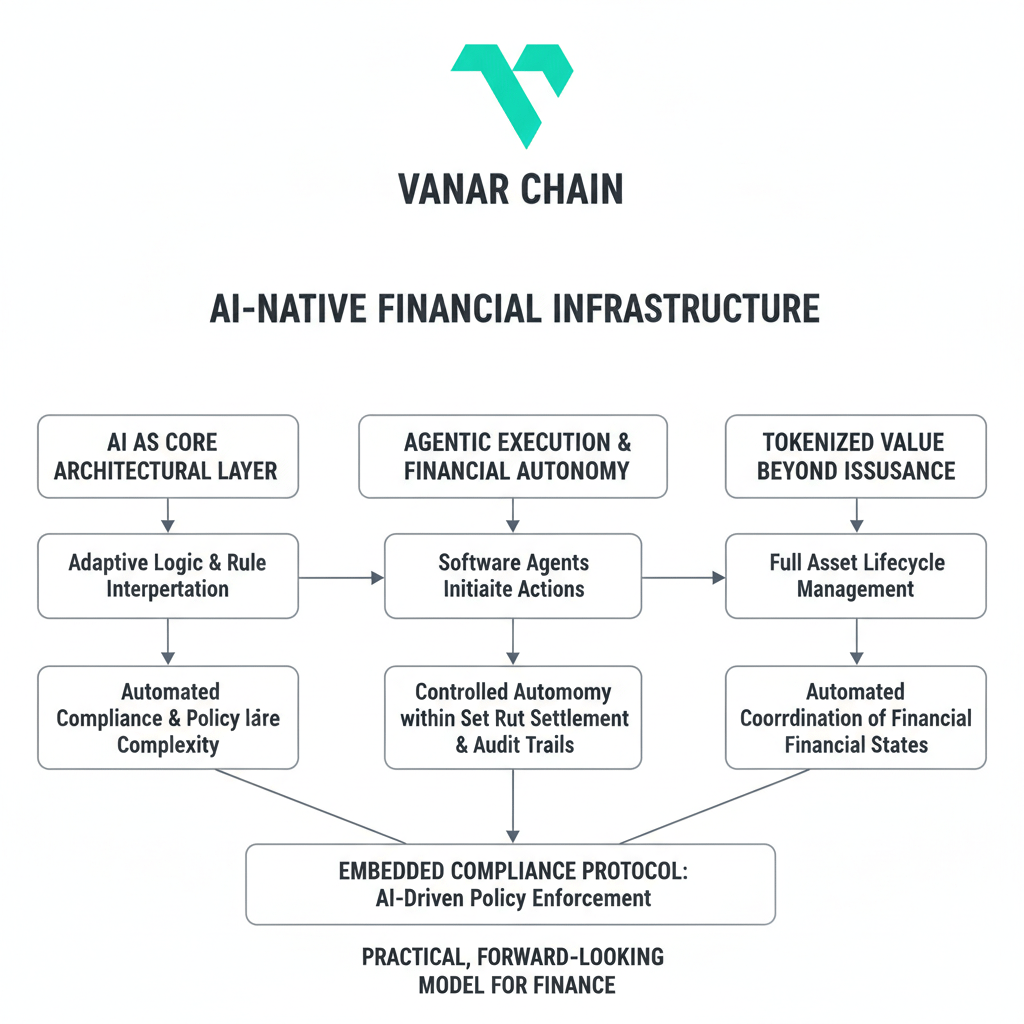
Most of the industry obsesses over asset issuance basically,turning things into tokens. Vanar asks the next question:After you issue a token,what happens to it?How does value actually move,settle,and reconcile? Infrastructure can’t stop at token creation;it has to handle ongoing execution.
Vanar focuses on repeatable settlement logic,managing the full lifecycle of assets, and automating coordination as financial states change.This lets tokenized systems act more like real markets,not just isolated tech demos.
Compliance as an Embedded Function
Instead of bolting compliance on as an afterthought,Vanar bakes it right into the execution logic.AI evaluates conditions, applies policy rules,and keeps workflows aligned with institutional demands.
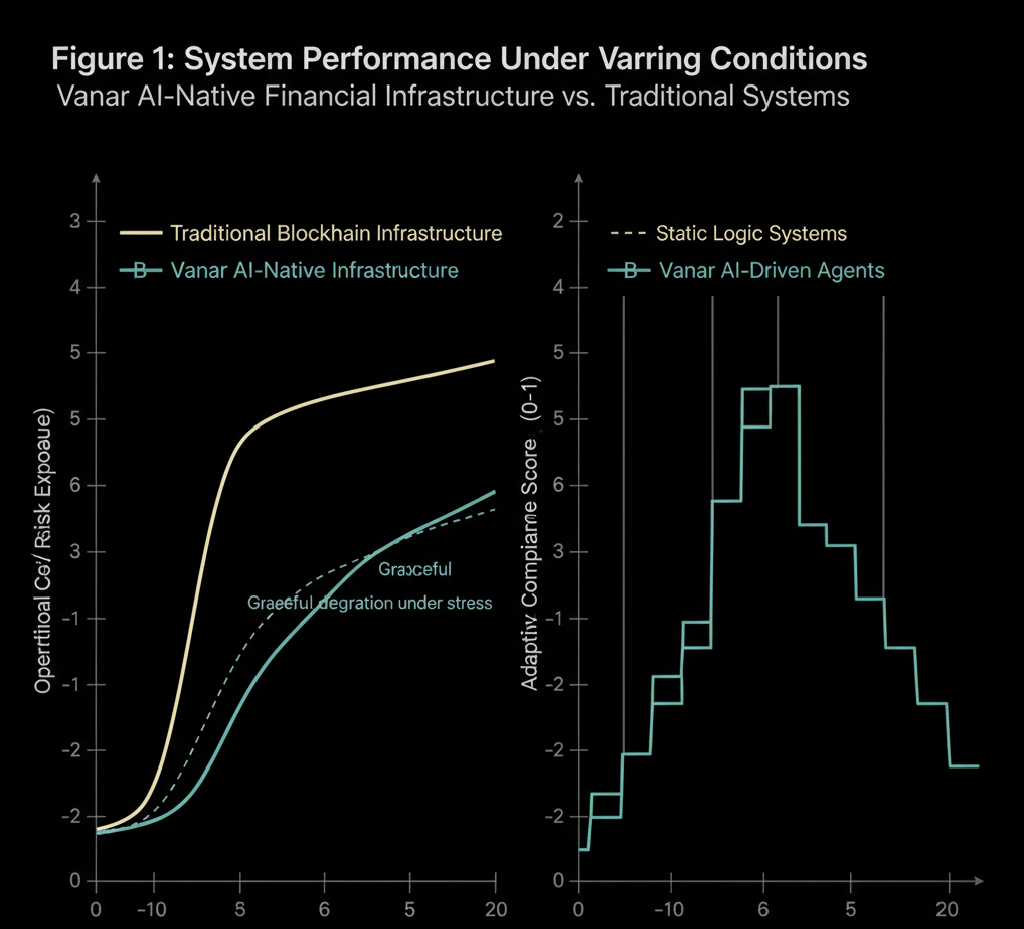
Embedding compliance at the protocol level sends a clear signal:this infrastructure is built to last.It’s not just chasing the next hype cycle.
Conclusion
Vanar shows what happens when you treat AI as a foundation,not a feature,in blockchain infrastructure.Adaptive execution,agentic workflows,and built in compliance start to fill the gaps that have kept blockchains on the fringes of finance.
I see this as a practical,forward looking model one where intelligent automation and coordinated blockchain infrastructure finally come together to support finance as it really works.