
There’s a kind of irony in watching a financial technology learn how to be discreet. When Dusk first began as a loose idea in 2018, its creators weren’t trying to shout louder than the rest of crypto; they wanted something that could sit in a trading room or a registrar’s office and behave like a proper financial infrastructure private where it must be, auditable where it must, and predictable above all else. That tension between secrecy and proof has become the story of the project: not flashy headlines, but long, patient engineering that trades hype for the kind of determinism institutions need.
If you follow Dusk from the start you see it slowly rewrite the checklist that normally divides TradFi from crypto. Instead of pretending regulators, exchanges, custodians and developers would bend to the same rules at once, Dusk built lanes for each of them. At the base sits a settlement and data layer designed to make finality and auditability simple; over it lives an execution layer that speaks the language of mainstream smart-contract developers; and threaded through both are cryptographic primitives that allow value to move without leaking secrets. The official documentation and recent technical updates make this architectural intent plain: separation of settlement (DuskDS) and execution (DuskEVM) wasn’t an academic choice, it was a practical one a way to let settlement be fast and deterministic while giving application logic its own, composable playground.
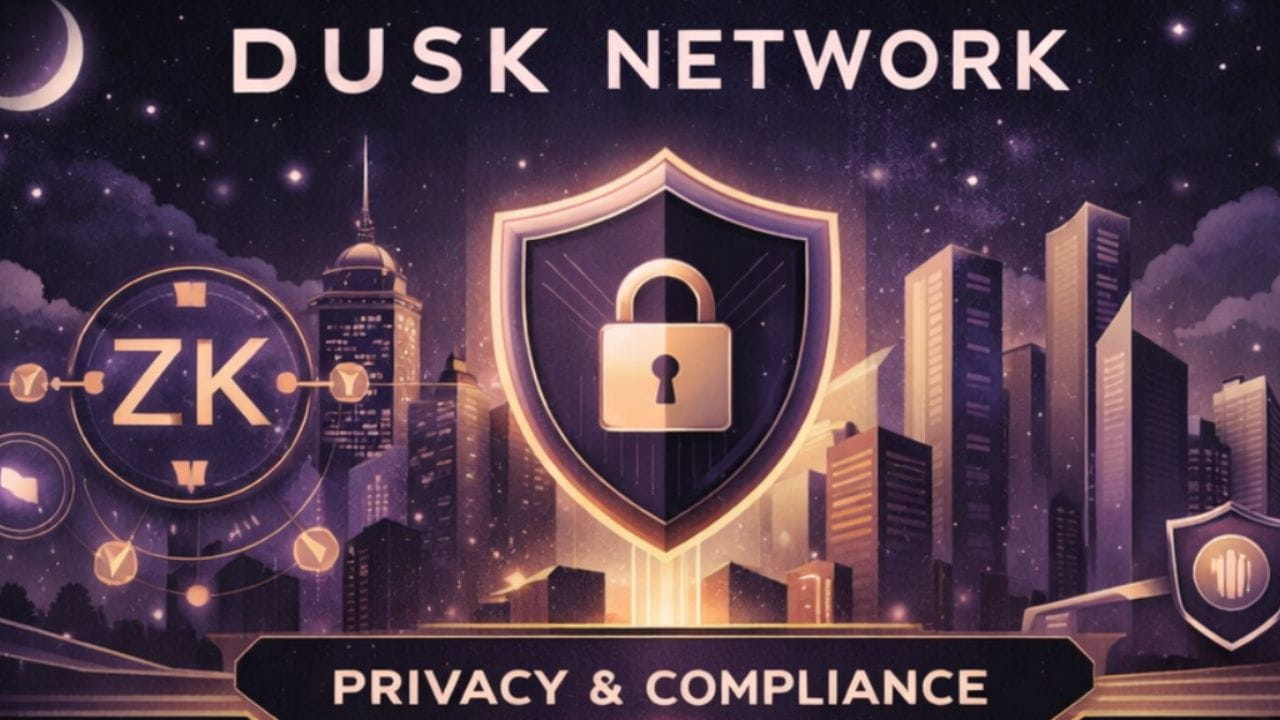
That architectural choice also explains why Dusk reads like a toolbox for regulated markets rather than a playground for speculation. The team built a ZK-friendly execution model and then wrapped it with pieces that matter to securities markets: confidential issuance, machine-verifiable audit trails, and primitives that let an issuer prove compliance without exposing customer balances. Over time that toolbox evolved into named components things like the Hedger privacy engine that show how the project moved from cryptographic theory to developer-facing mechanics. Hedger, for example, is not marketing copy: it combines homomorphic encryption with zero-knowledge proofs to let EVM-style contracts operate on encrypted values while still producing proofs that an auditor or a regulator can verify. That combination is the kind of engineering that lets a trading desk run an order book and still hand a regulator a verifiable dossier when needed.
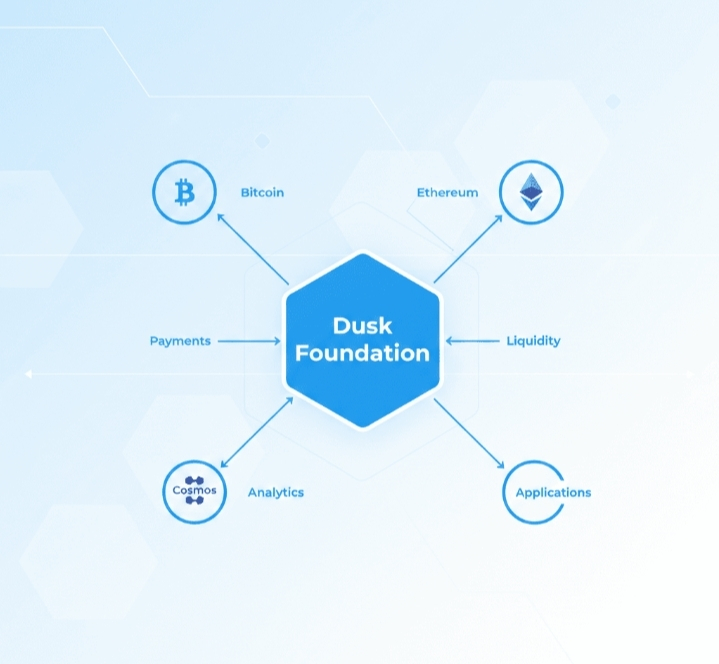
Part of Dusk’s recent momentum has come not from reinvention but from a willingness to integrate. You can see this in its choices around market data and interoperability. Rather than building a bespoke market-data pipeline and pretending it’s as trustworthy as an exchange’s reporting, Dusk has partnered with established oracle and interoperability infrastructures to bring exchange-grade feeds and cross-chain messaging into its world. The practical upshot is a “dual delivery” of data: one path that brings official exchange records on-chain in provable form, and another that streams high-frequency market information in a low-latency, auditable way for trading and pricing engines. For regulated finance, that pairing matters settlement needs the authoritative record, trading needs tick-level speed and Dusk has deliberately stitched both into its stack.
When people ask whether privacy and auditability can coexist, the temptation is to trade one for the other. Dusk’s answer has been different: make privacy the default, but build verifiable windows into it. Cryptography ZK proofs, homomorphic operations, carefully designed transaction models does the heavy lifting. But cryptography alone would be sterile without practical plumbing for identity, compliance, and data provenance. That’s where native modules, licensed exchange partners, and verifiable data work together: issuers can put real-world assets on chain under a legal wrapper, and the chain can enforce the rules while the system provides the proofs that those rules were respected.
There’s also a pragmatic streak to how Dusk treats randomness and external inputs. Blockchains need sources of unpredictability for fair selection, lotteries, and some financial primitives; the industry has converged around verifiable randomness delivered by cryptographic oracles. Dusk hasn’t obscured itself from that reality. Instead, it designs its oracle layer so that verifiable randomness and authoritative data can be consumed by contracts in a way that preserves the same audit path that makes the rest of the architecture useful to institutions. In short: randomness that can be proven, and data that can be traced back to a licensed feed both are treated as first-class citizens. (That’s the same technical pattern other institutional-focused chains are adopting when they integrate VRF-style services.)
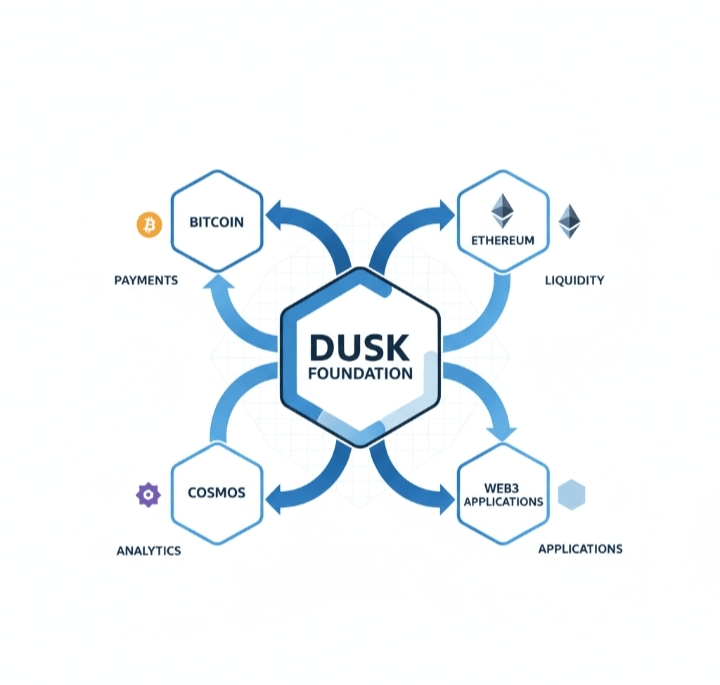
You’ll also find Dusk quietly pragmatic about interoperability. Cross-chain conversations can quickly blur into abstractions, but Dusk has focused on concrete bridges and standards that let tokenized securities and their attendant data move between networks without breaking compliance guarantees. That means native bridging at the settlement layer and careful use of cross-chain messaging standards that preserve provenance, custody semantics, and rate controls the things lawyers and auditors actually care about when assets hop chains. The goal isn’t maximal composability for its own sake; it’s connectedness that doesn’t undermine legal or operational controls.
What about the money that runs the system? DUSK as a token sits at the center of fees, settlement, and incentive alignment. Supply and market statistics show a structure intended to balance short-term usability with long-term stewardship: a sizeable circulating supply to support activity, and designed caps and allocations that aim to fund development and partnerships as the network matures. Those numbers are, of course, not the architecture itself, but they matter token design shapes the kinds of validators, custodians, and partners that will find it sensible to build there.
If you dig through the repositories and release notes you’ll find that Dusk is deliberate about developer experience. The team shipped EVM-equivalent tooling, deployment guides, SDKs and a cadence of releases designed to keep integrators from treating Dusk as a research project. There’s an active public codebase and documentation aimed at letting a Solidity developer arrive with familiar tools and leave with confidential, auditable contracts. That approach bring the developer you already have, then give them primitives they couldn’t get elsewhere is what will determine whether the network becomes a quiet plumbing layer for tokenized capital or stays a niche curiosity.
Finally, the long game is philosophical more than technical. Dusk trades the fever of viral token narratives for a slow scaffolding that real markets can adopt. Its choices modular settlement, cryptographic privacy that’s auditable, exchange partnerships, and pragmatic interoperability read like an attempt to build a protocol that can survive audits, legal scrutiny and the slow, cautious inertia of institutional capital. That is less glamorous than building a speculative playground, but if you believe that tokenized real-world assets are going to grow into something that interacts with banks, regulators and market infrastructure, then the kind of careful, engineering-first approach Dusk has taken starts to look less like conservatism and more like an insistence on being useful.
There are open questions, of course. Integrating legal frameworks with code will always be messy; latency and settlement models that satisfy both traders and auditors require tradeoffs; and “privacy with proof” will be a constant engineering conversation as cryptography and regulation evolve. But in the quiet scaffolding of its architecture and the deliberate pattern of partnerships and releases, Dusk reveals the kind of stubbornness that long-term infrastructure needs: patience, a focus on interoperability that actually preserves compliance, and a refusal to let privacy become either theater or a way to dodge oversight. If tokenized finance is going to become ordinary, the network that gets the last mile the audit trail, the exchange-grade feed, the legal wrapper will be the one we do business with. Dusk has spent the better part of a decade laying those tracks.If you want the manual: read the whitepaper for the cryptographic foundations, the docs for the DuskDS/DuskEVM split, and the recent integration notes to see how market data and bridges are being woven into the system. But if you prefer the headline: Dusk is the patient ledger built to keep a secret when it must, and to prove it kept that secret when someone with a license asks for the books.@Dusk #Dusk $DUSK