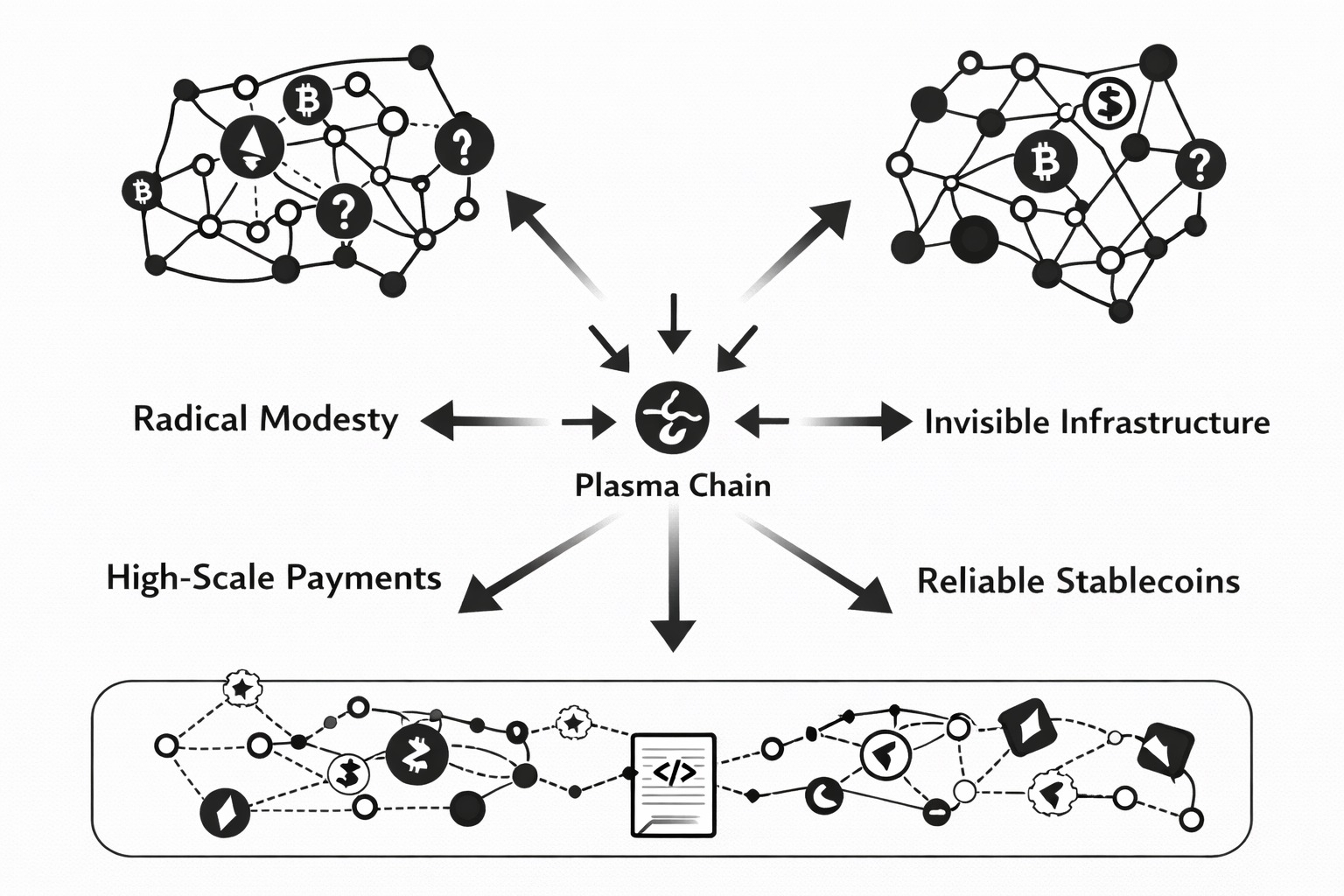
There is something almost countercultural about Plasma. In an industry obsessed with visibility—dashboards that glow with throughput numbers, ecosystems that announce themselves with maximalist branding, chains that want developers and users to constantly notice them—Plasma’s appeal lies in the opposite instinct. It is a blockchain that seems to ask a quiet but radical question: what if the best infrastructure is the kind you barely feel at all?
To understand why this is strange, it helps to remember how blockchains usually justify their existence. Most present themselves as destinations. They want you to build on them, speculate on them, talk about them, and, ideally, stay inside their universe. Performance is framed as a headline feature, governance as a selling point, and complexity as a sign of sophistication. Plasma, by contrast, feels less like a destination and more like a utility layer—something closer to plumbing than architecture. You do not admire plumbing. You just want it to work.
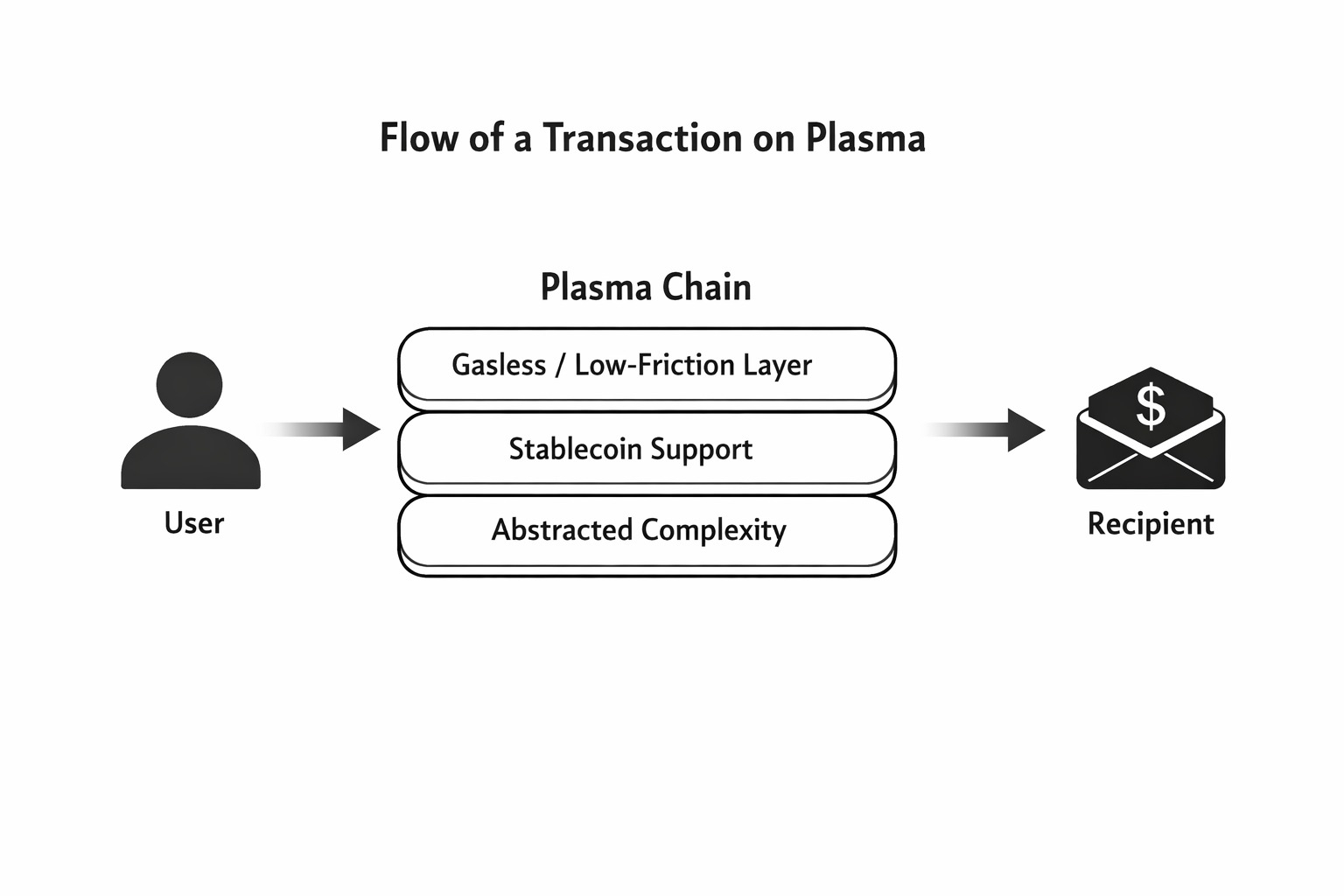
This design philosophy becomes clearer when you look at what Plasma is optimized for. Rather than trying to be a general-purpose platform that does everything moderately well, it focuses narrowly on one of blockchain’s most stubborn unsolved problems: making digital dollars actually usable at scale. Stablecoins have become the real economic engine of crypto, moving trillions in value each year, yet the infrastructure supporting them often feels hostile to everyday use. Fees fluctuate unpredictably, user experience leaks protocol details, and transactions that should feel boring instead feel fragile. Plasma’s response is not to add more features, but to remove friction—to make the chain disappear behind the action it supports.
This is where Plasma’s “stay out of the way” ethos shows its teeth. Instead of forcing users to think about gas, block times, or network conditions, @Plasma is designed so that payments feel like payments, not protocol interactions. The technical sophistication is still there, but it is pushed down the stack, away from the user’s consciousness. This is not accidental. It reflects an understanding that mass adoption will not come from educating everyone about blockchain mechanics, but from building systems that no longer require that education.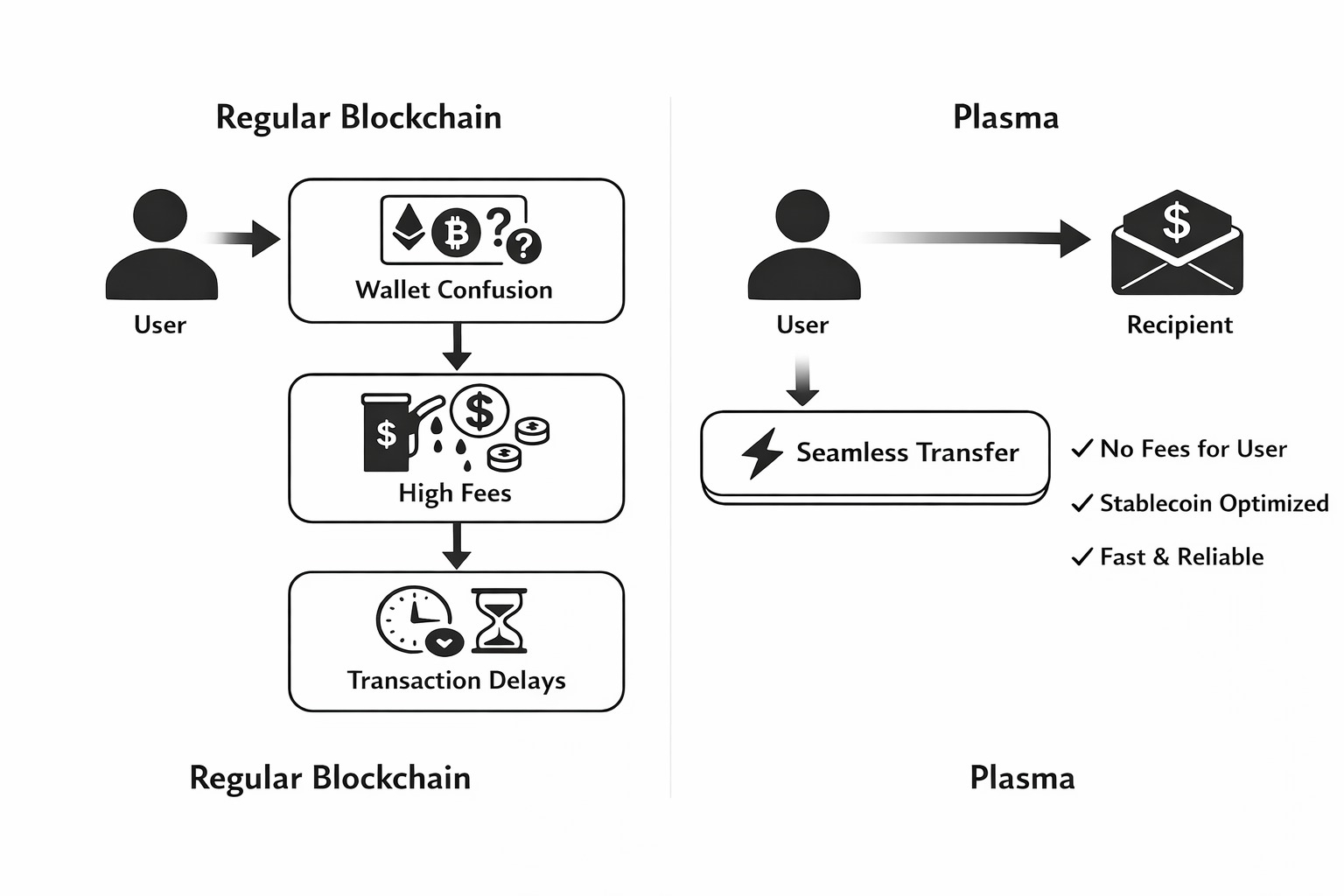
There is also an economic subtlety at play. Many blockchains implicitly rely on user friction as part of their security and revenue model. Fees, complexity, and delays are tolerated because they are framed as necessary trade-offs. Plasma challenges this assumption by treating friction itself as a bug. If stablecoin transfers are meant to function like digital cash, then unpredictability becomes unacceptable. In that sense, Plasma is less interested in redefining money and more interested in finally behaving like it.
What makes this approach compelling is that it aligns with how successful infrastructure has always evolved. The internet did not scale because users learned TCP/IP; it scaled because browsers hid it. Operating systems did not conquer the world by exposing kernel design; they did so by abstracting it away. Plasma seems to draw from this lineage, positioning blockchain not as an experience to be explored, but as a substrate to be trusted. The less you think about it, the more it is doing its job.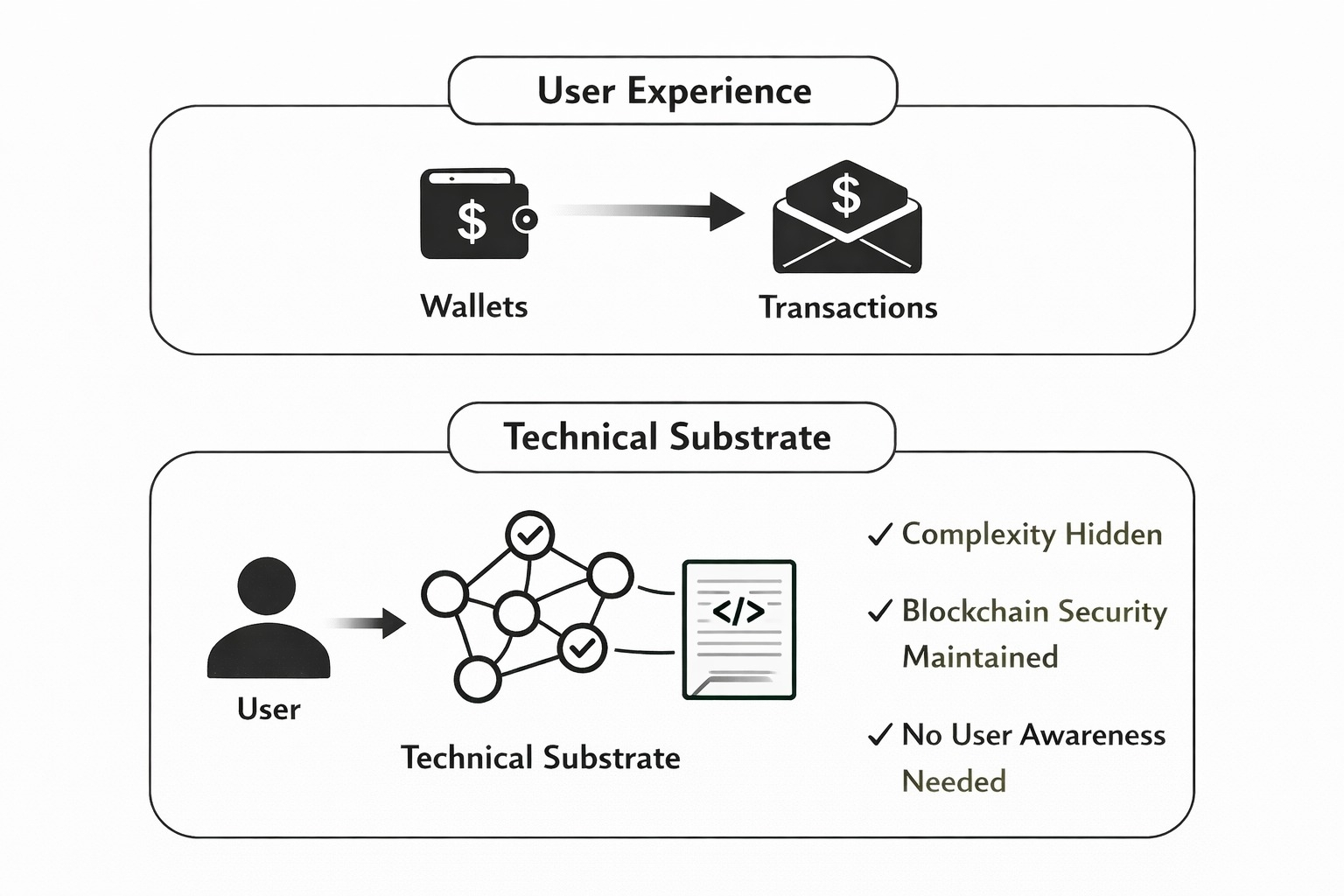
Of course, this restraint can look unimpressive in a space driven by spectacle. A chain that does not loudly advertise its novelty risks being overlooked. But that is precisely what gives Plasma its strange appeal. It suggests a maturity that much of crypto still lacks—the confidence to optimize for usefulness rather than attention. By narrowing its scope and lowering its profile, Plasma implicitly argues that the future of blockchain may not belong to the loudest or most flexible systems, but to the ones that integrate so smoothly into everyday activity that they stop feeling like blockchain at all.
In the end, Plasma’s quietness is not an absence of ambition. It is a different kind of ambition: to become invisible infrastructure for real economic activity. If that vision succeeds, people may never praise Plasma for its elegance or debate its architecture on social media. They will simply use it, perhaps without even knowing its name. And in a world where blockchains usually demand to be noticed, that kind of anonymity might be the most radical achievement of all.