I didn’t find Dusk during a big launch or trending post. It happened late one night while I was tired of reading about “the next big blockchain.” Every project promised speed and disruption. Most of them felt empty. I almost skipped Dusk too. Then I read its whitepaper. I was sleepy. But one idea made me pause.
It wasn’t about being faster.
It was about regulated finance.
That mattered to me because I was already frustrated with how crypto ignores reality. I’ve seen how banks actually work. Slow systems. Long approvals. Endless checks. Settlement delays that still feel ridiculous today. But I also know why those systems exist. Privacy matters. Laws matter. Accountability matters. You can’t just erase them and call it progress.
That’s when Dusk started to make sense.
🛡️Why Privacy Isn’t Secrecy
Dusk is a Layer 1 blockchain made for financial systems that follow rules. Real rules. The kind written by regulators and auditors, not online communities. Instead of fighting regulation or pretending it will disappear, Dusk accepts it and builds around it.
Let’s be honest. Crypto’s love for total transparency scares real institutions. No serious bank or investment fund wants the world to see its balances, trades, or strategies in real time. You can’t run a bond market if every move is public. That’s not openness. That’s chaos. This is the problem Dusk is trying to solve.
But Dusk doesn’t hide everything.
Its idea of privacy is simple: share only what is necessary. Transactions can stay private but still be valid. Rules can be enforced without exposing sensitive details. Regulators can check compliance without seeing everything. This balance is rare in crypto, and it’s intentional.
🏗️Built Like Real Financial Infrastructure
Dusk is designed the way real financial systems work. When something is settled, it is final. No waiting and hoping nothing changes later. That kind of certainty is required when ownership and legal responsibility are involved. Experimental apps can afford uncertainty. Financial infrastructure cannot.
Building on Dusk also feels practical. Developers can create familiar applications, but with privacy where it actually matters. Not every action needs to be hidden. Not every step needs to be public. This flexibility reflects how finance works in the real world.
Identity Without Overexposure
Identity is handled in a smart way too. Dusk avoids extremes. Users don’t need to be fully anonymous, and they don’t need to expose everything either. They can prove they are allowed to participate without revealing unnecessary personal details. It’s a small idea, but it changes how compliant markets can work on-chain.
🤫 Quiet Progress Over Loud Promises
What I respect most about Dusk is that it doesn’t treat blockchain like a belief system. It treats it like infrastructure. Pipes. Rails. Systems that need to work quietly and reliably. These aren’t exciting things to talk about, but they are what real finance depends on.
The project’s progress reflects this mindset. Development moves step by step. Stability comes before new features. Testing comes before expansion. There is no rush to impress. This slow and careful approach may not attract hype, but it matches how serious financial systems are built.
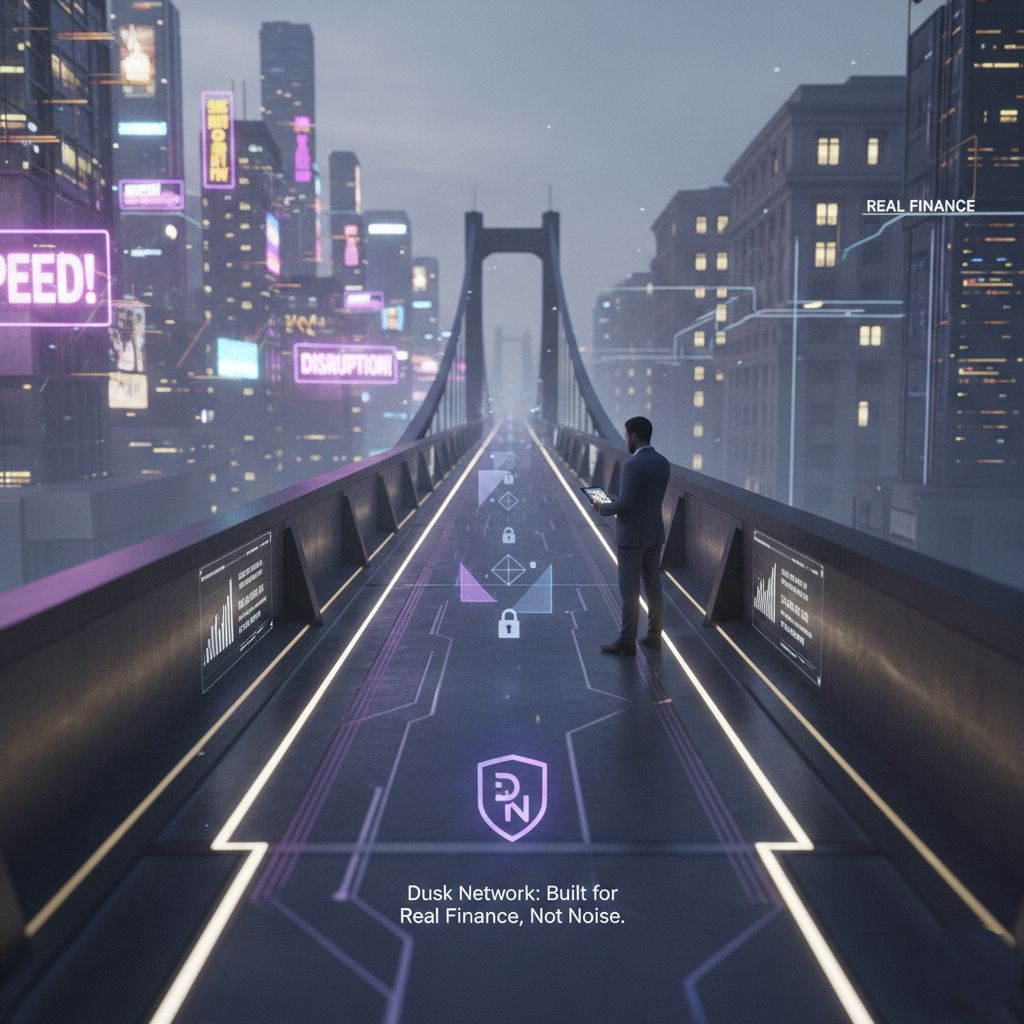
After spending time with Dusk, I stopped thinking of it as just another blockchain. It feels more like a bridge between two worlds that rarely agree: crypto builders and traditional finance. Dusk doesn’t attack either side. It listens. Then it builds something practical.
That’s why it stands out.
Not because it’s loud.
But because it’s realistic.
Do you think institutions will ever fully embrace public blockchains without built-in privacy? Let’s discuss in the comments.