

When I look at Dusk, I don’t get the usual “this will onboard millions of users” energy. I get something quieter and more deliberate. It feels like a blockchain designed by people who understand that real finance isn’t loud—it’s cautious, rule-bound, and deeply allergic to surprises.
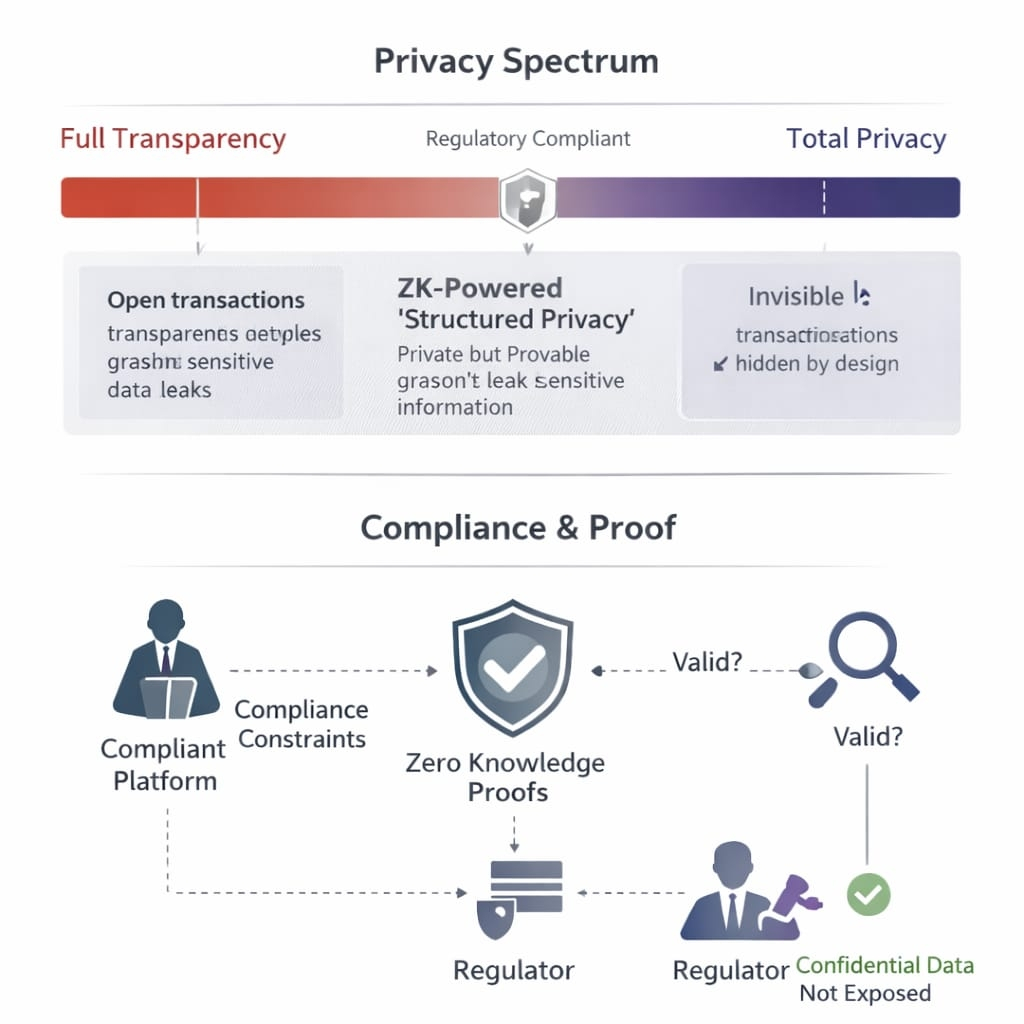
Most blockchains treat privacy like a feature you toggle on when users ask for it. Dusk treats privacy like a constraint you design around from day one. Not because hiding things is cool, but because markets simply don’t work when every position, trade, and intention is broadcast in real time. At the same time, Dusk doesn’t pretend regulators don’t exist. Instead of choosing sides, it tries to live in the uncomfortable middle: keep things private by default, but provable when they need to be questioned.
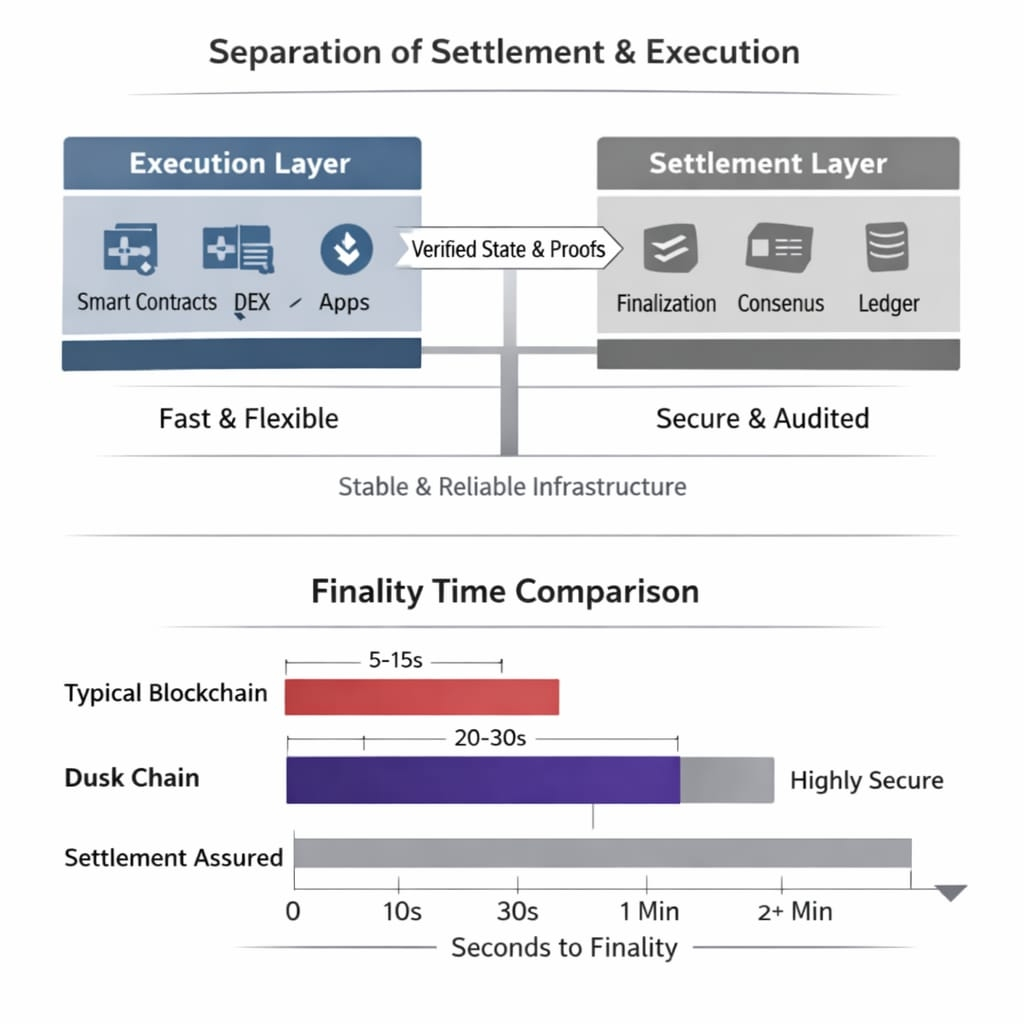
What stands out to me is how unglamorous the architecture feels—and I mean that as a compliment. Splitting settlement from execution isn’t about chasing trends; it’s about stability. In real financial systems, you don’t casually upgrade the rails money runs on. You freeze them, test them, audit them, and only then do you let innovation happen on top. Dusk seems to understand that instinctively. The chain feels less like an app playground and more like infrastructure that expects to be blamed when something goes wrong.
Even the EVM compatibility tells a deeper story. It’s easy to say “we want developers.” Harder to admit is that institutions won’t touch a system that requires exotic tooling and fragile assumptions. DuskEVM feels like a bridge between two worlds: familiar enough for builders, but anchored to a settlement layer that’s clearly designed to be the source of truth. The current limitations—like longer finality windows—aren’t hidden either. That honesty matters. In finance, pretending risks don’t exist is worse than having them.
The privacy model reinforces this feeling. Dusk doesn’t chase total invisibility. It chases structured privacy. The kind where transactions don’t leak sensitive information, but the system still knows how to say “this is valid” without asking for blind trust. That’s not cypherpunk idealism—it’s pragmatic design for environments where someone eventually asks for an explanation.
Where things get real is in the regulated distribution angle. Tokenization by itself is cheap talk. The hard part is distribution through platforms that live under real rules, with real licenses, and real consequences for getting things wrong. That’s where Dusk starts to separate itself. Building rails that regulated venues can actually use forces discipline. You can’t hand-wave edge cases when securities, reporting, and compliance officers are involved.
The DUSK token also reads differently when you view it through that lens. It’s not screaming “number go up.” It feels more like fuel for a system that expects to run for a long time: staking thresholds that discourage fly-by validators, fee units designed for precision, governance processes that assume proposals need traceability and structure. It’s boring in the way infrastructure should be boring.
None of this means Dusk is guaranteed to win. The biggest risk is also its defining trait: regulated adoption is slow, frustrating, and invisible until it suddenly isn’t. There are no viral moments when compliance teams onboard. Progress happens in integrations, contracts, and systems that most people never see. That kind of timeline tests patience.
But if Dusk works, it doesn’t need hype cycles or explosive user counts. It just needs to become the chain that serious financial actors don’t feel nervous using. A place where privacy doesn’t look suspicious, and transparency doesn’t feel invasive. That’s not a flashy ambition—but it’s a rare one, and it’s very human in its understanding of how finance actually behaves when the stakes are real.
