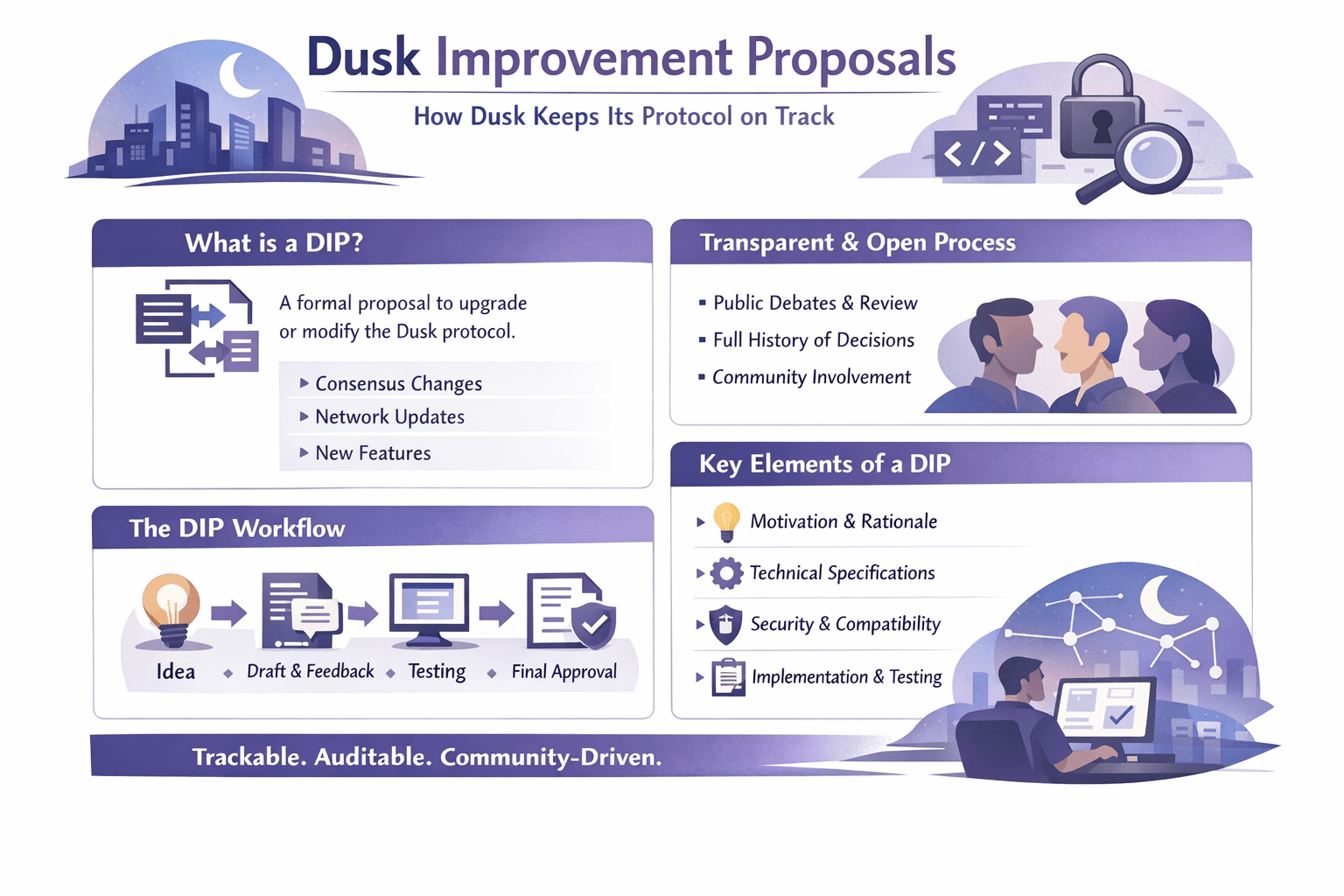
When you look at any serious blockchain, you realize it’s not just about tech wizardry. Long term,what really matters is good governance clear rules,open decision making,and a process that doesn’t go off the rails.That’s where Dusk’s Improvement Proposal system (DIP) comes in.It’s not just paperwork.It’s how Dusk keeps the protocol moving forward,with everyone on the same page.
A DIP is basically the official way to suggest a new feature, tweak an existing standard,or change how Dusk works.Instead of random upgrades or half baked ideas,the DIP process makes sure every change has a single,public record.So,when someone wants to touch something big like consensus, how nodes talk to each other,or how transactions get checked there’s a plan,a paper trail,and a way for people to weigh in. It turns what could be chaotic debates into something more like engineering,where you can actually audit how decisions get made.
But the DIP repository isn’t just a graveyard for old documents.It’s how real change happens,out in the open.Anyone can see how a proposal evolved,who argued for what,and why a decision landed where it did. That kind of transparency means the protocol doesn’t forget its own history.Plus,it gives the community a real shot at helping steer the ship without letting things devolve into messy,unfocused brainstorming.
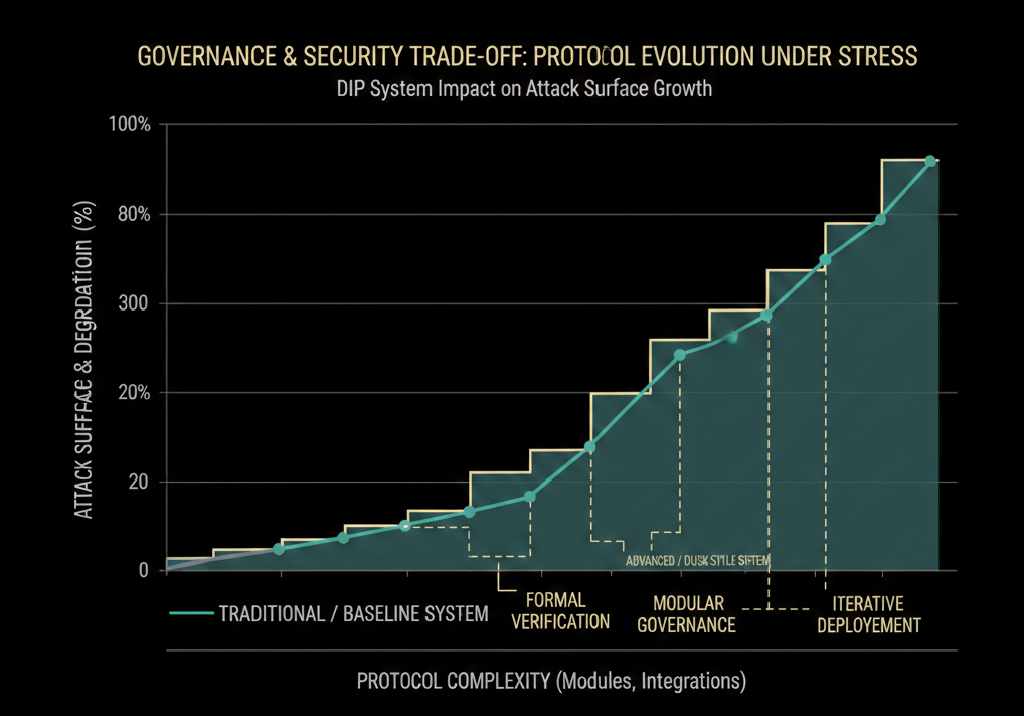
Submitting a DIP isn’t just tossing an idea over the wall.First,you check what’s already out there no sense in reinventing the wheel or working at cross purposes.Then you draft your proposal using a specific template.They want clarity,real reasoning,not just a wish list. You push it to the official repository,and that’s when the real work starts.People poke holes, ask tough questions,suggest changes.The process is built to be iterative.No one just drops a finished product and walks away. When everyone’s finally on board,editors lock it in,give it a number,and track how it’s actually rolled out.
Every DIP follows a strict format.There’s a preamble with basics title,who wrote it, when,its current status then a quick abstract. After that, you get into the motivation, technical specs,the“why,”and so on: backwards compatibility,how it’s tested,what it references,security stuff.They even let you update things as the implementation moves forward.
Why all this structure? First,it forces people to justify their ideas.You can’t just say,“Trust me, this is better.”You have to show your work. Second,it creates a lasting knowledge base. Later contributors don’t have to guess why things are the way they are they can dig into the record.In a system as complex as Dusk, with cryptography and consensus at its core, that kind of documentation isn’t just bureaucracy.It’s essential for security and reliability.
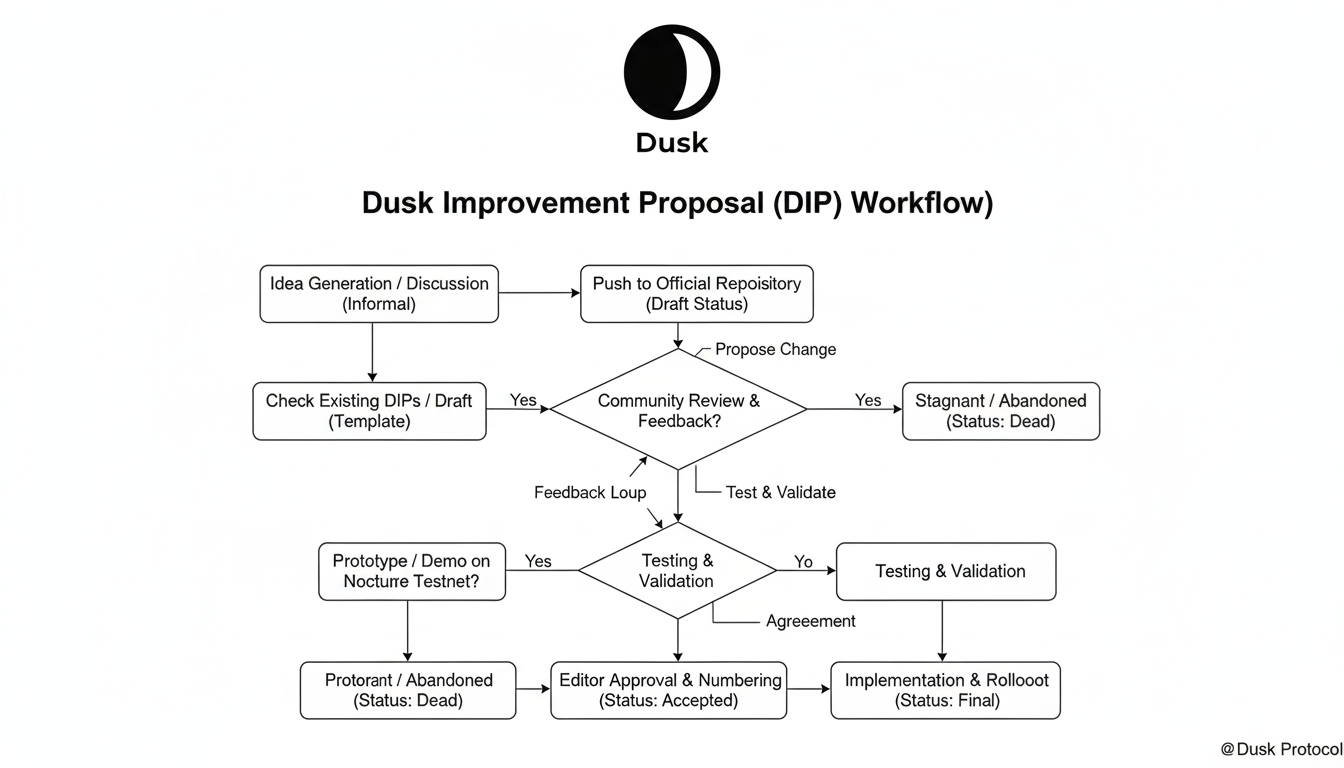
The workflow for a DIP isn’t static,either. Ideas usually start informally.Once they start to take shape,they become drafts.There’s room for feedback,maybe even a prototype or demo,so people can see how things work before making a final call.The Nocturne test environment lets you kick the tires in a sandbox.Only when everyone agrees does the proposal go live and actually become part of Dusk.
They also have rules for what happens if an idea fizzles out.If work stalls,a proposal goes stagnant,and eventually it might get marked dead.That keeps the system clean and focused,so only ideas that actually have momentum make it through.This way,Dusk avoids clutter and makes sure old, abandoned ideas don’t gum up the works.
From a design standpoint,the DIP system is about moving forward on purpose.Dusk doesn’t chase fast,flashy upgrades.It wants every decision to be traceable,peer reviewed,and backed by real arguments.In a world where correctness and long term health matter more than quick hacks,that kind of discipline is how you keep the protocol secure and trustworthy.
Personal Take
Honestly,I think the DIP process is one of the clearest signs that a blockchain protocol is growing up.Raw technical firepower isn’t enough to keep a project on track forever.If you don’t have a way to manage change real governance things eventually fall apart. Dusk’s focus on rationale,thorough testing, and security shows they take protocol changes seriously.They treat upgrades as a responsibility,not just as a chance to experiment for the sake of it.
What really jumps out is how they’ve managed to balance...