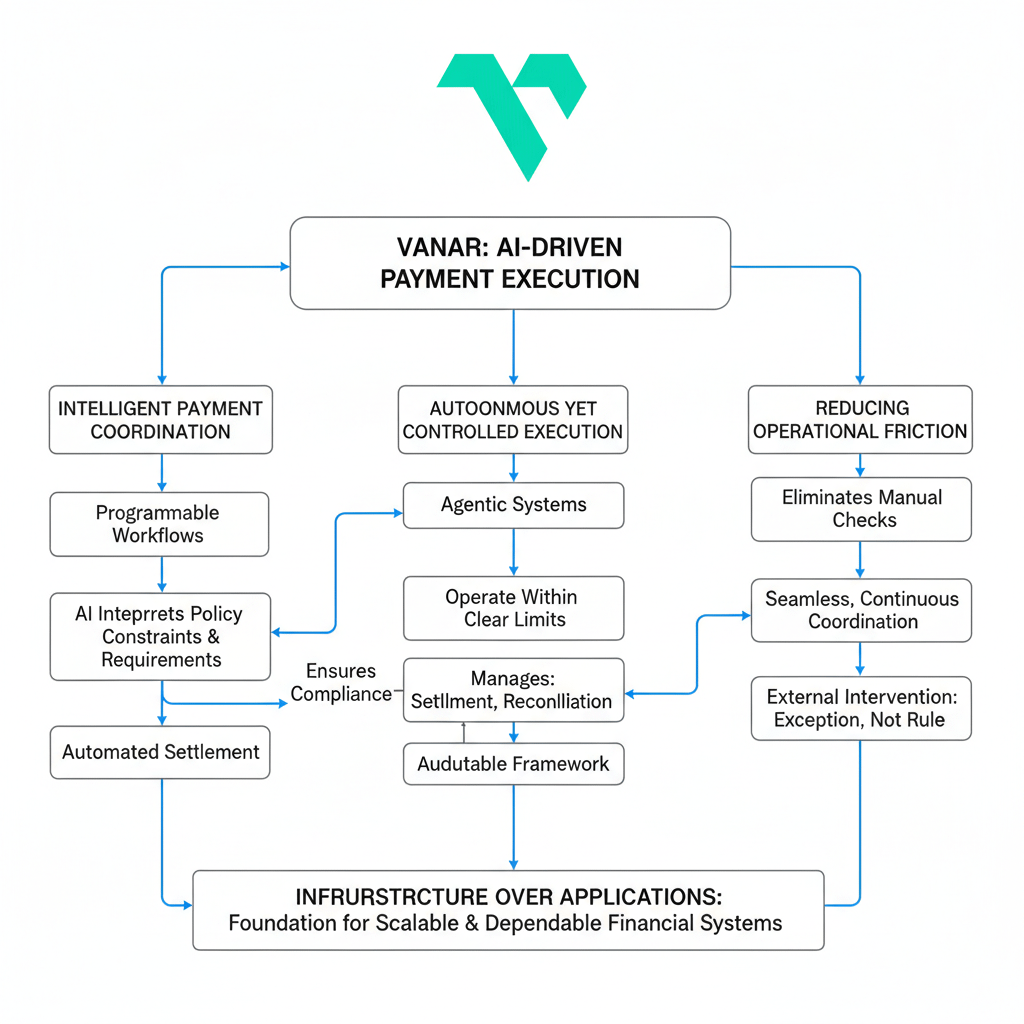
Payment systems have always leaned on central control,manual checks,and a maze of middlemen.Vanar flips that on its head.It brings execution logic,settlement,and verification together on AI native blockchain rails.
What grab my attention isn’t flashy speed or some futuristic feature it’s the obsession with operational reliability.
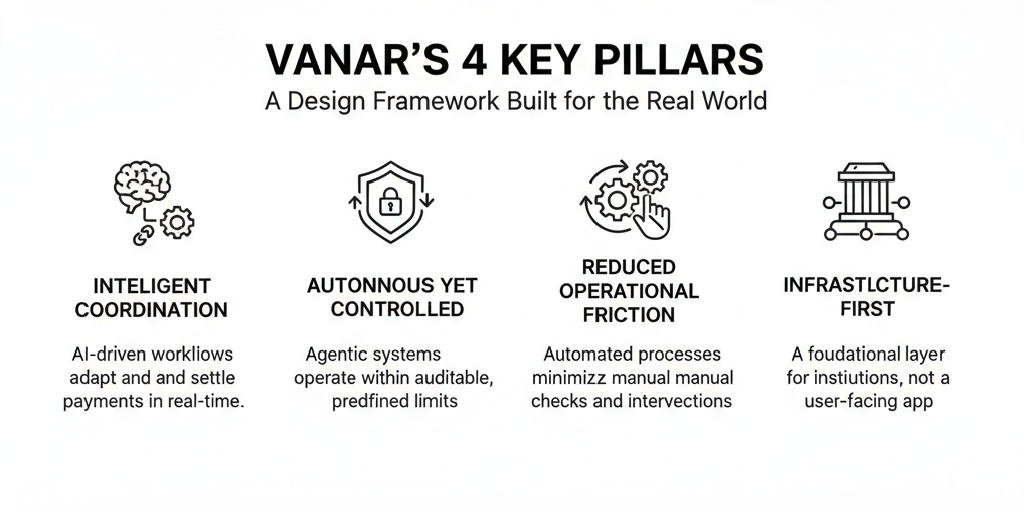
Intelligent Payment Coordination
With Vanar,you get programmable payment workflows that react in real time.AI doesn’t just follow scripts;it reads the situation, checks if requirements are met,and then handles the settlement.This isn’t your typical automation.The system can actually interpret policy constraints,not just tick boxes on a list. As finance grows more tangled,that kind of flexibility stops being a luxury it’s a necessity.
Autonomous Yet Controlled Execution
Vanar’s agentic systems don’t go rogue. They operate within clear limits,sticking to the rules set ahead of time.They manage payments initiation,settlement,reconciliation on their own,but always stay within an auditable framework.That’s the sweet spot: strong automation,but with real control.
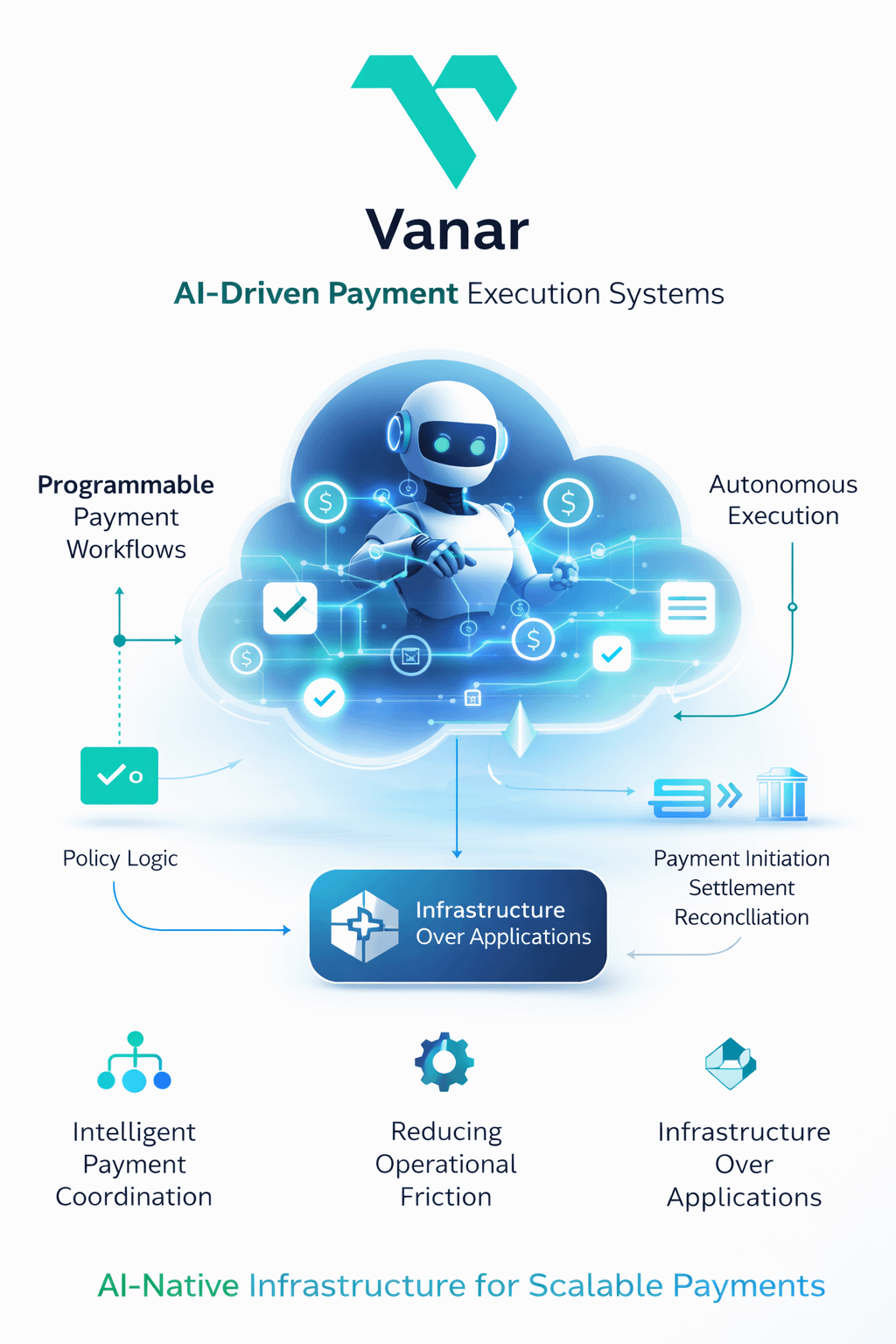
Reducing Operational Friction
Manual checks and pieced together settlement processes slow things down and open the door to mistakes.Vanar’s setup cuts out that friction.AI keeps the coordination running nonstop,smoothing out the payment process and making outside intervention the exception,not the rule.
Infrastructure Over Applications
Vanar isn’t trying to be the next payment app. It’s the foundation the execution layer that lets institutions build what fits them. Infrastructure first thinking is what makes platforms last,not just fade away after a season.
Conclusion
Vanar shows how AI native infrastructure can reshape payment execution,keeping governance and compliance front and center. Instead of chasing superficial innovation,it bets on intelligent coordination.The result?A foundation for financial systems that are both scalable and dependable.