

When I sit with Plasma today and re-evaluate it with fresh eyes, I still don’t think of it as a blockchain in the way that word is usually used. I think of it as settlement infrastructure that happens to live on-chain. That distinction may sound subtle, but it changes how I judge every design decision. I am not asking whether it is expressive or flexible in the abstract. I am asking whether it behaves the way money infrastructure needs to behave when real people depend on it daily. That lens has only become more important as stablecoins continue to move from experimental tools into routine financial instruments for millions of users.
What feels clearer now than even a few months ago is how intentionally Plasma is built around actual stablecoin behavior rather than imagined future use cases. Stablecoins today are not primarily used for experimentation. They are used for payroll, remittances, merchant settlement, treasury movement, and simple value storage in regions where local currencies are unstable or payment rails are fragmented. The people using them are not exploring systems; they are trying to get through their day. Plasma’s architecture reads like it was shaped by watching those patterns closely and deciding not to fight them.
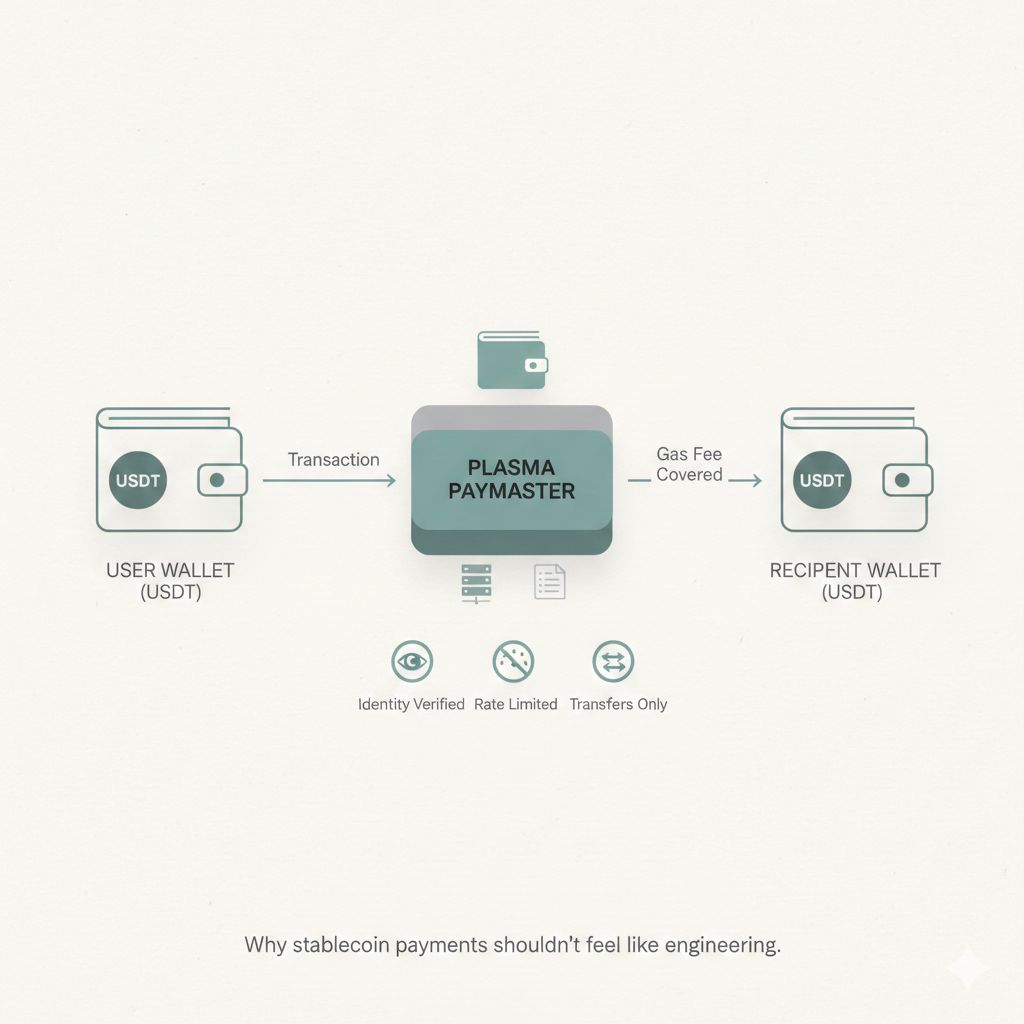
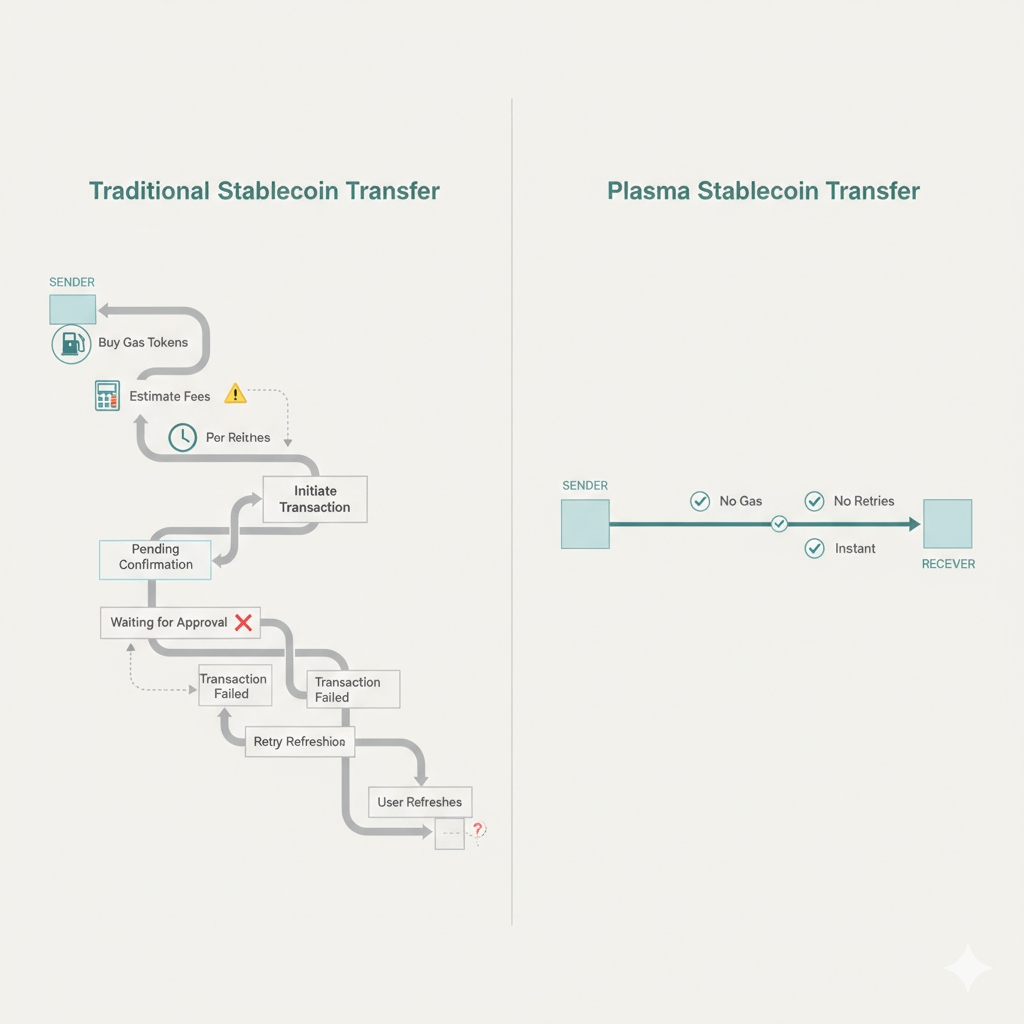
Gasless USDT transfers remain one of the most revealing choices in this design. This is not about making transactions cheaper in a theoretical sense. It is about removing a cognitive interruption. Requiring users to acquire, manage, and understand a separate asset just to move their money is friction that never needed to exist from the user’s perspective. As stablecoin volumes continue to grow globally, that friction compounds. Plasma’s decision to make stablecoins first-class citizens in the fee model reflects a simple observation: people think in terms of the money they are sending, not the machinery that moves it. Infrastructure that respects that mental model tends to feel natural rather than imposed.
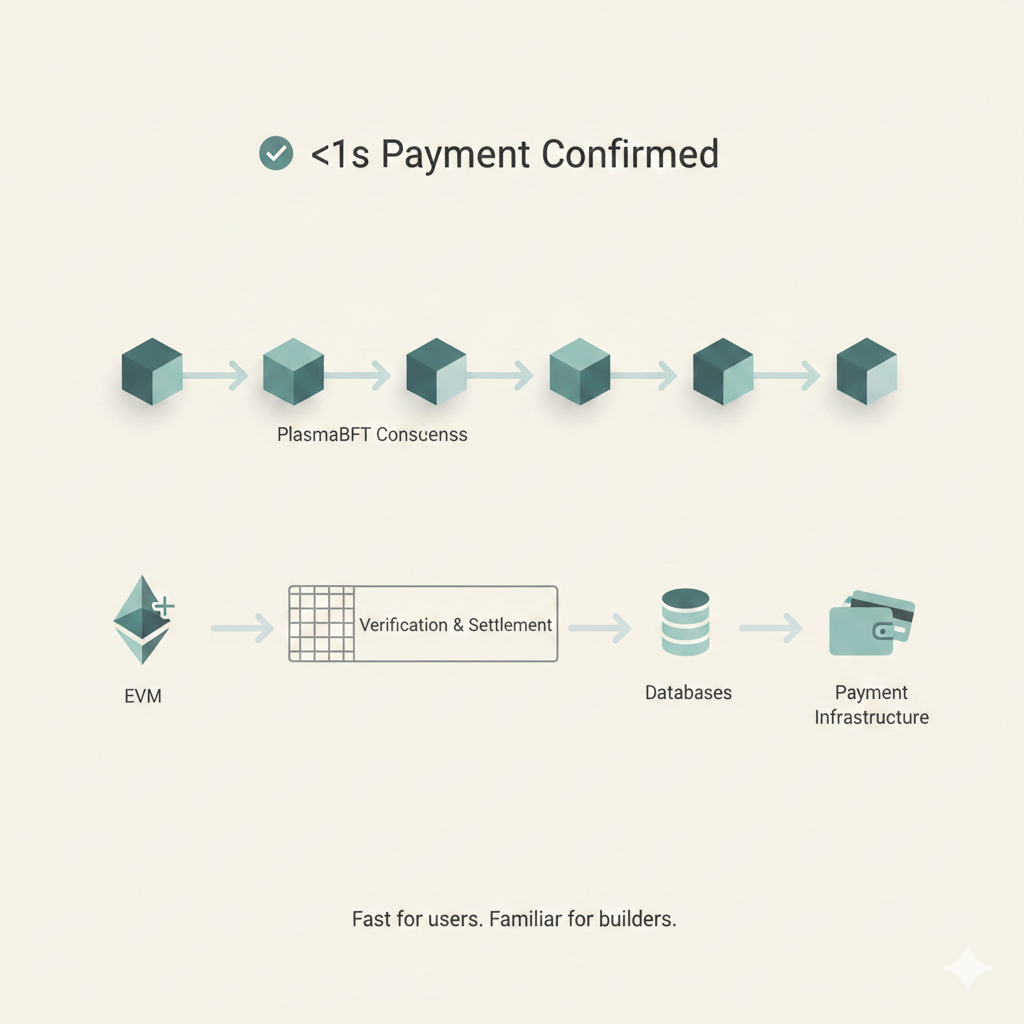 Sub-second finality becomes more meaningful when viewed through this same human lens. In payment flows, time is not measured only in seconds. It is measured in confidence. There is a narrow window where a transaction feels “done” enough that a user mentally moves on. When confirmations stretch beyond that window, even if they are technically fast, doubt creeps in. Users refresh screens, retry actions, or hesitate to proceed. Plasma’s consensus design appears tuned to stay within that comfort zone. The goal is not to showcase speed but to avoid creating moments where the system reminds users of its own complexity.
Full EVM compatibility via Reth continues to strike me as a deliberately unambitious decision in the best sense of the word. Plasma is not trying to redefine how applications are written or how execution works. It is choosing a familiar environment that already carries a shared understanding among developers and operators. For settlement infrastructure, this matters more than novelty. Familiarity reduces integration errors, shortens development cycles, and lowers operational risk. When money is involved, boring choices are often the safest ones. Plasma seems comfortable being boring in the places where reliability matters most.
One area where Plasma’s philosophy stands out even more clearly today is how it treats security and neutrality. Bitcoin-anchored security is not framed as a feature to be marketed or interacted with. It is treated as a background condition, something that quietly shapes the system’s behavior without demanding attention. As regulatory scrutiny around payments and digital dollars continues to increase globally, neutrality and censorship resistance are no longer abstract ideals. They are operational concerns. Anchoring to Bitcoin introduces constraints, but it also introduces a kind of gravity that discourages short-term optimization at the expense of long-term trust.
 Those constraints are worth lingering on. Anchoring security in this way limits certain kinds of flexibility and requires discipline in system design. It makes rapid, sweeping changes harder. But that friction can be healthy. Payment infrastructure should not be easy to change on a whim. It should evolve slowly, deliberately, and with a bias toward continuity. Plasma’s willingness to accept these limits suggests an understanding that reliability is not just a technical property but a governance posture.
What I find increasingly compelling is how Plasma handles complexity by actively hiding it. Many systems in this space treat complexity as proof of sophistication. Plasma seems to view complexity as a liability that should be absorbed internally. Users do not need to understand consensus, anchoring, or execution models to move their money. Builders do not need to invent new mental models to deploy applications. The surface remains simple, even as the underlying system does real work. This is how mature infrastructure earns trust over time, not by explaining itself constantly, but by behaving consistently.
When I imagine Plasma under real stress, I do not picture idealized demos. I picture end-of-day settlement batches, cross-border remittances sent under time pressure, merchant balances that need to reconcile cleanly without manual intervention. These scenarios expose weaknesses quickly. Latency spikes, inconsistent finality, and hidden fees become immediately visible. Plasma’s focus on stablecoin settlement rather than general-purpose expressiveness suggests that these scenarios were considered early. It feels built for repetition rather than exploration, for reliability rather than novelty.
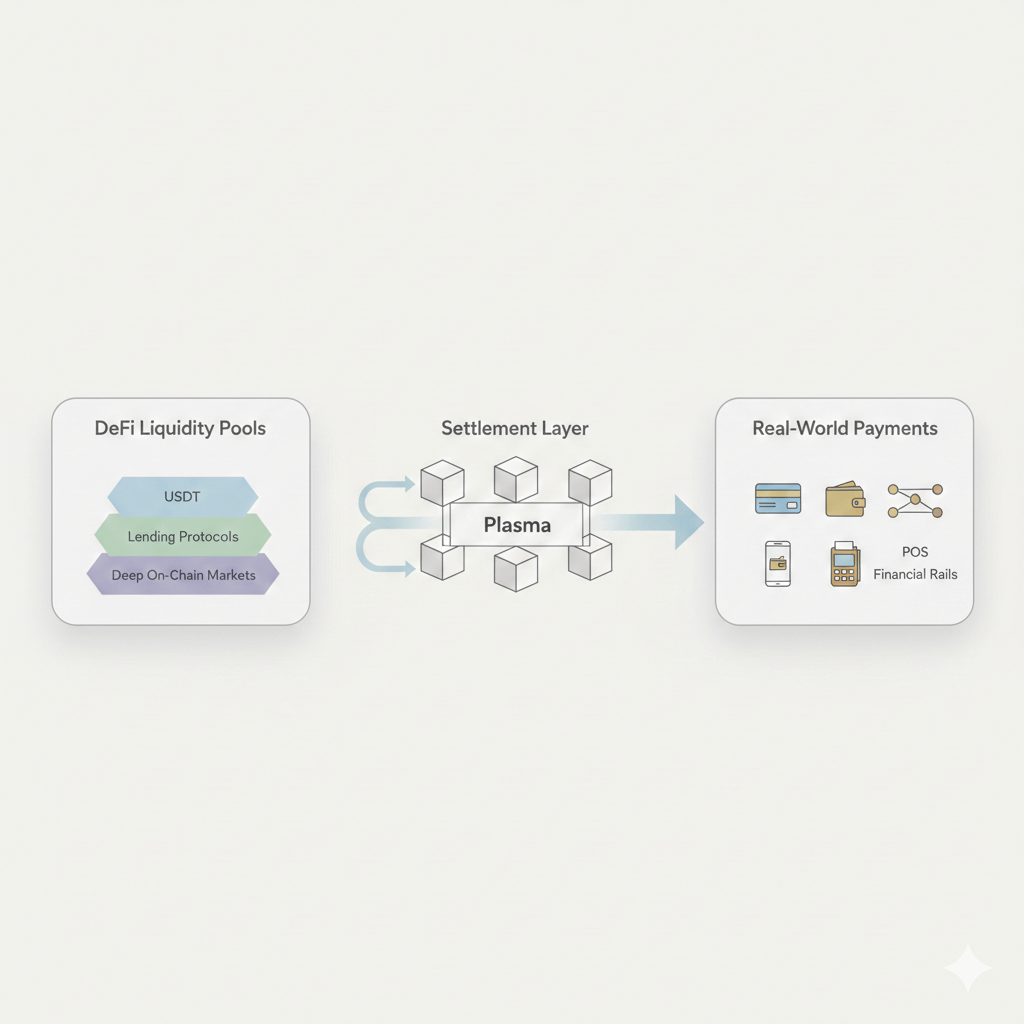
 Recent growth in stablecoin usage reinforces the relevance of this focus. As more institutions and payment providers experiment with on-chain settlement, they are not looking for ideological purity or maximal flexibility. They are looking for systems that behave predictably, integrate cleanly, and fail gracefully when something goes wrong. Plasma’s design choices read as responses to those expectations rather than attempts to redefine them.
The role of the token becomes clearer when viewed through this operational lens. It is not positioned as an object of attention. It exists to support network function, align usage with operation, and ensure the system runs smoothly. Its importance scales with activity and recedes when activity slows. This kind of alignment does not generate excitement, but it does generate coherence. Tokens that are tightly bound to everyday usage tend to fade into the background, becoming part of the system’s internal accounting rather than its public identity. Plasma appears comfortable with that outcome.
What this all signals to me is a broader shift in how consumer-facing blockchain infrastructure may mature. Plasma does not ask users to care about blockchains. It asks them to care about outcomes: did the money move, did it settle, did it work the same way it did yesterday. It does not frame itself as a vision to believe in, but as a service to rely on. That posture is demanding. It leaves little room for excuses. Systems built this way are judged relentlessly by their behavior.
 I do not see Plasma as trying to impress anyone. I see it trying to disappear into daily financial routines, the way good infrastructure always does. Roads, power grids, and payment networks are noticed only when they fail. Plasma seems designed with that standard in mind. If it succeeds, most users will never know its name. They will simply experience money that moves smoothly, predictably, and without ceremony. In the end, that invisibility is not a lack of ambition. It is a sign of discipline, and discipline is often what separates systems that last from systems that merely attract attention.
