

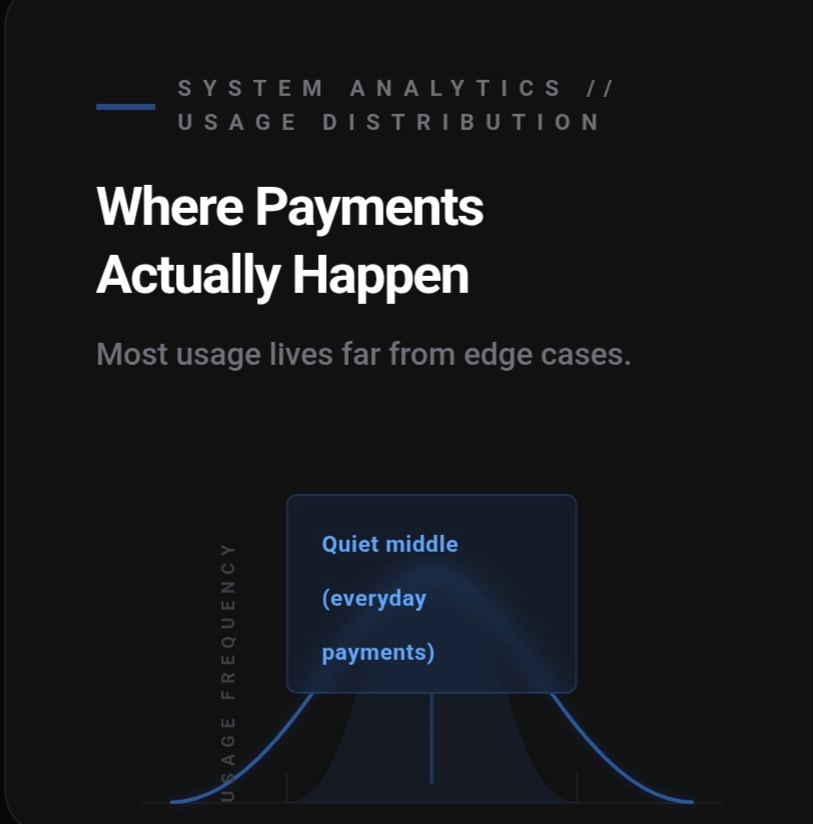
Most systems are designed by obsessing over extremes. The fastest moment. The highest load. The rare failure. The edge case that proves technical brilliance. That instinct makes sense if you’re building tools for experimentation. It becomes less helpful when you’re building something people are supposed to use every day.
What keeps standing out to me about Plasma is how little it seems motivated by extremes at all.
It doesn’t feel like a system built to shine during record-breaking moments. It feels built for the quiet middle — the vast majority of time when nothing unusual is happening and nobody is watching closely. That’s where real payment behavior lives.
Most money movement isn’t urgent. It’s habitual.
Rent. Subscriptions. Supplier payments. Allowances. These transfers don’t test limits. They test consistency. They happen when they’re supposed to, at amounts that don’t make headlines, under conditions that rarely change. Systems that behave differently from one ordinary day to the next introduce friction even when nothing is technically wrong.
Plasma seems designed to minimize that day-to-day variance.
Instead of optimizing for peak flexibility, it appears to optimize for uniformity. A payment at noon feels like a payment at midnight. A quiet day behaves like a busy one. The system doesn’t reward users for timing the network or adjusting behavior. It just does the same thing, over and over.
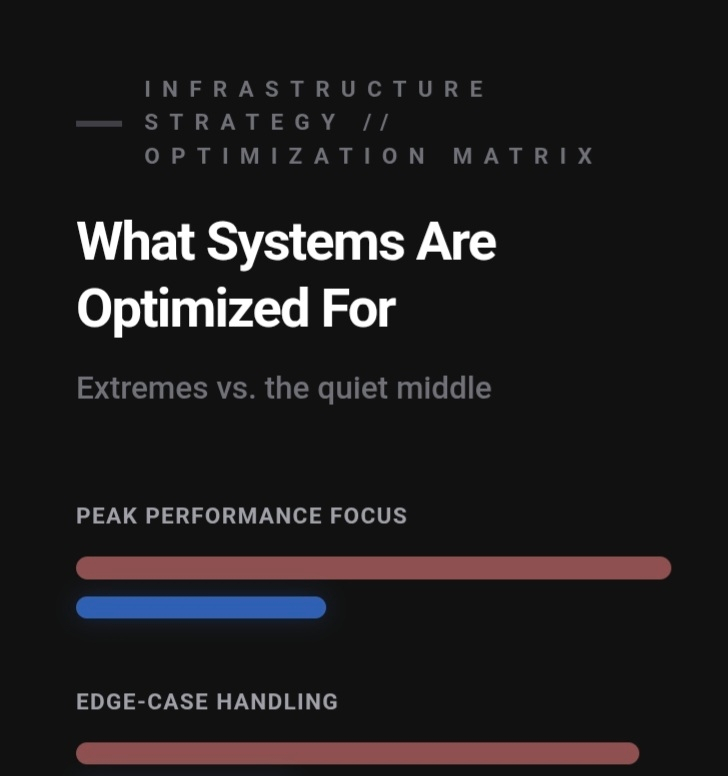
That repetition is easy to underestimate.
Humans learn systems through exposure, not documentation. When behavior stays consistent, people stop preparing for surprises. They stop hedging mentally. They stop building backup plans. Over time, the system fades into the background of routine.
Many blockchains inadvertently teach the opposite lesson. They teach users to stay alert. Fees fluctuate. Conditions change. Best practices evolve. Even when transfers succeed, the environment feels unstable. That instability doesn’t have to cause losses to be damaging. It just has to demand attention.
Plasma feels like it’s trying to avoid teaching that lesson altogether.
What’s interesting is how this focus on the middle reframes reliability. Reliability isn’t about surviving catastrophic stress. It’s about not creating micro-stress during normal use. A system can survive a crisis and still fail as infrastructure if it makes ordinary days feel unpredictable.
Plasma seems to understand that distinction.
This design philosophy also affects how people escalate trust. In systems built for extremes, trust is conditional. Users trust the system when metrics look good, when conditions are favorable, when nothing unexpected happens. In systems built for the middle, trust becomes ambient. It doesn’t depend on checking anything. It’s just assumed.
Ambient trust is fragile at first, but powerful once established.
There’s also a business implication here. Organizations don’t plan around edge cases. They plan around averages. A payment system that behaves differently on “normal” days creates planning overhead that compounds quietly. Teams add buffers. Schedules loosen. Efficiency erodes.
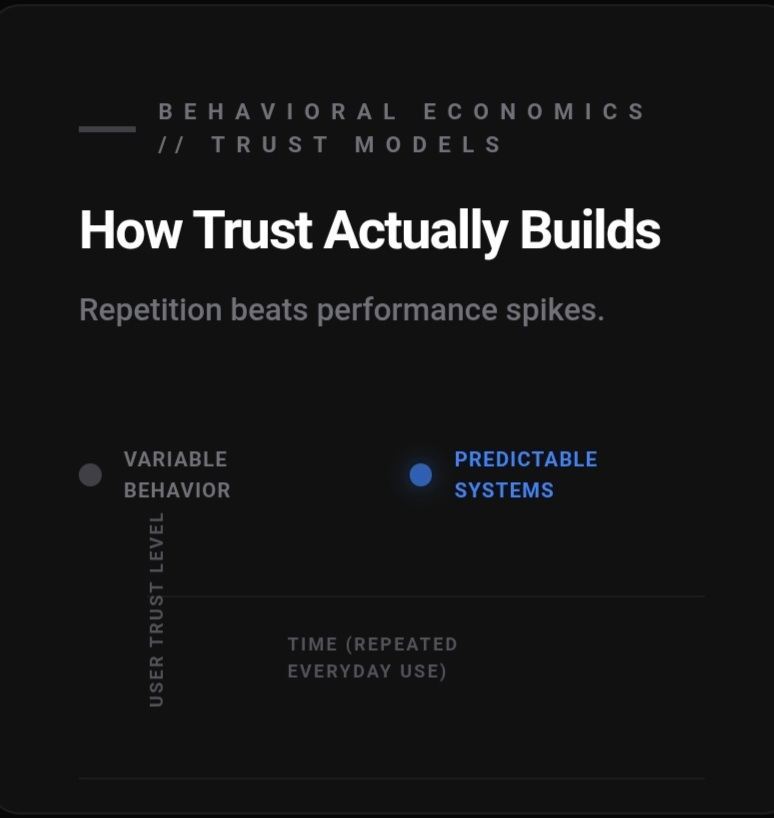
A system that behaves the same across normal conditions reduces that overhead without fanfare.
Plasma’s restraint feels aligned with this reality. It doesn’t try to capture every possible use case. It doesn’t try to be expressive in every direction. It narrows its responsibility and executes it consistently. That narrowing looks conservative, but it’s how systems earn longevity.
Of course, this approach isn’t glamorous. There’s no dramatic story in “nothing happened today, and everything worked.” But economies are built on days like that, repeated thousands of times.
The systems that matter most are the ones that don’t ask to be noticed during those days.
What I find compelling is how Plasma seems comfortable letting the edge cases stay edge cases. Instead of designing the entire experience around rare events, it protects the experience where users actually live. That protection shows up not as a feature, but as an absence of friction.
In crypto, absence is hard to sell. It doesn’t screenshot well. It doesn’t trend. But absence is what allows habits to form without resistance.
Plasma feels like it’s optimizing for those habits rather than for applause.
If payments are going to mature, they’ll stop being measured by how they perform under extraordinary circumstances and start being judged by how little they demand during ordinary ones. The quiet middle will matter more than the edges.
Plasma doesn’t feel like it’s chasing the extremes.
It feels like it’s anchoring itself in the part of the curve where people actually live.
And that, more than any benchmark, is often what determines whether a system becomes infrastructure or remains an experiment.