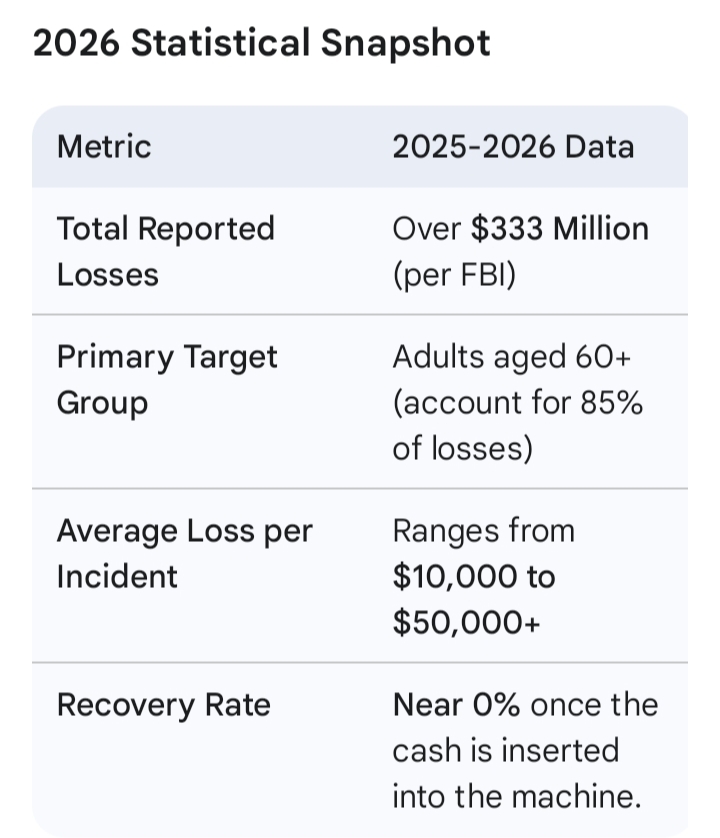
In early 2026, the FBI and multiple state Attorneys General have issued high-priority alerts regarding Crypto ATM (or Kiosk) scams, which resulted in over $333 million in reported losses last year alone.
These scams are particularly dangerous because they bypass digital security measures by moving the transaction into the physical world, where victims are often pressured into bypassing their own better judgment.
How the Scam Works: Step-by-Step
The scam is designed to induce panic and isolate the victim from any help.
The "The Hook": It begins with an urgent call, text, or computer pop-up. Scammers often impersonate:
Government/Law Enforcement: Claiming there is a warrant for your arrest or a "frozen" Social Security number.
Tech Support: Warning that your bank account has been "hacked by Russia" or another foreign entity.
Utility Companies: Threatening to shut off power or water immediately unless a "deposit" is made.
The "Safe Haven" Instruction: The scammer tells you that your bank funds are "unsafe" and must be moved to a "government-secured digital locker" or "safe wallet."
The Physical Move: You are instructed to withdraw physical cash from your bank. Scammers often tell you not to tell bank tellers why you are withdrawing the money, claiming the bank employees might be "in on the hack."
The Kiosk Transaction: You are directed to a specific crypto ATM (found in gas stations or grocery stores). The scammer sends you a QR code via text.
The Instant Loss: When you scan the QR code and insert your cash, the money is instantly converted to Bitcoin (or other assets) and sent to the scammer's wallet. Because crypto transactions are irreversible, the money is gone the moment you hit "send."