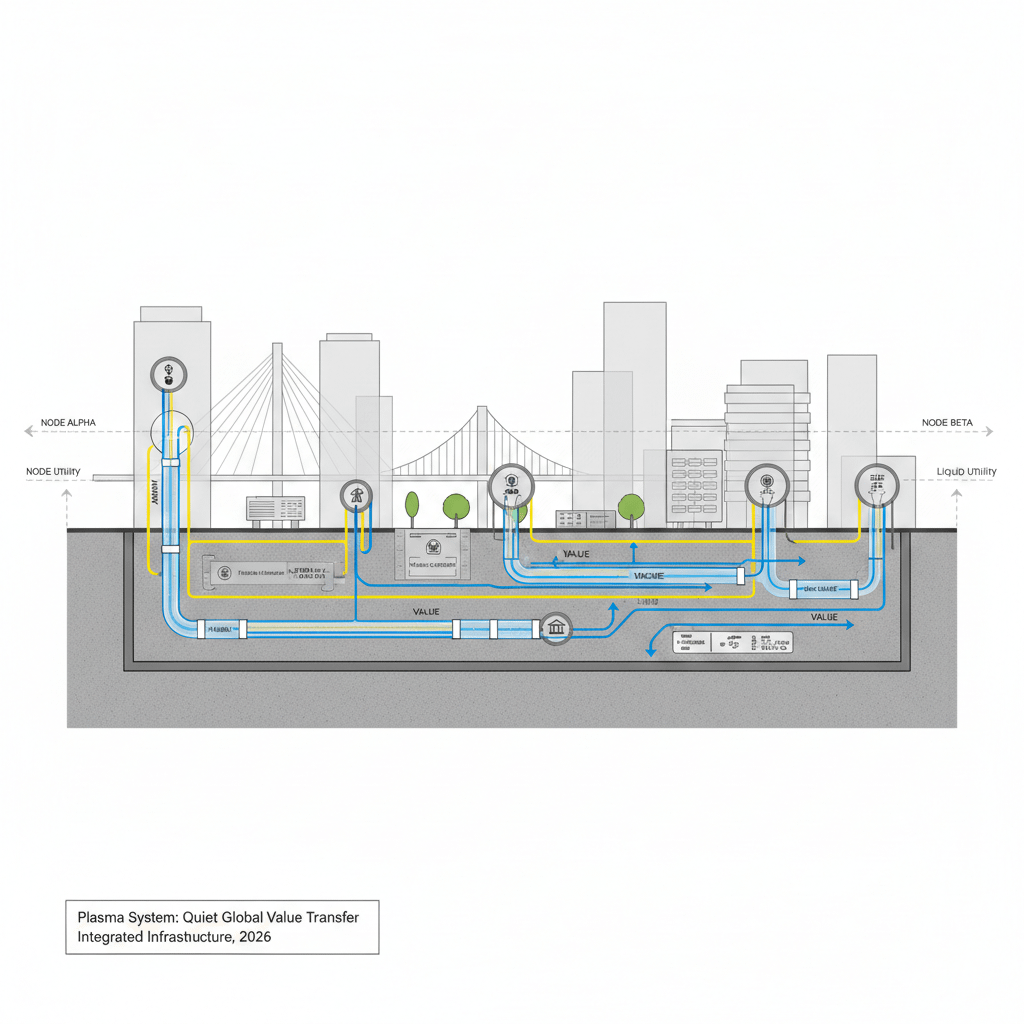
@Plasma The first time I came across Plasma, it did not feel like the kind of project that tries to introduce itself loudly. There was no grand promise of reinventing everything or replacing the foundations of finance. Instead, it read like a quiet adjustment to something that has already been happening for years. Stablecoins had slowly become the real traffic on blockchains, even if the conversation still revolved around tokens and speculation. Plasma seemed to begin from that simple observation: if most people are already moving dollars rather than dreams, then perhaps the road itself should be built for dollars.
After watching several market cycles come and go, I have learned that infrastructure projects tend to arrive in two waves. The first wave is philosophical. It argues about decentralization, purity, and ideals. The second wave is practical. It quietly asks, “What are people actually doing here?” Plasma feels like it belongs to the second group. It does not try to redefine money or governance. It notices that traders, freelancers, small businesses, and even institutions are simply trying to send stable value from one place to another without friction.
In that sense, the context around it matters more than the code itself. Stablecoins have become the unofficial settlement layer for much of the crypto economy. They move across exchanges, wallets, and borders every hour, often treated like digital cash. Yet most blockchains still treat these transfers like any other activity, competing for block space with everything else. The result is sometimes clumsy. Fees fluctuate. Transactions wait. Users who only want to move a few dollars are forced to think about gas prices and timing. It works, but it never feels natural.
Plasma appears to start by acknowledging this awkwardness. Instead of building a general-purpose environment and hoping stablecoin use will fit inside it, the design flips the priority. The chain seems shaped around the assumption that stable value transfer is the main job. Everything else is secondary. That subtle shift changes the tone of the system. Features like gasless transfers for common stablecoins feel less like perks and more like basic utilities, the kind of thing you would expect rather than celebrate.
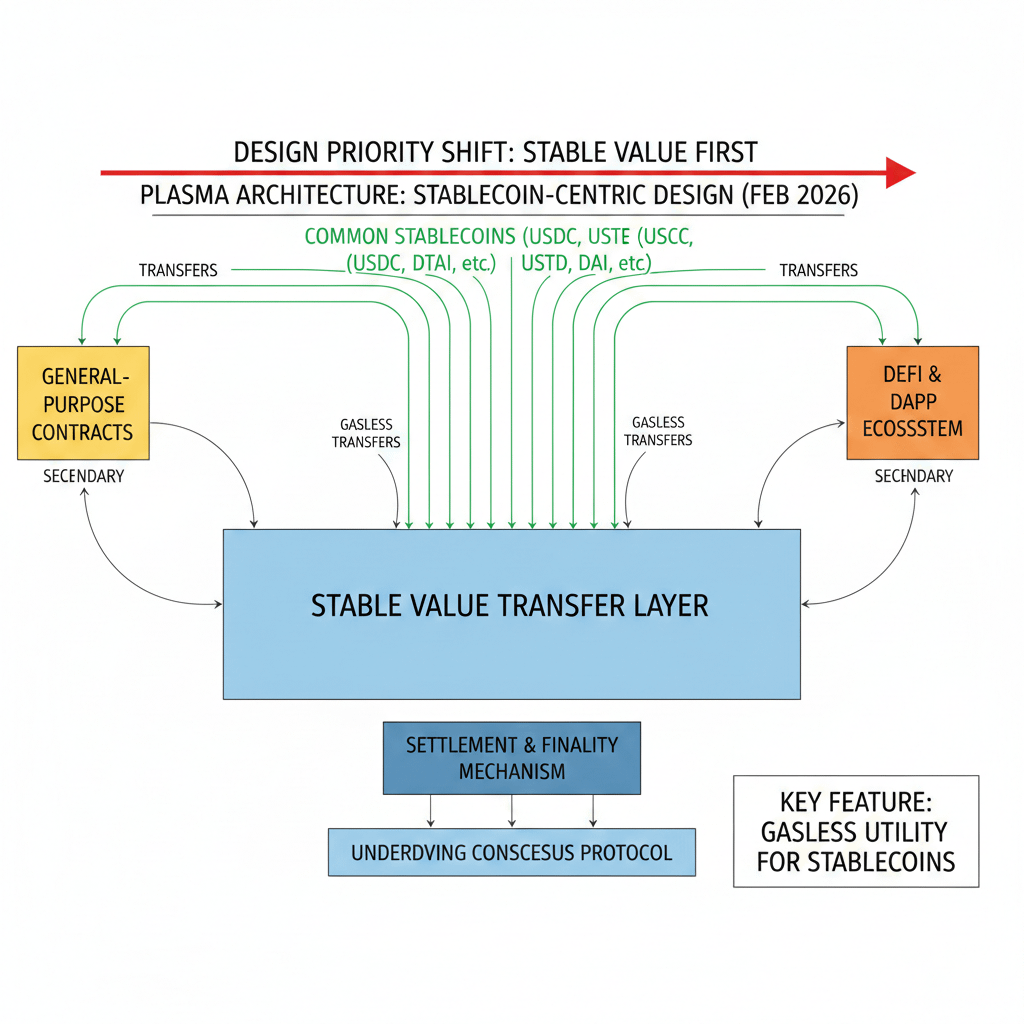
I found myself appreciating how restrained the choices were. Full compatibility with familiar smart contract tools is there, but it is not presented as an invitation to endless complexity. It feels more like a bridge, allowing existing applications to move over without resistance. The faster confirmation times also don’t read as a technical race. They simply reduce waiting, which is often the most human kind of friction. When sending money, even a small delay can feel longer than it really is.
There is also something thoughtful about anchoring security to a larger, older network rather than trying to create legitimacy from scratch. Over time, I have become skeptical of new chains that rely entirely on their own internal promises. Borrowing strength from something battle-tested suggests a certain humility. It accepts that trust is accumulated slowly, sometimes over decades, and cannot be manufactured overnight. Instead of competing for attention, Plasma seems content to lean on existing foundations.
What stands out most is the number of trade-offs that seem intentional. The project does not chase every possible use case. It does not try to become the home for gaming, social apps, and experimental tokens all at once. By narrowing its focus to settlement, it quietly gives up some flexibility. But that limitation might be the source of its clarity. Systems that try to serve everyone often end up feeling unfocused. Here, the boundaries are visible, and that makes the design easier to understand.
Simplicity shows up in small ways. If a user can pay fees in the same stable asset they are already holding, the mental overhead drops. They no longer have to keep a separate token just to move their money. It sounds minor, but these small frictions accumulate. Over years, they determine whether a network feels like a tool or like a puzzle. Plasma seems to prefer being a tool.
Still, adoption rarely moves as quickly as whitepapers suggest. From what I have seen across cycles, infrastructure grows at a patient pace. Institutions test quietly. Payment providers experiment in the background. Retail users drift in when something simply works better than before. I imagine Plasma’s growth following that same pattern. Not a sudden rush, but a gradual layering of real usage. The kind of growth you only notice when you look back after a year and realize volumes have quietly multiplied.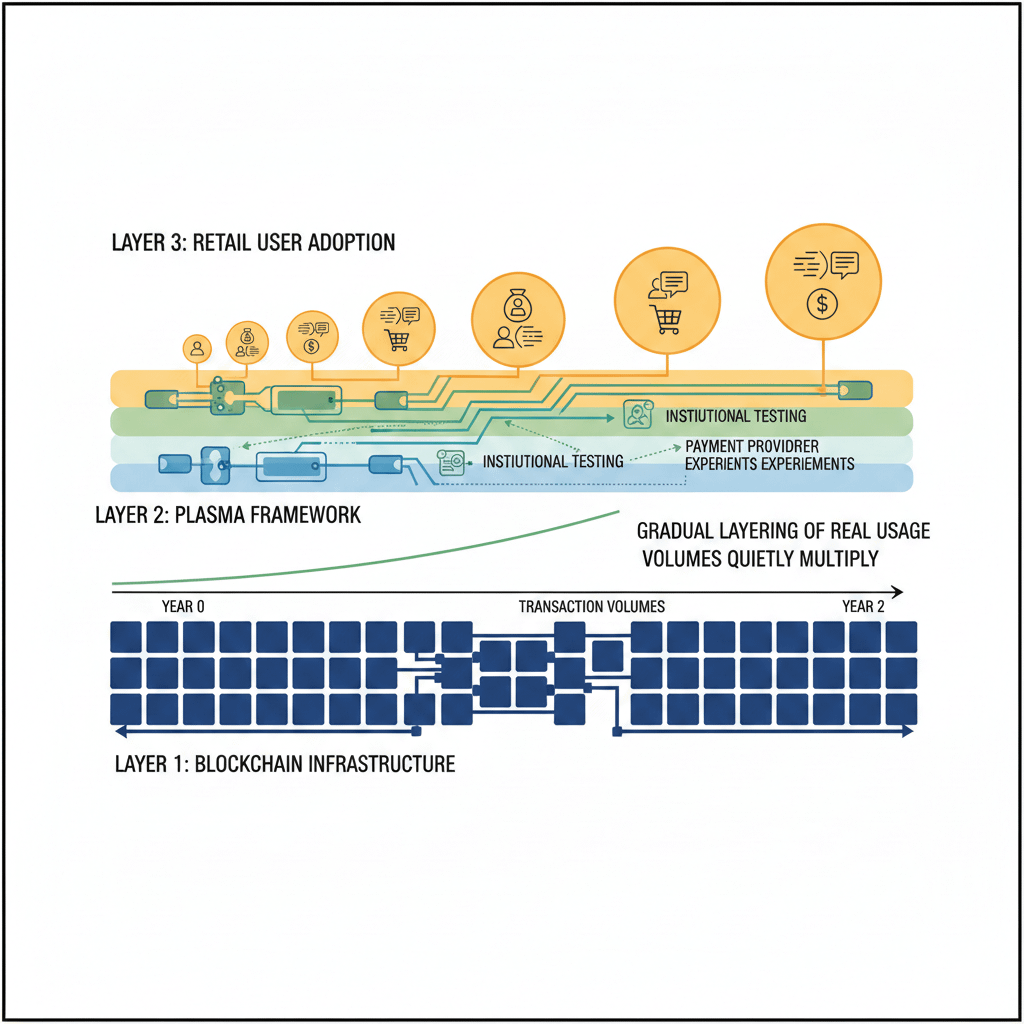
There are, of course, open questions. Specialization can become a constraint if the market changes direction. If stablecoins evolve or regulation reshapes how they are used, a chain built around them may have to adapt carefully. There is also the broader question of whether users care which chain settles their transactions at all, or whether convenience at the wallet level will matter more than the underlying network. These are not fatal doubts, just the kind that accompany any system that tries to carve out a specific role.
Another uncertainty is cultural. Crypto still carries an experimental mindset, while settlement systems tend to value predictability. Balancing those two temperaments is not easy. A network meant for everyday payments must feel boring in the best possible way. Reliable, uneventful, almost invisible. Yet it still exists in an ecosystem that rewards novelty. Plasma will likely have to resist the temptation to constantly reinvent itself just to stay in the conversation.
And perhaps that is what makes it interesting to me. It does not feel loud. It does not ask to be admired. It simply tries to reduce a few obvious inefficiencies and step out of the way. After years of watching grand narratives rise and fade, there is something refreshing about a project that seems comfortable being ordinary. Ordinary, in this context, means dependable.
When I think about where such systems fit, I do not imagine dramatic turning points. Instead, I picture a slow blending into the background of daily activity, like plumbing or electricity. If Plasma succeeds, people might not talk about it much at all. They will just send value across borders and not think twice. In the long run, that kind of quiet relevance often lasts longer than any moment of excitement.