

Plasma is being built as a Layer 1 that treats stablecoin settlement as the main mission, not as an extra feature that happens to work because the chain is EVM compatible, and that focus changes everything about how the network is designed, how the user experience is shaped, and what kind of activity it is trying to attract. The project is aiming for a world where stable value moves like modern payments infrastructure, meaning transfers feel instant, costs stay predictable, and the average user is not forced to learn a separate gas token workflow just to move a dollar based asset from one address to another, which is exactly the kind of friction that slows adoption when you move from traders to everyday usage.
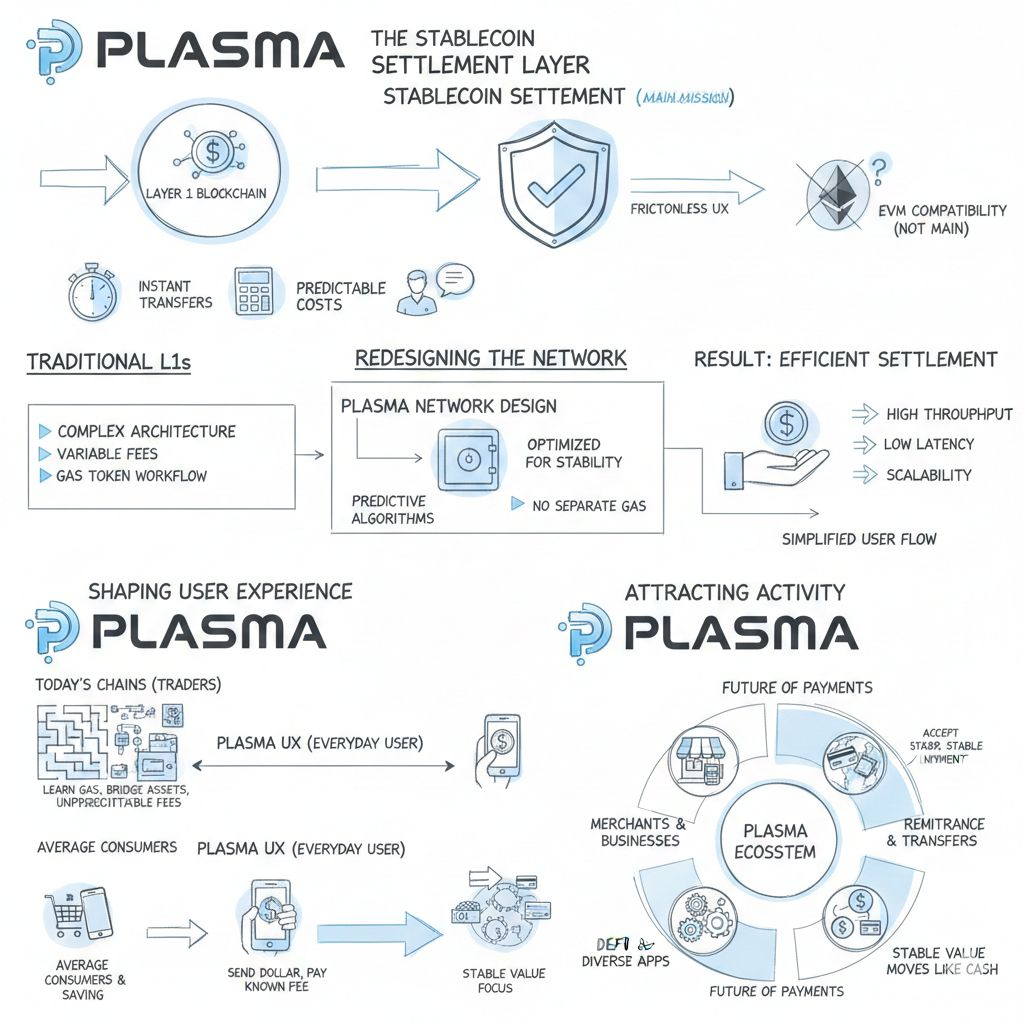
What makes Plasma stand out is the way it pushes stablecoin behavior into protocol level building blocks, so instead of every wallet and every app rebuilding the same relayer logic and fee abstraction tricks, the chain itself provides stablecoin native functionality that is meant to feel normal and default. This is where the gasless USDt transfer idea comes in, because the purpose is not to create a marketing hook, it is to remove the most common reason stablecoin sends fail for new users, which is not having the right gas asset at the right moment. On top of that, Plasma is also designed around the idea that gas should be payable in approved tokens through a paymaster style mechanism, so fees can be handled in the same unit the user is already holding, and the experience stops feeling like a puzzle where you need to buy something extra just to make the transaction move.
Behind the scenes, Plasma keeps the developer side familiar by staying EVM compatible, which means Solidity contracts and standard tooling can carry over without forcing builders into a completely new environment, yet the chain is also tuned for payment load rather than purely for general experimentation. PlasmaBFT is positioned as the consensus approach for fast settlement style behavior, and the network configuration published for mainnet beta points to a performance profile that targets quick finality and a steady flow of blocks that can support high volume transfer activity without turning the experience into a waiting game. The practical vision is that the network should be able to carry the boring, repetitive, high frequency traffic that payments produce, while keeping fees and confirmation times stable enough that a business can rely on it without constantly rethinking its flow.
Another important part of Plasma’s story is how it thinks about neutrality and long term resilience, because the project talks about Bitcoin anchored security as a way to strengthen censorship resistance and credibility over time, and it also documents a native Bitcoin bridge design that brings BTC into the ecosystem through a structured deposit and withdrawal process rather than relying purely on the simplest wrapped token model. The bridge design described publicly leans on verifier participation and threshold signing for withdrawals, which is meant to reduce single point trust and keep the system closer to a multi party security model, and while any bridge design deserves careful evaluation, the intention here is clear, Plasma wants stablecoin settlement to be the center, but it also wants BTC to have a first class path into the environment so stablecoin liquidity and BTC liquidity can coexist inside the same settlement network.
The project has also been deliberate about not launching into emptiness, because a payments chain without liquidity and without places to use that liquidity becomes a demo instead of a network, so Plasma has framed its rollout around having strong stablecoin presence and ecosystem integrations early, including support for USDt0 from day zero as part of the plan to make stablecoin movement across chains simpler and more standardized. That matters because stablecoin users care less about narratives and more about whether they can enter, move value, and exit without surprises, and the project is trying to make those pathways feel like a normal part of the chain rather than a collection of external hacks stitched together by third parties.
When you look at the token side, XPL is presented as the native asset tied to network operations and validator incentives, and it sits behind the stablecoin first user experience as the piece that helps secure the chain and keep participation aligned, even if the end goal is that many users should not need to think about XPL during simple stablecoin usage. Plasma has also published details about how public sale participation relates to supply and unlock rules, and the clean way to view the token story is that it is designed to support the chain’s security and continuity, while the stablecoin native features aim to keep the user journey focused on stable value rather than on token management.
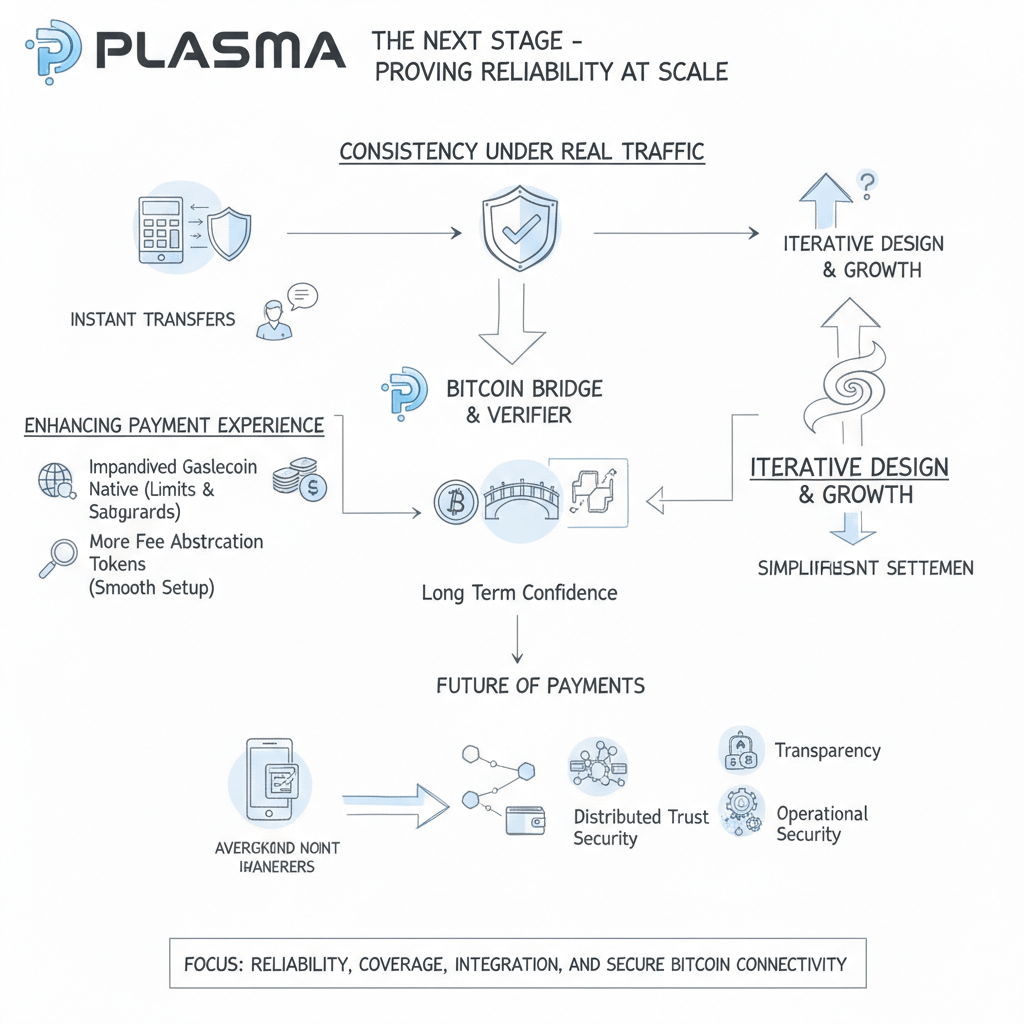
What comes next for Plasma is less about inventing new buzzwords and more about proving reliability under real traffic, because the hard part of payments infrastructure is consistency at scale. The next stage is naturally about expanding stablecoin native coverage, improving limits and safeguards around gasless flows, increasing the range of tokens that can be used for fee abstraction, and deepening wallet and application integration so the experience is smooth without special setup. In parallel, the Bitcoin bridge and verifier components will be judged by transparency, distribution of trust, and operational security, because that is where long term confidence is built, and the project will need to keep tightening its design as usage grows.
My takeaway is that Plasma is trying to be the chain people use when they want stablecoins to behave like money, not like a complicated onchain asset that requires extra steps, and the strongest signal of success will always be steady activity that reflects real usage patterns. The explorer level snapshot is useful here because it shows whether people are actually transacting and whether builders are deploying contracts, and on the most recent 24 hour view that was shared publicly on the network charts, the chain recorded roughly 403,599 transactions, about 5,981 new addresses, around 119 contracts deployed, and 1 contract verified, which reads like continuing daily motion rather than a one time launch spike. If those numbers keep holding and improving while the stablecoin native experience stays reliable, Plasma moves from an idea into an actual settlement rail that can support the kind of volume stablecoin adoption is already demanding.

