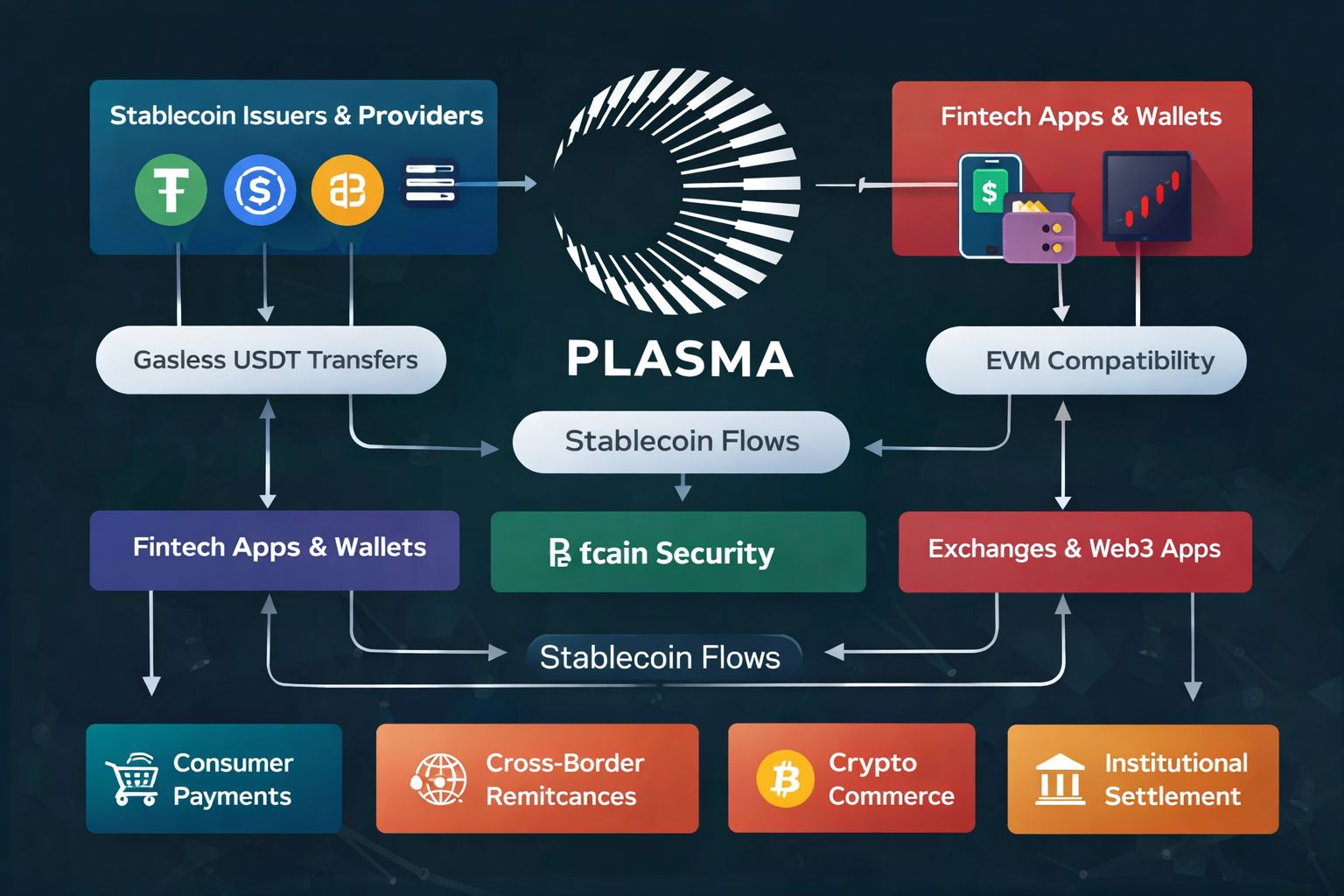
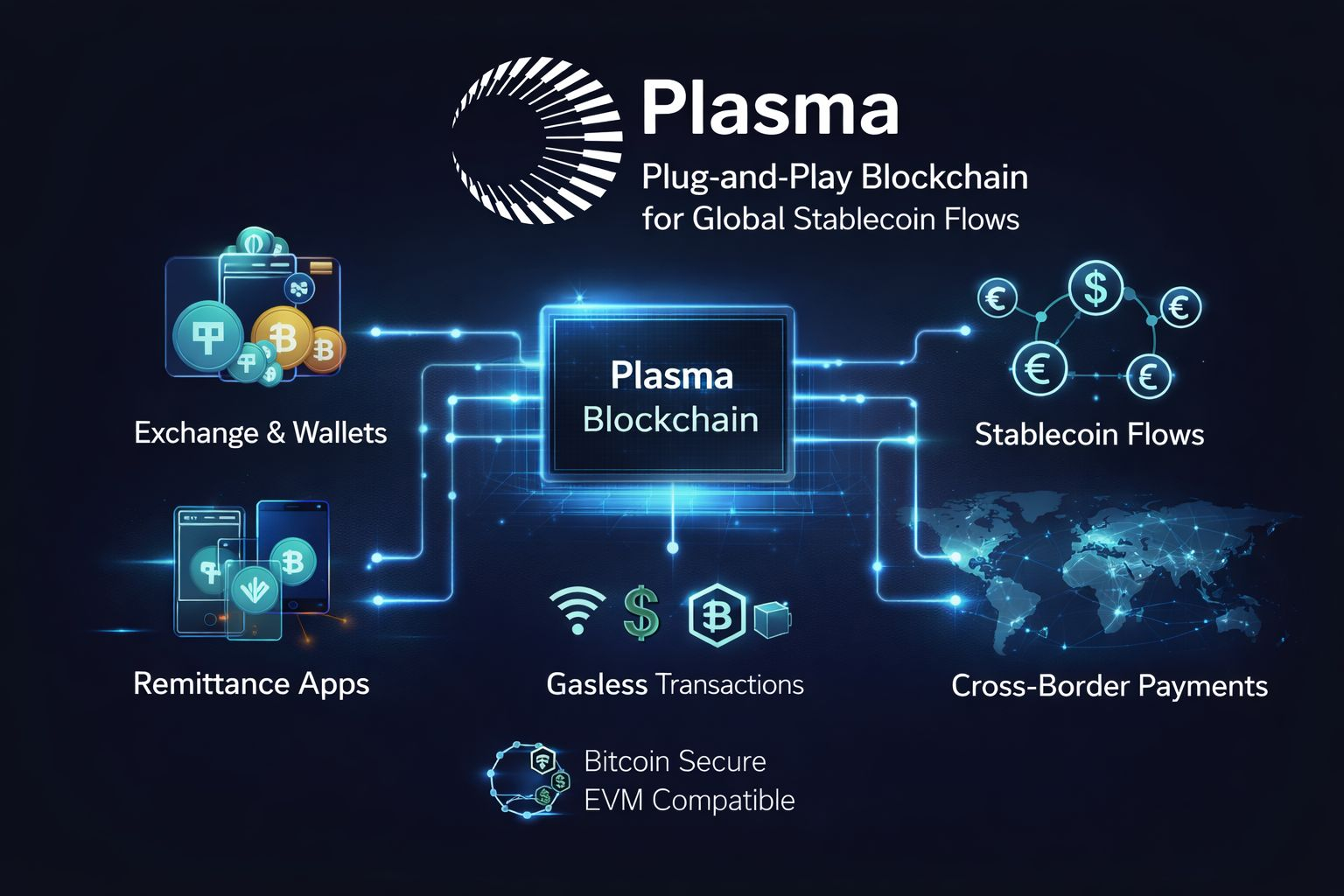
 When people talk about the future of crypto payments, they usually imagine a world where digital money moves with the same ease as sending a text message. But in reality most blockchains are still too slow, too expensive, or too complicated for everyday payments. This is where Plasma steps in with a very different approach. Plasma is not trying to become another general purpose chain that does everything. Instead it is becoming a plug and play network designed specifically for stablecoin movement and real payment activity at a global scale.
Plasma treats stablecoins as the center of the entire system. Rather than trying to push developers toward complicated fee markets, token designs, or liquidity schemes, Plasma takes a simple but powerful approach. Stablecoins are money. People should be able to move them instantly, without thinking about gas, and with the strongest security possible. This is the core insight behind Plasma and it changes the experience for both users and developers.
The moment you interact with Plasma you notice the difference. The chain is fully compatible with the Ethereum environment because it uses Reth. So you can deploy the same contracts, build the same tools, and integrate your wallet without learning a new system. But unlike most networks, everything on Plasma is built around stablecoins. The gas system has been reworked to allow gasless USDT transfers through paymasters. This means users can send money even if they have zero native tokens. It is a simple idea but it unlocks the kind of user experience people expect from real payment apps rather than blockchain experiments.
The reason this model works so smoothly is the underlying engine of the chain. Plasma uses its own BFT system that gives sub second finality. Payments confirm almost instantly and they do not get stuck in mempools during congestion. This is the point where Plasma feels like a modern payment rail rather than a traditional blockchain. Every transfer feels clean and predictable. For the consumer the process is invisible and for the institution the flow is auditable and secure.
Another powerful part of the Plasma design is the anchoring to Bitcoin. By anchoring the chain to Bitcoin, Plasma introduces a level of neutrality and resilience that appeals to global users and large financial players. Bitcoin has a unique position as the most trusted and censorship resistant settlement layer. When Plasma roots its state into Bitcoin it signals that no single party controls the entire chain and that the system inherits a long term security foundation. This gives stablecoin issuers and payment companies confidence that Plasma is not just another short lived chain but a long term settlement environment.
What makes Plasma plug and play is the developer experience. Because of its EVM compatibility any team can deploy in minutes. Exchanges, wallets, fintech apps, and new Web3 builders can integrate Plasma without changing their infrastructure. Stablecoin heavy apps such as remittance tools, savings apps, and credit protocols can plug into Plasma and instantly offer a smooth stablecoin flow. Many builders prefer this simplicity because they do not want to manage the complexity of running gas markets or educating users on native tokens. They just want a chain where money moves fast, finalizes quickly, and works everywhere.
Plasma’s focus on stablecoins also gives it a strategic advantage for global adoption. Most people in high adoption markets prefer stablecoins because they are predictable. They are easier to understand than volatile tokens and they work in both retail and institutional environments. By optimizing around this single asset class, Plasma becomes the chain for real economic use rather than speculative trading. This is a major shift in how chains position themselves in the ecosystem. Plasma is not trying to be everything. It is trying to be the chain where stablecoins flow freely.
Another factor that strengthens this vision is the integration of intents and account abstraction features. Users can sign simple messages instead of complicated transactions. Wallets can handle the technical steps in the background. Payment apps can sponsor user fees. Institutions can automate complex flows without exposing their systems to unnecessary risk. All of this makes Plasma feel closer to a modern fintech engine than a typical blockchain.
The global nature of stablecoin flows also means Plasma is not limited to crypto native users. Millions of people use stablecoins for remittances, e commerce, and cross border savings. Many businesses accept them because they offer the speed of crypto but the familiarity of fiat value. Plasma brings these activities into a chain where every transaction is optimized for cost and speed. A stablecoin payment that takes a few seconds and almost no cost can compete with credit cards, bank transfers, and legacy systems.
Another important part of the Plasma design is neutrality. The chain does not try to control liquidity or force developers into certain token models. It gives everyone a level playing field. This is very important for builders who want to launch products quickly. They do not need to redesign everything for a specific ecosystem because Plasma behaves exactly like the environment they already know. Plug your contracts. Plug your tools. Plug your user flows. And everything just works.
What is starting to happen now is a shift in how people think about blockchain utility. For years the industry has been obsessed with throughput numbers and huge TVL figures. But real adoption comes from simple user experience. Plasma aligns with that philosophy by giving users a way to move money in a way that feels natural. When someone sends stablecoins over Plasma they do not feel like they are using a blockchain. They feel like they are using a global payment network.
As more fintech companies, stablecoin issuers, and payment providers explore blockchains, networks like Plasma become the ideal foundation. They combine the predictability of stablecoins, the familiarity of EVM, the finality of a modern BFT engine, and the security of Bitcoin anchoring. This mixture is rare and highly strategic. It positions Plasma as a settlement layer that can scale globally without forcing users to adopt unfamiliar behavior.
Plasma is moving toward a future where global stablecoin flows work smoothly across wallets, exchanges, and apps. The chain is built for this purpose and every design choice reflects it. A world where money moves instantly, cheaply, and securely across borders is not science fiction. It is happening now. And Plasma is building the rails that make it possible.