

Most payment systems look perfectly reliable the moment a transaction confirms.
A wallet sends funds. A block includes it. A screen shows success. From the outside, everything worked.
But businesses don’t evaluate payments at the moment they happen.
They evaluate them the next day.
When finance teams open their reports in the morning, that is when a payment system is truly tested.
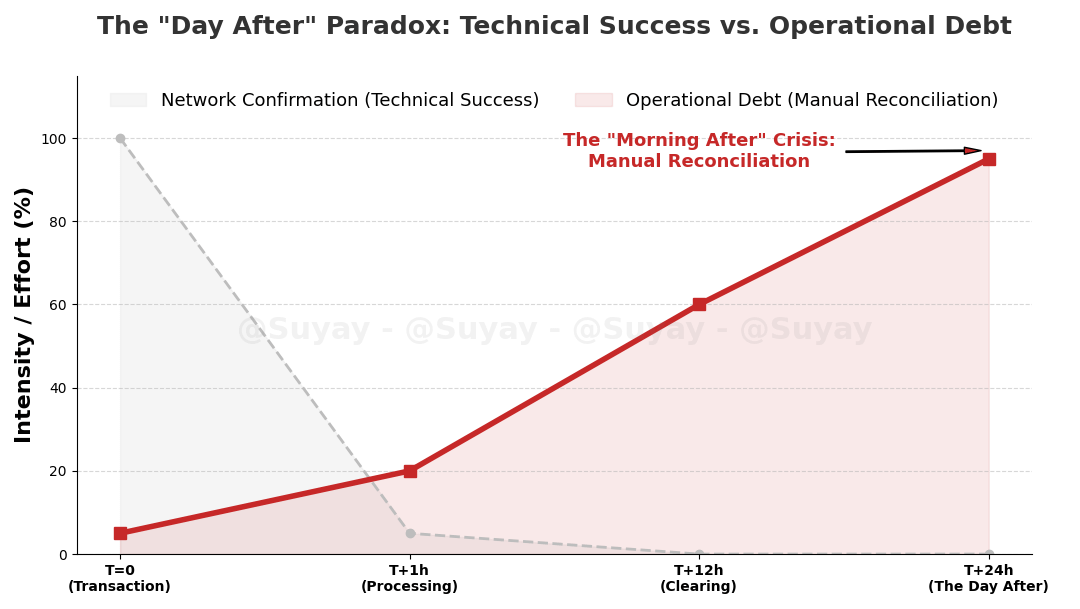
What finance checks the day after
The first thing that happens is not sending another payment.
It is verifying the previous one.
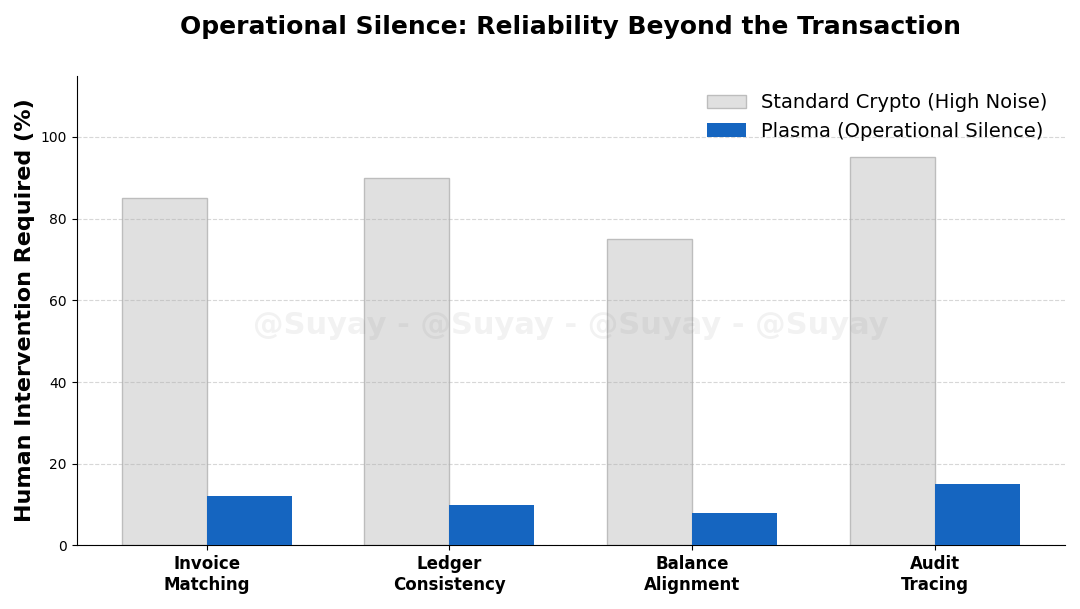
Invoices must be marked as paid. Ledgers must reflect the movement correctly. Reports must match balances. References must make sense without anyone having to investigate what happened.
If someone needs to open a spreadsheet, send an email, or manually verify a transfer, the system has already failed its real test.
Because the problem is not whether money moved.
The problem is whether operations stayed quiet after it did.
Where operational friction actually appears
Payment issues rarely show up as failed transactions.
They appear as:
Balances that don’t match internal records.
Reports that require adjustments.
Missing references that force manual checks.
Time spent confirming what should already be obvious.
This is why finance teams don’t ask how fast a network is.
They ask how often payments create extra work the day after.
Reliability is not measured in seconds. It is measured in how little noise yesterday’s payments create today.
Why demos hide this reality
Demos focus on the moment of the transfer.
They show confirmations, dashboards, and technical success.
But they never show what happens when that payment enters accounting software, payroll systems, invoicing tools, or treasury reports.
That is the environment where payments must live.
And that is the environment most blockchain payment solutions were never designed for.
From wallets to workflows
Most blockchain systems are organized around wallets.
But businesses are organized around workflows.
Approvals, invoices, payroll cycles, supplier payments, reporting deadlines — payments must fit into these structures without forcing teams to think about signatures, gas, or token mechanics.
When a payment system requires explanation the next day, it loses trust immediately.
When payments start behaving like settlement
Trust appears when payments stop feeling like crypto transfers and start behaving like settlement actions inside existing tools.
This happens when:
Fees are predictable and not tied to volatile assets.
Finality is fast enough to remove doubt.
Transactions can be traced without blockchain expertise.
Sensitive financial data is not exposed publicly.
At this point, the question is no longer “did the transaction succeed?”
It becomes “did this create any work for us today?”
Why Plasma aligns with what happens after
Plasma’s design around stablecoin payments reflects this operational reality.
Stablecoin-native contracts, custom gas logic, account abstraction, fast finality, and confidential payments are not built to make transactions look impressive. They are built to reduce the operational friction that appears after money moves.
The goal is not to optimize the moment of payment.
It is to make the day after uneventful.
When reliability becomes invisible
The best payment systems are the ones finance teams stop thinking about.
Not because they are simple, but because they don’t create questions, checks, or extra steps after funds move.
This is where many chains struggle. They were designed to demonstrate transactions, not to support continuous financial operations.
Plasma is built around the assumption that stablecoins are used repeatedly, predictably, and operationally inside real business workflows.
And that assumption only reveals its value the day after a payment happens.