

When I first started digging into Dusk, I tried to ignore the usual labels—“privacy-focused,” “layer 1,” “institutional-grade”—because those words have been stretched thin in crypto. Almost every project claims some version of them. What stood out instead was a quieter pattern: Dusk seems less interested in impressing the crowd and more interested in not breaking when serious people show up.
Privacy, on Dusk, doesn’t feel like a magic trick. It feels more like discretion. In real financial systems, privacy isn’t about pretending transactions never happened; it’s about controlling who can see what, and under which circumstances. Dusk’s design leans into that reality. Transactions can be shielded from the public eye, but the system still assumes that, someday, someone may need to verify something—an auditor, a regulator, an internal risk team. That mindset alone puts it in a different category from chains that equate privacy with total opacity.
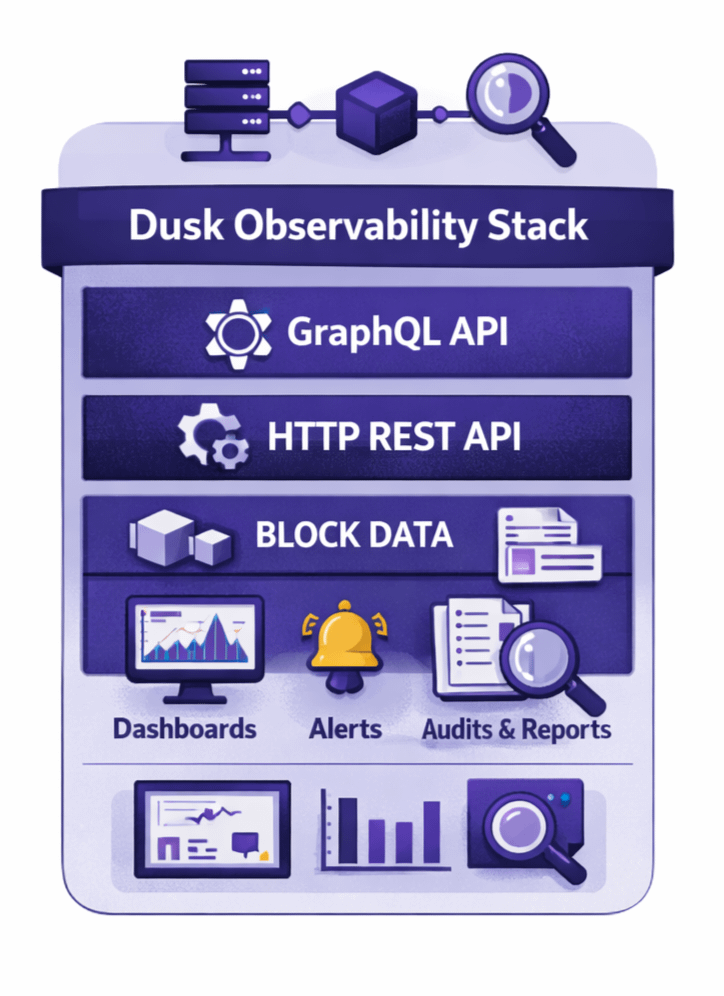
What makes this believable is how much attention Dusk gives to things most people never tweet about. Take observability. Instead of treating explorers and APIs as cosmetic extras, Dusk exposes its chain state in a way that feels deliberately built for professionals. GraphQL-style queries, access to block events, provisioner data, gas prices—this is the kind of tooling you build when you expect people to integrate your chain into dashboards, reports, and monitoring systems. It’s not flashy, but it’s honest. You don’t build this stuff if your only goal is speculation.
The same “grown-up” energy shows up in staking. Validators are called Provisioners, which sounds minor until you read the documentation and realize how intentionally boring it is—in a good way. There’s a clear minimum stake, clearly defined responsibilities, and slashing that’s framed as a reliability mechanism rather than a public execution. It feels like a system designed to keep operators stable and accountable over time, not one designed to scare people into compliance or chase yield tourists.
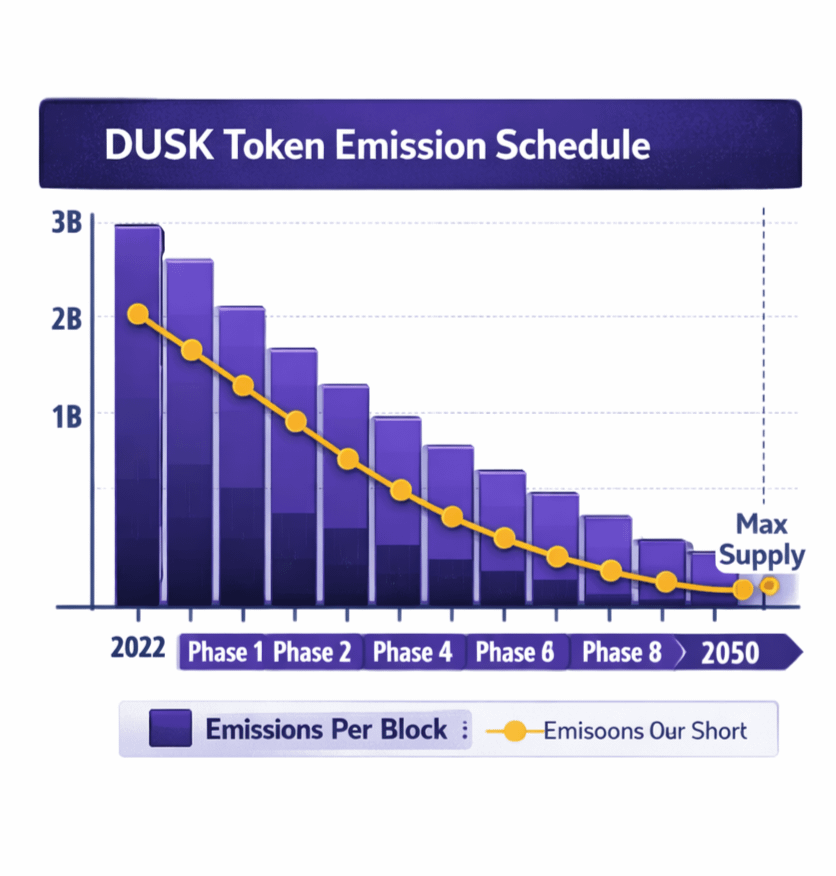
Token economics usually trigger skepticism for me, but Dusk’s approach is refreshingly straightforward. DUSK exists to secure the network, pay for transactions, and reward the people who keep the chain running. Block rewards are split in a way that openly funds both validators and long-term development. You don’t have to love every parameter to appreciate the intent: this is a network planning to exist for decades, not cycles. A 36-year emission schedule sounds almost boring in crypto terms, but that boredom is kind of the point. Institutions don’t move at meme speed, and Dusk doesn’t pretend they will.
One detail that really stuck with me was how carefully Dusk handles token migration. This is where a lot of projects quietly lose trust—confusing processes, vague timelines, hand-wavy explanations. Dusk does the opposite. The migration flow is spelled out step by step: tokens are locked, events are emitted, listeners react, native tokens are issued, decimals are handled explicitly. It’s not glamorous, but it’s respectful of the user’s need to understand what’s happening to their assets. That kind of clarity is rare, and it says a lot about how the team thinks.
Recent technical updates also feel less like announcements and more like groundwork. Enabling third-party smart contracts, refining wasm support, shipping incremental releases—none of this is headline-grabbing, but all of it expands the surface area for other builders. And that’s crucial. Dusk’s vision only works if others can build real financial applications on top of it, using its privacy and audit features in ways that make sense outside a demo environment.
If I had to sum up Dusk in one sentence, I’d say it feels like a blockchain that’s stopped trying to be cool and started trying to be reliable. It’s not chasing attention; it’s building habits—clear interfaces, predictable economics, careful documentation—that make it easier for cautious, regulated actors to participate without feeling like they’re gambling on chaos.
That won’t make Dusk loud. But if the future of blockchain includes banks, asset issuers, and institutions that actually care about confidentiality and accountability, it makes Dusk feel quietly relevant in a way many louder projects aren’t.