The customer came back the next day with the receipt in hand.
Wrong size. Simple return. The kind of interaction retail systems are built to handle in seconds.
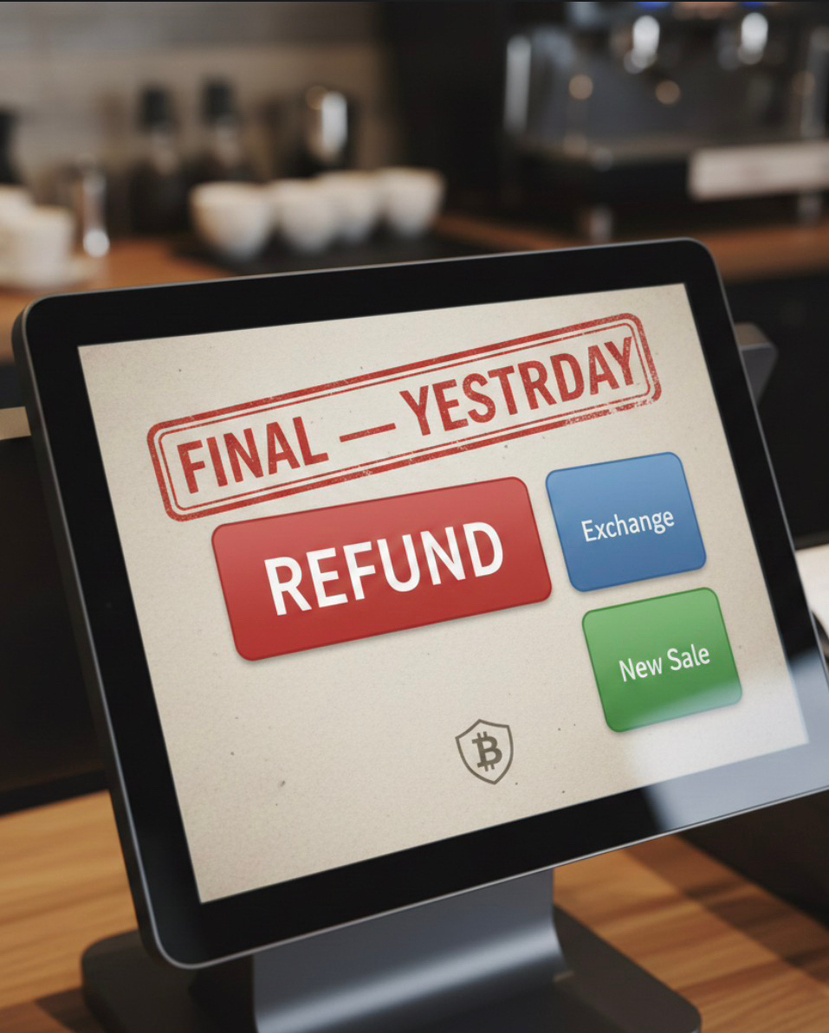
The cashier scanned the barcode. The old payment popped up. USDT. Paid. Timestamped. Clean.
“Okay,” she said, reaching for the refund option like muscle memory.
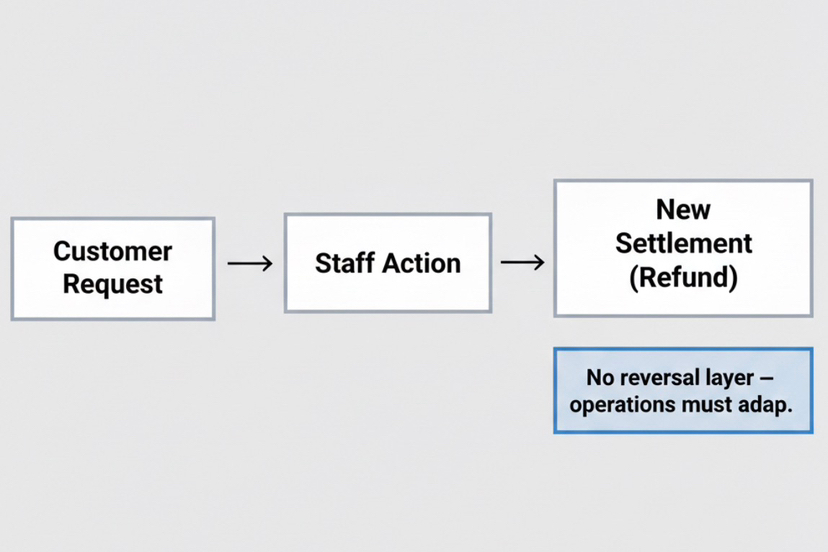
But on Plasma, refunds don’t rewind anything.
That original payment settled in under a second the day before. PlasmaBFT closed it as a finished fact. There’s no “open” state left to reverse, no pending pocket still floating around the system.
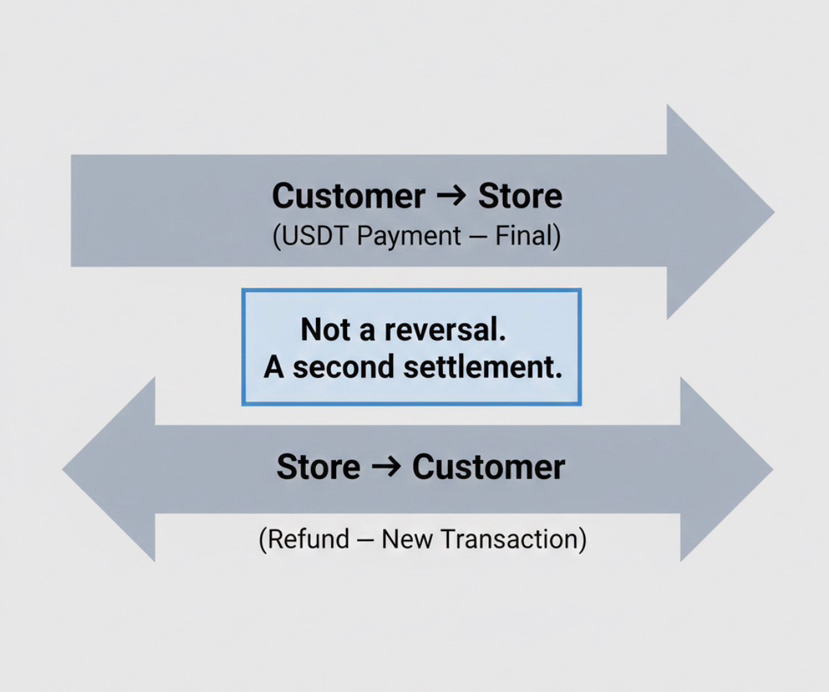
A refund isn’t undo.
It’s a new transaction moving the other way.
The cashier didn’t think in those terms. She thought in store logic: customer gives item back → money goes back. One motion, one story.
Plasma splits that story into two separate events, each final on its own.
The manager had learned this the hard way a week earlier.
Back then, a staff member hit refund twice because the screen lagged. Both went through. Not duplicates in a technical sense — just two very real payments in the opposite direction. Accounting caught it at close, not the counter.
On softer rails, teams sometimes rely on the idea that a payment might still be reversible if caught quickly. Procedures form around that gray area. Staff stall. Managers double-check. Time is treated like a safety net.
Plasma removes that net.
Once settlement happens, the only path forward is another settlement. That makes the system cleaner at the ledger level — but more demanding at the operational edge.
The cashier called the manager over.
“She wants a refund. Yesterday’s payment.”
He nodded. “Do it once. Then wait for the confirmation from the backend, not just the screen.”
That sentence didn’t exist in their training manual six months ago.
Gasless USDT had made checkout easier. No one ever had to pause a sale because a wallet lacked a gas token. Stablecoin-first gas kept fees inside the same currency flow, invisible to customers and cashiers.
But ease at checkout shifts complexity somewhere else.
Refunds now carry the same finality weight as purchases. Each one is a new, settled movement of value. There’s no silent correction layer underneath.
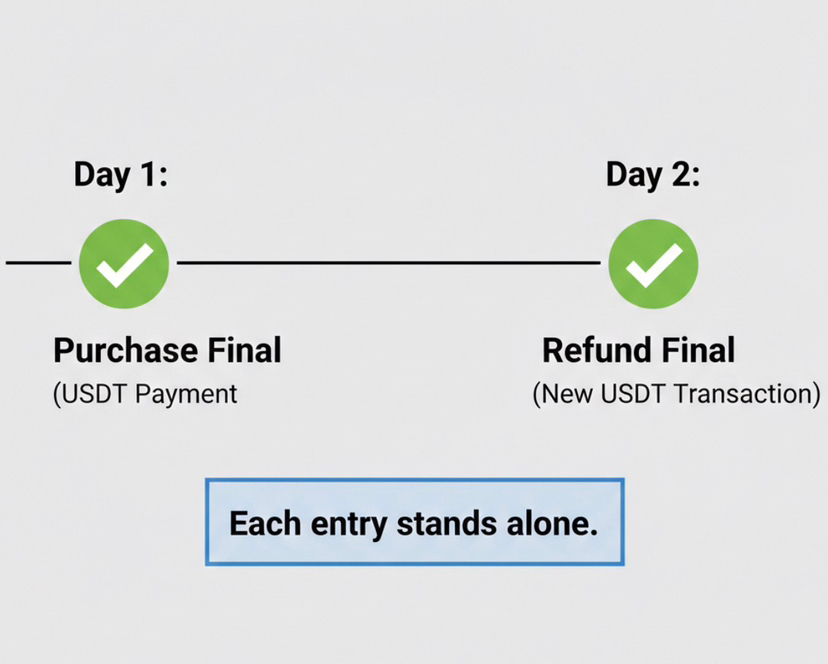
For finance, this clarity is useful. Every movement has a timestamp, a direction, a record that doesn’t blur. Reconciliation becomes matching facts, not debating states.
For frontline staff, it requires a mindset change. The refund button is no longer a soft eraser. It’s a trigger for another completed payment.
Bitcoin anchoring sits in the background of all this, not visible in the return interaction but shaping the trust behind it. Institutions care that settlement history can’t be quietly rewritten. That neutrality matters more when disputes appear days later.
Back at the counter, the cashier processed the refund once. Then she stopped. Hands off the keyboard. Eyes on the backend dashboard, not the POS animation.
“Okay,” the manager said after a moment. “That one’s done.”
The customer left satisfied. The item went back to inventory. Two separate blockchain entries now told the full story of the transaction’s life.
Nothing was reversed.
Nothing was pending.
Just two settled facts, linked only by context and a paper receipt.
Plasma doesn’t make refunds complicated. It makes them explicit. Every correction is a new decision, recorded as firmly as the original sale.
That’s not how older payment habits were built. But it’s how a rail with sub-second finality behaves when stablecoins move like finished money instead of negotiable promises.