
Decoding Blockchain Performance: Beyond Transaction Speed
In the ever-evolving world of blockchain, it’s become almost cliché for every new Layer 1 network to tout blazing speeds and ultra-low fees. The promise of near-instant finality and seamless user experiences is everywhere. But if we peel back the hype, it becomes clear that high transaction speed is only one piece of a much larger puzzle. The core challenges facing modern blockchains—scalability, security, decentralization, and real-world usability—demand a more holistic approach.
So, what truly sets “high-speed” L1s apart from one another, and where does Plasma fit into this landscape? Most of these fast L1s achieve their performance boosts by making architectural trade-offs. Some might streamline their consensus mechanisms, reducing the number of validators or making it easier for blocks to be produced quickly. Others might compromise on decentralization by relying on smaller or permissioned validator sets. While these tactics can certainly drive up throughput, they often do so at the expense of the network’s foundational principles. When too much is sacrificed for speed, blockchains can become vulnerable to attacks, censorship, or reliability issues—especially when user demand spikes.
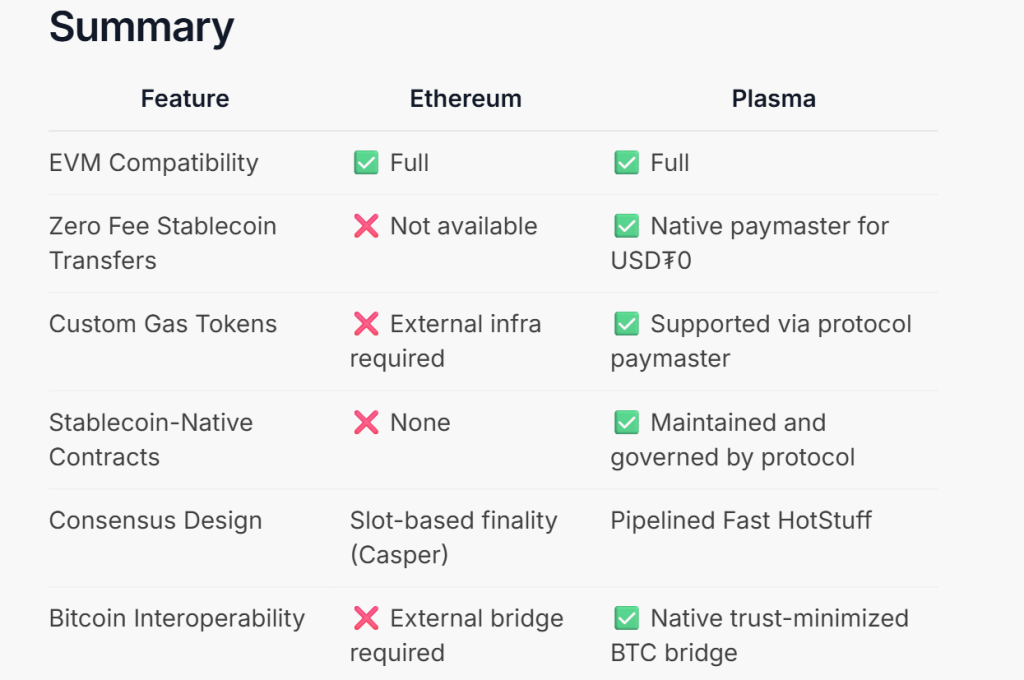
Plasma introduces a fundamentally different paradigm. Rather than pushing every single transaction through the congested main chain, Plasma creates connected “child chains” or side environments where most transactions are processed. Only the essential settlement data is anchored back to the main layer, preserving the integrity and security of the base chain. Think of it like a city with dedicated express lanes for local traffic, allowing most vehicles to bypass gridlock without compromising the safety and order of the central thoroughfare. This setup empowers applications to handle far greater volumes of activity without bogging down the primary network, especially during periods of high demand.
This isn’t just a technical curiosity—it has real implications for both users and developers. For traders, a network that balances speed with deep liquidity and consistent uptime is far more attractive than one that’s fast on paper but unreliable in practice. For builders, the ability to scale applications without constantly battling high fees or congestion means they can focus on user experience and innovation rather than infrastructure headaches. Plasma’s design also offers a measure of future-proofing; as adoption grows and use cases multiply, the network can expand without sacrificing its security backbone.
However, none of this matters if the ecosystem doesn’t evolve beyond theoretical benefits. A network’s true success hinges on active users, robust developer communities, and meaningful integrations in the broader crypto economy. Speed is a compelling metric, but it’s only impactful when paired with security, decentralization, and genuine utility. Chasing raw transaction numbers without considering these other dimensions is like buying a sports car with no brakes—you might go fast, but it won’t get you very far safely.
Before diving into any new blockchain or token, it’s crucial to look past the marketing and examine how the network achieves its speed, what trade-offs are involved, and whether its approach is sustainable as the ecosystem grows. Are there mechanisms to recover from attacks or outages? How is user data protected? Is the network open and inclusive, or controlled by a handful of actors?
Are faster L1s always better for trading?
Not necessarily. While transaction speed can enhance the trading experience, factors like network reliability, security, and deep, stable liquidity pools are just as critical. A fast but fragile L1 can expose traders to risks like failed transactions or unexpected downtime, which can be far more costly than a few extra seconds of wait time.
What makes Plasma different from other scalability solutions?
Plasma’s unique value lies in its off-chain processing model. By moving most transactional activity off the main chain and only using the base layer for dispute resolution and final settlements, it achieves scalability without diluting security. This separation allows for high throughput and low fees, even during network surges, all while ensuring that the ultimate state of the network remains anchored to a robust, decentralized core.
In summary, while speed is an important aspect of blockchain performance, long-term value comes from networks that strike a careful balance among throughput, security, usability, and community adoption. Always look deeper than headline numbers before investing time or capital in a new project."