

@Vanarchain Enters the AI Agent Wars:
How Neutron Gives OpenClaw Agents a 'Second Brain'
#vanar dropped a bombshell that could reshape the AI agent landscape. In a tweet that garnered nearly 90,000 views, they announced upgrade to Neutron — a persistent memory API that solves one of the most frustrating problems plaguing AI agents today: amnesia.
AI agents are getting better at acting — executing commands, navigating apps, coordinating workflows. But the difference between a useful agent and a truly dominant one has nothing to do with how well it acts.
It comes down to how long it remembers — and where that memory lives.
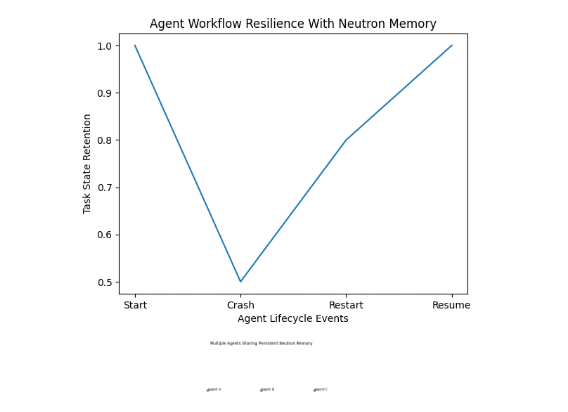
Today, most autonomous agents still rely on fragile, local memory. Files like MEMORY.md or USER.md work until the agent restarts, moves machines, spawns a new instance, or runs long enough that its context becomes bloated and unreliable. At that point, memory stops being an advantage and starts becoming technical debt.
This is the ceiling OpenClaw agents eventually hit. They can act powerfully, but their intelligence is tied to a single runtime. Shut the agent down, and what it learned risks disappearing with it.
Neutron changes that architecture entirely. By externalizing memory, Neutron gives OpenClaw agents a persistent second brain — one that survives restarts, machines, retries, and even complete agent replacement. The agent becomes disposable. The intelligence does not.
That shift — separating memory from the agent itself — is what turns autonomous systems from experiments into infrastructure.
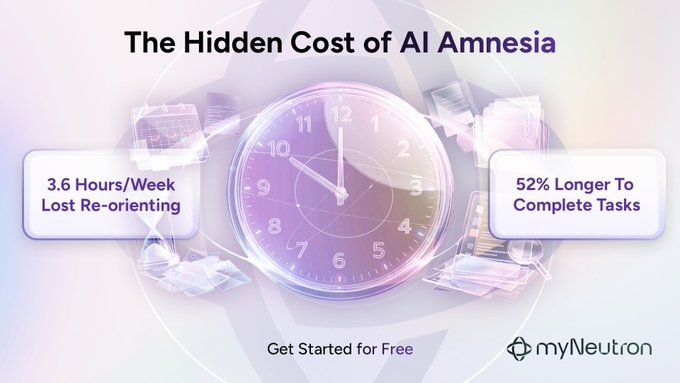
"If you're using agents with OpenClaw, you've hit this: they forget what they were working on last week," the announcement read. It's a pain point every AI agent developer knows too well. You're building something complex, making real progress, then — restart. Everything's gone. Back to square one.
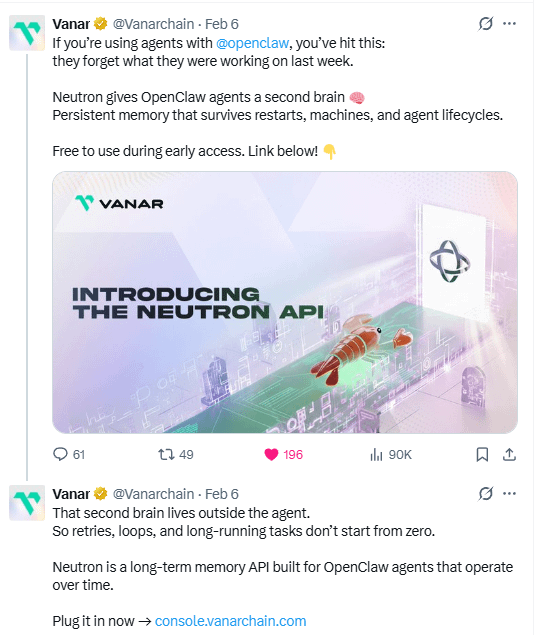
Neutron promises to change that. But to understand why this matters for Vanarchain and its native token VANRY, we need to dive into the full story — from what OpenClaw is, to how Vanar's complete five-layer AI stack creates something the blockchain world has never seen before.
The Problem: AI Agents With Alzheimer's
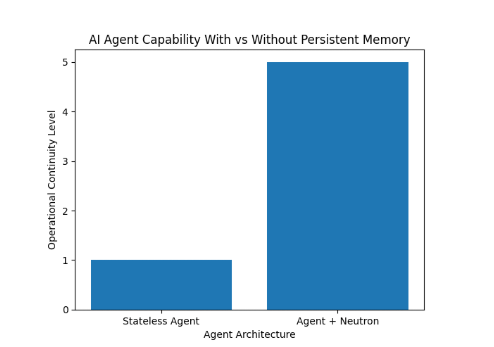
Picture this: You're using an AI agent to manage a complex project. It's learned your preferences, knows your workflow, understands the context of what you're building. Then your computer restarts. Or you switch machines. Or the agent crashes.
When you fire it back up? Blank slate. Zero memory. It doesn't remember what it was working on yesterday, let alone last week. Every retry, every loop, every long-running task starts from absolute zero.
This is the curse of stateless AI agents. OpenClaw — the fastest-growing open-source AI agent platform on GitHub with over 113,000 stars in less than a week — suffers from this exact problem. These agents can execute terminal commands, read and write files, control browsers, and work across WhatsApp, Telegram, Discord, Slack, and 50+ other platforms. They're incredibly powerful. But without memory, they're operating with one hand tied behind their back.
Enter Neutron.
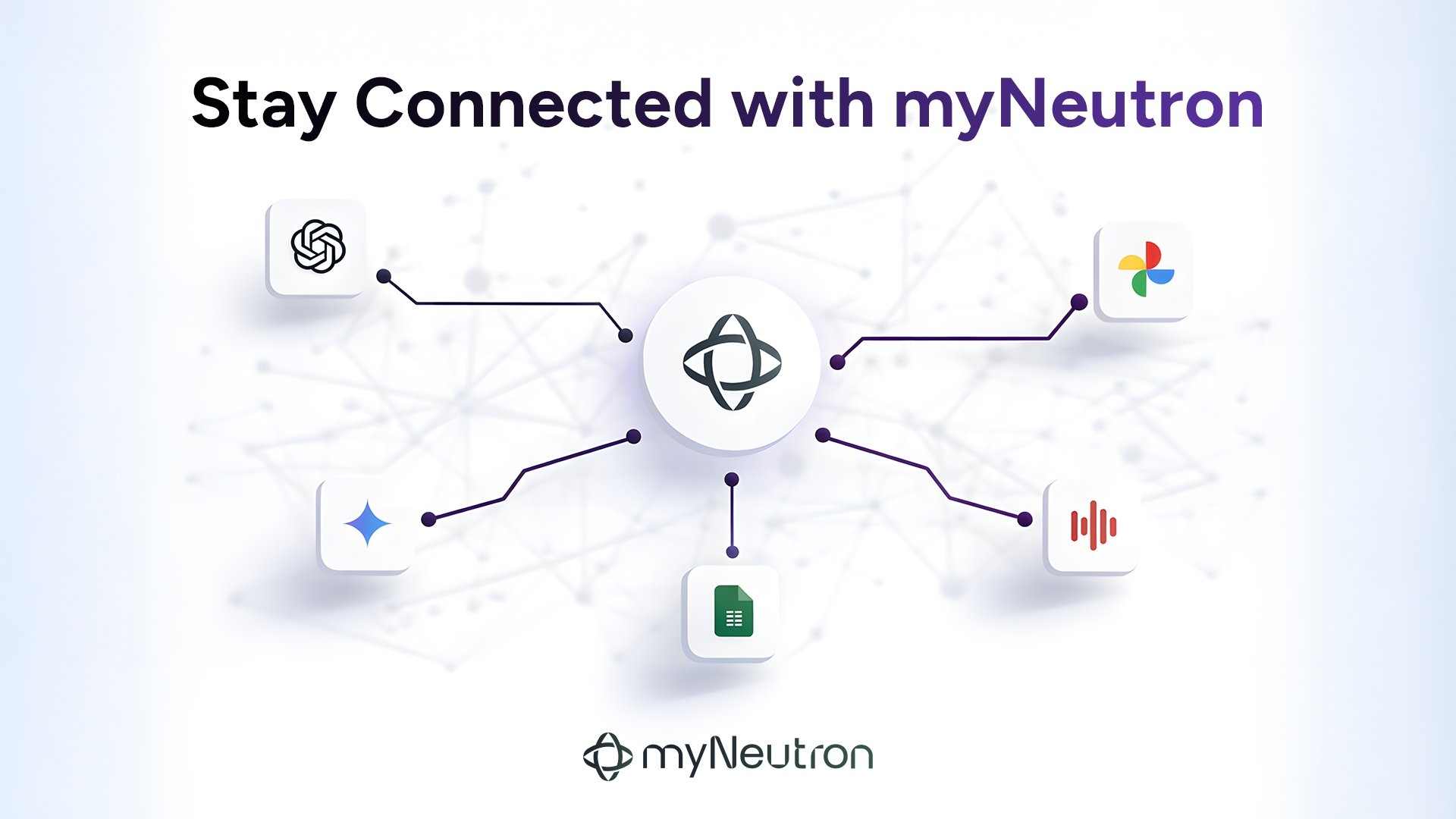
Neutron: The External Brain That Never Forgets
Vanarchain's solution is elegantly simple in concept, revolutionary in execution. Neutron gives AI agents a second brain that lives outside the agent itself.
Think of it like this: traditional AI agents store everything in RAM — temporary memory that vanishes the moment the program closes. Neutron is like giving them access to a hard drive that persists across sessions, machines, and entire agent lifecycles. But it's more sophisticated than simple storage.
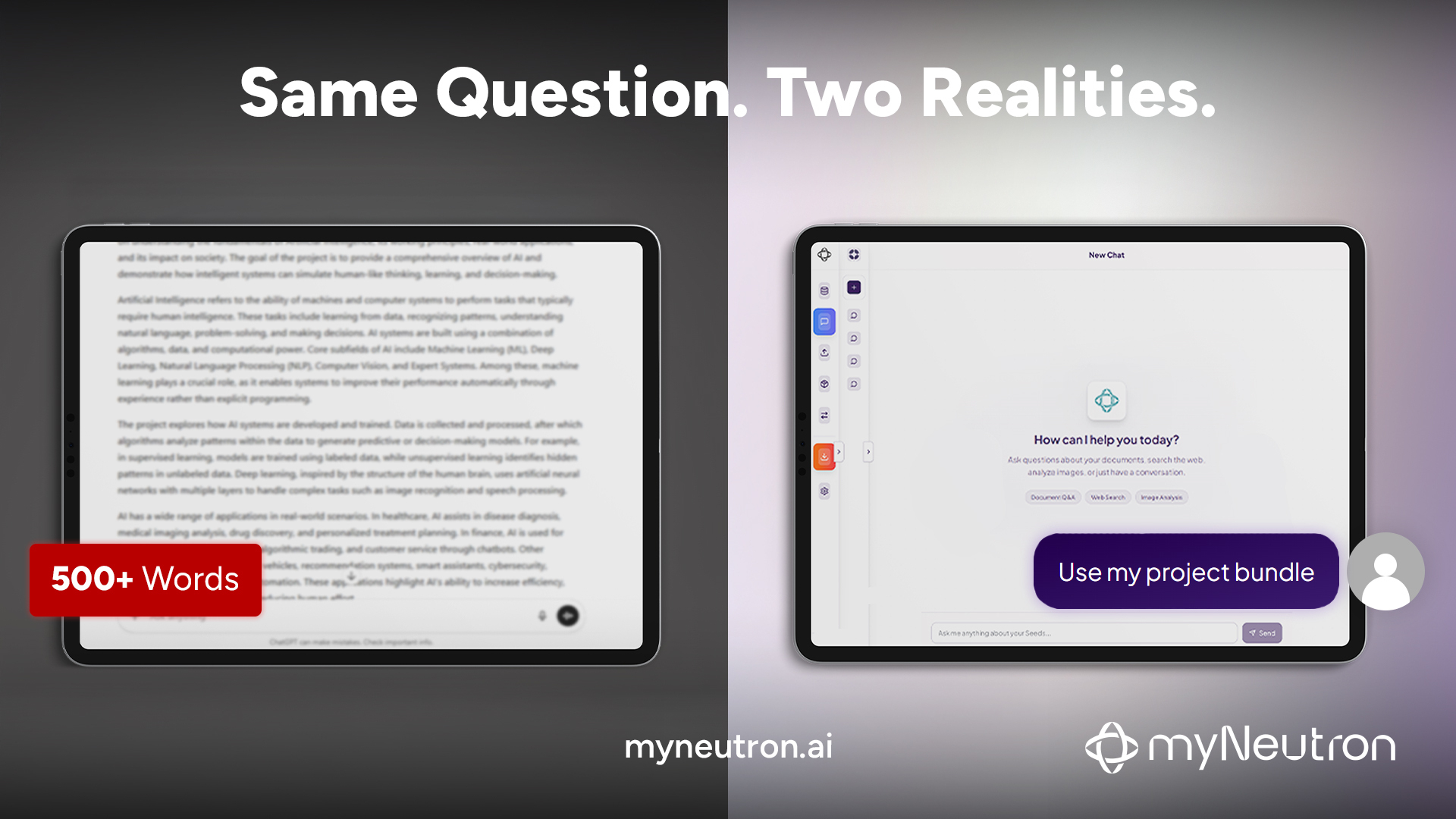
How Neutron Works
Neutron operates as a long-term memory API built specifically for agents that operate over time. Here's the technical magic:
Lightning-Fast Semantic Search: Neutron delivers sub-200ms semantic search powered by PostgreSQL with pgvector. When an agent needs to recall information, it happens instantly.
Multimodal Embeddings: Using 1024-dimensional Jina v4 embeddings, Neutron can search across text, images, and documents in a unified space. Your agent doesn't just remember words — it remembers context, visuals, everything.
Multi-Tenant Architecture: Each user gets isolated, secure memory spaces. Build SaaS AI products where every customer's agent has its own persistent brain.
Bundles for Organization: Memories can be organized into logical groups — perfect for projects, topics, or conversation threads that span weeks or months.
The beauty is in the persistence. That second brain lives outside the agent, which means retries, loops, and long-running tasks don't start from zero. An agent working on a complex coding project can pick up exactly where it left off, even after a crash. An assistant remembers your coffee order from three weeks ago. A customer support bot recalls your entire history across multiple channels.
The Vanarchain Connection: More Than Just Memory
Here's where things get really interesting. Neutron isn't a standalone product — it's Layer 2 of Vanarchain's complete five-layer AI-native blockchain stack. Understanding this architecture is crucial to grasping VNAR's value proposition.
The Complete Vanar Stack: Building Intelligence Into Blockchain
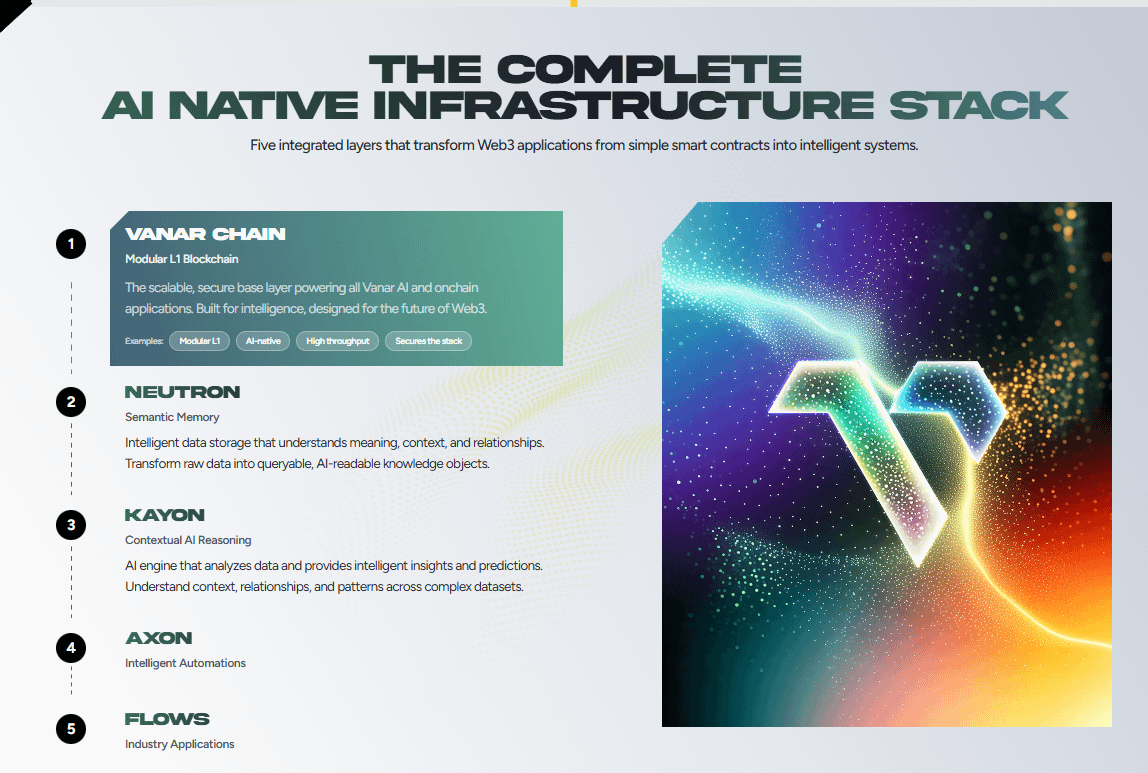
Vanarchain isn't trying to retrofit AI onto an existing blockchain. It was architected from day one as an AI-native Layer 1, with each layer purpose-built to work together:
Layer 1: Vanar Chain — The Foundation
This is the base blockchain layer — a modular, EVM-compatible Layer 1 offering high throughput and ultra-low fixed fees (around $0.0005 per transaction). But unlike traditional blockchains built for human-triggered transactions, Vanar Chain is optimized for AI workloads from the ground up. It features native support for AI inference, optimized data structures for semantic operations, built-in vector storage, and AI-optimized consensus mechanisms.
Layer 2: Neutron — Semantic Memory
This is where the magic we've been discussing lives. Neutron transforms raw data into queryable, AI-readable knowledge objects through intelligent compression. Here's the breakthrough: Neutron compresses files by up to 500:1 — turning a 25MB file into just 50KB — while preserving what matters most in a provable, retrievable form.
The compression isn't just shrinking bits; it's understanding them. Using semantic, heuristic, and algorithmic layers, Neutron creates ultra-light, cryptographically verifiable "Neutron Seeds" that can be stored directly on-chain. These Seeds aren't dumb files — they're smart, queryable data structures that AIs can work with natively.
At TOKEN2049 in Dubai back in April 2025, Vanar demonstrated this live: they compressed a 25MB 4K video into a 47-character Neutron Seed, embedded it in a blockchain transaction, and reconstructed it on-chain in under 30 seconds. No IPFS. No AWS. No external storage. Everything lives on the chain itself.
Layer 3: Kayon — The Reasoning Engine
If Neutron is the memory, Kayon is the thinking brain. Kayon is Vanar's on-chain AI reasoning engine that queries, validates, and applies real-time logic to data stored in Neutron Seeds.
This is where Vanar moves beyond simple data storage into true on-chain intelligence. Kayon enables smart contracts to understand context, analyze patterns across complex datasets, and make intelligent decisions — all without leaving the blockchain. It supports natural language queries, meaning you can ask questions like "Summarize vendor payments over $500K and highlight anomalies" and get auditable, tamper-proof answers directly from on-chain data.
For enterprise use cases like PayFi and tokenized real-world assets, Kayon provides compliance-ready queries and verifiable insights. For gaming, it enables player behavior analysis and economy balancing. For DAOs, it delivers transparent proposal analysis and automated reporting. The reasoning happens on-chain, making it auditable and trustless.
Layer 4: Axon — Intelligent Automation
Currently under development, Axon is designed to enable intelligent, agent-ready smart contracts. Think of it as the automation layer that lets the system act on the insights Kayon provides. Axon will handle automated, logic-driven workflows — the "hands" that execute based on the "brain" (Kayon) processing the "memory" (Neutron).
This moves blockchain beyond simple transaction execution into a system that can reason and automate complex tasks autonomously.
Layer 5: Flows — Industry Applications
The top layer of the stack focuses on industry-specific intelligent agents and real-world applications. This is where all the underlying infrastructure comes together to power actual products: PayFi applications for tokenized real-world assets, gaming economies, enterprise automation, and more.
Why OpenClaw Needed Vanarchain
Now we can understand the perfect synergy. OpenClaw is an open-source platform that gives AI agents "hands" — the ability to execute commands, control applications, and interact across dozens of messaging platforms. It's incredibly powerful, with explosive growth proving the market demand.
But OpenClaw agents are stateless. They can do things, but they can't remember things across sessions. That's where Vanarchain's Neutron enters the picture.
By integrating Neutron, OpenClaw agents gain:
Cross-Platform Persistence: An agent working across WhatsApp, Slack, and Discord remembers context from all channels.
Project Continuity: Long-running coding projects don't reset with every crash or restart.
Learning Over Time: Agents actually get smarter with every interaction, building a knowledge base that grows continuously.
Instant Context Retrieval: Sub-200ms semantic search means agents recall relevant information faster than you can blink.
And because this memory lives on Vanarchain, it's not dependent on any centralized service. It's cryptographically verifiable, quantum-resistant, and persistent even if cloud providers go down (which was demonstrated during an April 2025 AWS outage that took down major exchanges while Vanar kept running).
How to Use Neutron with OpenClaw
The integration is remarkably straightforward, which is part of its genius. Developers can get started in minutes:
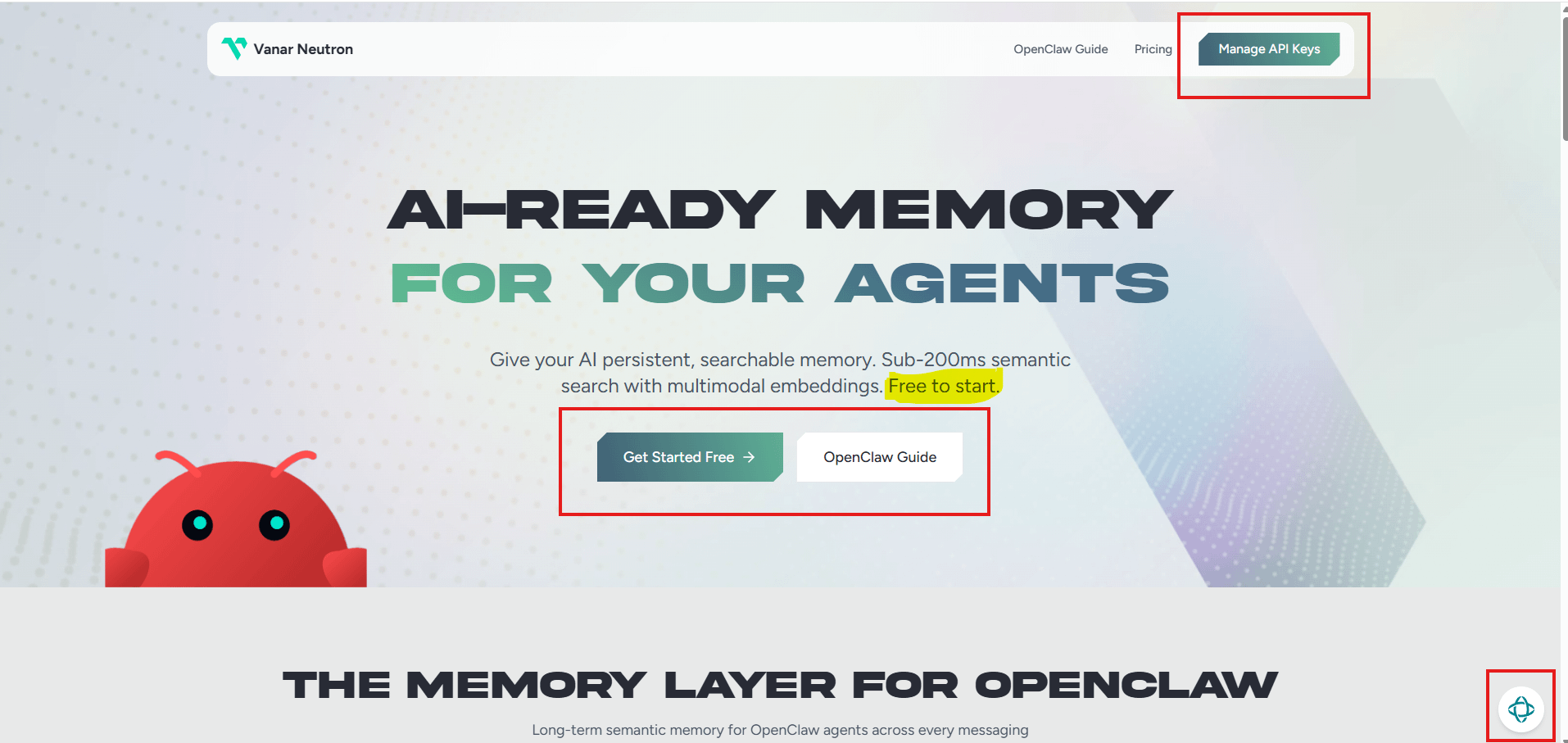
1. Sign Up for Free Access
Head to console.vanarchain.com and grab your API key. Neutron is free during early access — a strategic move by Vanar to build developer adoption before monetizing through VANRY token requirements.
2. Integrate via REST API or SDK
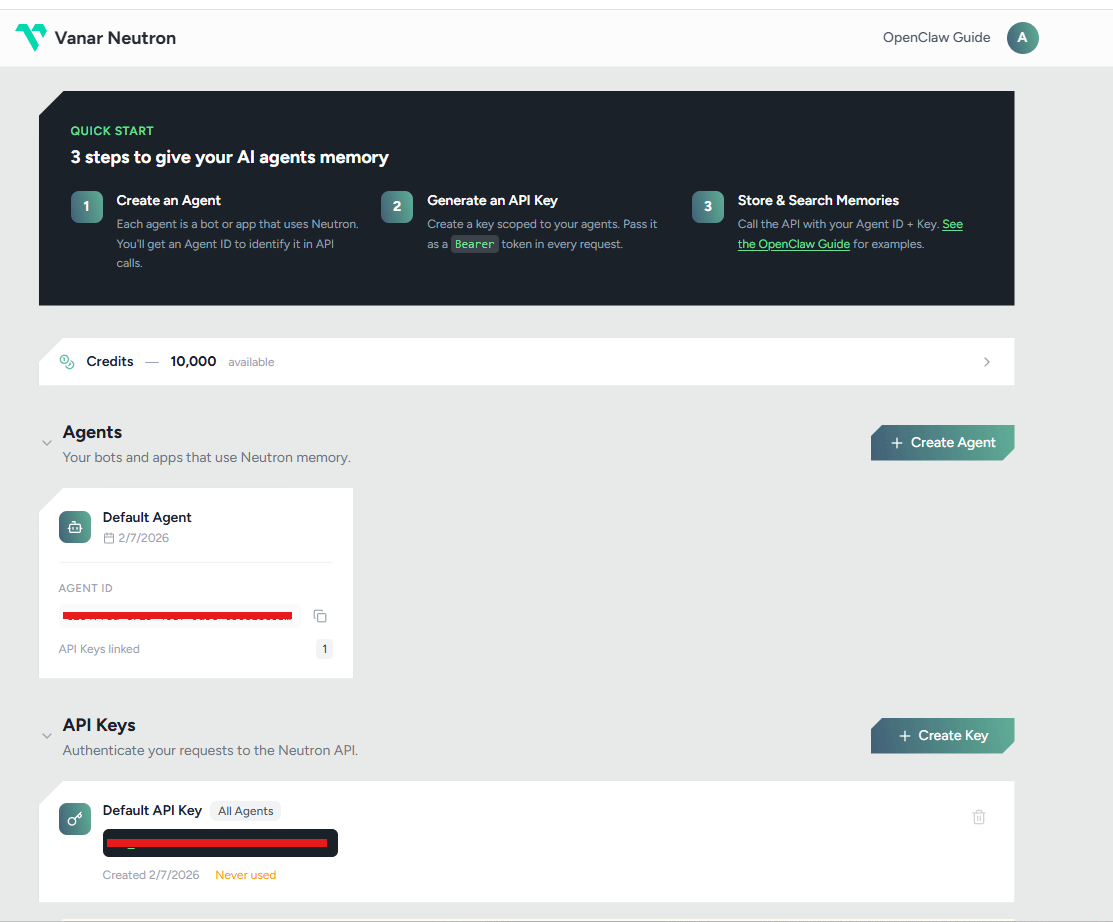
Neutron provides a clean REST API with a TypeScript SDK. The integration is as simple as storing memories with metadata and retrieving them via semantic search when needed.
For example, when your agent learns a user preference, it stores it:
"Mike's usual coffee order is an oat milk latte with an extra shot, no sugar. He goes to Blue Bottle on weekday mornings before work."
Later, when Mike asks "What's my usual coffee order?" the agent queries Neutron with semantic search and instantly retrieves the exact context — even if weeks have passed, the machine changed, or the agent restarted multiple times.
3. Organize with Bundles
Group related memories into bundles — perfect for organizing by project, user, or topic. This makes retrieval even more efficient and contextually relevant.
What This Means for VANAR
This is where the tokenomics get interesting. VNAR isn't just a governance token or a speculative asset — it's the economic fuel for an entire AI infrastructure stack.
Real Utility, Real Demand
Starting in Q1 2025, Vanar has been transitioning products like myNeutron to paid subscription models requiring VANRY tokens. Every transaction, smart contract execution, AI service subscription, and enterprise use case depends on VNAR. This creates continuous functional demand rather than speculation.
Consider the economic model:
Gas Fees: All transactions on Vanar Chain are paid in Vanry at ultra-low fixed costs (~$0.0005), making the network suitable for high-frequency AI operations.
AI Service Subscriptions: Access to premium features in Neutron, Kayon, and future layers requires VANAR payments.
Staking and Validation: VANAR holders can stake tokens to become validators, earning rewards while securing the network.
Deflationary Pressure: Token burns and buybacks from service revenue create deflationary pressure tied to actual network usage.
Positioning in the AI Infrastructure Race
The OpenClaw integration is strategic genius. OpenClaw's viral growth (113K+ GitHub stars in under a week) demonstrates massive demand for agent infrastructure. By becoming the memory layer for these agents, Vanarchain positions itself at the center of an exploding market.
But it's bigger than just OpenClaw. Neutron works with any AI agent platform. The same infrastructure powering OpenClaw's memory can serve personal AI assistants, customer support bots, RAG applications, knowledge management systems, and multi-user SaaS AI products.
This is the key differentiator: while other blockchains are retrofitting AI capabilities as an afterthought, Vanarchain built the entire stack from day one to be AI-native. Every component — from the base layer's consensus mechanism to Neutron's compression algorithm to Kayon's reasoning engine — is optimized for AI workloads.
The Bigger Picture: From TPS Wars to Intelligence Wars
Between 2021-2023, blockchain competition was all about throughput — the "transactions per second" arms race. But in the emerging agent economy, speed without intelligence is irrelevant.
Vanarchain recognizes that the next competitive meta isn't about processing more transactions faster — it's about processing smarter transactions. Blockchains that can reason over data, maintain persistent context, and enable autonomous decision-making will lead the next cycle.
This is what makes the Neutron announcement so significant. It's not just a feature release — it's proof of concept that Vanar's five-layer vision is operational and growing. The stack is no longer theory. It's running, powering real products, generating real on-chain activity.
Use Cases Beyond OpenClaw
The applications extend far beyond AI agents:
PayFi and Tokenized Assets: Kayon enables compliance-ready queries on tokenized real-world assets, with Neutron storing legal documents, financial records, and proof-based data directly on-chain.
Gaming Economies: Games like World of Dypians with 30,000+ players already run on Vanar, with fully on-chain assets and economies.
Enterprise Integration: MCP-based APIs connect Kayon directly to ERPs, dashboards, and custom backends, making proprietary data queryable with natural language.
DAOs and Governance: Transparent proposal analysis, voter behavior tracking, and automated reporting — all auditable on-chain.
The Road Ahead: 2026 and Beyond
Vanarchain's 2026 roadmap centers on maturing the complete Neutron and Kayon infrastructure to become the default AI layer for Web3. The strategic goal isn't to compete on transaction speed — it's to solidify an infrastructure moat through proven AI capabilities.
The OpenClaw integration is just the opening move. As Axon and Flows come online, the stack will enable increasingly sophisticated autonomous systems. Imagine agents that don't just remember context but can reason about it, make decisions based on complex logic, and execute multi-step workflows entirely on-chain.
The technology is quantum-resistant, preparing for threats that don't even exist yet. It's integrated with Google Cloud's renewable-energy nodes and NVIDIA's CUDA-accelerated AI stack, ensuring enterprise-grade infrastructure. Partnerships with Worldpay bring payment rails directly into the ecosystem.
Conclusion: Memory as Moat
The February 6th Neutron announcement might seem like a simple feature release — give AI agents persistent memory. But zoom out, and you see the strategic brilliance.
Vanarchain isn't competing in the blockchain wars. It's not trying to beat Ethereum on transactions per second or Solana on finality time. It's playing a different game entirely — becoming the intelligent infrastructure layer that the entire AI agent economy will be built on.
By solving memory for OpenClaw agents, Vanar demonstrates that its five-layer stack isn't vaporware — it's operational, it's growing, and it's solving real problems that developers face right now. As AI agents become more prevalent (and OpenClaw's viral growth suggests that's happening fast), the platforms that give them memory, reasoning, and automation capabilities become critical infrastructure.
For VNAR holders, this is more than promising technology — it's a business model where every agent interaction, every memory stored, every query processed creates demand for the token. As CEO Jawad Ashraf put it: "Platforms disappear, hard drives fail, but with Neutron, your most brilliant insights become immortal."
In a world where AI agents are becoming as common as mobile apps, the infrastructure that gives them memory isn't just useful — it's essential. And Vanarchain is building that infrastructure layer by layer, with each release proving the vision works.
The question isn't whether AI agents need persistent memory. They clearly do. The question is whether Vanarchain can maintain its first-mover advantage as the AI-native blockchain while competition catches up. Based on the integrated stack they've built — from base layer to reasoning engine to memory to automation — they've created a moat that won't be easy to replicate.
That's the real story of Neutron and OpenClaw: not just solving today's memory problem, but positioning for tomorrow's intelligence economy.
