

Dear family, I was trying to explain this in a way that feels honest, not technical. I’m slowly understanding Vanar not as something to trade or speculate on, but as something closer to a road, a wire, or a quiet system that just needs to work. The kind of thing you don’t talk about much because when it’s built properly, it doesn’t interrupt your life.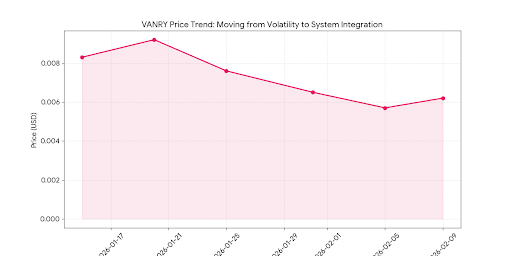
When we talk about digital money, especially stable value, the most important feeling isn’t excitement. It’s comfort. Money that’s used for rent, salaries, groceries, or helping family shouldn’t feel dramatic. It should feel boring in the best way. You send it, it arrives, you know it’s done. No stress, no checking again and again, no wondering if something went wrong behind the scenes.
That’s why I’ve stopped paying attention to loud promises and started watching design behavior instead. Good financial systems don’t ask people to understand how they work internally. They protect people from that complexity. They remove steps, hide the machinery, and give you a clear outcome. The user shouldn’t feel like they’re operating technology. They should feel like they’re just moving value, the same way they always have.
In real life, friction shows up in small ways. A payment that takes too long. A confirmation that’s unclear. A transfer that’s “pending” with no explanation. Those small moments create anxiety, follow-up work, and distrust. Over time, people quietly abandon systems that make life harder, even if those systems look impressive on paper.
So when a blockchain is designed with everyday use in mind, the real question becomes simple: does it reduce tension or add to it? Does it help people move on with their day, or does it pull them into complexity they never asked for?
Fast and reliable settlement matters here, not as a technical achievement, but as emotional relief. Certainty lets businesses close their books. It lets families relax. It lets people trust that what they did is finished. A system that consistently delivers that kind of certainty earns trust without asking for attention.
What also stands out to me is the focus on real environments—games, entertainment, brands—places where users are unforgiving of friction. In those spaces, technology only survives if it stays out of the way. Products like Virtua Metaverse and VGN Games Network matter not because they’re flashy, but because they force the infrastructure underneath to behave like infrastructure, not an experiment.
There’s also something important about restraint. Systems that last aren’t usually the ones that try to do everything at once. They’re the ones that choose a smaller set of responsibilities and perform them consistently. Clear rules. Predictable behavior. Fewer surprises. Over time, that consistency becomes more valuable than constant innovation.
Trust doesn’t come from noise. It comes from repetition. From doing the same thing correctly again and again until people stop thinking about alternatives.
Compatibility with existing tools fits into this mindset too. When a system respects what builders are already using, it lowers the cost of participation. It doesn’t demand reinvention just to belong. That kind of respect makes growth sustainable, not forced.
Vanar is powered by the VANRY token, but even that feels secondary when you view the system as infrastructure. In a mature financial network, the token shouldn’t be the star of the story. It should quietly do its job in the background, supporting the network so users can focus on what they’re actually trying to accomplish.
The more I think about it, the clearer it becomes. The best financial infrastructure doesn’t chase attention. It fades into the background. Not because it lacks importance, but because it works so reliably that people forget to notice it. And in that quiet, unnoticed space, real economic activity happens—calmly, predictably, day after day.