
What deterministic rule lets Plasma remain double-spend-safe during worst-case Bitcoin reorgs without freezing bridged stablecoin settlements?
I still remember the exact moment something felt off. It wasn’t dramatic. No hack. No red alert. I was watching a stablecoin transfer I had bridged settle later than expected—minutes stretched into an hour—while Bitcoin mempool activity spiked. Nothing technically “failed,” but everything felt paused, like a city where traffic lights blink yellow and nobody knows who has the right of way. Funds weren’t lost. They just weren’t usable. That limbo was the problem. I wasn’t afraid of losing money; I was stuck waiting for the system to decide whether reality itself had finalized yet.
That experience bothered me more than any outright exploit I’ve seen. Because it exposed something quietly broken: modern financial infrastructure increasingly depends on probabilistic truth, while users need deterministic outcomes. I had done everything “right”—used reputable bridges, waited for confirmations, followed the rules—yet my capital was frozen by uncertainty I didn’t opt into. The system hadn’t failed; it had behaved exactly as designed. And that was the issue.
Stepping back, I started thinking of this less like finance and more like urban planning. Imagine a city where buildings are structurally sound, roads are paved, and traffic laws exist—but the ground itself occasionally shifts. Not earthquakes that destroy buildings, but subtle tectonic adjustments that force authorities to temporarily close roads “just in case.” Nothing collapses, yet commerce slows because nobody can guarantee that today’s map will still be valid tomorrow. That’s how probabilistic settlement feels. The infrastructure works, but only if you’re willing to wait for the earth to stop moving.
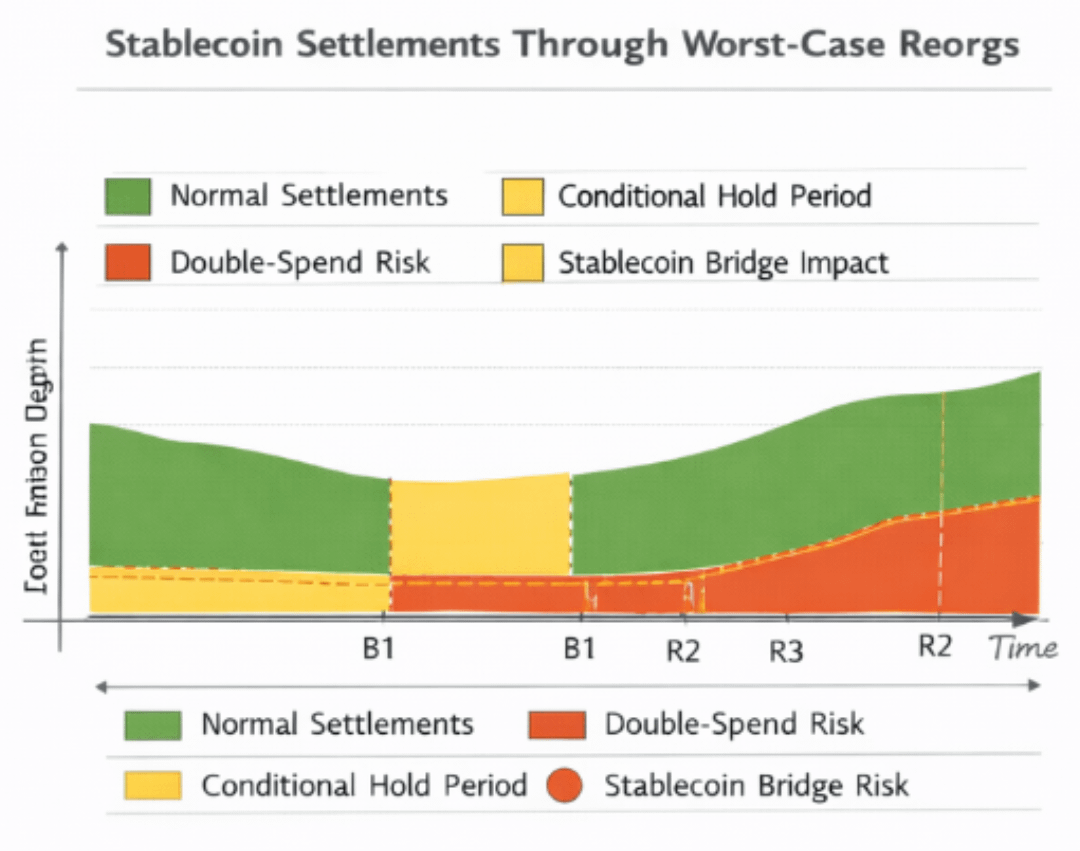
This isn’t a crypto-specific flaw. It shows up anywhere systems rely on delayed finality to manage risk. Traditional banking does this with settlement windows and clawbacks. Card networks resolve disputes weeks later. Clearinghouses freeze accounts during volatility. The difference is that users expect slowness from banks. In programmable finance, we were promised composability and speed—but inherited uncertainty instead. When a base layer can reorg, everything built on top must either pause or accept risk. Most choose to pause.
The root cause is not incompetence or negligence. It’s structural. Bitcoin, by design, optimizes for censorship resistance and security over immediate finality. Reorganizations—especially deep, worst-case ones—are rare but possible. Any system that mirrors Bitcoin’s state must decide: do you treat confirmations as probabilistic hints, or do you wait for absolute certainty? Bridges and settlement layers often take the conservative route. When the base layer becomes ambiguous, they freeze. From their perspective, freezing is rational. From the user’s perspective, it feels like punishment for volatility they didn’t cause.
I started comparing this to how other industries handle worst-case scenarios. Aviation doesn’t ground every plane because turbulence might happen. Power grids don’t shut down cities because a transformer could fail. They use deterministic rules: predefined thresholds that trigger specific actions. The key is not eliminating risk, but bounding it. Financial infrastructure, especially around cross-chain settlement, hasn’t fully internalized this mindset. Instead, it defaults to waiting until uncertainty resolves itself.
This is where Plasma (XPL) caught my attention—not as a savior, but as an uncomfortable design choice. Plasma doesn’t try to pretend Bitcoin reorganizations don’t matter. It accepts them as a given and asks a different question: under what deterministic rule can we continue settling value safely even if the base layer temporarily disagrees with itself? That question matters more than throughput or fees, because it targets the freeze problem I personally hit.
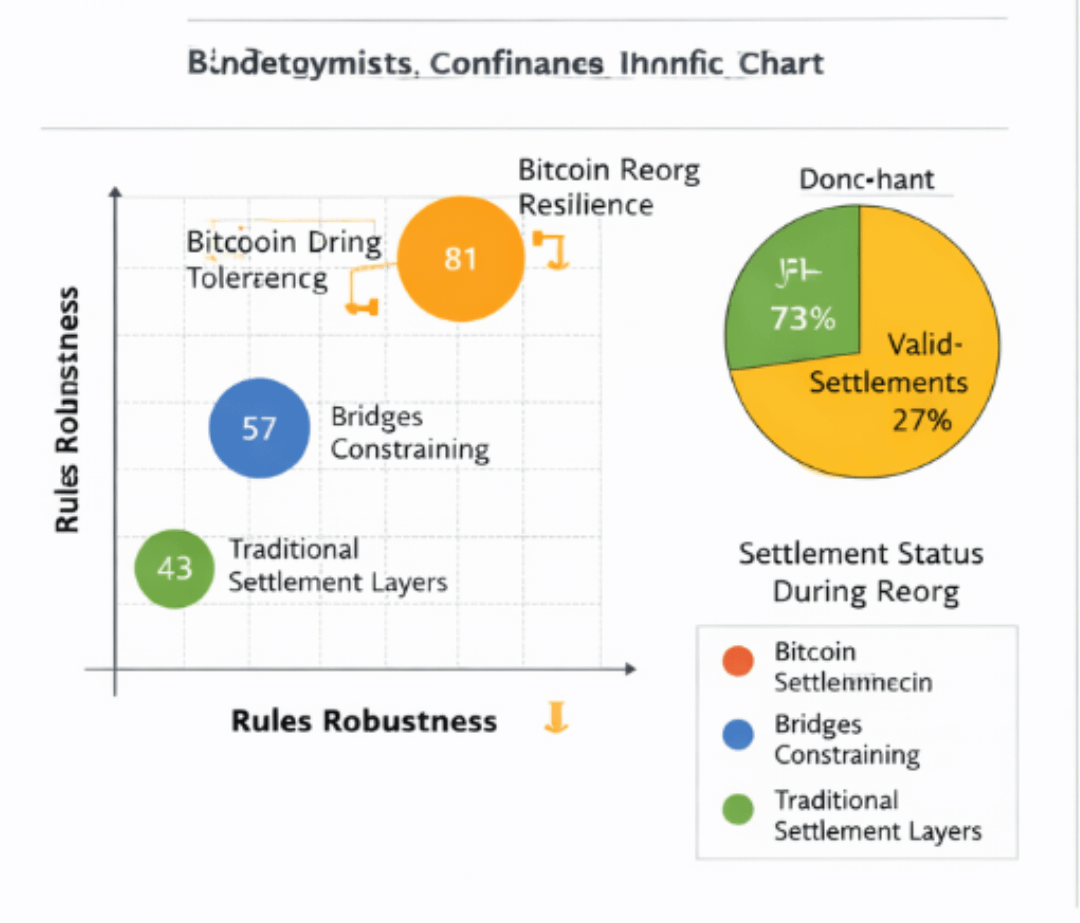
Plasma’s approach is subtle and easy to misunderstand. It doesn’t rely on faster confirmations or optimistic assumptions. Instead, it defines explicit settlement rules that remain valid even during worst-case Bitcoin reorgs. Stablecoin settlements are not frozen by default; they are conditionally constrained. The system encodes which state transitions remain double-spend-safe regardless of reorg depth, and which ones must wait. In other words, uncertainty is partitioned, not globalized.
To make this concrete, imagine a ledger where some actions are “reversible-safe” and others are not. Plasma classifies bridged stablecoin movements based on deterministic finality conditions tied to Bitcoin’s consensus rules, not on subjective confidence levels. Even if Bitcoin reverts several blocks, Plasma can mathematically guarantee that certain balances cannot be double-spent because the underlying commitments remain valid across all plausible reorg paths. That guarantee is not probabilistic. It’s rule-based.
This design choice has trade-offs. It limits flexibility. It forces stricter accounting. It refuses to promise instant freedom for all transactions. But it avoids the all-or-nothing freeze I experienced. Instead of stopping the world when uncertainty appears, Plasma narrows the blast radius. Users may face constraints, but not total paralysis.
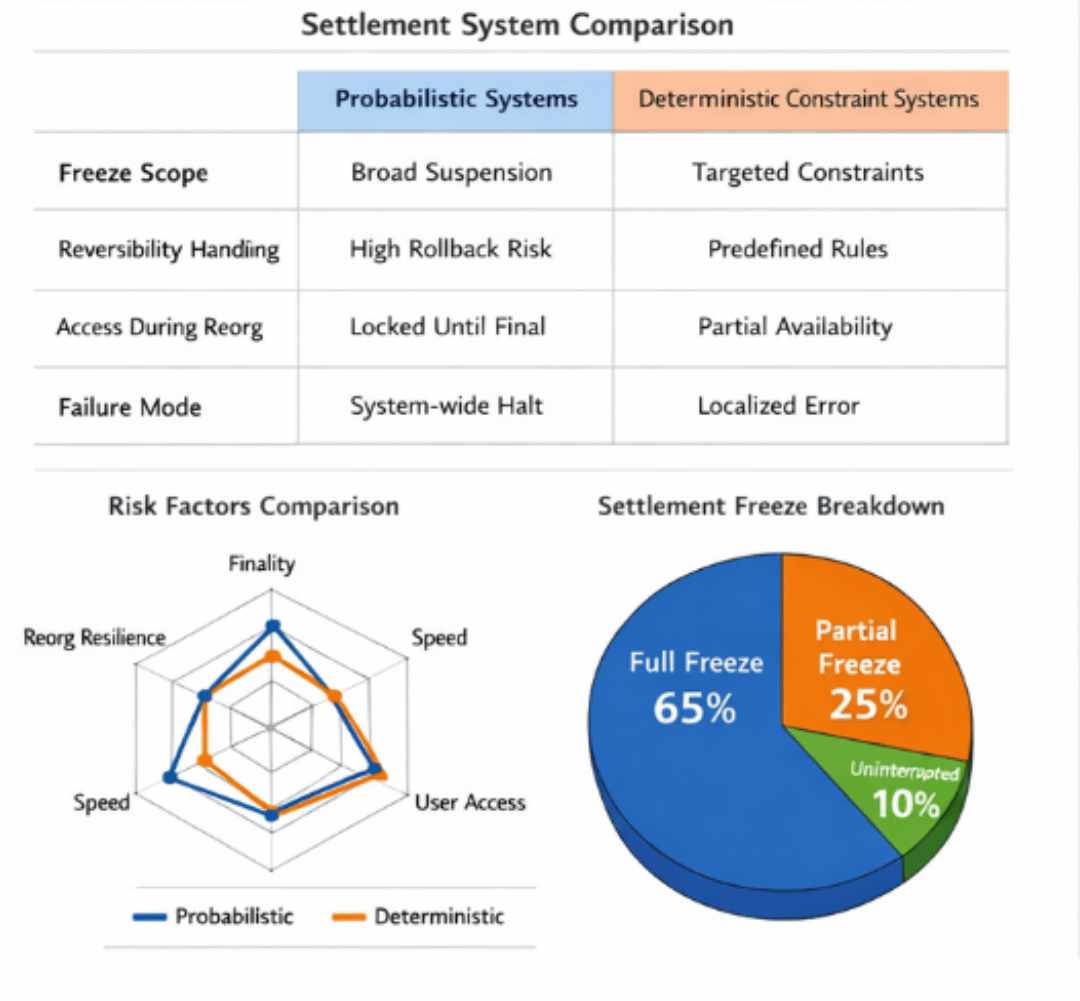
A useful visual here would be a two-column table comparing “Probabilistic Settlement Systems” versus “Deterministic Constraint Systems.” Rows would include user access during base-layer instability, scope of freezes, reversibility handling, and failure modes. The table would show that probabilistic systems freeze broadly to avoid edge cases, while deterministic systems restrict narrowly based on predefined rules. This visual would demonstrate that Plasma’s design is not about speed, but about bounded uncertainty.
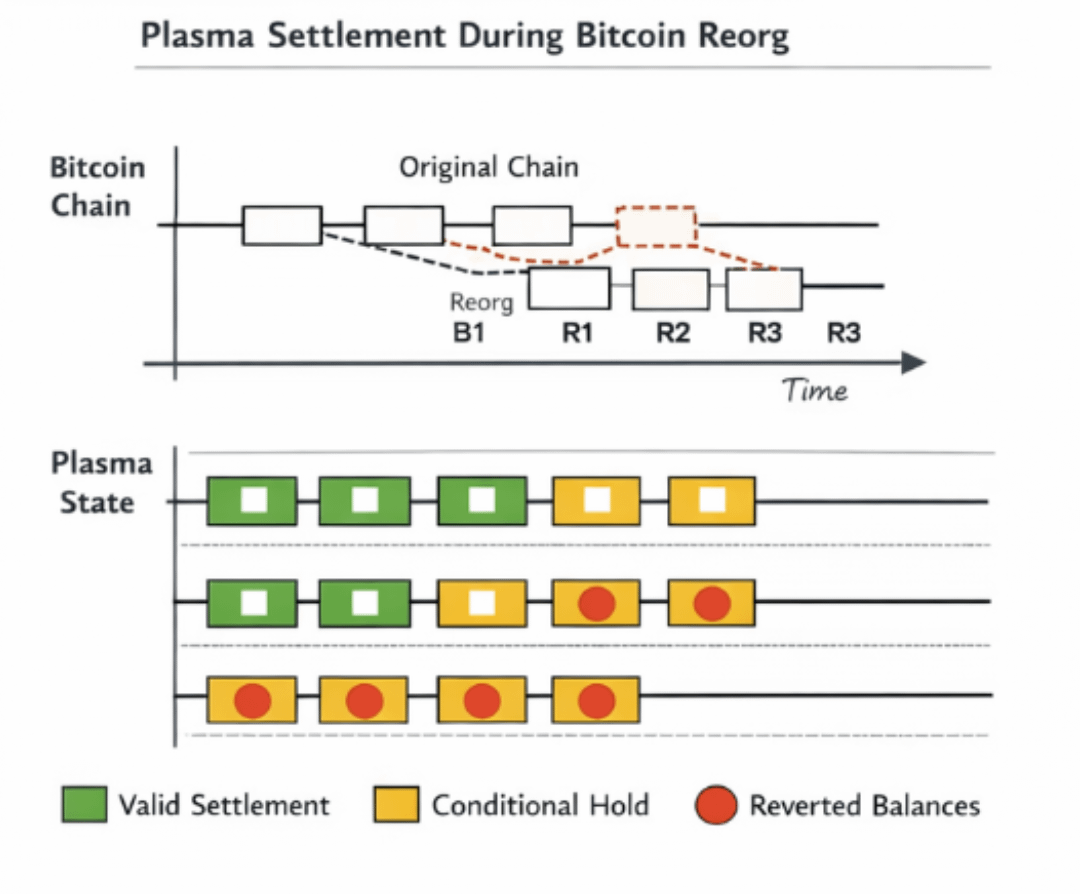
Another helpful visual would be a timeline diagram of a worst-case Bitcoin reorg, overlaid with Plasma’s settlement states. The diagram would show blocks being reorganized, while certain stablecoin balances remain spendable because their commitments satisfy Plasma’s invariants. This would visually answer the core question: how double-spend safety is preserved without halting settlement.
None of this is free. Plasma introduces complexity that many users won’t see but will feel. There are assumptions about Bitcoin’s maximum reorg depth that, while conservative, are still assumptions. There are governance questions around parameter updates. There’s the risk that users misunderstand which actions are constrained and why. Determinism can feel unfair when it says “no” without drama. And if Bitcoin ever behaves in a way that violates those assumed bounds, Plasma’s guarantees would need reevaluation.
What I respect is that Plasma doesn’t hide these tensions. It doesn’t market certainty as magic. It encodes it as math, with edges and limits. After my funds eventually settled that day, I realized the frustration wasn’t about delay—it was about opacity. I didn’t know why I was waiting, or what rule would let me move again. Deterministic systems, even strict ones, at least tell you the rules of the pause.
I’m still uneasy. Because the deeper question isn’t whether Plasma’s rule works today, but whether users are ready to accept constraint-based freedom instead of illusionary liquidity. If worst-case Bitcoin reorgs force us to choose between freezing everything and pre-committing to hard rules, which kind of discomfort do we actually prefer?