

When I first came across Vanar I didn’t have a strong reaction. That’s probably the most honest way to put it. There was no immediate excitement no obvious hook that made me want to dig deeper right away. In a space where new projects constantly try to outdo each other with big claims, Vanar felt… quiet.

At the time, I took that as a negative.
I’m used to Layer-1 projects leading with something bold. Faster speeds. Bigger numbers. A new architecture that’s supposed to change everything. Vanar didn’t seem particularly interested in doing that. The messaging wasn’t loud, and the technology wasn’t framed as a breakthrough in isolation. It felt almost understated, which made it easy to scroll past.
Not a single announcement or feature was altered. It was spending more time with the project and realizing that my initial reaction might have been shaped by the wrong expectations.

Most blockchain projects want to impress you immediately. Vanar doesn’t seem built for that moment. It feels built for what comes after.
The first shift happened when I stopped looking at Vanar as “another L1” and started paying attention to where it was actually being used. Games, virtual environments, and brand-driven digital experiences are very different testing grounds than typical DeFi applications. Those environments are unforgiving. Users don’t tolerate friction, and they don’t stick around to admire technical elegance.
Once you view the chain through that lens, some of the early design choices start to make more sense. The lack of flashy positioning isn’t an oversight. It’s intentional. When infrastructure is meant to support consumer-facing products, the goal isn’t to be admired it’s to be invisible.
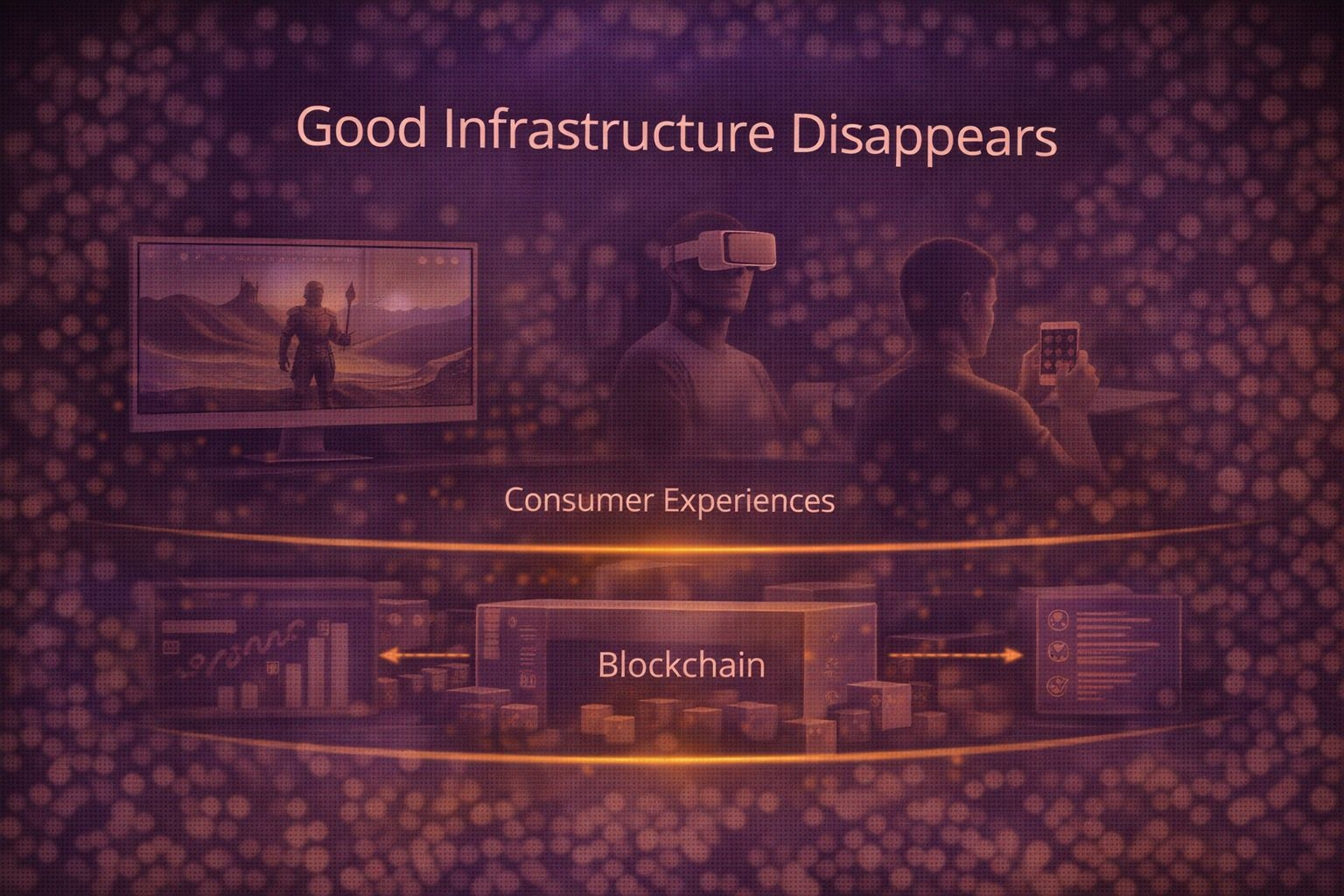
That invisibility was probably why I overlooked it at first.
Another thing that took time to appreciate was Vanar’s attitude toward complexity. Many projects in this space assume that users will eventually adapt. They expect people to learn how wallets work, understand gas mechanics, and accept irregular costs as part of the experience. Vanar seems to assume the opposite: that most users never will, and that they shouldn’t have to.
That assumption leads to very different priorities. Predictability becomes more important than optimization. Stability matters more than flexibility. And success is measured less by theoretical performance and more by whether people keep using the system without thinking about it.
Those aren’t the kinds of features that jump out in a first read-through. You notice them only when you imagine real users interacting with real products over time.
I also underestimated how much the team’s background influences the direction of the project. Coming from games and entertainment changes how you think about infrastructure. In those industries, there’s no reward for complexity. If something feels slow, confusing, or unreliable, users don’t analyze why they leave.
Designing for that reality forces humility. The technology has to serve the experience, not the other way around. Over time, it became clear that Vanar isn’t trying to convince users that blockchain is important. It’s trying to make it irrelevant to them.
That realization reframed how I looked at the project’s AI efforts as well. Like many people, I’ve grown skeptical of “AI-native” claims in crypto. The term gets used so often that it’s lost most of its meaning. At first glance, Vanar’s AI narrative didn’t stand out to me either.
What changed was noticing how restrained it was.
Rather than promising autonomous systems or revolutionary intelligence, the focus is on making the chain easier to understand and operate. That’s a much less exciting story, but a far more practical one. Helping developers and operators make sense of on-chain activity isn’t flashy, but it’s essential if blockchain is ever going to support mainstream applications.
Again, this isn’t the kind of thing that impresses at first glance. It reveals its value slowly, through use rather than explanation.
Even the token model felt unremarkable at first. VANRY does what you’d expect: gas, staking, governance. There’s no novelty there. But over time, it became clear that the lack of emphasis on the token itself was part of the point. The system isn’t designed to revolve around constant token interaction. In many cases the token is meant to fade into the background supporting experiences rather than defining them.
That’s how most successful platforms work. People care about what they’re doing, not what’s powering it.
Looking back, I think Vanar didn’t impress me at first because it wasn’t trying to. It wasn’t designed for the moment of discovery. It was designed for the moment after adoption, when a system has to hold up under real use without asking for attention.
That’s a difficult thing to evaluate quickly, especially in a space that rewards spectacle. It takes time, context, and a willingness to sit with something that doesn’t immediately stand out.
What changed my perspective wasn’t hype or comparison charts. It was realizing that Vanar seems to be optimizing for a version of Web3 that most projects talk about but few actually design for one where users don’t feel like they’re using blockchain at all.
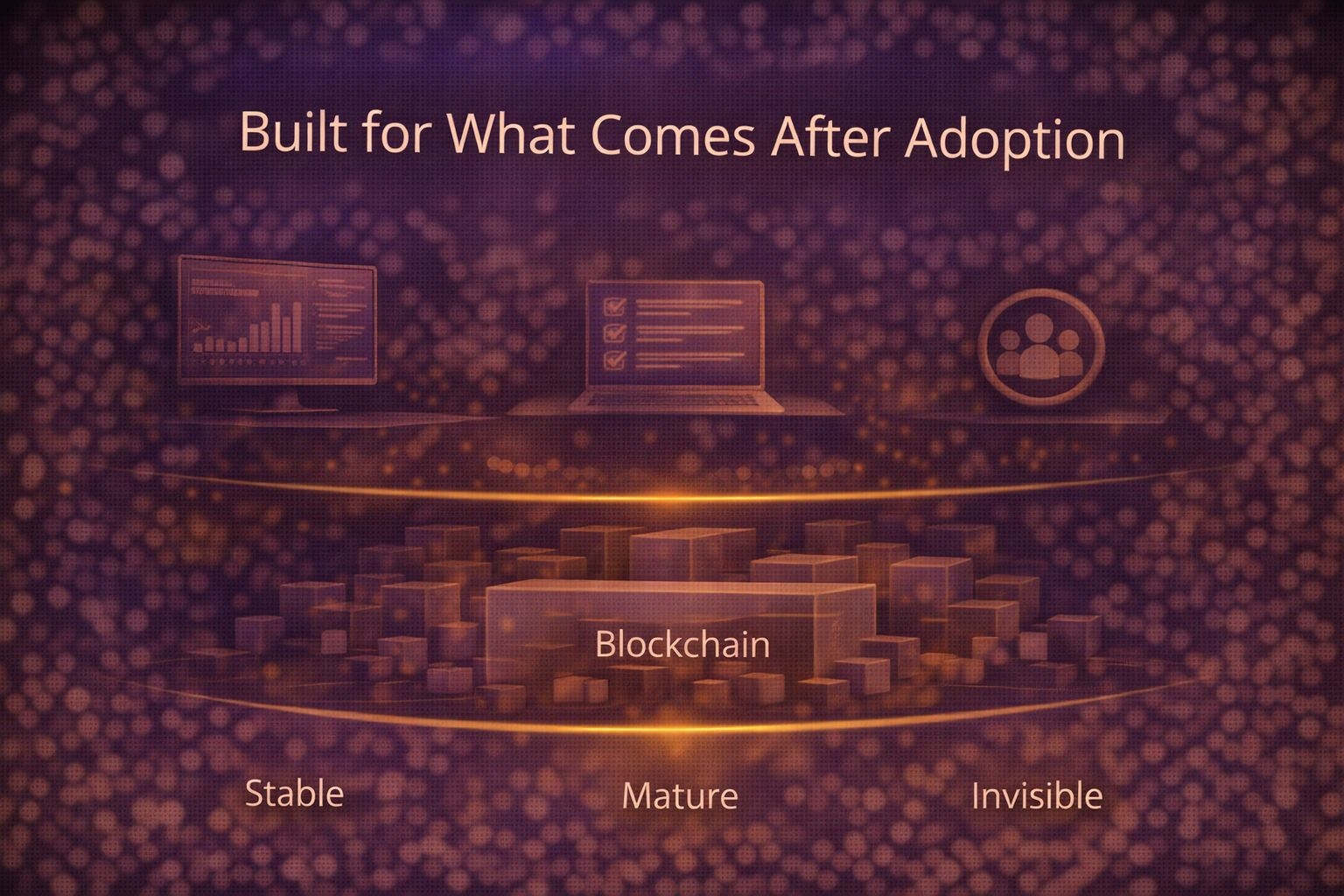
That approach won’t appeal to everyone. It won’t generate instant excitement. But if consumer Web3 is ever going to reach people outside its current bubble, this kind of thinking may matter more than anything else.
Sometimes, the most interesting projects aren’t the ones that impress you right away. They’re the ones that make more sense the longer you look at them.
And Vanar, for me, turned out to be one of those.