
Plasma is a technology made to help blockchains work better when many people use them at the same time. As crypto grows, networks like Ethereum can become slow and costly. Plasma was created to solve this problem in a simple way.
Plasma works by creating smaller blockchains that are connected to a main blockchain. Think of the main chain as a big city road and Plasma chains as smaller side roads. Most daily traffic moves on the side roads, so the main road stays clear and safe.
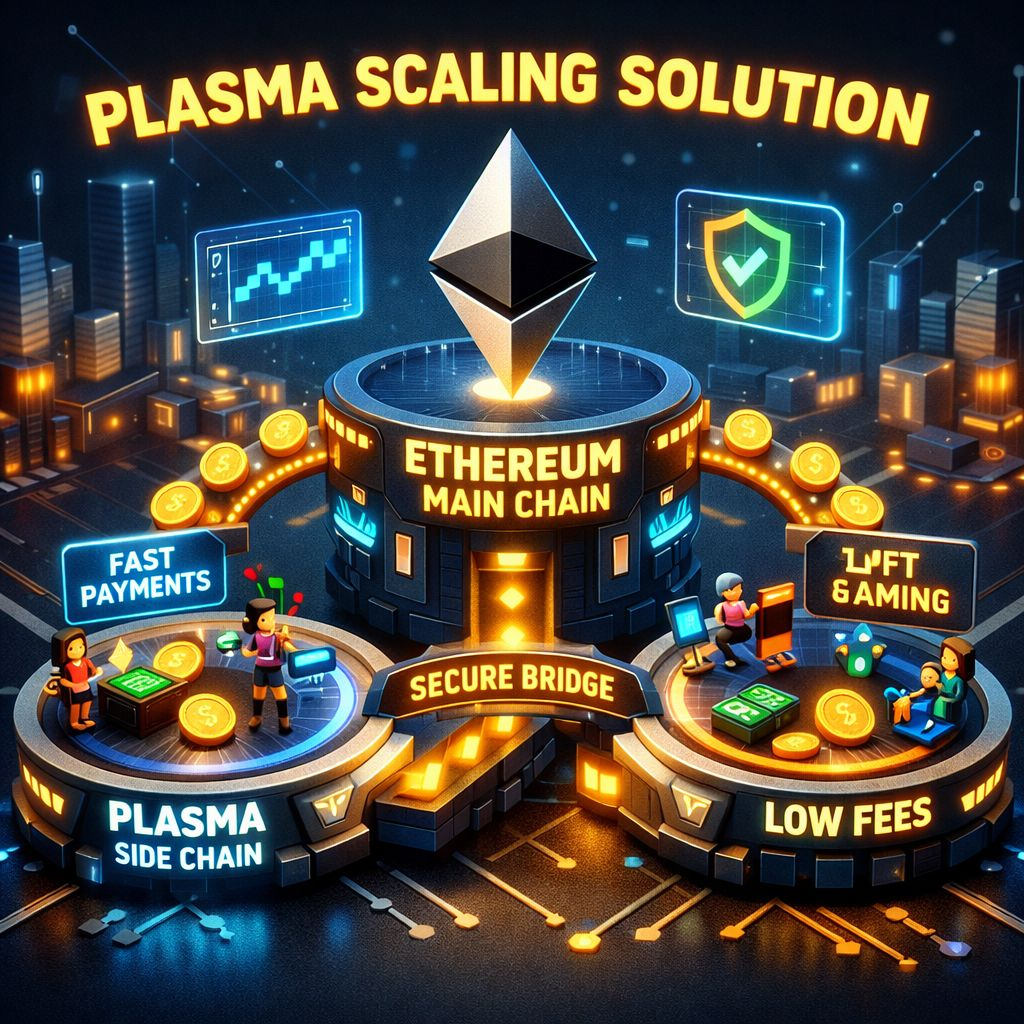
What Plasma does
Plasma moves many transactions away from the main blockchain. These transactions are processed on smaller chains. Only the final results are sent back to the main chain. This helps save time and money.
How Plasma works
• Users send transactions to a Plasma chain
• Plasma chain processes them quickly
• Main chain checks and secures the data
• Users can exit anytime if something goes wrong
Why Plasma is important
High gas fees and slow speeds stop many people from using crypto daily. Plasma reduces these problems. It makes blockchain more friendly for normal users, not just traders and developers.
Main features of Plasma
• Faster transactions
• Lower fees
• Strong security from the main chain
• Scales without overloading the network
When Plasma is useful
Plasma is best when a project needs many small transactions. Games, NFT platforms, and payment apps benefit the most. These apps need speed and low cost, which Plasma provides.
Use cases of Plasma
• Blockchain games with many users
• Fast crypto payments
• NFT minting and transfers
• Decentralized apps with high activity
Plasma is not perfect and may not fit every project. But it played a big role in teaching the crypto world how to scale blockchains safely. Many new solutions learned from Plasma’s design.
In simple words, Plasma helps blockchains grow without breaking. It makes crypto faster, cheaper, and easier to use for everyone.

