
I used to think “financial inclusion” meant cheaper apps and a nicer UI.
Then I watched a friend try to invest like a grown-up. Not meme coins. Real stuff. Bonds. Funds. A boring basket that pays, quietly. And the wall wasn’t knowledge. It was access.
Minimums. Paperwork. “Not available in your region.” Fees that only feel small if your account already has commas in it. And the weird part? The people who do get access still don’t want their whole book exposed. A portfolio is personal. Like your salary. Like your medical file.
So I went looking for a chain that treats finance the way finance actually works. Not “everyone sees everything forever.” More like: some data stays private, some data must be provable, and settlement can’t be a circus. That’s where Dusk shows up.
Dusk positions itself as a privacy-first Layer 1 built for regulated finance, with tooling aimed at tokenized securities and real-world assets. And yes, it’s already past the “just a roadmap” stage Dusk’s recent mainnet launch, and the focus since has been pushing regulated assets on-chain.
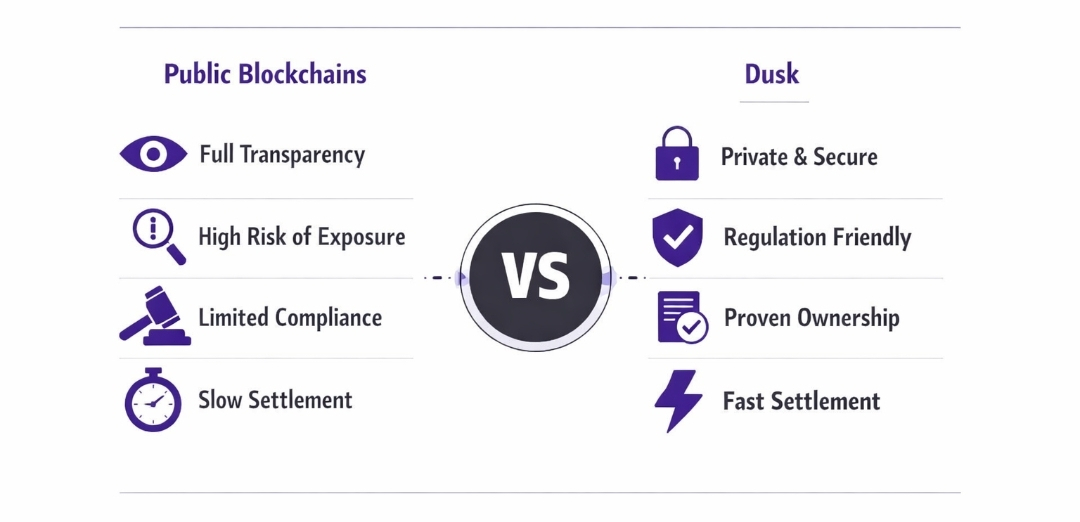
THE “WALL STREET TOOLS” PROBLEM IS NOT THE TOOLS. IT’S THE RAILS.
People hear “Wall Street-grade” and like fancy charts. That’s not the edge.
The edge is the rails: custody, compliance, privacy, and clean settlement. If you can’t hold an asset safely, prove ownership, meet rules, and trade without leaking your position, you’re not playing the same game.
Public blockchains nailed one thing: shared settlement. Everyone agrees on the ledger. But they also made a weird trade: total visibility by default. That’s fine for a token swap. It’s messy for securities.
Dusk is built around that tension. The goal isn’t to hide from rules. The goal is to keep user data private while still being able to prove rules were followed when needed. Think of it like a bank vault with a small inspection window. Your assets stay inside. But an auditor can confirm the vault isn’t empty.
That is what inclusion starts to look like: not “everyone gets rich.” More like “more people can safely access real instruments without becoming public data.”
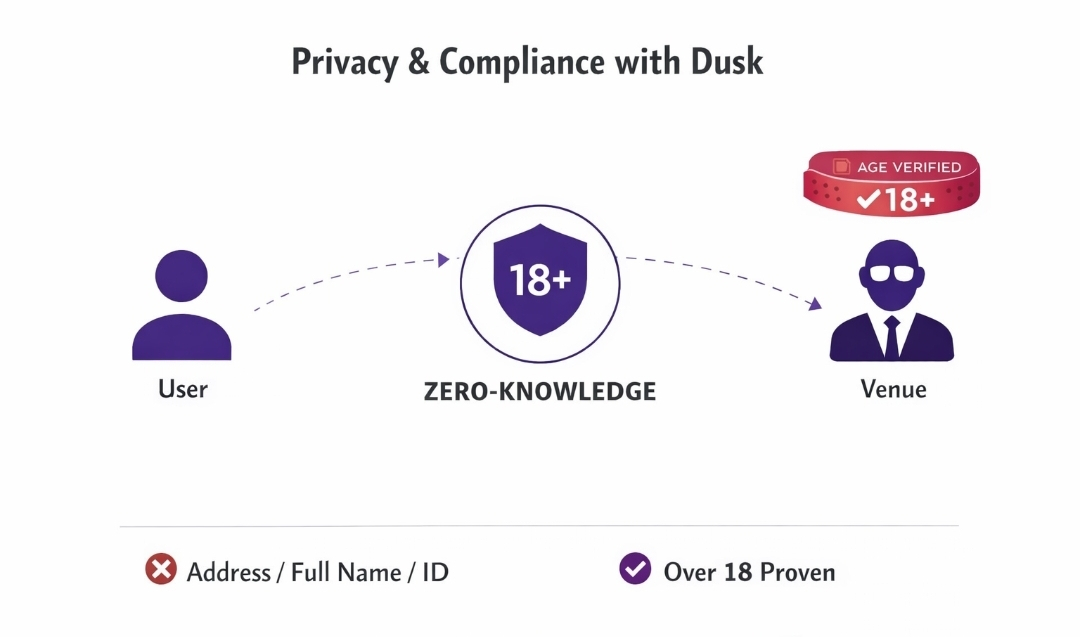
PRIVACY THAT CAN STILL ANSWER TO COMPLIANCE
Here’s where most people get confused. I did too.
“Privacy” in crypto often sounds like “no one can check anything.” That’s a dead end for regulated assets. Markets run on proof.
Dusk leans on confidential smart contracts smart contracts that can process encrypted data and generate proofs, while only revealing what’s necessary to the network.
If you’ve never touched zero-knowledge before, picture this: you walk into a venue, and instead of showing your full ID, you show a bouncer a stamped wristband that proves you’re over 18. The bouncer doesn’t learn your address. Or your full name. But the rule is enforced.
That’s the shape of it. You can prove “this transfer followed the rules” without dumping every detail onto the street.
For financial inclusion, that matters more than people admit. Because privacy is not a luxury feature. It’s safety. It’s not broadcasting your holdings to every scammer with a search bar. It’s not turning every paycheck, every trade, every position into a public profile.
And for issuers funds, companies, brokers this is the difference between “cool tech demo” and “something you can actually deploy.”
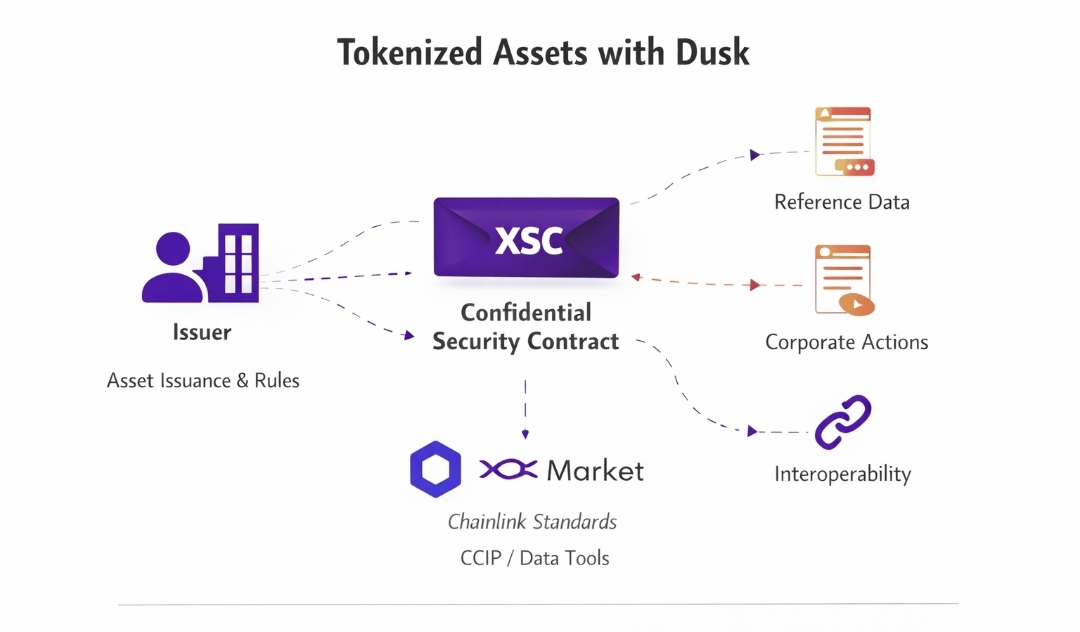
STANDARDS AND CONNECTIONS THAT MAKE ASSETS USABLE
Inclusion fails if assets can’t move, price, and settle like real assets.
Dusk built the Confidential Security Contract (XSC) standard for creating and issuing privacy-enabled tokenized securities. Think of XSC as a digital envelope. The outside has the rules and labels needed for the system to route it correctly. The inside holds the sensitive parts balances, holders, maybe even trade terms kept private.
But assets also need data and links to the rest of the market.
A real bond doesn’t live in isolation. It needs reference data. Corporate actions. Market prices. Sometimes cross-chain movement. So Dusk and the Dutch regulated exchange NPEX integrated Chainlink standards CCIP for interoperability plus data tools like Data Streams and DataLink to support compliant issuance, secure settlement, and market data publication.
That matters because “tokenized asset” without reliable data is like a stock quote that updates whenever it feels like it. Cute. Not useful.
And on the core network side, Dusk uses a Proof of Blind Bid style selection model (PoBB), where validators submit sealed bids, then selection happens without everyone seeing the bids ahead of time. instead of loud auction shouting, everyone drops a sealed envelope in a box. Harder to bully. Harder to collude in plain sight.
Is it perfect? Nothing is. But the intent is clear: reduce predictable power games, keep the system more neutral, and keep settlement reliable.
FINAL THOUGHT
If Dusk works, the “inclusion” headline won’t be flashy.
It will look like this: a normal person holding regulated assets in a wallet. A small business issuing something bond-like without hiring an army of middlemen. A market that can enforce rules without forcing everyone to live in a glass house.
That’s the actual bar.
Dusk is basically trying to bring the boring parts of finance privacy, compliance, settlement finality on-chain without turning users into public spreadsheets. Mainnet is already live (since January 2026), partnerships are being wired in, and the real test now is traction: issuers, volume, and repeat use.
if you want Wall Street-grade rails for regular people, you need privacy and proof. Not one or the other. Dusk is one of the few chains that seems built around that reality.
