
There is a moment that rarely gets talked about when people discuss money. It’s the pause before you press “send.” The breath you hold. The tiny fear that something might go wrong, that a fee will be higher than expected, that the payment will hang in limbo while life keeps moving. For some people, that pause is inconvenient. For others, it’s heavy. It carries rent, food, school fees, pride. It carries the quiet responsibility of not being allowed to fail.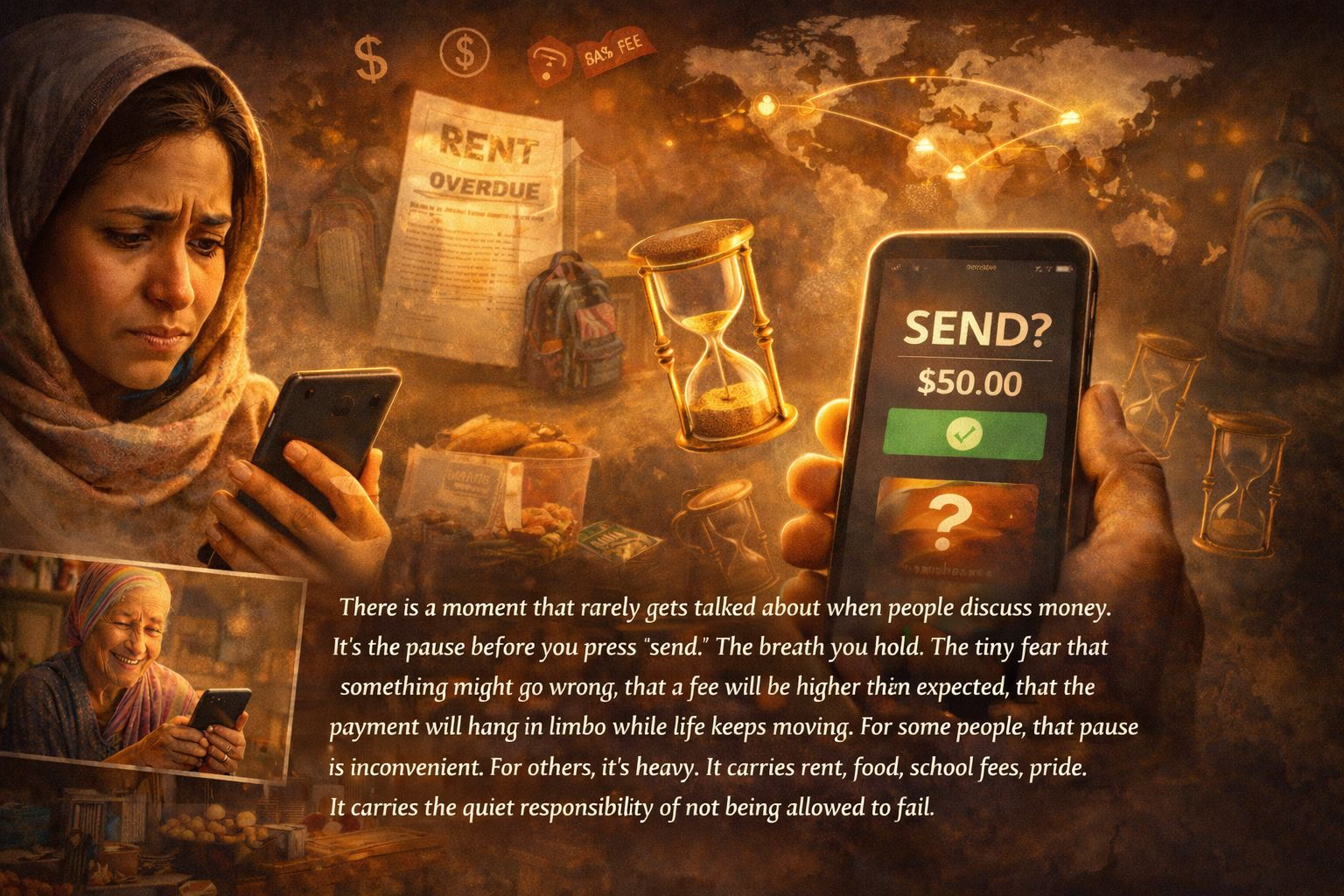
Most financial systems were not designed with that moment in mind. They were built for balance sheets and institutions, not for the human pulse behind a transaction. Even many blockchains, for all their promises of freedom, ask people to become technicians just to move their own money. You want to send a stable dollar, but first you must buy a volatile token. You want certainty, but you’re told to accept probability. You want speed, but you’re warned about congestion, gas spikes, and mempool delays. The system speaks in abstractions while the user thinks in consequences.
Plasma begins from a different emotional truth: that money should not make people anxious.
It treats stablecoins the way people already treat them in real life — as money, not as an experiment. When value moves on Plasma, it moves in the same unit it’s measured in. You don’t have to step into uncertainty just to pay a fee. In many cases, you don’t have to think about fees at all. That alone changes how it feels to use. The fear softens. The transaction stops feeling like a gamble and starts feeling like an action.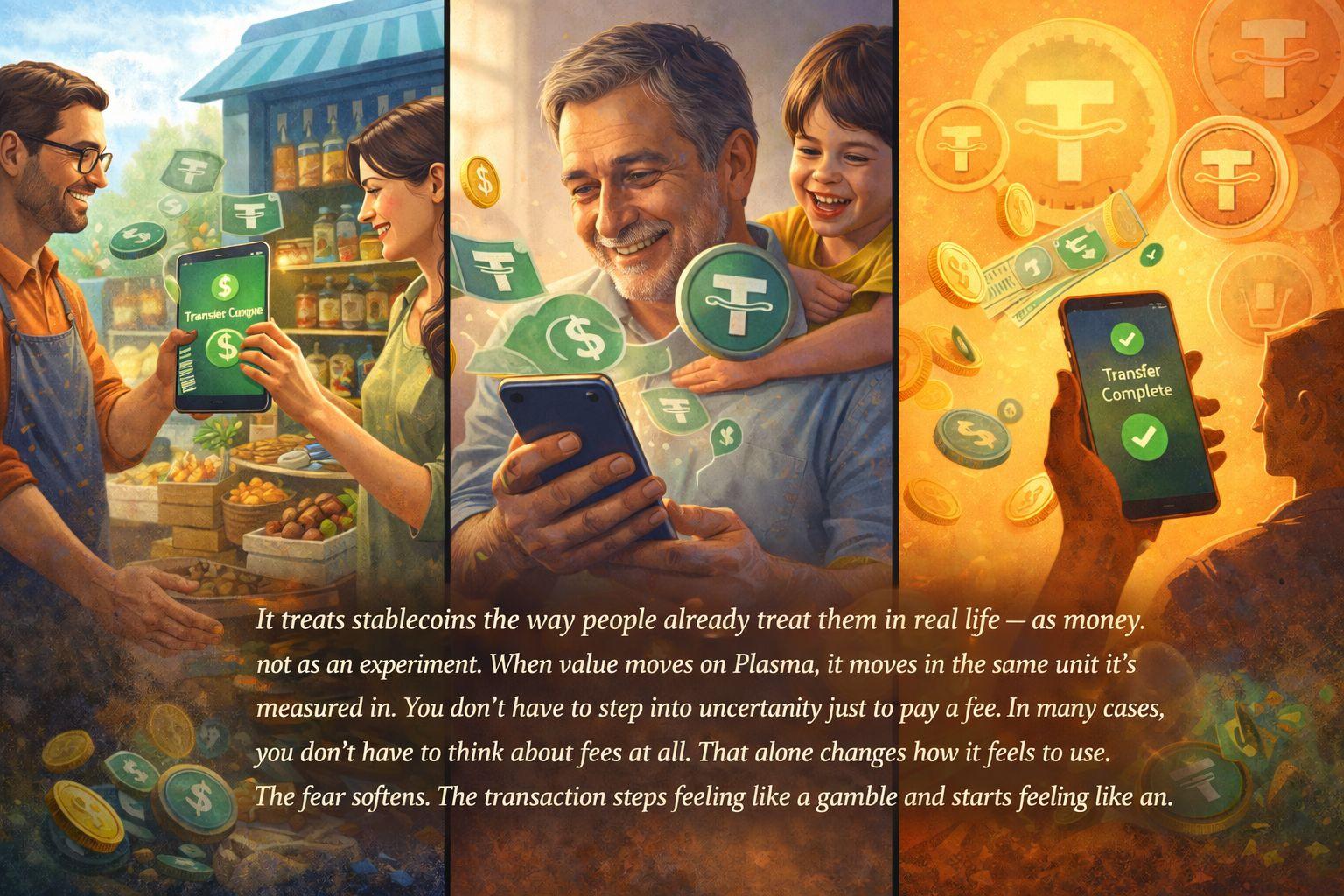
Under the surface, there is serious engineering holding that calm together. Full EVM compatibility means developers don’t have to rebuild their understanding of how smart contracts work. Sub-second finality means that when you pay someone, they know almost instantly that the money is theirs. There is no lingering doubt, no “let’s wait and see.” The moment resolves itself cleanly, the way physical exchanges always have.
But what gives Plasma its emotional gravity is not speed or compatibility. It is its relationship to trust.
By anchoring its security model to Bitcoin, Plasma is tying itself to something that has earned its place through endurance rather than persuasion. Bitcoin did not ask to be trusted; it survived long enough that trust accumulated around it. In a world where payment systems can change rules overnight or freeze accounts without warning, that anchoring is a quiet promise: this ledger is meant to be hard to bully. Hard to rewrite. Hard to quietly capture.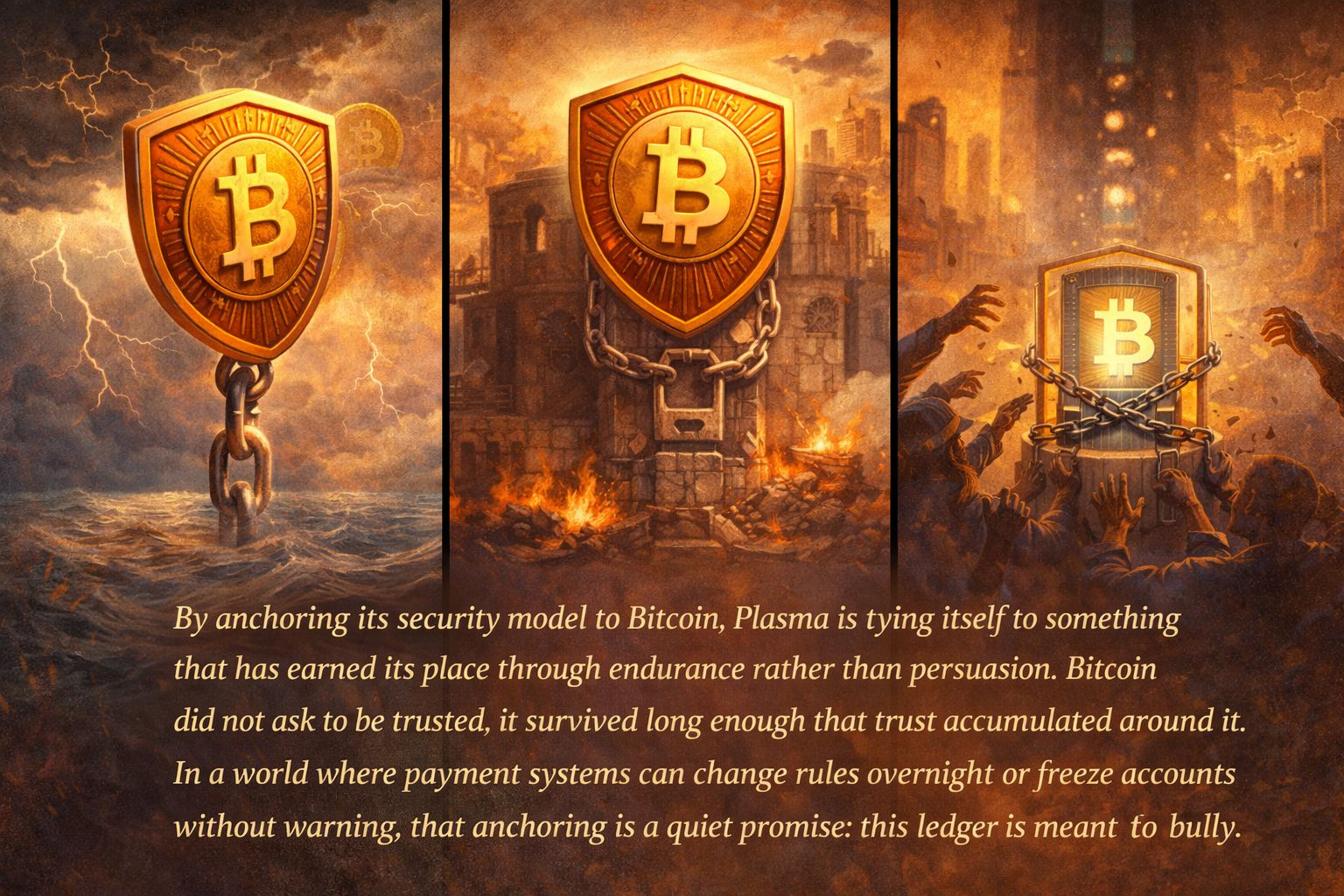
This matters most to people who already feel fragile inside financial systems.
Think of someone sending money home across borders. Not as a headline or a statistic, but as a person watching exchange rates, fees, and delays erase the value of their work. Every extra step is a chance for loss. Every delay is a night of worry. A system that settles quickly, predictably, and without surprise doesn’t just save money — it saves sleep.
Think of a small merchant deciding whether to accept digital payments. Not a startup founder, but a shop owner who closes the register at night and counts carefully. Complexity is risk. Volatility is risk. Plasma removes layers of both. It doesn’t ask that merchant to speculate, to hedge, or to learn a new financial language. It meets them where they already are.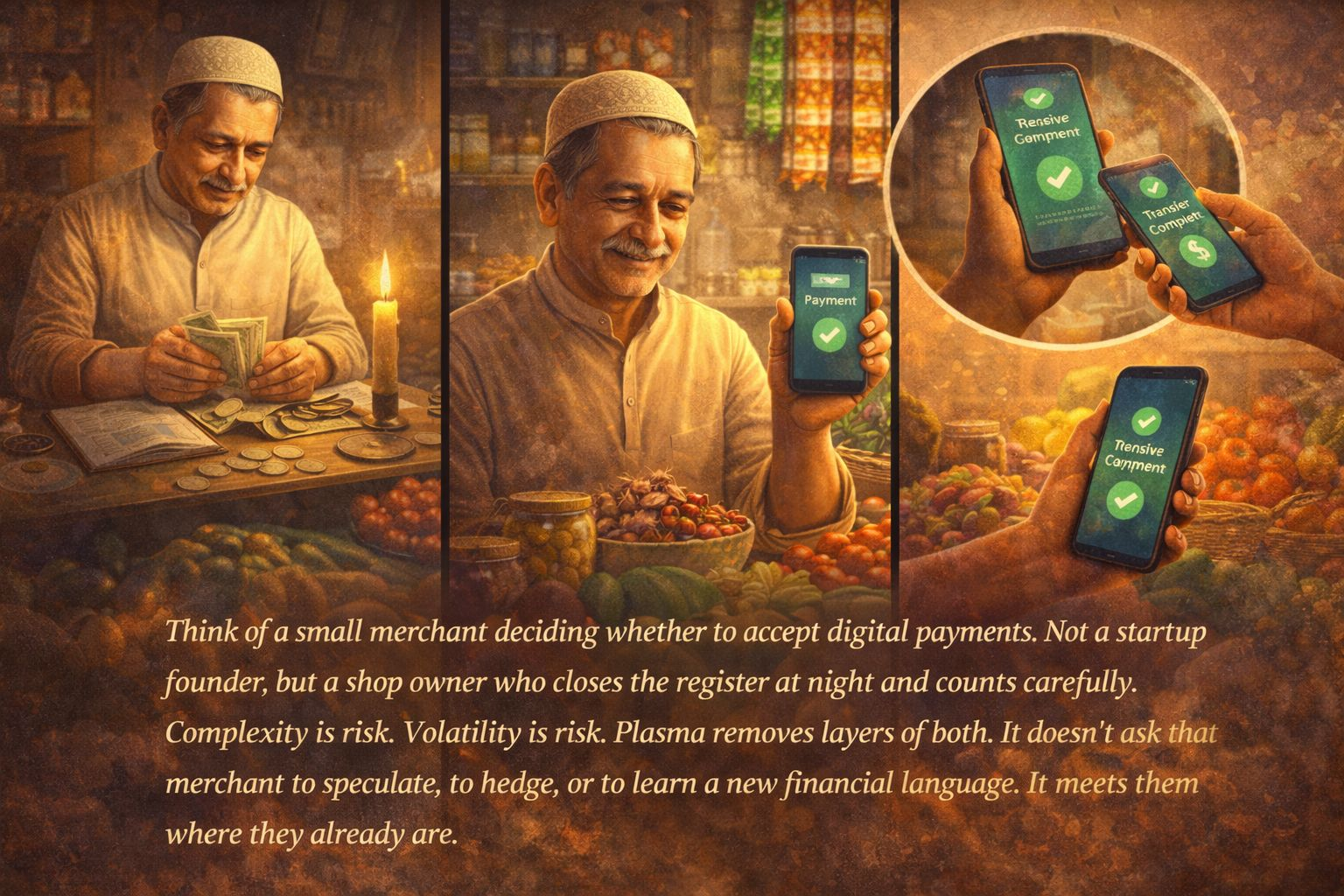
For institutions, the emotions are different but still real. There is the fear of reconciliation errors, the dread of unclear settlement, the quiet panic of something breaking under scale. Plasma’s stablecoin-first design speaks to that anxiety too. Predictable fees, fast finality, and familiar execution environments are not luxuries — they are the difference between confidence and constant monitoring.
What Plasma understands, perhaps better than most systems, is that trust is not built by grand promises. It is built by removing small sources of pain. By making things stop going wrong. By allowing people to forget about the infrastructure entirely.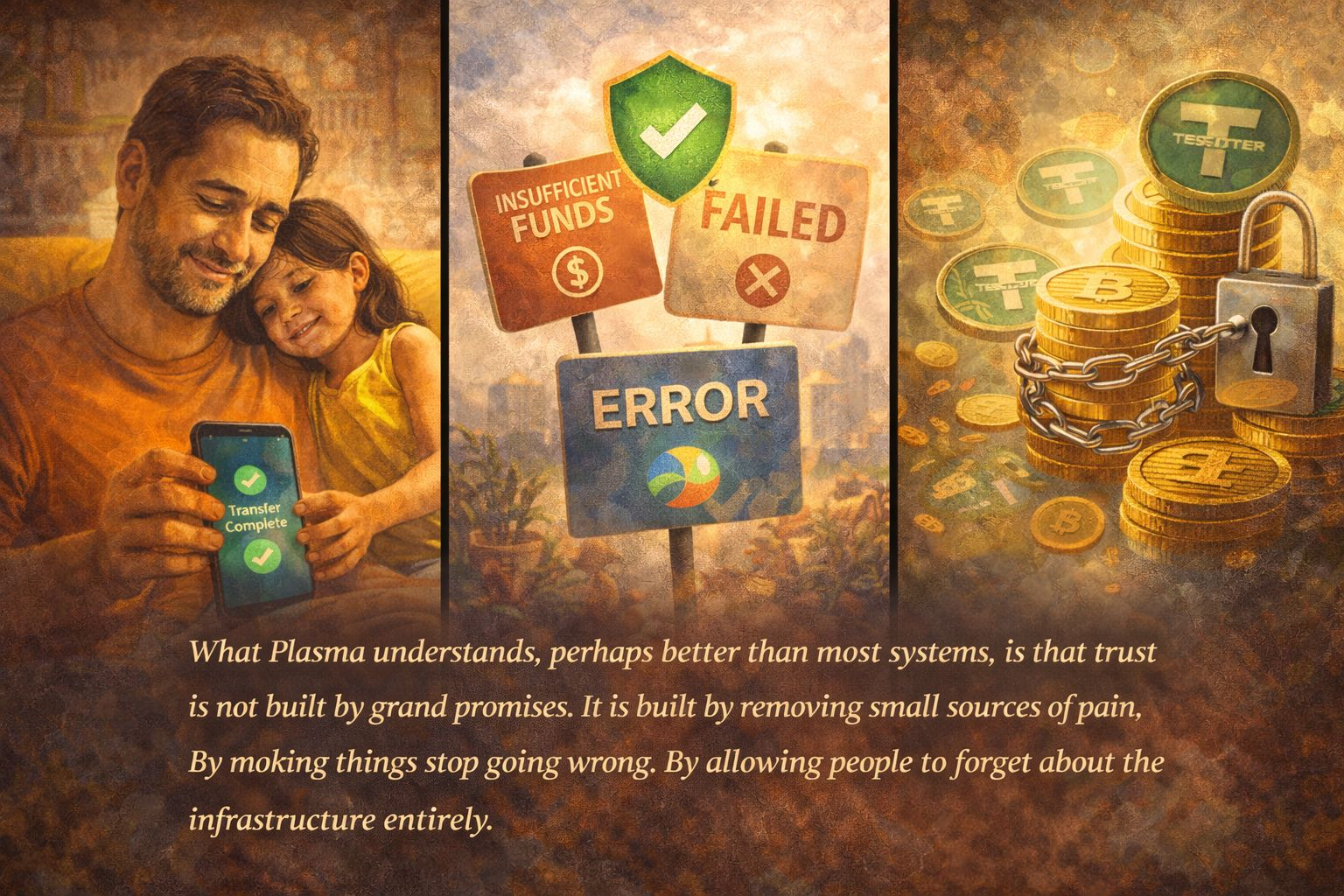
There is no utopian claim here. Plasma does not pretend to fix inequality, or replace governments, or reinvent money itself. It simply tries to make the act of sending value less cruel than it often is today. Less noisy. Less demanding. Less fragile.
And that humility is rare.
If Plasma succeeds, people will not talk about its consensus algorithm at dinner. They will not debate its architecture in line at the store. They will simply notice that sending money no longer feels like a test. That it no longer requires courage.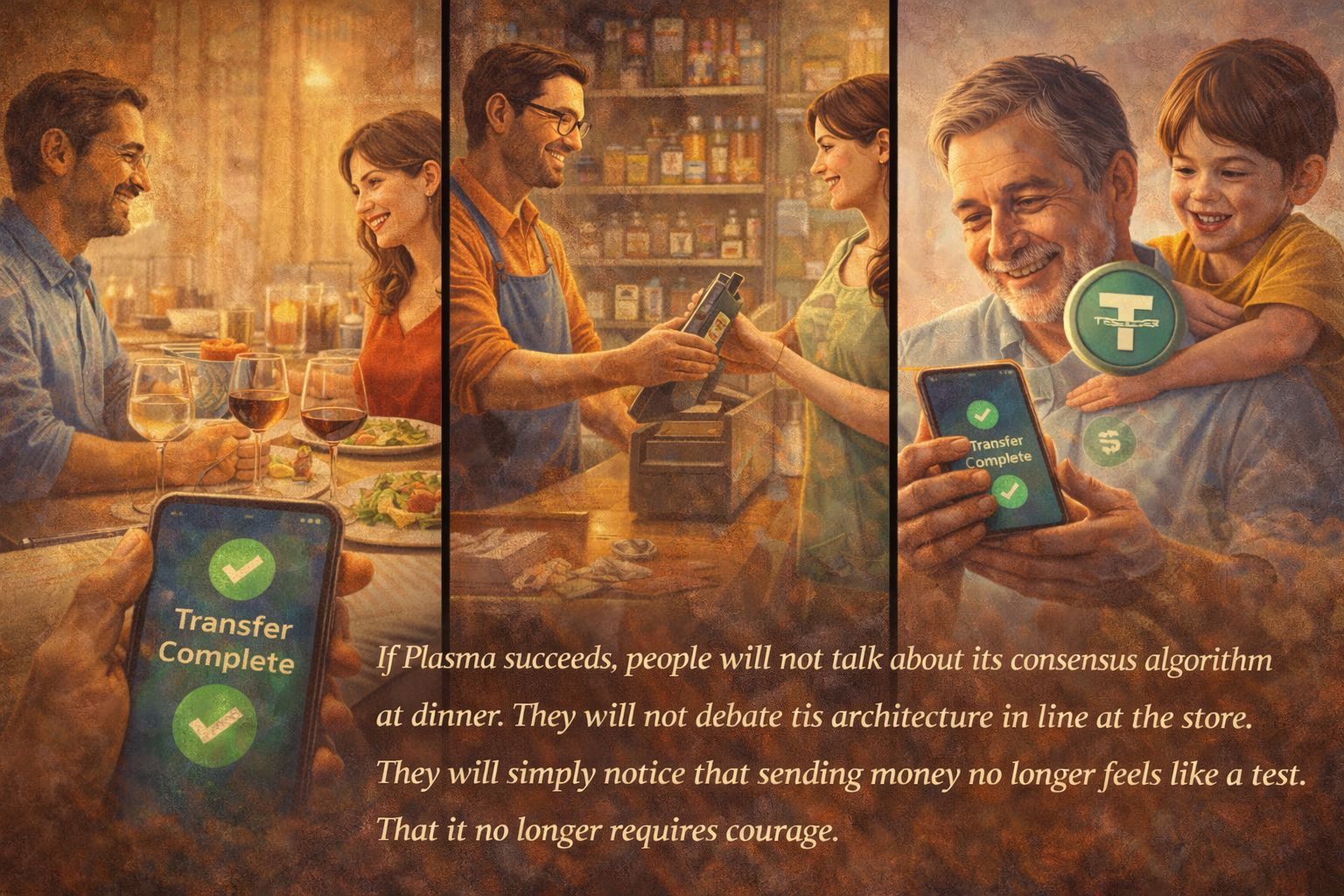
In that quiet absence of fear, something important happens. Money stops being a source of tension and returns to its original purpose: a way to take care of one another across distance and time.
That is not innovation as spectacle.
That is innovation as relief.