

Introduction
Ethereum is the most used blockchain for smart contracts, DeFi, NFTs, and stablecoins. But it has a big problem: it is slow and expensive when many people use it at the same time.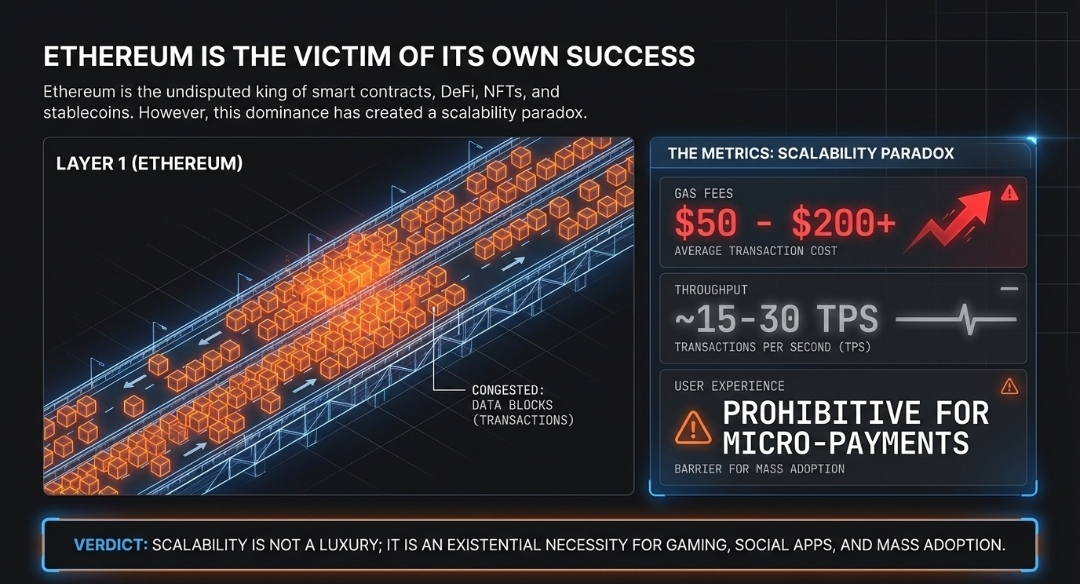
This problem led to the rise of Layer 2 (L2) solutions.
Today, dozens of Layer 2 networks are competing for users, developers, and capital. This competition is often called the “Layer 2 Wars.”
But an important question remains:
👉 Will one Layer 2 win, or will many coexist?
This article explains:
What Layer 2s are
Why they exist
The main competitors
The real challenges
And who is most likely to win in the long run
What Is a Layer 2 (In Simple Terms)?
Ethereum itself is Layer 1.
A Layer 2 is a network built on top of Ethereum that:
Processes transactions faster
Charges much lower fees
Uses Ethereum for final security
Think of it like this:
Ethereum (Layer 1) = main highway (very secure, but crowded)
Layer 2 = fast side roads that later reconnect to the highway
Layer 2s do not replace Ethereum. They depend on it.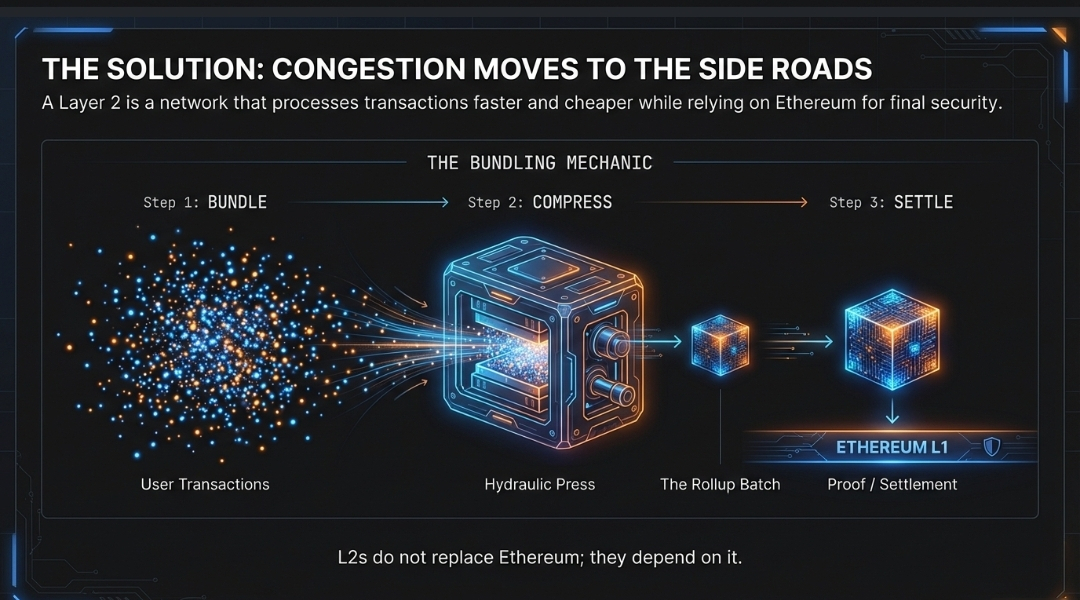
Why Layer 2s Are Necessary
Ethereum has three major limits:
High gas fees during heavy usage
Limited transactions per second
Poor user experience for small payments
Without Layer 2s:
DeFi becomes too expensive
Gaming and social apps are impossible
Micro-payments do not work
Layer 2s solve these problems by:
Bundling many transactions together
Sending a summary back to Ethereum
Sharing the cost across users
The Main Types of Layer 2s
Most serious Layer 2s today are Rollups.
1. Optimistic Rollups
Examples:
Arbitrum
Optimism
Base
How they work:
Assume transactions are correct
Allow challenges during a waiting period
Cheaper and simpler to build
Trade-off:
Withdrawals to Ethereum can be slow
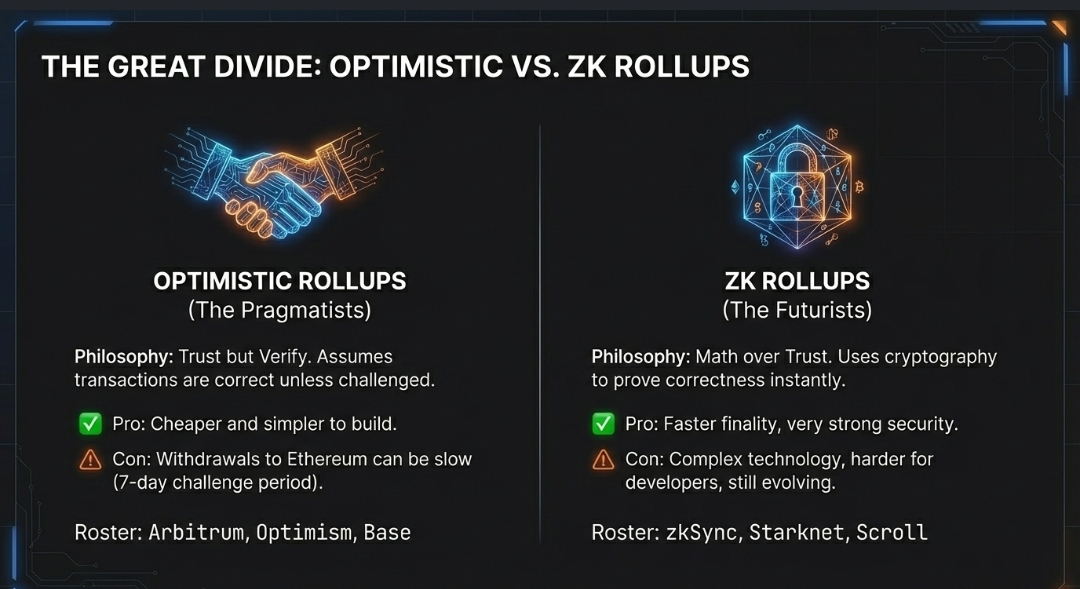
2. ZK Rollups (Zero-Knowledge Rollups)
Examples:
zkSync
Starknet
Scroll
How they work:
Use cryptography to prove transactions are correct
Faster finality
Very strong security
Trade-off:
Complex technology
Harder for developers
Still evolving
The Major Competitors in the Layer 2 Wars
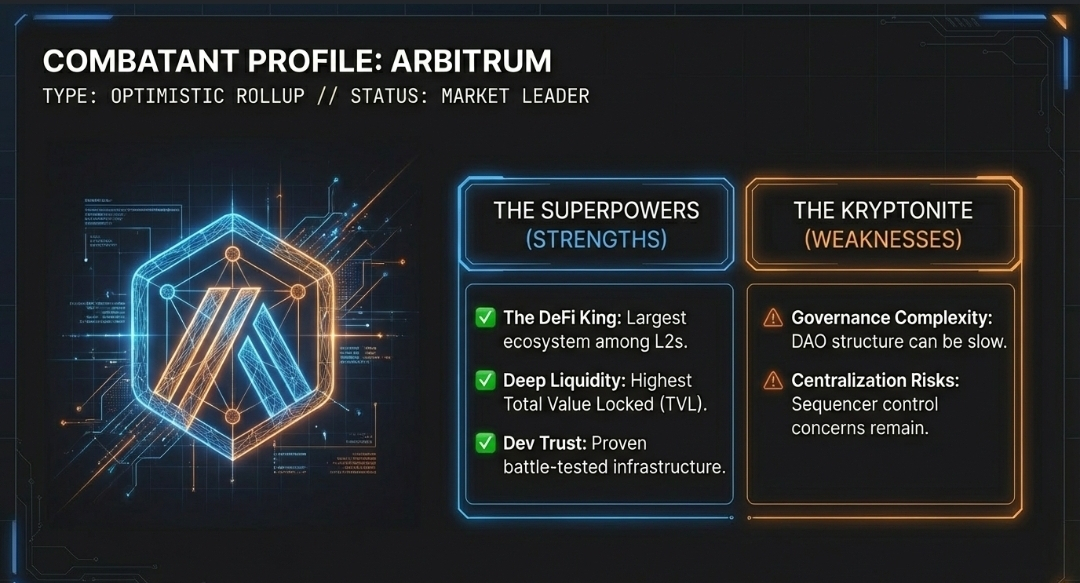
Arbitrum
Strengths
Largest DeFi ecosystem among L2s
High liquidity
Widely trusted by developers
Weakness
Complex governance
Some centralization concerns
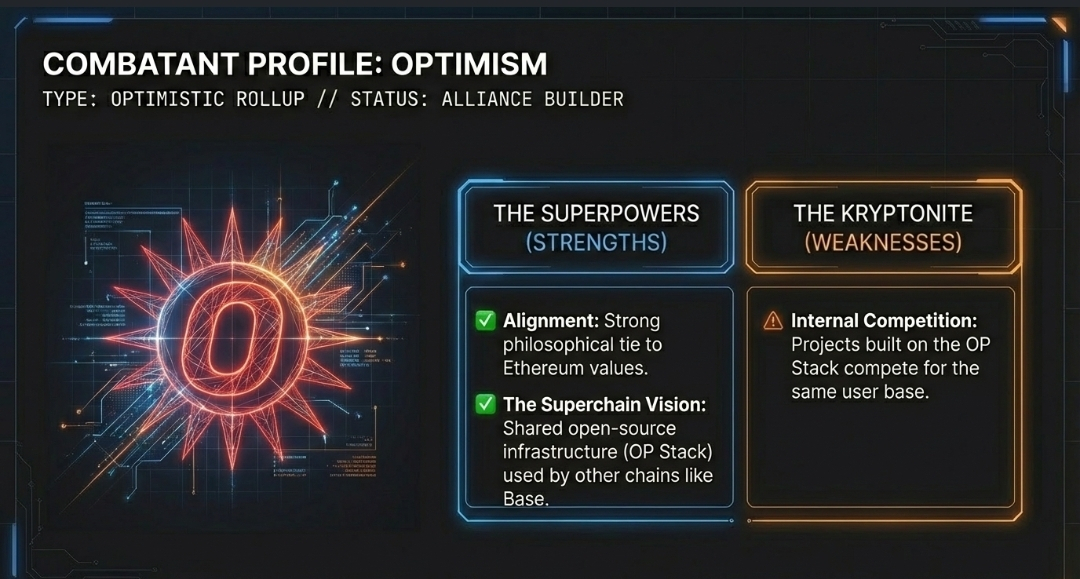
Optimism
Strengths
Strong alignment with Ethereum
“Superchain” vision (shared infrastructure)
Used by Coinbase’s Base
Weakness
More competition inside its own ecosystem
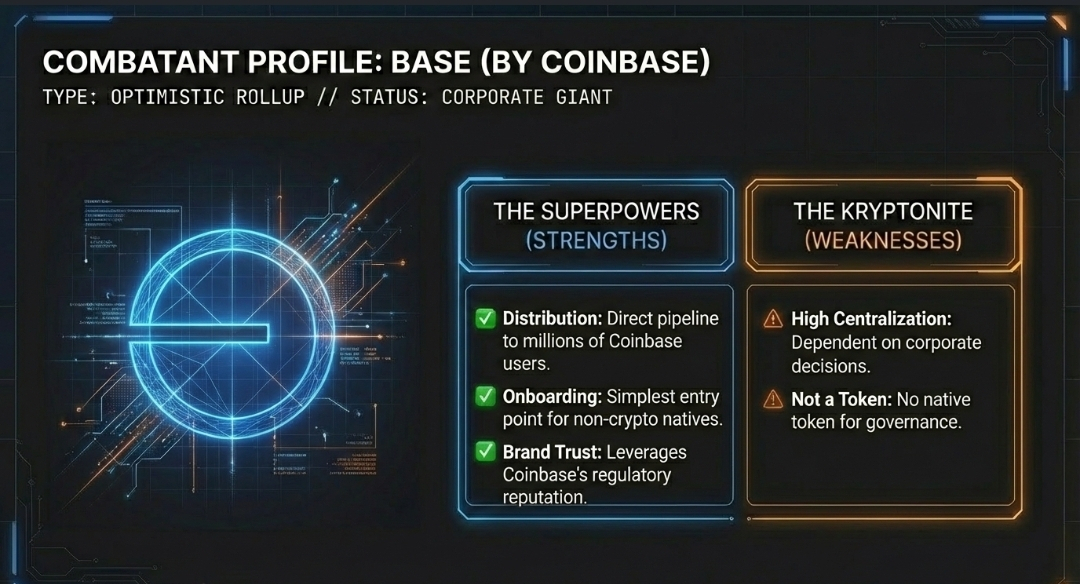
Base (by Coinbase)
Strengths
Direct access to millions of Coinbase users
Very simple onboarding
Strong brand trust
Weakness
High centralization
Depends heavily on Coinbase decisions
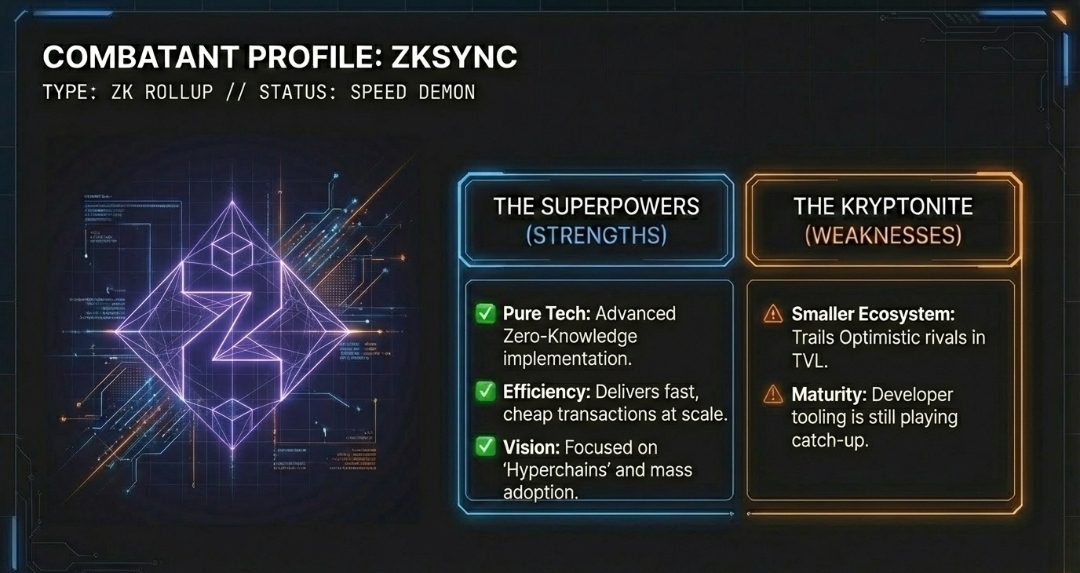
zkSync
Strengths
Advanced ZK technology
Fast and cheap transactions
Long-term scalability vision
Weakness
Smaller ecosystem
Tooling still maturing
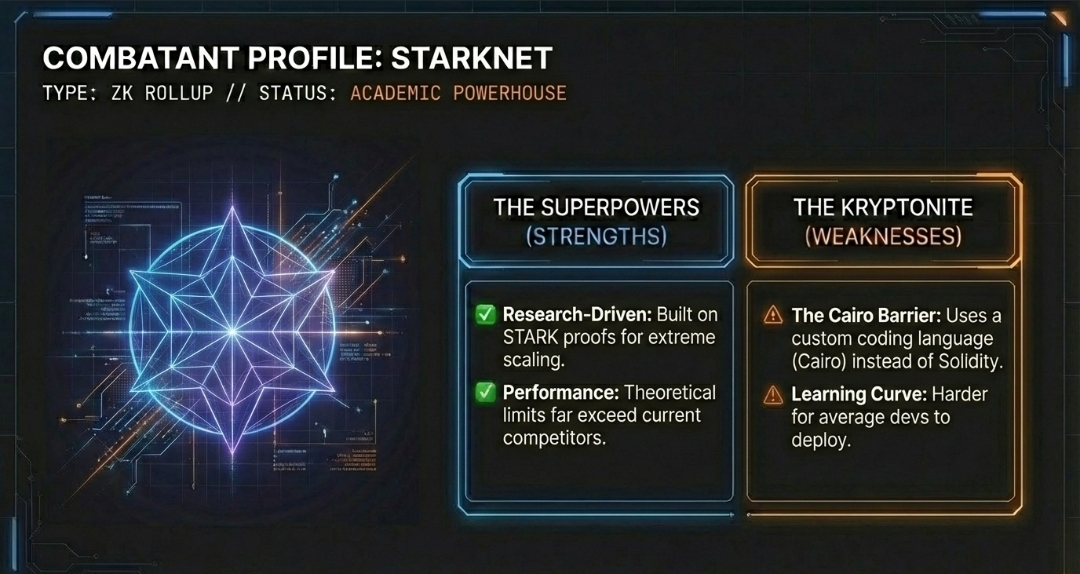
Starknet
Strengths
Very powerful ZK architecture
Backed by serious research
Long-term scalability focus
Weakness
Uses a new programming language (Cairo)
Steep learning curve for developers
The Real Problems No One Likes to Talk About
1. Fragmentation
Users are spread across many Layer 2s:
Different wallets
Different bridges
Different liquidity pools
This makes crypto harder to use, not easier.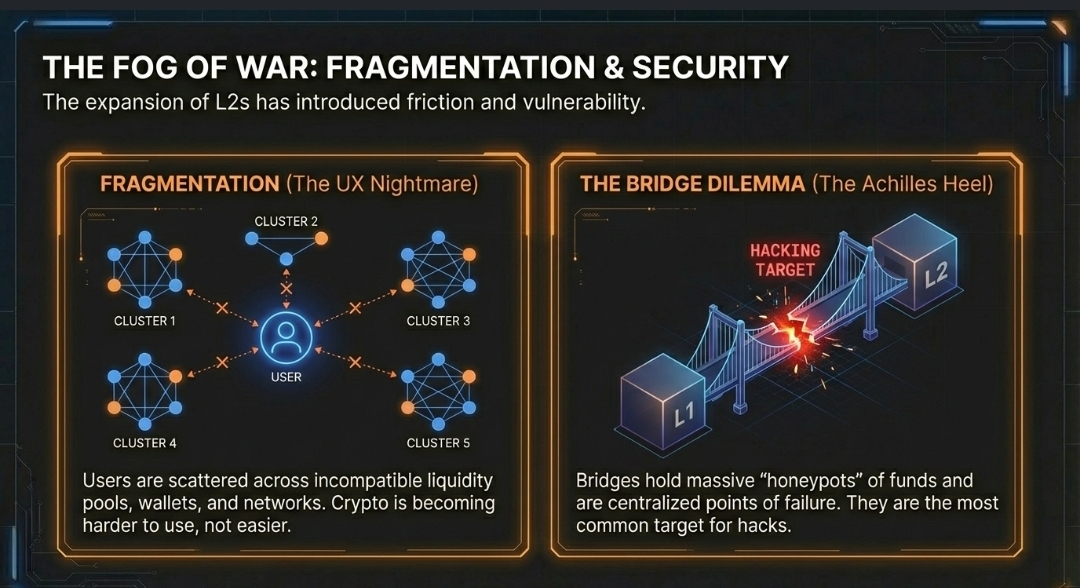
2. Bridges Are Risky
To move assets between L2s, users rely on bridges, which:
Are frequently hacked
Hold large amounts of funds
Are often centralized
Bridges are one of crypto’s biggest security risks.
3. Centralization
Many L2s still:
Have upgrade keys
Use centralized sequencers
Depend on small teams
This goes against the idea of decentralization.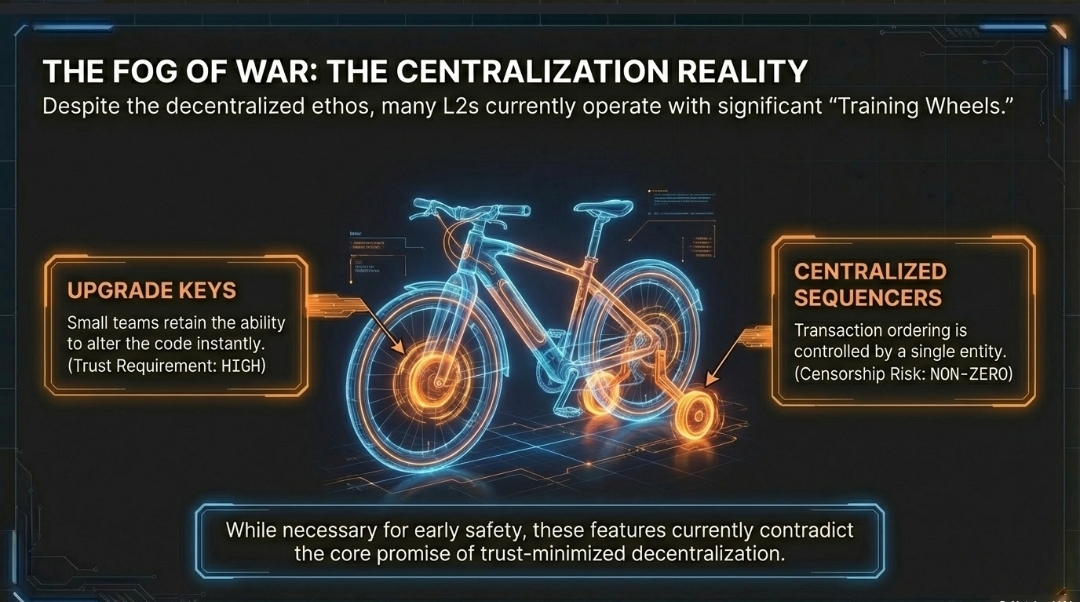
So… Who Will Actually Win?
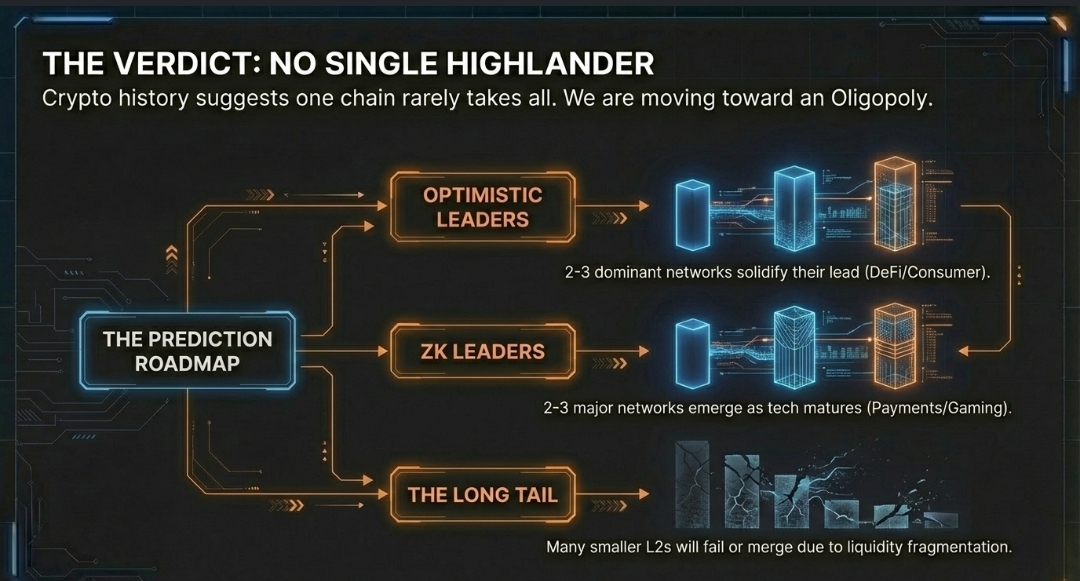
Short Answer: No Single Winner
Crypto history shows that:
One chain rarely controls everything
Different use cases prefer different trade-offs
Likely Outcome: A Few Big Winners
We are likely to see:
2–3 dominant Optimistic Rollups
2–3 major ZK Rollups
Many smaller L2s failing or merging
What Really Determines Success
The winners will not be chosen by hype, but by:
User experience
Easy onboarding
Cheap fees
Fast transactions
Developer adoption
Good tools
Clear documentation
Active communities
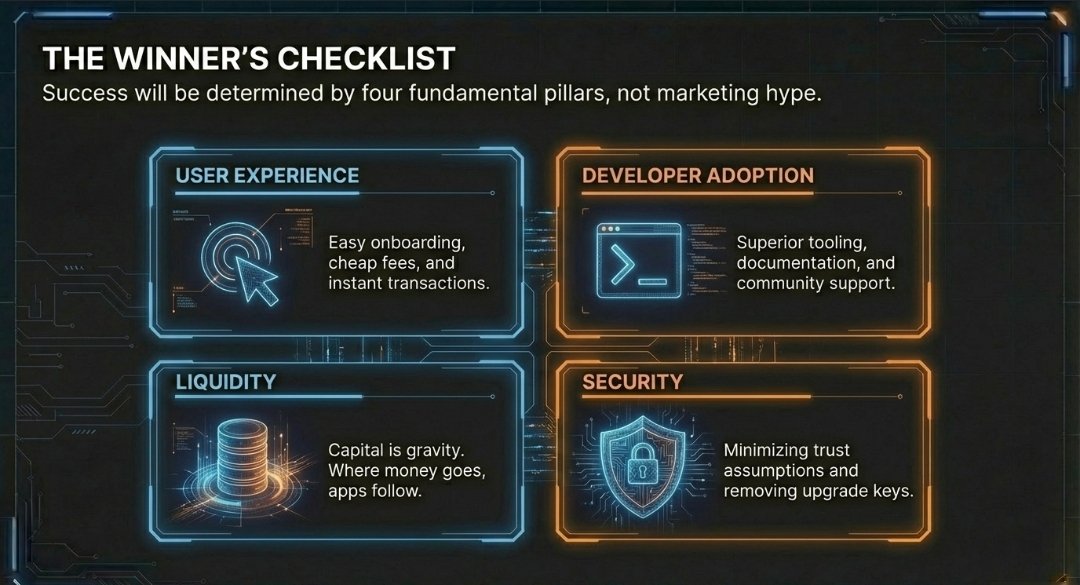
Liquidity
Where capital goes, apps follow
Security
Trust minimized
Fewer centralized control points
The Bigger Truth: Ethereum Is the Real Winner
No matter which Layer 2 succeeds:
Ethereum remains the security layer
Ethereum earns fees
Ethereum becomes the settlement hub
Layer 2s are not competing against Ethereum.
They are competing to become Ethereum’s main execution layers.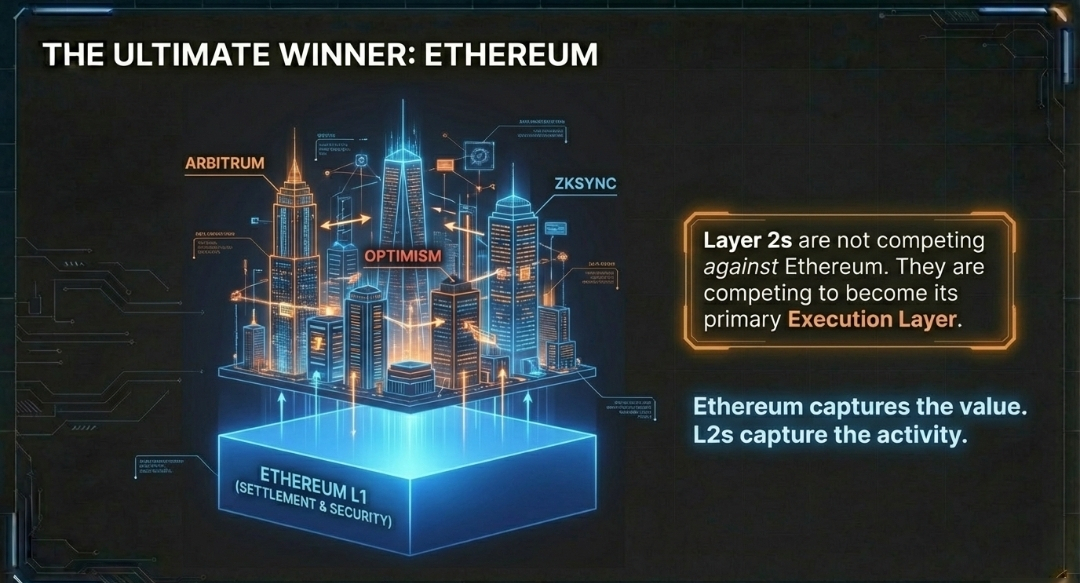
Conclusion
The “Layer 2 Wars” are not about one chain killing the others.
They are about:
Scaling Ethereum
Making crypto usable for normal people
Finding the best balance between speed, cost, and security
In the end:
Multiple Layer 2s will survive
Most will fail
Ethereum will remain at the center
The real winner will be the Layer 2 that users forget they are even using, because everything just works.