Crypto markets are unforgiving to projects that survive on excitement alone. I’ve seen too many tokens explode on announcements, partnerships or narratives, only to slowly bleed value once emissions exceed real usage. That cycle has repeated so often that it’s almost predictable. This is why Vanry’s economic design genuinely caught my attention. It doesn’t feel engineered for a moment. It feels engineered for time.
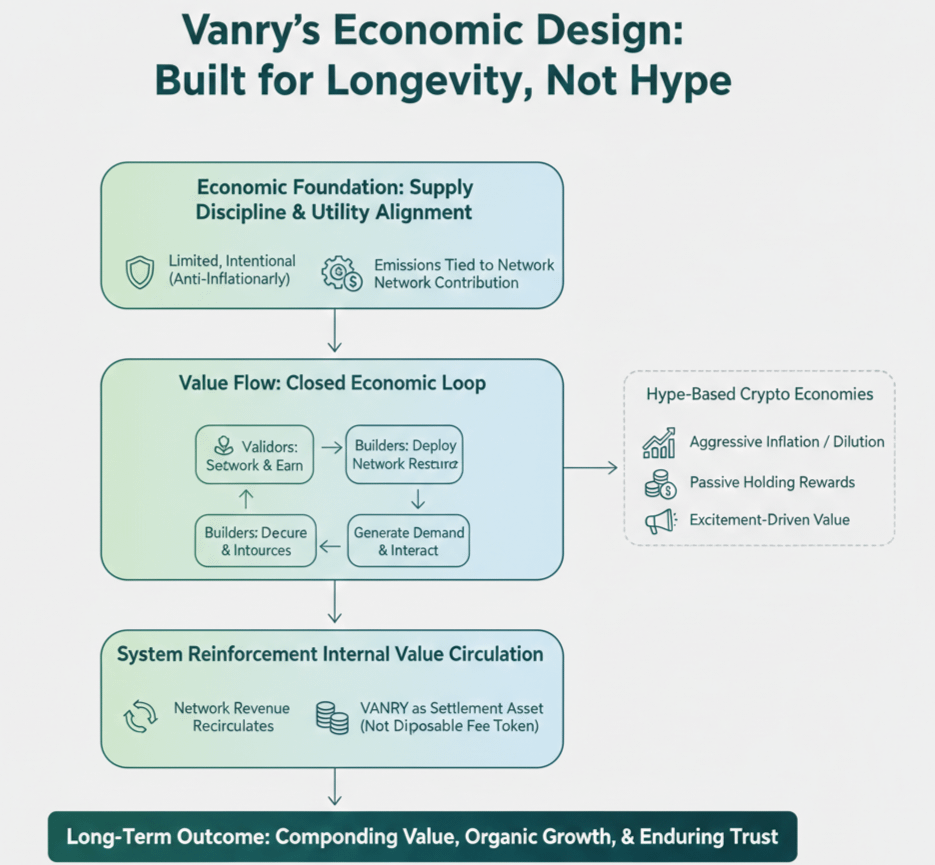
What stands out immediately is the lack of aggressive inflation. VANRY isn’t constantly printing new supply just to subsidize short-term activity or artificial growth metrics. A large portion of the supply is already in circulation, and what remains is released with intention. Future emissions are tied to actual participation and network contribution, not vague promises of growth. That alone reduces the quiet dilution most holders unknowingly pay in other ecosystems.
But supply discipline is only part of the story. What really matters is how value moves through the system. Vanry doesn’t treat its token as a speculative chip detached from reality. Instead, token flow is connected directly to productive behavior. Validators earn by securing the network and maintaining integrity. Builders consume resources when they deploy logic and intelligent systems. Users generate demand through real interaction. Each role feeds into the next, creating a closed economic loop rather than a funnel where value leaks out.
Personally, I find this approach refreshing. Many networks reward passive holding far more than active contribution. Tokens sit idle while emissions flow regardless of usage. Vanry flips that dynamic. Activity matters. Participation matters. The more the network is used, the more relevant and meaningful the token becomes. That alignment between usage and value is subtle but it’s powerful.
Another detail I appreciate is how Vanry handles economic output. Instead of letting value constantly exit the ecosystem, parts of network revenue are designed to circulate internally. This reinforces VANRY’s role as a settlement asset, not just a disposable fee token that users dump after every transaction. Over time, this kind of structure can strengthen the network’s internal economy rather than hollow it out.
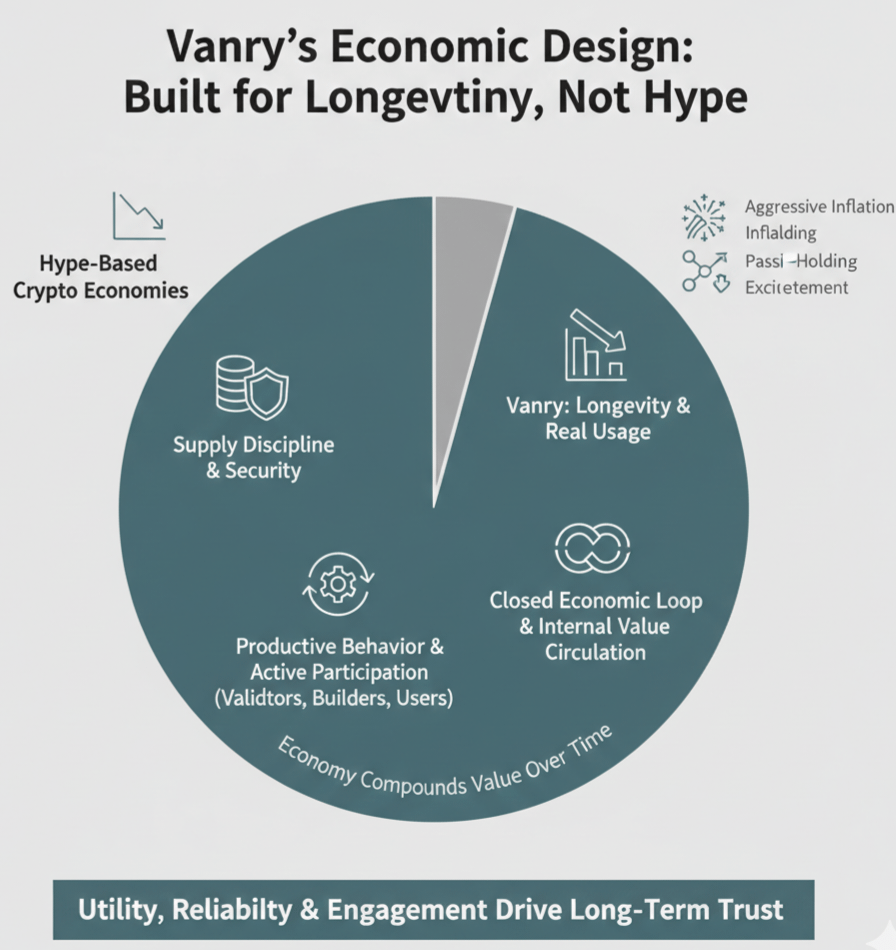
From my point of view, this model favors patience over impulse. It rewards participants who believe networks should grow organically through utility, reliability and engagement, not through constant hype cycles. There’s no guarantee of price appreciation and there never is. But there is a clear attempt to build a healthier foundation, one that can survive beyond market moods.
If Vanry succeeds, I don’t think it will be because of a single viral moment or headline. It will be because its economy quietly compounds value over time, interaction by interaction, as real usage steadily replaces speculation. That’s the kind of design that doesn’t shout, it endures.