
The Ghost in the Machine My Journey into Vanar's Unique World
Hello everyone, and welcome to another deep dive here on Binance Square! Today, I want to share something truly fascinating that I've been researching a blockchain that promises to be different from almost anything else you've encountered. We’ve all heard about Layer 1s, Layer 2s, scalability, and gas fees. But what if I told you there's a blockchain designed not just to process transactions, but to think? To learn, to remember, and to reason?
For a long time, I, like many of you, felt that while blockchain technology was powerful, it often felt dumb. It’s brilliant at keeping a secure, unchangeable record, but when it came to understanding complex real-world data or making intelligent decisions beyond simple "if X, then Y" commands, it often fell short. It needed help from outside systems, from oracles, from centralized servers. It was like a super-fast calculator without a brain.
This is where Vanar Chain (formerly Virtua) caught my attention. The more I dug into it, the more I realized that calling Vanar a simple "Layer 1 blockchain" is like calling a supercomputer a fancy calculator. Vanar isn't just a network; it's an intelligent ecosystem, built from the ground up with not one, not two, but five distinct layers that work together to create something truly revolutionary. It’s what I’ve started calling the "5-Layer Intelligence Stack," and I believe it's going to change how we think about blockchain entirely.
My goal in this article is to pull back the curtain on this incredible architecture. I want to explain, in the simplest possible terms, how these five layers combine to create a blockchain that is not only fast and green but also uniquely intelligent. I want you to understand why Vanar is positioning itself as the infrastructure for the "next 3 billion users" the people who might not even know they’re using a blockchain. So, let’s embark on this journey together and explore the "brain" behind Vanar.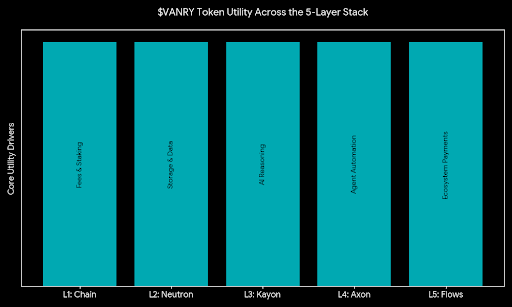
Understanding the Core Problem: Why Blockchains Needed a Brain
Before we dive into Vanar's solution, let’s briefly consider the problem it's trying to solve. Think about a regular blockchain, like Ethereum or Solana. They are fantastic at what they do: processing transactions, securing data, and running smart contracts. But imagine you wanted a smart contract to do something really complex, like:
"Analyze the weather data for the last 5 years, predict the best time to plant a certain crop, and then automatically order the seeds when conditions are optimal."
"Create a unique, evolving AI companion in a game that learns from your playing style and changes its personality over time."
"Securely store a high-resolution 3D model of a car, ensure its authenticity, and then allow an AI to check if it meets specific engineering standards before it's tokenized as an RWA."
Traditional blockchains struggle with these kinds of tasks because:
They are not good at storing large, complex data: Storing a high-res image or a video directly on-chain is incredibly expensive and inefficient. So, data often lives off-chain on centralized servers or IPFS, making it less secure and harder for the blockchain to interact with directly.
They can’t "reason": Smart contracts follow pre-programmed rules. They can't "think" or "learn" or "interpret" data in a complex way. For anything intelligent, they rely on "oracles" external services that feed information to the chain. This introduces points of centralization and potential failure.
They lack "memory" for complex context: They know the current state of transactions, but connecting that to a vast library of historical data, analyzing it, and drawing conclusions is beyond their native capabilities.
Vanar's team saw these limitations and realized that for blockchain to truly go mainstream to power the next generation of games, AI, and enterprise solutions it needed to evolve. It needed to become more than just a ledger; it needed to become intelligent by default. And that's exactly what their 5-Layer Intelligence Stack aims to achieve.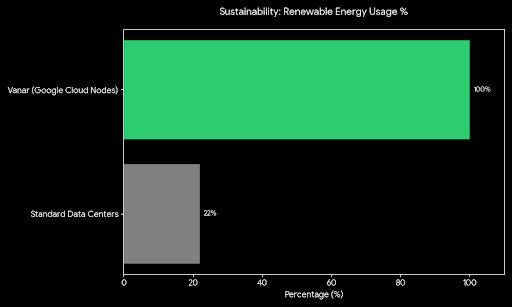
Deconstructing the Brain: Vanar's 5-Layer Intelligence Stack
Imagine a magnificent, futuristic city. Each part of this city serves a crucial function, working together seamlessly. This is the analogy I like to use when thinking about Vanar’s architecture. Each layer is a vital component, building upon the last, to create a truly intelligent and robust ecosystem.
Layer 1: The Foundations Vanar Chain (The Groundwork)
Every great city needs solid ground to build upon, and for Vanar, that's the Vanar Chain itself. This is the core Layer 1 blockchain, the bedrock of the entire ecosystem.
What it is: At its heart, Vanar Chain is a high-performance, EVM-compatible Layer 1 blockchain. "EVM-compatible" is a fancy way of saying it speaks the same language as Ethereum. This is incredibly important because it means developers who are already familiar with building on Ethereum can easily migrate their projects or create new ones on Vanar with minimal effort. Think of it as a universal translator for blockchain developers.
My take on its purpose: The team behind Vanar knew that for real-world adoption, this foundation had to be fast, secure, and incredibly efficient. They focused on:
Speed: With transaction finality measured in sub-3 seconds, Vanar feels instantaneous. In the world of gaming or retail, nobody wants to wait minutes for a transaction to confirm.
Scalability: It's designed to handle a massive number of transactions without slowing down, ready for those "next 3 billion users."
Cost-Effectiveness (Fixed Fees): This is a huge one for businesses! Vanar offers a fixed-fee model (often around $0.0005 per transaction). Imagine being a large company trying to plan your budget if your transaction costs could swing wildly from cents to hundreds of dollars, like on Ethereum. With Vanar, businesses can predict their costs precisely, which is non-negotiable for real-world adoption.
Eco-Friendliness: This is a crucial element for attracting global brands with strict ESG (Environmental, Social, and Governance) goals. Vanar leverages Google Cloud’s recycled energy infrastructure for its validator nodes, making it one of the most environmentally friendly blockchains out there. They even provide transparency on their carbon footprint. This isn't just a marketing gimmick; it's a strategic move to be the "green choice" for enterprise.
Why it's essential: This layer provides the secure, transparent, and efficient ledger necessary for any blockchain application. It’s the highway system of our city, allowing information and value to flow quickly and reliably.
Layer 2: The Library Neutron (The Data Compressor & Memory Bank)
Now, here's where things start to get really interesting and unique. If Layer 1 is the ground, then Neutron is the city's vast, intelligent library and data archive. But it’s no ordinary library; it’s a master of compression and organization.
What it is: Neutron is Vanar's flagship AI layer that functions as an advanced data compression and storage engine. It's designed to solve the problem of storing large, complex data directly on the blockchain in an affordable and scalable way.
My take on its creative purpose: This is a game changer for AI and large scale applications. Traditionally, storing a high resolution image, a 3D model of a game asset, or a lengthy legal document directly on-chain is prohibitively expensive. So, developers use off-chain storage like IPFS or centralized cloud solutions. But this makes the data less secure, harder to verify, and most importantly, unavailable for native on-chain intelligence.
The Magic of Compression: Neutron can take massive files (like a 25MB video or a 50MB 3D model) and compress them into a tiny, verifiable "Seed" that lives directly on the Vanar Chain. We're talking about compression ratios of up to 500:1! This "Seed" isn't the file itself, but a unique, cryptographically secure fingerprint and key that allows the full data to be retrieved and verified whenever needed.
On-Chain Memory: Imagine giving a blockchain the ability to "remember" anything you throw at it not just transaction hashes, but the actual content of a contract, the details of an intellectual property, or the full history of an AI's learning process. That's what Neutron provides. It transforms the blockchain from a simple ledger into a semantic database a database that understands the meaning and context of the data it stores.
Why it's essential: Neutron empowers Vanar to handle the rich, diverse data that real-world applications demand. For gaming, it means complex assets can be truly owned and verified on-chain. For AI, it means intelligent agents can access and process vast amounts of relevant data directly from the blockchain, making them truly decentralized and autonomous. It’s the city’s meticulously organized archive, where every piece of information is compressed, secured, and ready to be recalled or analyzed instantly.
Layer 3: The Brain Kayon (The Reasoning Engine)
Now that our city has solid ground (Vanar Chain) and a vast, organized library (Neutron), we need a brain to make sense of it all. This is where Kayon comes in Vanar’s unique AI reasoning engine.
What it is: Kayon is a decentralized AI engine designed to perform "reasoning" over the data stored in Neutron and other on-chain sources. It's not just retrieving data; it's interpreting it and drawing conclusions.
My take on its groundbreaking creativity: This is the layer that truly elevates Vanar beyond other blockchains. While other L1s might allow AI to interact with the blockchain (e.g., an AI bot reading prices), Kayon enables the blockchain itself to possess a form of intelligence.
Smart Contracts with a Brain: Think about our complex smart contract example: "Analyze weather data, predict planting time, order seeds." On a traditional chain, this would require a complex series of external oracles and services. With Kayon, the smart contract can access the weather data stored (and compressed) by Neutron, use Kayon's reasoning capabilities to analyze patterns and make a prediction, and then execute the seed order, all within the secure, decentralized environment of Vanar.
Dynamic AI in Web3: For games, this means truly adaptive NPCs (Non-Player Characters) or game environments that react intelligently to player actions based on stored historical data. For financial services, it could mean AI agents that can assess complex risk profiles by analyzing vast datasets on-chain, rather than relying on external, potentially biased, centralized services.
Learning and Evolving: Kayon allows for machine learning models to operate directly on-chain. This means dApps can evolve and improve over time, learning from new data without needing constant human intervention or centralized updates.
Why it's essential: Kayon is the central processing unit of our city. It takes the information from the library (Neutron), processes it, draws conclusions, and makes decisions. It transforms Vanar from a passive ledger into an active, intelligent participant in its own ecosystem. This is what truly enables "Intelligence by Default" for Web3 applications.
Layer 4: The Connective Tissue Axon (The Decentralized Agents)
As our intelligent city grows, we need autonomous workers to carry out the decisions made by the brain, using the information from the library. This is the role of Axon, Vanar's decentralized agent framework.
What it is: Axon provides the framework for decentralized AI agents to operate autonomously on the Vanar Chain. These agents can be programmed to perform specific tasks, interact with smart contracts, and leverage the intelligence of Kayon and the data of Neutron.
My take on its purpose in the stack: Axon is about automation and scalability of intelligence. If Kayon is the brain that thinks, Axon is the hand that acts.
Autonomous Operations: Imagine an AI agent within a decentralized game economy. It could use Kayon to analyze player demand (from Neutron data), automatically adjust item prices, or even deploy new game assets, all without human input.
Personalized Experiences: In a metaverse, an Axon agent could manage your personal preferences, curate content based on your past interactions, or even facilitate complex trades on your behalf, always respecting your on-chain identity and permissions.
The 'Invisible Hand' of Web3: Axon agents are designed to make the Web3 experience seamless. They can manage tasks like fee optimization, data management, and even proactive security monitoring, making the blockchain experience effortless for the end-user.
Why it's essential: Axon brings the intelligence of Kayon into practical, automated action. It’s the workforce of our city, constantly carrying out tasks, optimizing systems, and interacting with other parts of the city based on intelligent directives. It's the layer that ensures the "smart" part of "smart contract" truly delivers on its promise of automation and efficiency.
Layer 5: The Interface Flows (The Seamless User Experience)
Finally, for our intelligent city to be truly useful, it needs an intuitive way for its citizens (users) to interact with it. This is where Flows comes in Vanar’s solution for a truly seamless and humanized user experience.
What it is: Flows encompasses Vanar's approach to user experience (UX), focusing on abstracting away the complexities of blockchain interaction. This includes features like Social Wallets, human-readable addresses, and a focus on intuitive user interfaces.
My take on its creative significance: This is the layer that directly addresses the "next 3 billion users." Most people don't want to deal with long, complicated hexadecimal wallet addresses or remember seed phrases. They want something as easy as logging into their favorite social media platform.
Social Wallets & Human-Readable Names: Flows allows users to create wallets linked to their existing social media accounts or email addresses. It also supports human-readable addresses, like "john.vanar" instead of a string of random characters. This removes a massive barrier to entry for mainstream users.
No More Gas Fee Anxiety: Thanks to Layer 1's fixed fees and potential for sponsored transactions (where a dApp pays the fee for the user), users may not even realize they are paying a transaction fee. The experience becomes as smooth as using a traditional app.
Invisible Web3: The ultimate goal of Flows is to make the blockchain disappear into the background. Users interact with a game, a metaverse, or a brand loyalty program, and they don't necessarily know or need to know that a blockchain is powering it. The technology becomes a utility, not a hurdle.
Why it's essential: Flows is the welcoming interface of our city. It ensures that everyone, regardless of their technical knowledge, can easily access and benefit from the advanced intelligence and capabilities built into the lower layers. It makes the cutting-edge technology approachable and enjoyable for the everyday user, truly paving the way for mass adoption.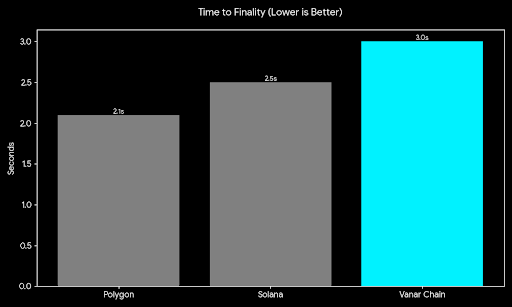
Bringing it All Together: Why This 5-Layer Stack is Revolutionary
Now that we’ve explored each layer, I want to emphasize why this integrated 5-Layer Intelligence Stack is so groundbreaking:
True Decentralized Intelligence: Vanar isn't just "integrating" AI; it's building AI into the core protocol. This means intelligence is decentralized, transparent, and auditable, unlike centralized AI models.
Unlocks New Use Cases: This architecture opens the door for applications that were previously impossible on blockchain. Imagine AI-powered legal contracts that can analyze case law, adaptive metaverses that evolve in real-time, or truly intelligent financial models that can assess complex market data autonomously.
Built for Mainstream Adoption: From the fixed, predictable fees for enterprises (Layer 1) to the seamless user experience (Flows, Layer 5), every layer is designed with mass market and enterprise adoption in mind. It removes the friction points that have kept billions of potential users out of Web3.
Green & Sustainable: Its commitment to eco-friendly operations positions it as the blockchain of choice for brands and organizations with strong environmental goals, further cementing its appeal for real-world enterprise integration.
A Powerful Circular Economy for $VANRY: Every time the "brain" (Kayon) thinks, or the "memory" (Neutron) is accessed, or the "workers" (Axon) perform a task, it utilizes $VANRY. This creates a deeply integrated utility for the token, tying its value directly to the intelligence and activity of the entire stack.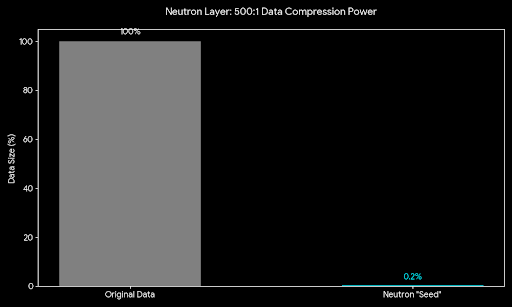
My Final Thoughts: Vanar Building the Future, Intelligently
As I reflect on my research into Vanar, I’m genuinely excited by its vision. In a crowded crypto landscape, many projects offer incremental improvements. Vanar, however, is proposing a fundamental shift: a blockchain that is not just a ledger, but a dynamic, intelligent, and evolving ecosystem.
I believe this "5-Layer Intelligence Stack" is more than just a technical achievement; it's a strategic blueprint for how blockchain can finally fulfill its promise of revolutionizing industries beyond finance. It’s about building a digital infrastructure where intelligence is native, where data has semantic meaning, and where user experience is paramount.
If you’re like me, constantly looking for projects with real utility, innovative technology, and a clear path to mainstream adoption, then Vanar Chain, with its groundbreaking 5-Layer Intelligence Stack, is definitely one to watch closely. It’s not just building a chain; it’s building the future, intelligently.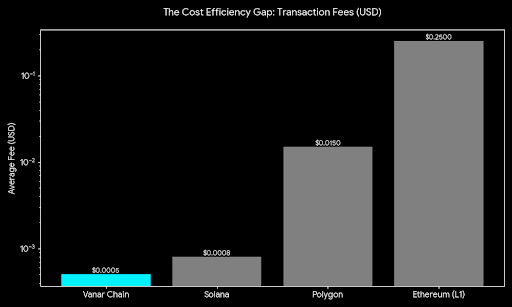
What are your thoughts on a blockchain designed to think? Let me know in the comments below!