
For a long time, I thought audits were mostly about regulation and reporting. The more I looked at how payment systems actually operate, the more my view changed. From my exposure to Plasma, it became clear to me that audits fail far earlier than most teams realize, and usually for one reason. The infrastructure was never designed to make financial history easy to verify.
In many systems, audits are painful because records are scattered. Payments live in one place. Refunds are tracked somewhere else. Timing is reconstructed from logs. When auditors ask simple questions, teams respond with explanations instead of evidence. From my perspective, that is not a compliance issue. That is an infrastructure issue.
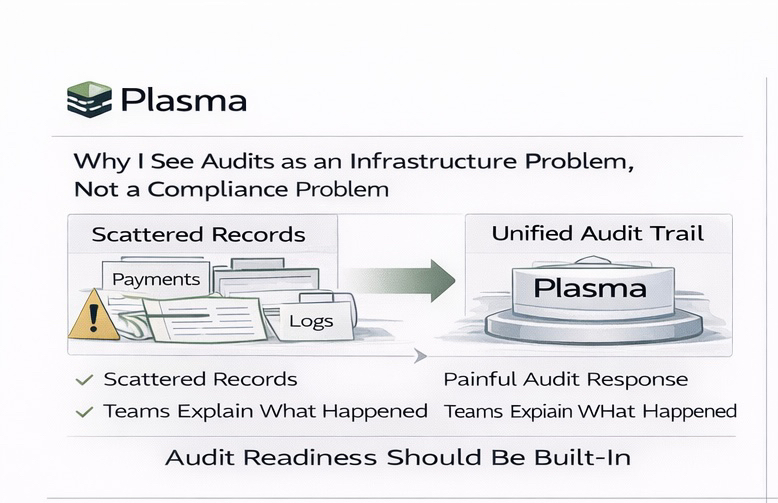
What stands out to me about Plasma is how audit readiness is treated as a natural outcome of execution, not an afterthought. Every payment moves through defined states. Each state change remains linked to the original transaction. Timing is preserved consistently. When I look at this design, it feels obvious that audits should become easier, because the system already tells a complete story without interpretation.
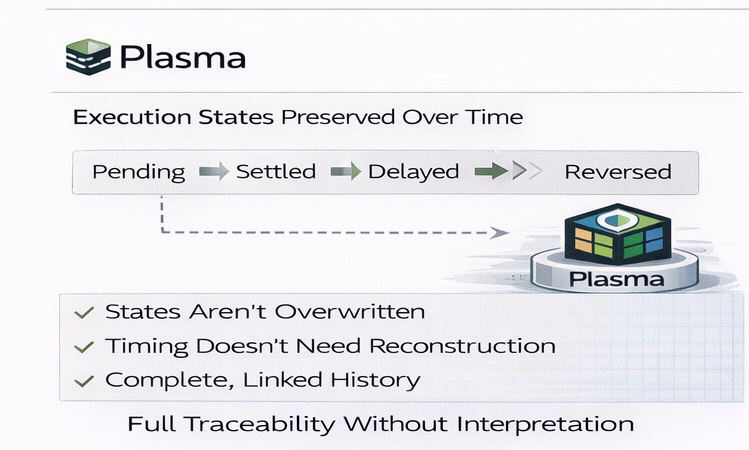
My exposure to Plasma’s architecture showed me why so many teams struggle during audits. They rely on systems that overwrite history or separate execution from records. Plasma avoids this by keeping outcomes deterministic and histories intact. Nothing needs to be explained later because nothing is hidden or rewritten along the way.
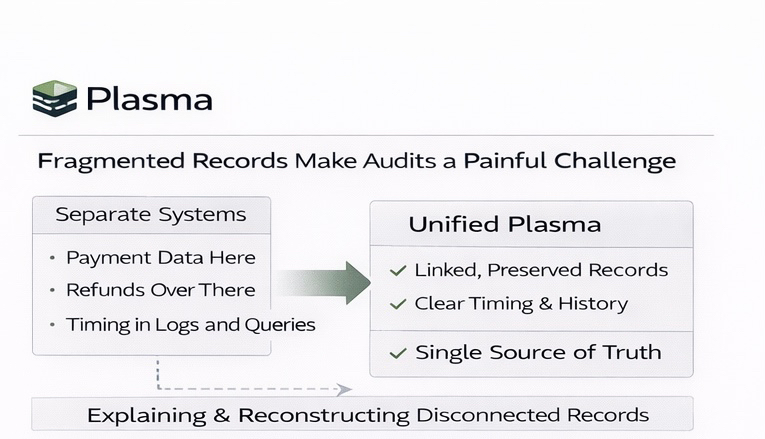
From an operational standpoint, this changes how organizations behave. Finance teams spend less time preparing narratives. Compliance teams rely on system output instead of manual reconstruction. Audits shift from stressful events to routine checks. That transformation does not come from better policies. It comes from better infrastructure.
My take is that long term financial systems should make audits boring. When infrastructure preserves truth automatically, verification becomes straightforward. Plasma feels designed with this mindset. It treats auditability as a consequence of disciplined execution, not as a separate layer bolted on later.

