
Over the past decade we have seen Stablecoin centric blockchains come out in waves. Each wave is an attempt to make blockchains better for making payments rather than just for speculation. Now @Plasma is entering the scene. It has the advantage of being able to learn from past experiences. If we look at Plasma and compare it to things like Tron, which came out on and Aptos, which is more recent we can see how the priorities for designing these systems have changed over time. This shows us why Plasma is not another version of something that already exists but rather a different end goal altogether. The Stablecoin centric blockchains, like Plasma are really, about making payments easier and more efficient.
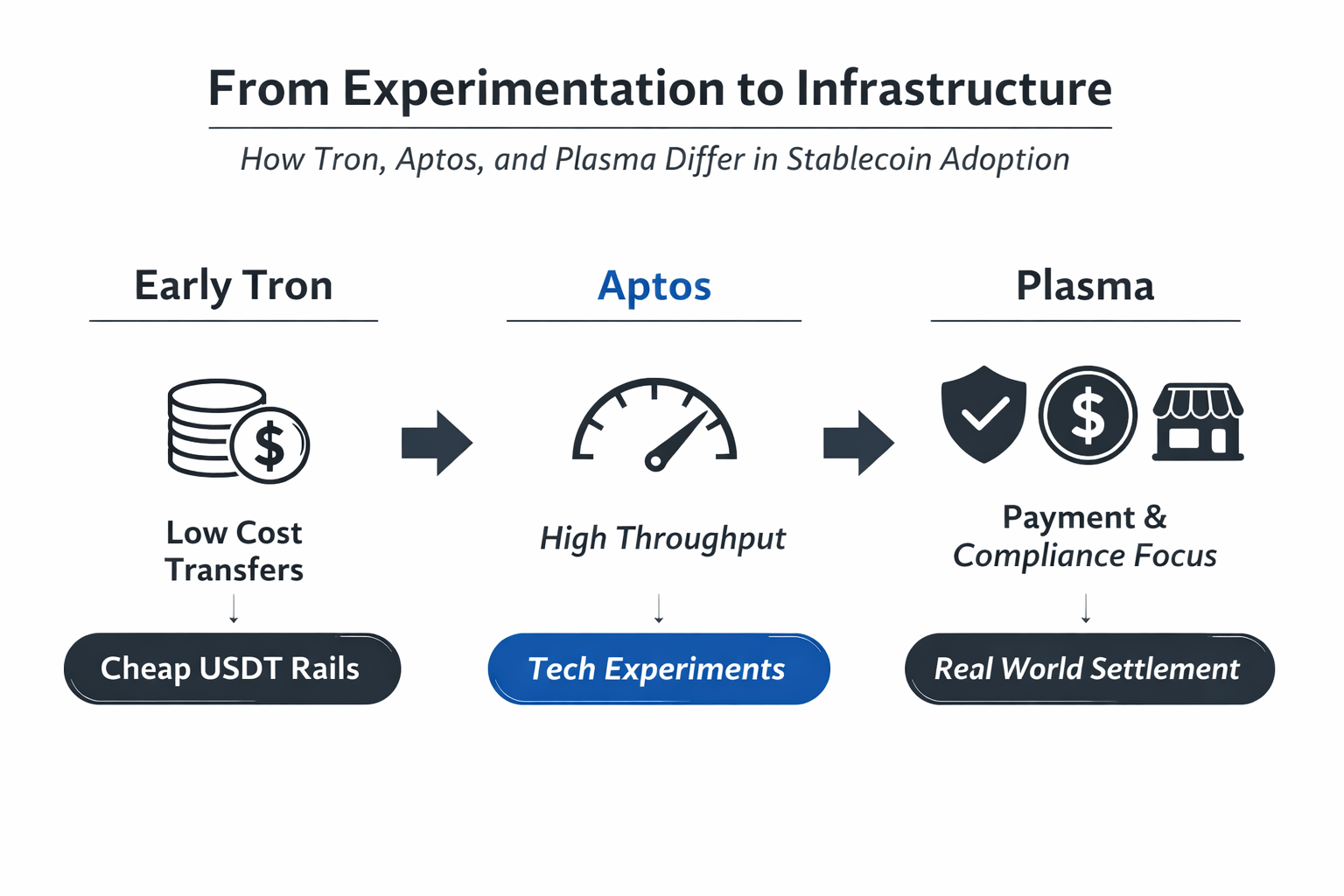
Tron started to grow fast because it made it easy to move stablecoins around. The main thing people used Tron for was to transfer USDT. It was cheap to use. It could handle a lot of transactions at the same time. Exchanges liked using Tron to settle transactions. This showed that people really wanted a way to move stablecoins around that was affordable.. Even though Tron was good at this it was still meant to be a chain that could do lots of different things. The way Tron used its resources was complicated it was hard to understand how decisions were made. It did not care much about following rules. Stablecoins were used on Tron. The chain was not specifically designed for them. This helped Tron grow. It also made it fragile when a lot of people used it at the same time or when regulators started to pay attention. Tron was still a purpose chain, at heart and stablecoins like USDT were just one part of it.
Aptos looked at the problem in a way. They thought about how to make it work well so they came up with a new way of doing things and it could handle a lot of work. They tried out some ideas with stablecoins and payments and it seemed like they might work. When something was finished it was really. The tools for developers were up to date.
Aptos still wanted to be able to do a lot of things though. Payments were one of the many things they could do. They did not really think about how to make it easy for users to manage gas or how to follow the rules they left that up to the people making the applications. This meant that stablecoins could not become a way to make payments because Aptos was not just focused, on that. Aptos was focused on things, including stablecoins but stablecoins were not the only thing they cared about.
Plasma does things a bit differently. It focuses on stablecoins as the thing, not just one of many uses. The way it settles transactions the way it carries out transactions and the way it handles fees are all centered around moving value from one place to another. When people use Plasma they do not have to worry about managing gas like they do with systems. This means that businesses can expect to pay the amount each time which is nice. Developers who build things on Plasma work with payment tools rather than complicated smart contracts that can do lots of things. Plasma is, about stablecoins.
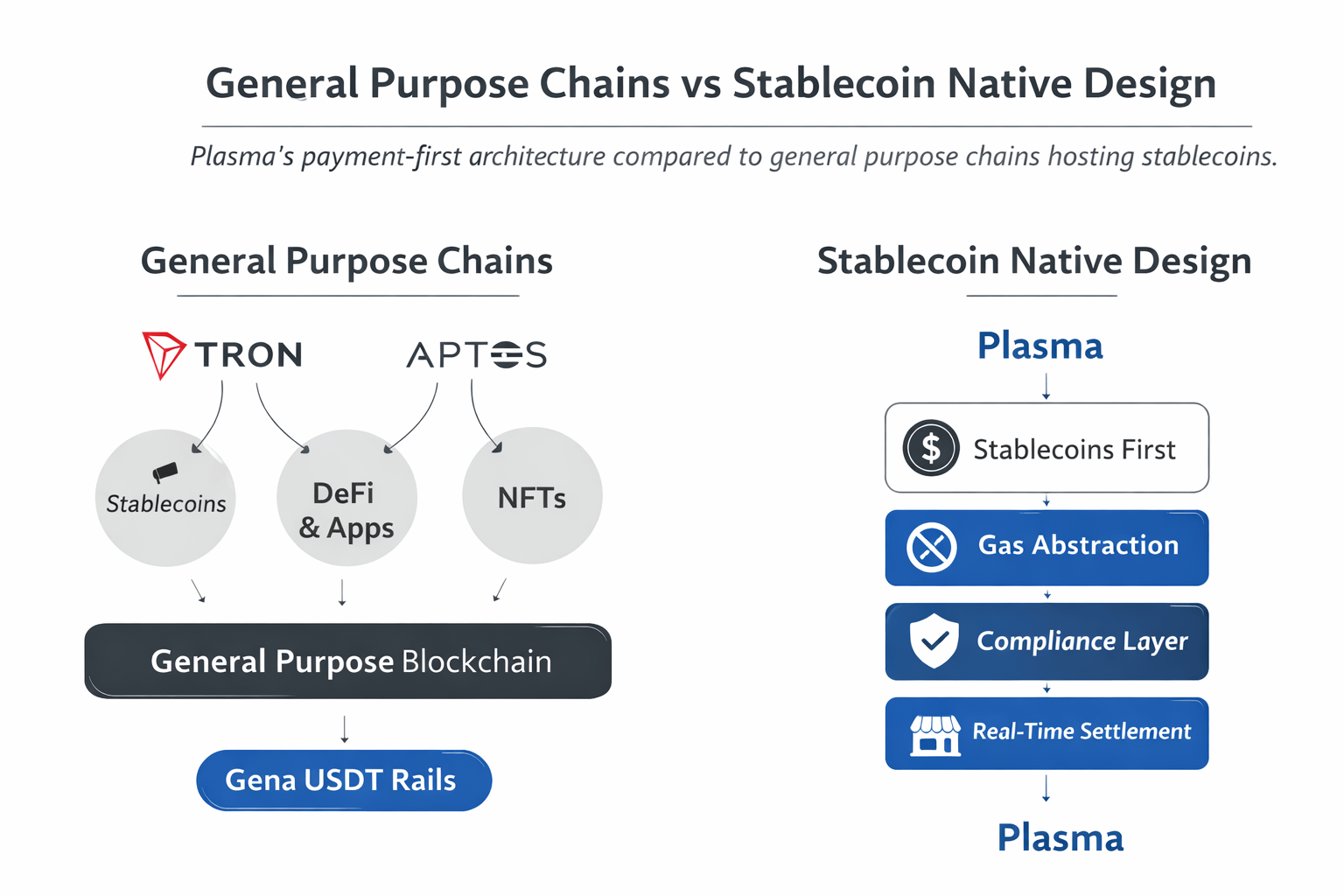
Another important difference is how the systems follow rules. The early version of Tron was successful even though it did not really follow the rules. Aptos does not take a side. Is able to adjust. Plasma has rules and ways to share information built into it. This does not mean people have privacy but it lets banks and other organizations that have to follow rules use the system without having to build their own special setup. This is very important for things like sending paychecks settling payments with merchants and doing business across borders. Plasma is really good, for payroll remittances, merchant settlement and cross border business flows because it has these rules built in.
The result is a chain that's better at being reliable than, at doing lots of different things. Plasma does not try to work with every application. It is focused on being a network that helps people use dollars in a big way. This makes things simpler. People trust it more when they use it for real things they buy and sell.
In hindsight early Tron proved demand Aptos proved performance and Plasma synthesizes these lessons into a purpose built stablecoin network. As stablecoins move from crypto native rails into global payments this specialization may be the difference between adoption and experimentation.
