
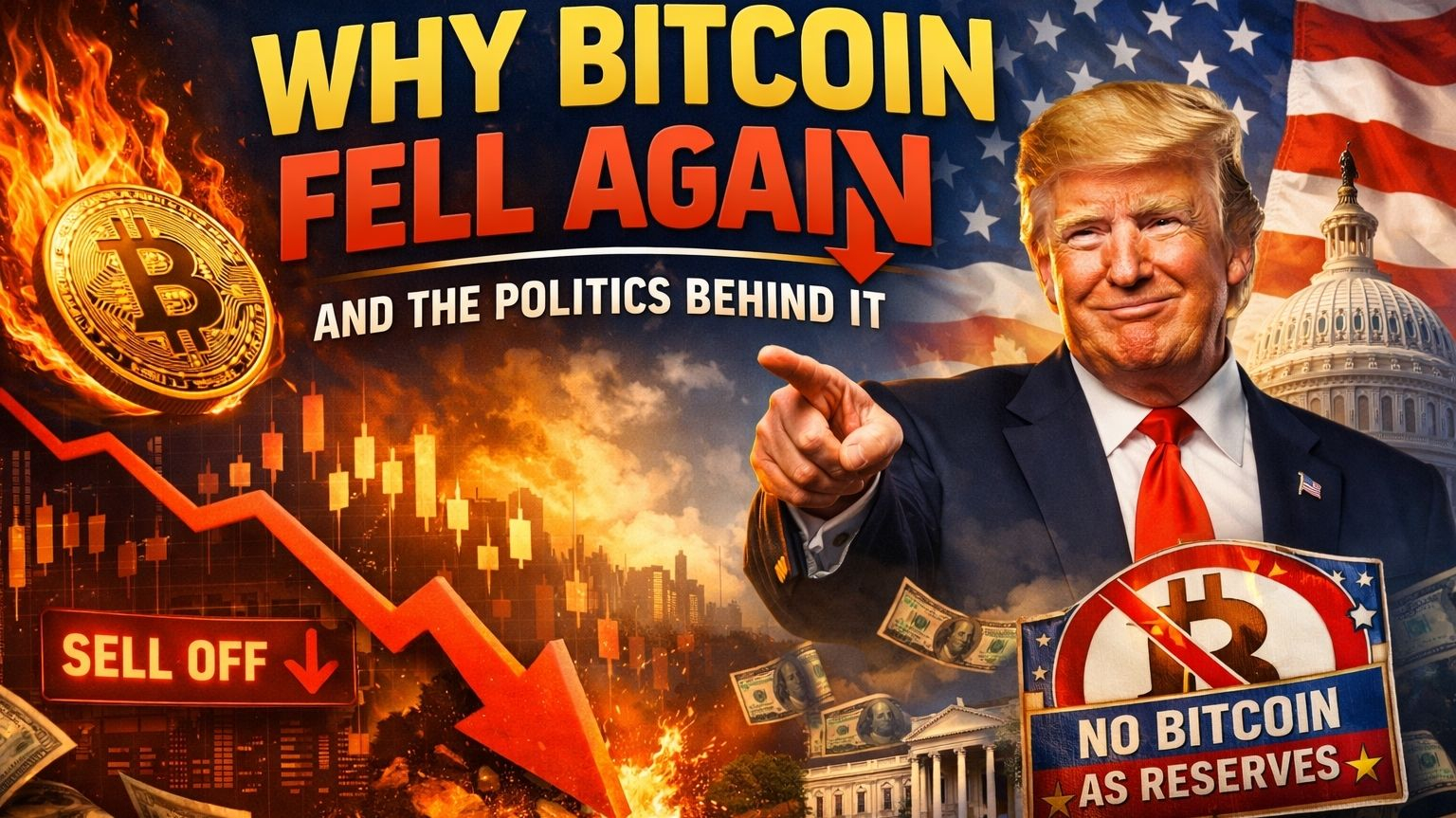
All'inizio del 2025 molte persone stavano osservando da vicino Bitcoin. (Hai menzionato $70K — nota: i dati reali mostrano che BTC era più alto allora — circa $94K il 1° gennaio 2025). All'inizio del 2026 Bitcoin era vicino a $88K, poi è sceso di nuovo man mano che il rischio è diminuito.
Cosa ha causato la recente caduta?
Rischio ridotto nei mercati: Quando le azioni tecnologiche e altri asset rischiosi sono scesi, i trader hanno venduto anche Bitcoin. Quella vendita su larga scala ha rimosso compratori e ha spinto il prezzo verso il basso.
Grandi detentori e deflussi di fondi: Investitori di grandi dimensioni ed ETF hanno ritirato denaro o realizzato profitti, il che ha ridotto la domanda.
Vendite forzate e interruzioni tecniche: poiché il prezzo si è indebolito, le operazioni con leva sono state liquidate e molti ordini di stop automatici sono stati eseguiti - questo ha reso la discesa più rapida.
Come i politici (incluso Trump) muovono i mercati cripto
I politici possono influenzare i mercati cripto semplicemente con ciò che dicono o promettono. Nel 2024-25, dichiarazioni pro-cripto e promesse politiche del Presidente Donald Trump hanno contribuito a sollevare l'ottimismo degli investitori - e quel sentimento è stato prezzato nei mercati. I dirigenti cripto hanno anche sostenuto la sua campagna, quindi i segnali politici hanno avuto importanza per la fiducia degli investitori.
Quando un politico segnala una politica favorevole al governo - per esempio, parlare di una "riserva cripto" nazionale - può aumentare i prezzi perché gli investitori si aspettano grandi acquirenti stabili o regole più flessibili. Trump ha annunciato piani per una riserva cripto nazionale nel 2025, il che ha sollevato il sentimento dell'epoca.
Perché l'idea di una "riserva Bitcoin" degli Stati Uniti non ha immediatamente spinto BTC di nuovo verso l'alto
Alcuni investitori credevano che il Bitcoin non avrebbe raggiunto un nuovo massimo sostenuto fino a quando il governo degli Stati Uniti non avesse formalmente adottato BTC come riserva. Ma funzionari e legislatori hanno risposto - chiarendo che qualsiasi discorso sulla "riserva" non significava usare denaro dei contribuenti per comprare cripto, e che la cripto sequestrata (non fondi pubblici) era la fonte più realistica. Questa risposta ha rimosso un importante vento a favore dei prezzi.
In sintesi
I movimenti del Bitcoin sono ancora guidati dal flusso di denaro e dalla fiducia. Le promesse politiche possono dare grandi slanci temporanei, ma i veri rally duraturi di solito necessitano di acquisti sostenuti da grandi istituzioni o di chiari cambiamenti politici - non solo di discussioni da campagna. Se il governo degli Stati Uniti decidesse effettivamente di detenere BTC come riserva (o se gli ETF continuassero a ricevere grandi afflussi netti), ciò sarebbe un motivo più forte per una rottura duratura. Fino ad allora, aspettati volatilità.