
A few days ago, I helped a shopkeeper fix his five-year-old cash register system. It was slow, outdated, and frustrating. I asked him why he didn’t just switch to a new one. He smiled and said something that stuck with me: changing the app takes five minutes, but rebuilding the entire business logic would take half a month. He couldn’t afford that downtime. In that moment, I was reminded that the highest form of competitiveness in business is not innovation alone — it is path dependence. Once systems are deeply integrated, switching becomes painful, risky, and economically irrational.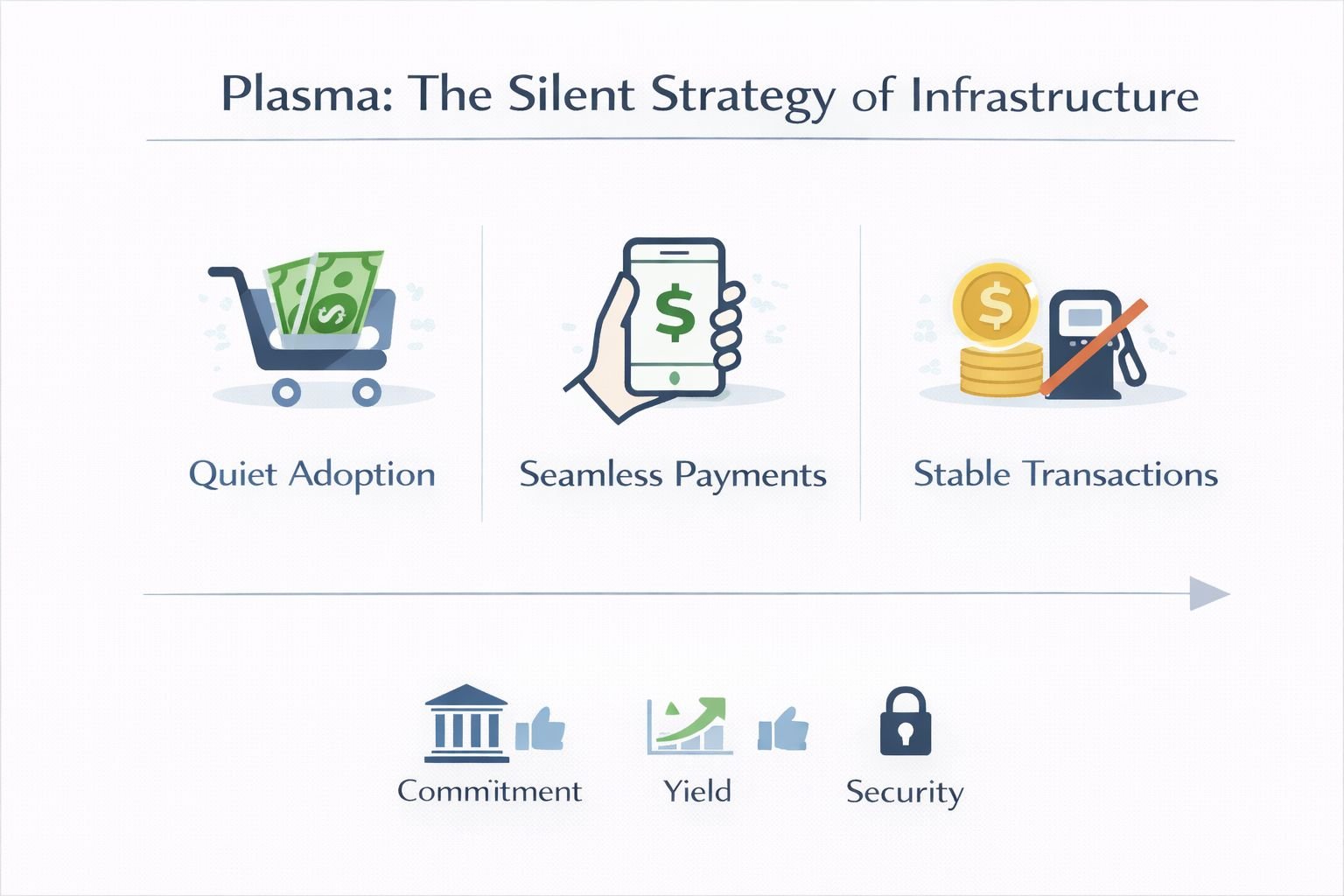
That idea has shaped the way I observe Plasma. In today’s crypto market, projects are judged by noise frequency. If a team doesn’t tweet for three days, people assume it’s dead. If there’s no incentive campaign for a week, price drops. We’ve built a culture that confuses visibility with progress. Plasma, however, appears quiet. Its timeline isn’t filled with daily hype cycles. To short-term traders, that feels cold. To me, it feels like concrete drying — the silent phase where foundations harden.
What matters more than social media updates are backend integrations. One example is YuzuMoney, which reportedly locked in $70 million within four months in Southeast Asia’s cash-heavy economies. This isn’t speculative capital chasing yield; it represents small and medium-sized enterprises digitizing real cash flows. Once businesses digitize their operational finances, they rarely revert. That transition creates dependency, and dependency creates stability.
Another signal comes from MassPay, a payment processor that achieved 286% growth in 2025 across 230 countries, positioning Plasma as its settlement layer. When enterprise systems integrate a settlement track, migration cost becomes more than financial. It becomes operational risk. Treasury flows, reconciliation systems, and compliance frameworks all intertwine. Switching is no longer just about fees; it’s about disrupting financial infrastructure. That is where invisible hegemony forms — not through marketing, but through integration.
This is why I believe Plasma’s strategy leans toward capturing merchants before consumers. Most crypto projects chase retail attention, but infrastructure dominance often begins at the backend. If you control the default option within the payment stack, consumer behavior eventually follows. Defaults shape habits. Habits shape markets.
Let’s talk about something practical. Every time I try onboarding friends into Web3, the friction is immediate. Download a wallet. Record a mnemonic phrase. Buy ETH or BNB just to pay gas. The most common question I hear is simple: “Why do I need to pay before I even start?” In Web2, no application charges you just to register or click. In Web3, this prepayment friction is normalized. As long as users must “buy gas first,” mass adoption remains constrained.
Plasma’s Paymaster mechanism addresses this pain point. It allows developers to sponsor gas fees on behalf of users. This mirrors traditional business logic — companies absorb small operational costs to acquire customers, like toll-free numbers or free shipping. In Plasma’s model, developers stake $XPL to subsidize user interactions. Users can interact without understanding gas mechanics or purchasing a native token upfront. That shift, although subtle, changes onboarding psychology from “user pays first” to “business invests first.”
There is also a deeper design philosophy at play regarding stablecoins. Most chains require a separate token for gas, meaning users holding USDT must also manage another asset. That introduces cognitive overhead, volatility exposure, and accounting complexity. Stablecoins stop feeling like dollars and start feeling like crypto instruments. Plasma’s approach to custom gas tokens aims to reduce that friction by allowing supported transactions to be paid in the token users already hold. This creates predictable costs, cleaner budgeting, and smoother accounting processes.
For businesses, predictability matters more than theoretical cheapness. Finance does not operate on averages; it operates on worst-case reliability. When operational expenses can be denominated in the same currency as revenue, budgeting becomes rational. When accounting teams no longer need to manage fluctuating gas reserves, friction decreases. These small efficiencies compound at scale.
Plasma’s technical revival also connects to Ethereum’s scalability journey. Historically, Plasma was an early Layer-2 scaling concept designed to offload transactions onto child chains that periodically settled to Ethereum. Its downfall stemmed from data availability issues and complex exit mechanisms. When Rollups emerged with clearer security models, Plasma faded from attention. However, advancements in zero-knowledge proofs have reopened possibilities. ZK technology can validate off-chain states without exposing full transaction histories, mitigating previous security concerns. Sometimes technology fails not because it is flawed, but because its supporting tools were immature.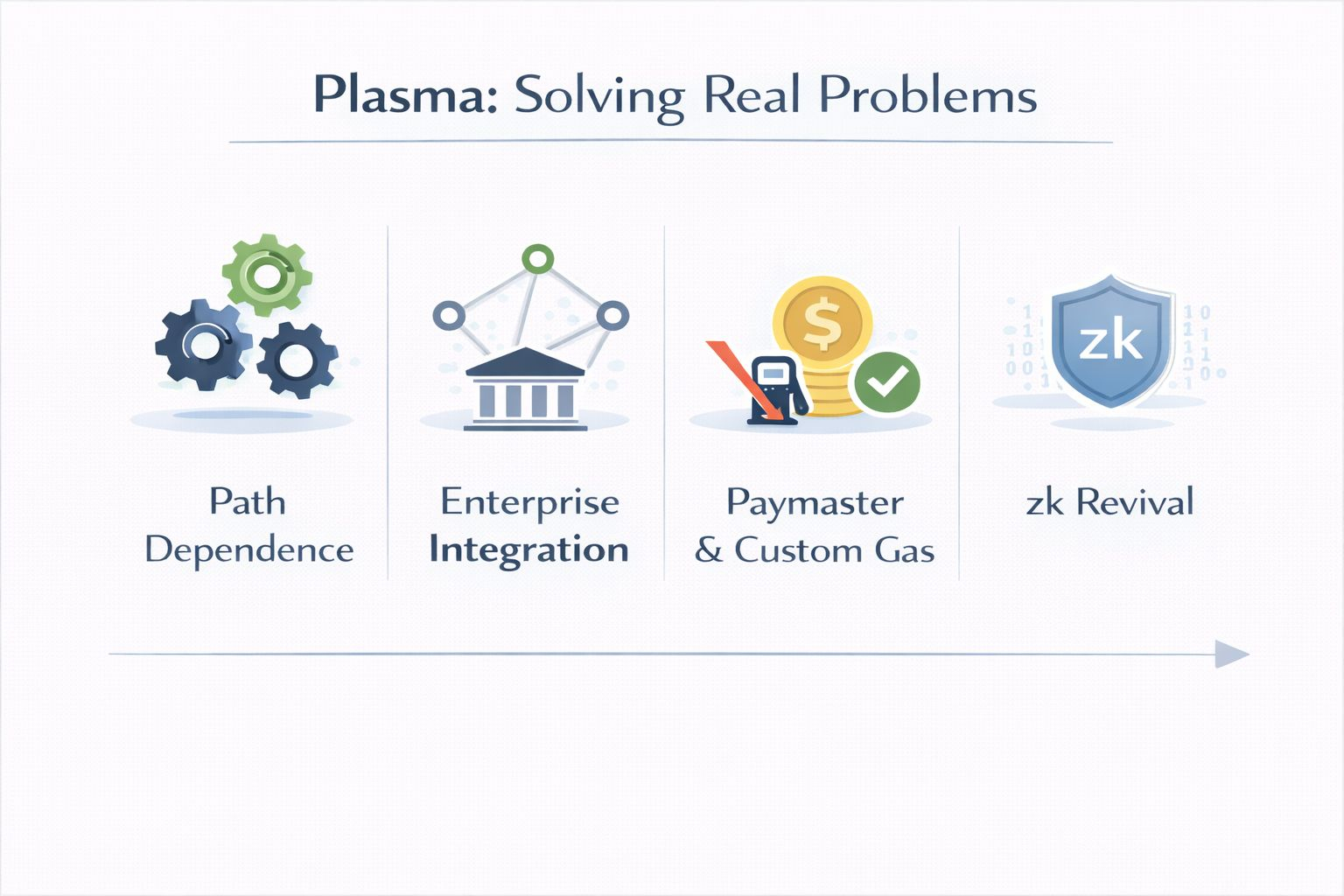
It is important to clarify that Plasma is not necessarily competing with Rollups. Instead, they may serve different purposes. Rollups prioritize maximum security and publish compressed data to Ethereum, maintaining stronger guarantees at higher cost. Plasma-style architectures, particularly when enhanced with modern cryptography, can focus on high-frequency, cost-sensitive applications such as gaming, social interactions, or large-scale data tracking. In a mature ecosystem, specialized layers can coexist rather than compete.
As for $XPL, current market pricing reflects impatience more than structural analysis. Infrastructure adoption often looks linear before compounding effects appear. If developers stake tokens to subsidize usage, if stablecoin applications scale, and if payment processors integrate more deeply, token demand shifts from speculation to operational consumption. That transition rarely produces instant excitement, but it builds structural depth.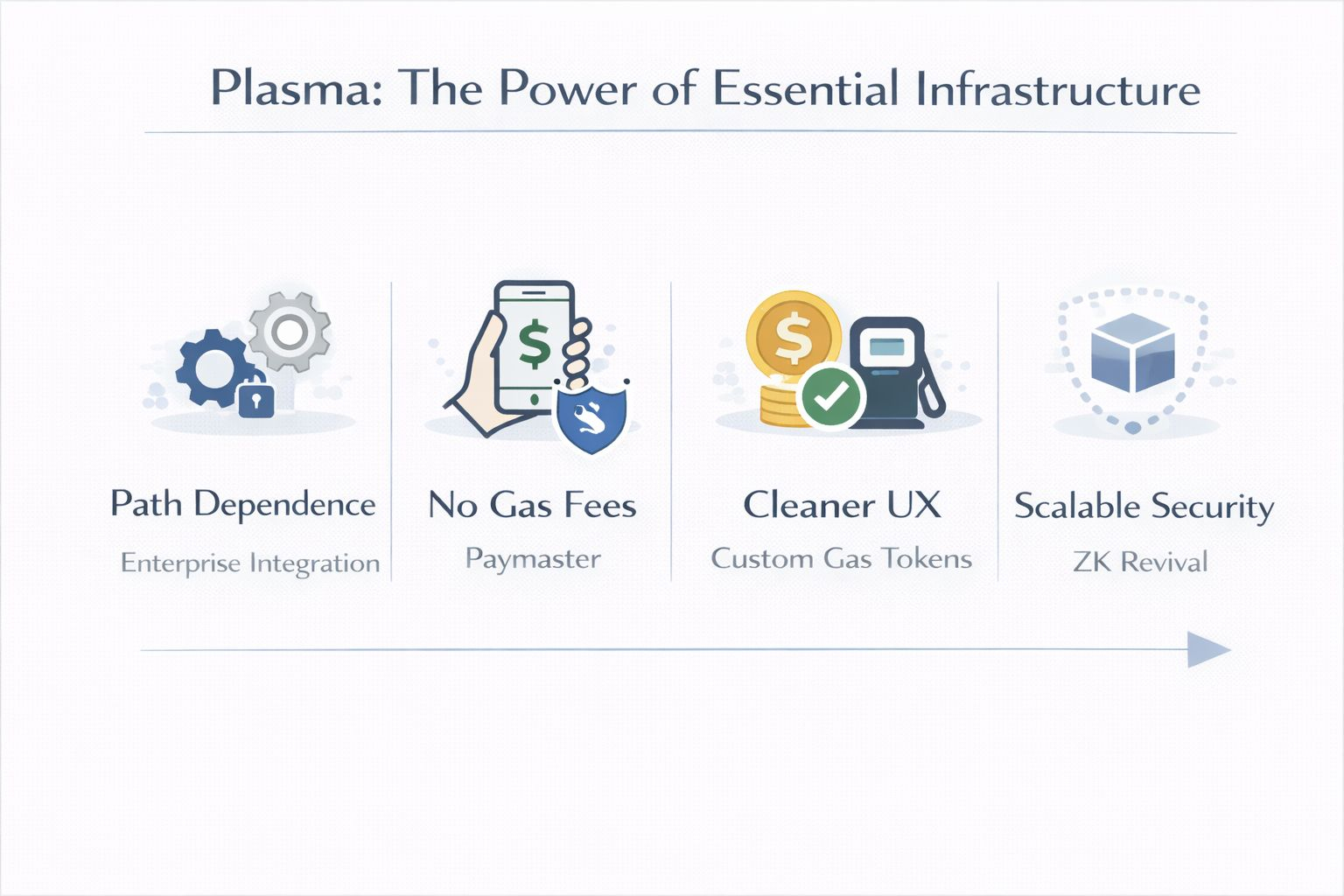
My stance is simple. I am less interested in projects that dominate attention cycles and more interested in systems that, once embedded, are difficult to replace. Path dependence builds slowly, but once it solidifies, it becomes irreversible. The most powerful market shifts often occur quietly, long before pricing reflects reality.
Plasma’s future is not guaranteed. But the problems it addresses — onboarding friction, stablecoin usability, enterprise integration, predictable costs — are real. If stablecoins are to function as everyday financial tools, they must behave like products, not experiments. They must reduce mental overhead, not add to it.
Sometimes, the loudest signals are silent ones. While others compete for the microphone, infrastructure builders quietly adjust the financial plumbing. And when the plumbing becomes default, attention eventually follows function.