

I’ve been in crypto long enough to accept one uncomfortable truth: most traders don’t lose money because their ideas are bad — they lose money because execution betrays them. You see the setup, you react fast, you click buy, and somewhere between intent and confirmation the market moves without you. Slippage widens, bots jump ahead, and your so-called edge evaporates. Over time, those milliseconds compound into something far more painful than a bad trade. They become a hidden cost you pay again and again.
That hidden cost is latency, and it’s exactly what pushed me to take a serious look at Fogo.
Most blockchains were not designed with traders in mind. They were designed to be secure first, decentralized second, and fast only if nothing else broke. Even the chains marketed as “high performance” still rely on global consensus models that introduce delays precisely when volume spikes. Ironically, the moments when speed matters most are the moments when chains struggle the hardest.
Solana changed the conversation with parallel execution, and for a long time it felt like the future. But anyone who has traded through real volatility knows the reality: congestion, failed transactions, unpredictable latency, and MEV pressure still creep in. Ethereum offers unmatched security, but its finality is simply not built for active execution. Appchains and specialized venues improve speed, but they do so by narrowing scope and composability. Every design seems to ask traders to accept some form of compromise.
Fogo starts from a different assumption. Instead of asking traders to tolerate latency, it treats latency as the enemy.
What makes Fogo interesting isn’t a flashy narrative or a promise of theoretical throughput. It’s the fact that the entire chain is optimized around execution quality. It runs on the Solana Virtual Machine, which immediately lowers the barrier for developers. Existing Solana programs can migrate with minimal changes, familiar tooling still works, and the ecosystem doesn’t need to be rebuilt from scratch. That alone gives Fogo a practical advantage most new L1s never achieve.
But compatibility is just the foundation. Where Fogo really separates itself is at the validator level. It runs a pure Firedancer client — the high-performance C++ architecture originally built to push Solana far beyond its limits. This isn’t about chasing vanity TPS numbers. It’s about minimizing networking overhead, maximizing parallelism, and staying stable under heavy, bursty trading load. In other words, it’s built for the moments when markets are chaotic, not calm.
One of the most underappreciated aspects of Fogo’s design is its approach to consensus. Instead of forcing every transaction through a single global bottleneck, Fogo introduces multi-local consensus. Transactions can finalize locally near active markets and then propagate globally. The result is dramatically reduced latency where it actually matters. The first region focuses on Asia-Pacific, with more zones planned over time. It’s a pragmatic trade-off that prioritizes execution today while leaving room for broader decentralization tomorrow.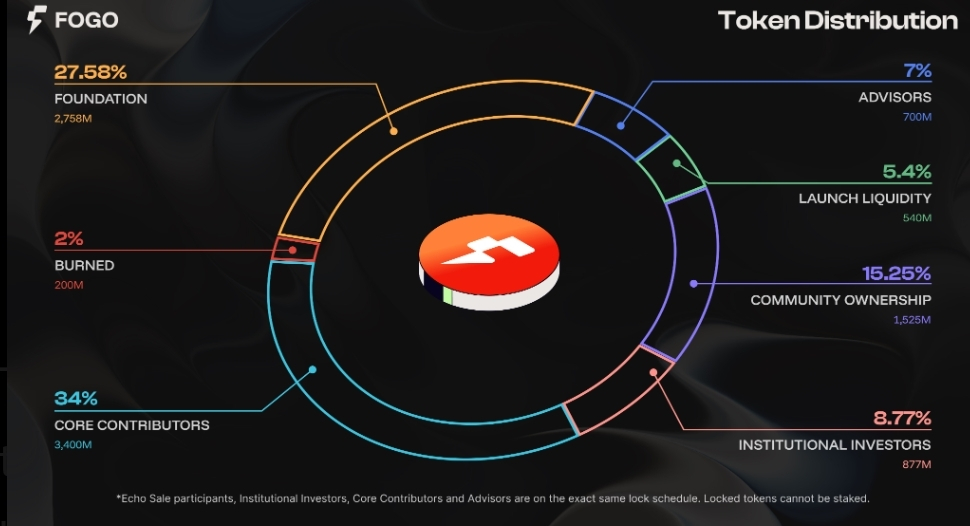
The performance numbers are already live, not hypothetical. Sub-40 millisecond block times. Around 1.3 seconds to finality. In latency-sensitive scenarios, execution that can be multiple times faster than what traders are used to on existing chains. Mainnet has been live since mid-January 2026, and the network is already processing real trades, not staged demos.
Speed alone, however, is meaningless if user experience still feels like friction layered on top of friction. This is where Fogo Sessions quietly change how on-chain trading feels. Instead of approving every single action, traders can authorize a session once, define limits, and then operate continuously without repeated signatures or gas pop-ups. It feels far closer to a professional trading terminal than traditional DeFi UX. The difference isn’t cosmetic. It changes behavior. When friction disappears, strategies become easier to execute consistently.
The philosophy behind Fogo makes more sense when you look at the people building it. The team comes from institutional trading, high-frequency systems, and crypto market infrastructure. These are environments where milliseconds directly translate into profit and loss. That background shows up everywhere: deterministic execution, MEV-aware design choices, and a relentless focus on predictability. This doesn’t feel like a chain built to impress Twitter. It feels like a chain built by people who have personally paid the latency tax and decided they were done with it.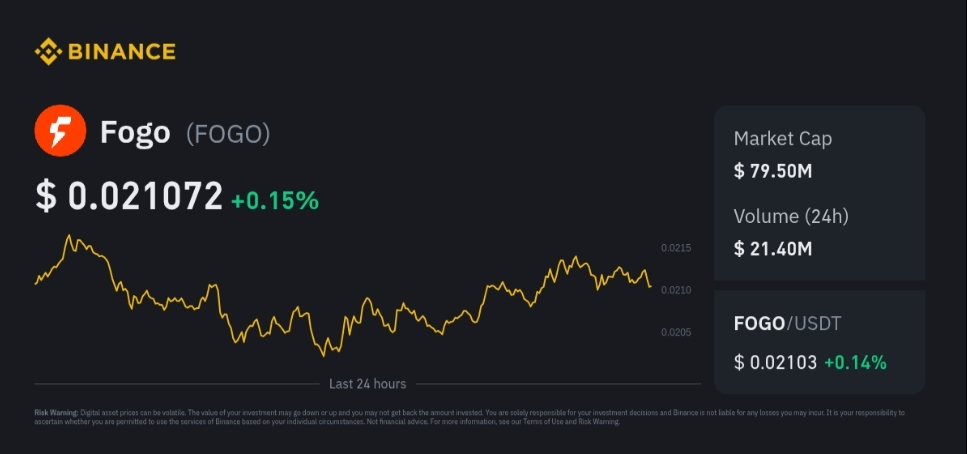
On the token side, $FOGO reflects that same long-term mindset. With a total supply of 10 billion and a circulating supply under four billion as of February 2026, the structure emphasizes gradual unlocks, contributor vesting, and meaningful community ownership. Utility is straightforward and aligned with real usage: gas fees with abstraction, validator staking, governance, and incentives tied to actual network activity. It doesn’t read like a short-term pump design. It reads like infrastructure economics.
Despite being early, the ecosystem is already forming. Core DeFi primitives are live. Solana developers are experimenting with migration. Real trading volume is flowing. Community events are happening across regions. The growth feels deliberate rather than chaotic, which is often how durable networks begin — quietly, before the narrative catches up.
None of this means Fogo is without risk. It is still early. Decentralization is rolling out progressively. Adoption will ultimately depend on whether standout applications choose to build and users choose to stay. Competition from other performance-focused chains is real. But what stands out is that Fogo isn’t trying to be everything at once. It is focused on one mission: make on-chain execution feel instant.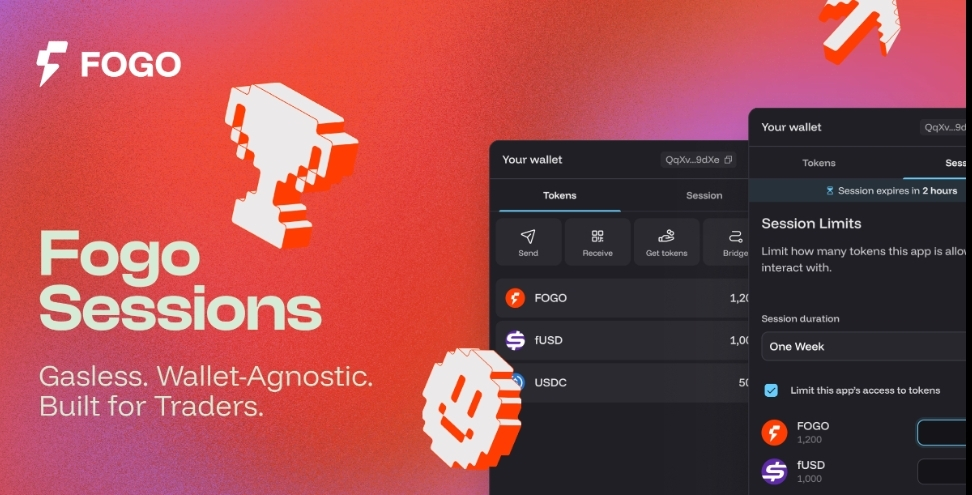
Zooming out, crypto doesn’t really need another general-purpose chain. It needs infrastructure that respects time, respects capital, and respects execution quality. If on-chain finance is going to absorb serious global trading volume, latency will not be a secondary concern. It will be decisive.
Fogo doesn’t feel like a speculative experiment. It feels like a trading primitive. Early, yes. Risky, absolutely. But deeply aligned with where on-chain markets are heading.
I’m curious what you think. Is ultra-low-latency execution the real next frontier for DeFi, or just another optimization cycle that won’t matter long term?