
Fogo: Igniting the Future of Real-Time On-Chain Finance – The Pure Firedancer L1 Built to Outpace Solana and Rival Centralized Exchanges
Fogo began with a frustration that a few people felt. These people lived in two different worlds. One world was the high-frequency trading floors. This is where people trade stocks fast and a small delay can mean a big loss of money. The other world was decentralized finance on blockchains like Solana. This world was exciting. It was not very smooth and had a lot of problems. Fogo was a reaction to the problems that people saw in these two worlds the trading floors and decentralized finance on blockchains, like Solana. People really liked what Solana had done. Solana had made some things like the Solana Virtual Machine that could do lots of transactions at the same time. Solana also had Proof of History which made sure everything had the time on it. Then there was Turbine which helped spread data around.. Solana had Tower BFT which made sure everything was finalized fast.. Even Solana, which is one of the fastest blockchain systems could not always make sure that blocks were finished in less than 40 milliseconds. This was a problem because professional traders needed this to happen quickly and reliably so they could use on-chain perpetuals or spot markets or make automated trading plans work. The difference between exchanges and DeFi just did not seem right. Solana had some features but it still was not good enough, for what professional traders needed. This is where the idea for Fogo started around 2024. The idea, for Fogo was born around 2024. The spark that started Fogo happened around 2024.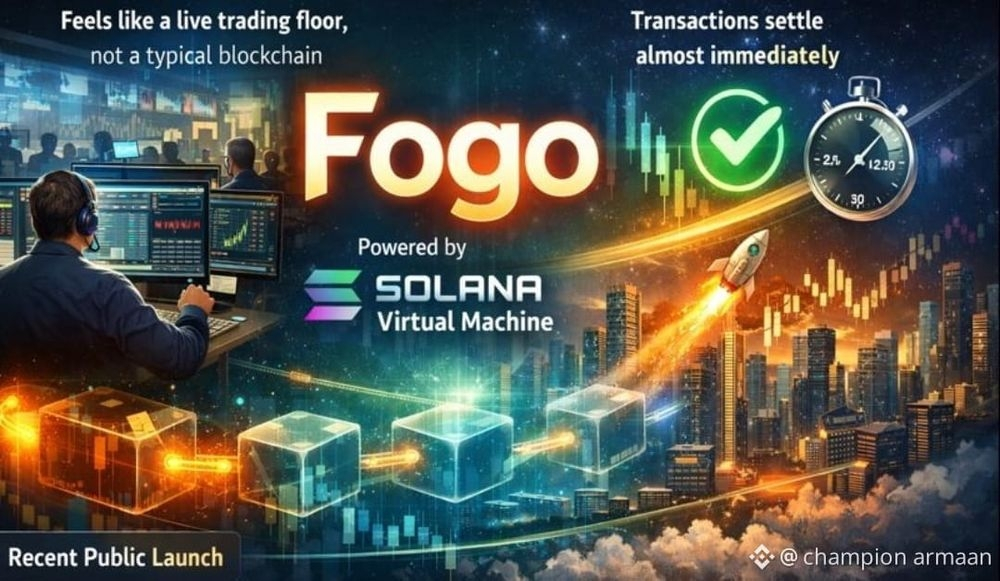
The people who started this project were really good at what they do. Robert Sagurton was in charge of selling assets at Jump Crypto so he knew what big institutions needed. Douglas Colkitt used to work at Citadel. He even started his own company called Ambient Finance. He knew that when things move slowly it can hurt your chances of making trades. Some people from Douro Labs, the team that made the Pyth oracle network also helped out. They were really good at making sure financial data was accurate and reliable. They did not want to make another blockchain that people would use for funny pictures, special coins or games. They had plans for the digital asset trading platform the Pyth oracle network and the team, at Douro Labs. So they decided to focus on one thing: making the possible system that works with SVM and is good for real-time financial applications. They called this system Fogo, which means fire. It is all about being fast and strong. They did not try to make something new instead they took the good parts of Solanas system and made them even better. They wanted Fogo to be the system for financial applications that need to happen in real time so they worked on making it really good, at what it does and that is being fast and working well with SVM and real-time financial applications.
The main decision was to use Firedancer for everything. Firedancer is a program that Jump Crypto made for Solana. It is really good, at doing lots of things at the time and it uses memory in a smart way. It also has fast networking and can handle a huge amount of work without stopping.
Solana decided to use a mix of Firedancer and an older program called Agave.. Fogo wanted to use only Firedancer. The people behind this project used a Firedancer client that was completely genuine from the beginning. They got rid of anything that could make it slower. This was not about being really fast. It was also, about being able to guess what would happen. When you are trading you need to know for sure how long something takes. You cannot just hope that it will take about an amount of time on average. The Firedancer client had to be reliable and consistent so they could trust that a block would take an amount of time every time they used the Firedancer client.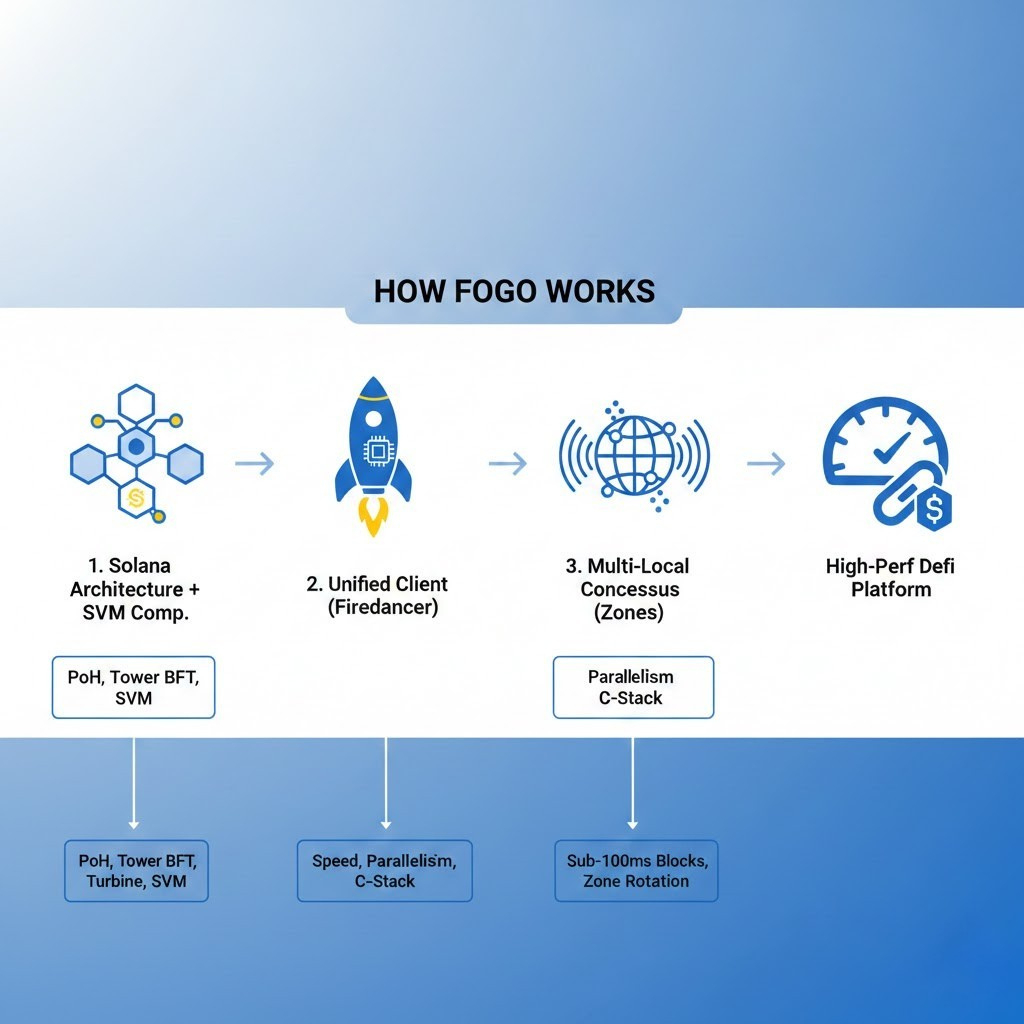
To get more out of the system the people behind it came up with something called multi-local consensus. Normally most systems spread out the people who check the transactions over the world to make sure everything is fair.. Fogo did things a little differently. They grouped these people together in areas starting with a lot of them in Tokyo. This made sense because Tokyo is close to some important financial centers in Asia and it is easy to connect to other markets, around the world quickly. By doing things this way the time it took to complete transactions was much shorter. The system still used a method called proof-of-stake to make sure everything was secure and something called Tower BFT to protect it. The company picked the group of validators choosing the best operators who could use the best hardware and keep it running all the time. What did they have to give up? They did not have many validators in different parts of the world at first but this meant that the network was much faster and everything worked together better. The validators worked well with the processing of the Shared Virtual Machine. This meant that the time to make a block was than 40 milliseconds it only took about 1.3 seconds for a transaction to be final and the network could handle tens of thousands of transactions per second in tests. These numbers make trades on the blockchain feel like they happen away similar to trades on centralized platforms. The Shared Virtual Machine and the validators worked together to make this happen making trades, on the blockchain feel fast like the Shared Virtual Machine was making it all work smoothly.
The technology works well when you look at it step by step. A trader sends in an order. The Proof of History puts a timestamp on it. The Solana Virtual Machine does a lot of things at the time without any problems. It is not like Ethereum where everything gets stuck. The Turbine helps spread the data out to the people who check it the validators, in an efficient way. The Multi-local consensus lets the nodes that are close to each other agree quickly using the Tower BFT and this helps finish the block in less than two seconds. Because everything is run on a Firedancer client that is optimized the Solana technology and the Firedancer client and the Proof of History and the Solana Virtual Machine all work together without any issues, from different software versions. Developers benefit a lot from this. Fogo works with SVM. This means that Solana programs and wallets like Phantom or Backpack can be used with Fogo without changes. The same goes for Anchor frameworks and tools. It is like getting an engine, for your car but the car stays the same. You can just use Solana programs and wallets like Phantom or Backpack and Anchor frameworks with Fogo and everything works.
People put their money together in a way thinking about the community rather than just letting venture people be in charge. In the end of 2024 and the start of 2025 they got a lot of money $5.5 million from people who wanted to help them get started. Distributed Global was in charge of this and CMS Holdings and some other people also gave them money. After that they did something cool with a website called Echo which is like a big group effort to raise money and it is run by a person named Cobie. They got around $8 million from than 3,000 people who wanted to invest in them and it all happened really fast in just a few hours. Funding, like the $5.5 million seed round and the money from Echo was a deal, for them. The people behind the project made some smart moves on like selling Binance tokens which got them around $7 million for the foundation. This helped them get than $20 million in total according to some reports. Of doing a traditional presale that would have helped people who were already involved they decided to give away a lot of tokens for free and start a points program called Fogo Flames. This program rewarded the people who tested, built and supported the project on. It really worked. Tens of thousands of people got excited, about the project before it was even launched.
The public mainnet was launched on January 15 2026. It happened right on time. This came after the devnet and testnet phases were completed. At the time the FOGO token was made available and it was listed on some big exchanges like Binance, OKX and Bybit.
In the beginning things looked good for the FOGO token and the mainnet. There were over 10 dApps when it was launched and these included things like Valiant, which is a DEX and even smaller apps like Fogo Fishing. When it came to transaction speeds the FOGO token and mainnet did well in real-world tests. They were able to handle thousands of transactions per second even when the system was, under a lot of stress. The fees were also low. There was not much congestion. The token had a lot of people trading it at first. We are talking hundreds of millions of dollars in one day sometimes. It was expected that the price would go up and down a lot after it was launched because of things like unlocks and what is happening in the market. What really matters is how many developers start using the token how much money is being put into DeFi protocols and how many people are using the token to trade every day. If Fogo can keep making transactions happen quickly in, than 40 milliseconds and make sure everything is fair it could get the attention of big traders and institutions that are currently using other tokens that are slower.
Risks are real. The team does not shy away from the risks. The team has a curated validator set. They are using geographic clustering. This raises some questions about centralization. For example what if there is an outage or some coordinated issues that disrupt the Solana network? The competition is intense. Solana is rolling out Firedancer upgrades in 2026. This could potentially close the gap. There are also SVM extensions and high-throughput L1s that are competing for the same finance-focused users, as Solana. The market can be really unpredictable. This could put a lot of pressure on the system. There might be some problems with the Firedancer implementation because it is still relatively new compared to Solanas system which has been tested times.
The team is working to fix these problems before they happen. They want to be open and clear about what they're doing. They have plans to slowly add validators and they want the community to be involved in the decision making process over time.
They are giving money to developers to help them build things on the system. They are also working with companies to get more people to use the system for things other than just trading. The people who are helping to build the system will get tokens over a period of time which means they will not be able to sell them all, at once. The community will also get a lot of tokens, which will help to reduce the risk of the price dropping suddenly.
Looking forward Fogos path could really change things. If Fogo keeps its speed advantage we will probably see big time financial deals happening directly on the blockchain. This means things like payment for real assets mixing old finance with new decentralized finance products or even super fast buying and selling that was not possible before without a central authority. Since Fogo has things like price information and basic exchange functions built in and it can pool money from places it could become the go to choice for financial professionals. Fogos path could lead to something if it holds its latency edge and this will help Fogo make institutional grade on chain finance a reality with Fogo being the key to real time settlement, for real world assets. The developer tools are getting better. They are making bridges between different chains. This could make it a big place where everything happens. Crypto markets are really hard to figure out. The government might make rules the economy might get bad or there could be technical problems that slow things down.. The people, in charge are being careful and they know what they are doing with the foundation of the crypto market and the developer tools and cross-chain bridges.
So Fogo is not another company trying to make a lot of money. It shows us that blockchain is really about making old finance and new finance work together better. When people can make trades that're fair and happen right away without anyone cheating or slowing things down more people can be a part of it. This includes people who trade for fun big companies and just regular people. We are still figuring out what this new world will look like. Fogo has helped make it a little more possible. Fogo and blockchain are making a difference. Blockchain and Fogo are helping to make things fairer, for everyone. Whether it becomes the Ferrari of on-chain trading or simply accelerates everyone else forward, its pursuit of speed without compromise leaves you wondering: how much faster can trustless finance really get, and what happens when it does?
