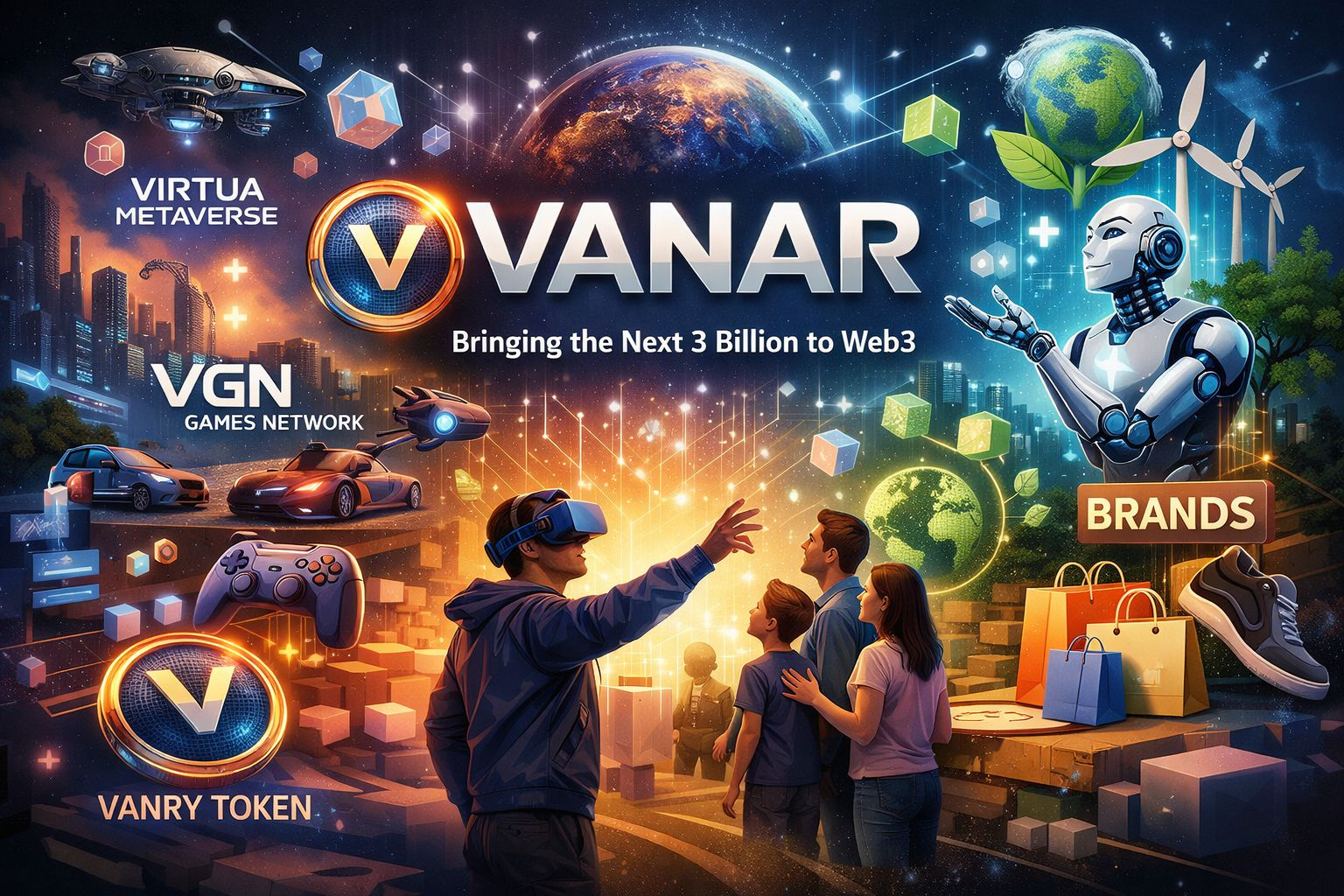
In the blockchain world, it is easy to get lost in abstract promises, faster transactions, bigger ecosystems, revolutionary ideas. But every now and then, a project appears that feels more grounded in everyday reality. Vanar is one of those Layer 1 blockchains that is not only thinking about crypto native users, but also about what it would actually take to bring billions of normal people into Web3 in a way that feels natural.
At a high level, Vanar is an L1 blockchain designed specifically for mainstream adoption. Instead of focusing only on decentralized finance or technical experimentation, its direction is shaped by industries like gaming, entertainment, brands, and digital experiences. This makes its purpose clearer, Vanar wants blockchain to become something people use without needing to understand the complexity behind it.
One of the biggest problems in Web3 today is that adoption is still limited. Most blockchains are built with developers and early crypto users in mind, but real world consumers care about different things, ease, speed, affordability, and familiarity. If blockchain is going to reach the next 3 billion users, it has to feel less like a financial tool and more like a seamless digital layer behind everyday platforms.
Vanar’s approach reflects this challenge. The team comes from backgrounds connected to gaming and entertainment, industries that already manage massive user bases and digital economies. That experience matters, because onboarding millions of gamers or brand customers is very different from onboarding a small crypto community. Vanar seems to be positioning itself as infrastructure for consumer facing Web3.
In terms of design philosophy, Vanar is built to support multiple mainstream verticals. Its ecosystem includes areas like gaming networks, metaverse environments, AI related products, eco initiatives, and brand solutions. Rather than being a single purpose chain, Vanar is structured more like a foundation where different real world applications can coexist.
A key example is Virtua Metaverse, one of the most well known products connected to Vanar. Metaverse platforms require high transaction throughput, low fees, and smooth user interaction, because users will not tolerate delays or expensive costs just to buy an item or enter a digital space. Vanar’s infrastructure aims to make those experiences practical rather than experimental.
Another notable part of the ecosystem is the VGN games network. Gaming is often seen as one of the most natural entry points for Web3 because players already understand digital ownership, in game assets, and virtual economies. Vanar’s focus here suggests a belief that gaming could become one of the strongest bridges between blockchain and everyday consumers.
From a technical perspective, Vanar being an L1 means it is not relying entirely on another chain for its security or execution. It has its own base architecture, which allows it to optimize for the kinds of consumer applications it targets. While many chains compete on raw decentralization or DeFi dominance, Vanar’s differentiation is more about usability and real world integration.
Of course, usability requires more than just fast transactions. It also requires developer friendly tools, smooth onboarding systems, and interoperability with the broader blockchain world. For Vanar to truly succeed, it needs to connect with other ecosystems rather than becoming isolated. Cross chain compatibility and partnerships will likely be important for long term relevance.
The VANRY token plays a central role in the network. Like most blockchain tokens, it powers transaction fees, network operations, and ecosystem incentives. But beyond simple utility, tokens in consumer focused ecosystems also have to support sustainable economics, rewarding participation without creating unsustainable speculation cycles.
This is where the economic model becomes both an opportunity and a challenge. If Vanar grows through gaming, brands, and metaverse platforms, VANRY could become deeply integrated into digital commerce and experiences. But at the same time, token based ecosystems must carefully manage volatility, regulation, and user trust, especially when onboarding mainstream audiences who are not used to crypto risk.
Vanar’s strengths lie in its clear market focus. Instead of trying to compete everywhere, it is leaning into industries that naturally generate engagement, entertainment, gaming, and digital consumer experiences. This gives it a narrative that feels more grounded than chains that only promise technical superiority.
Still, it is important to stay balanced. The blockchain space is extremely competitive, and many L1s have made similar adoption focused claims. Vanar will need to prove itself through sustained developer growth, strong partnerships, and real user activity beyond early supporters. Adoption is not only about technology, it is about trust, community, and long term execution.
Looking ahead, Vanar’s future potential depends on whether Web3 truly becomes embedded in mainstream platforms. If gaming networks, metaverse ecosystems, and brand engagement move deeper into blockchain, Vanar could find itself well positioned. But the road will require patience, careful scaling, and constant alignment between technology and real consumer needs.
In the end, what makes Vanar interesting is not that it promises something radically different, but that it seems to be asking a more human question, how can blockchain actually fit into everyday life? If Vanar can continue building quietly, focusing on practical experiences rather than hype, it may contribute meaningfully to the slow, real transition of Web3 from niche culture into something more familiar and usable.
That kind of progress is rarely loud, but it can be deeply important.
@Vanarchain #vanar $VANRY #Vanar