
Speed isn’t a luxury in crypto, it’s the whole game.
You can have the best strategy in the world, but if your transaction lands late, none of that matters. A tiny delay can turn a clean entry into a bad fill. It happens fast, and it’s frustrating because it feels random.
Most of the time, it’s not random at all. It’s distance.
Blockchains are global, validators are scattered across continents, and messages need time to travel. Decentralization is great, but it comes with a cost. Physics charges a fee.
Fogo doesn’t try to ignore that fee. It designs around it.
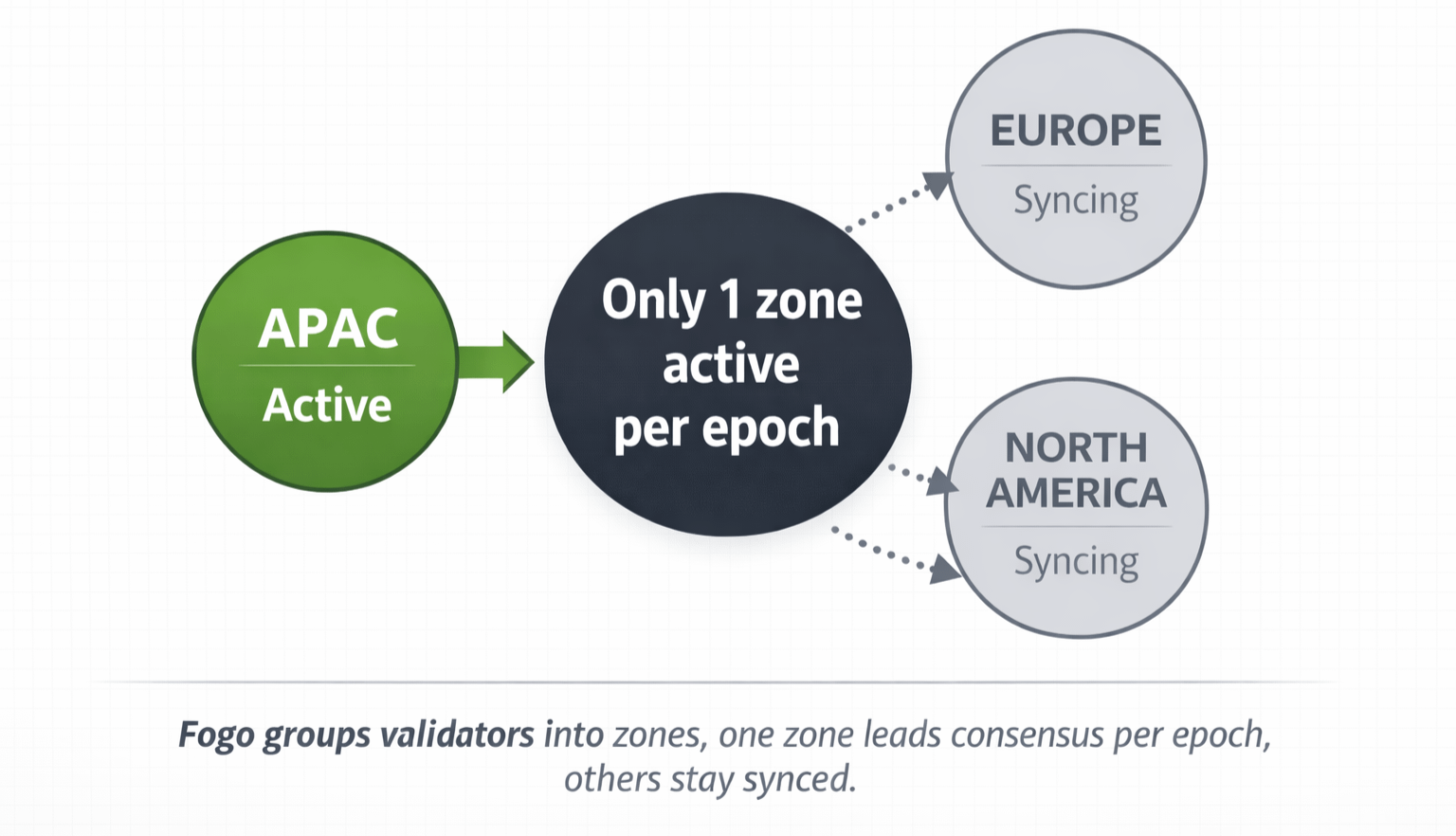
Fogo uses a zone-based validator setup as part of what it calls multi-local consensus.
In plain words, validators are grouped into zones, usually by geography.
Only one zone is active for consensus during a given epoch. Validators in that active zone propose blocks and vote. Validators in other zones stay online and keep syncing, but they don’t vote during that window.
On Fogo Testnet, there are three zones: APAC, Europe, and North America. Consensus rotates between these zones at the epoch boundary. That rotation is what makes the follow-the-sun concept real, not just a slogan.
An epoch is just a scheduled time window. Like a shift change.
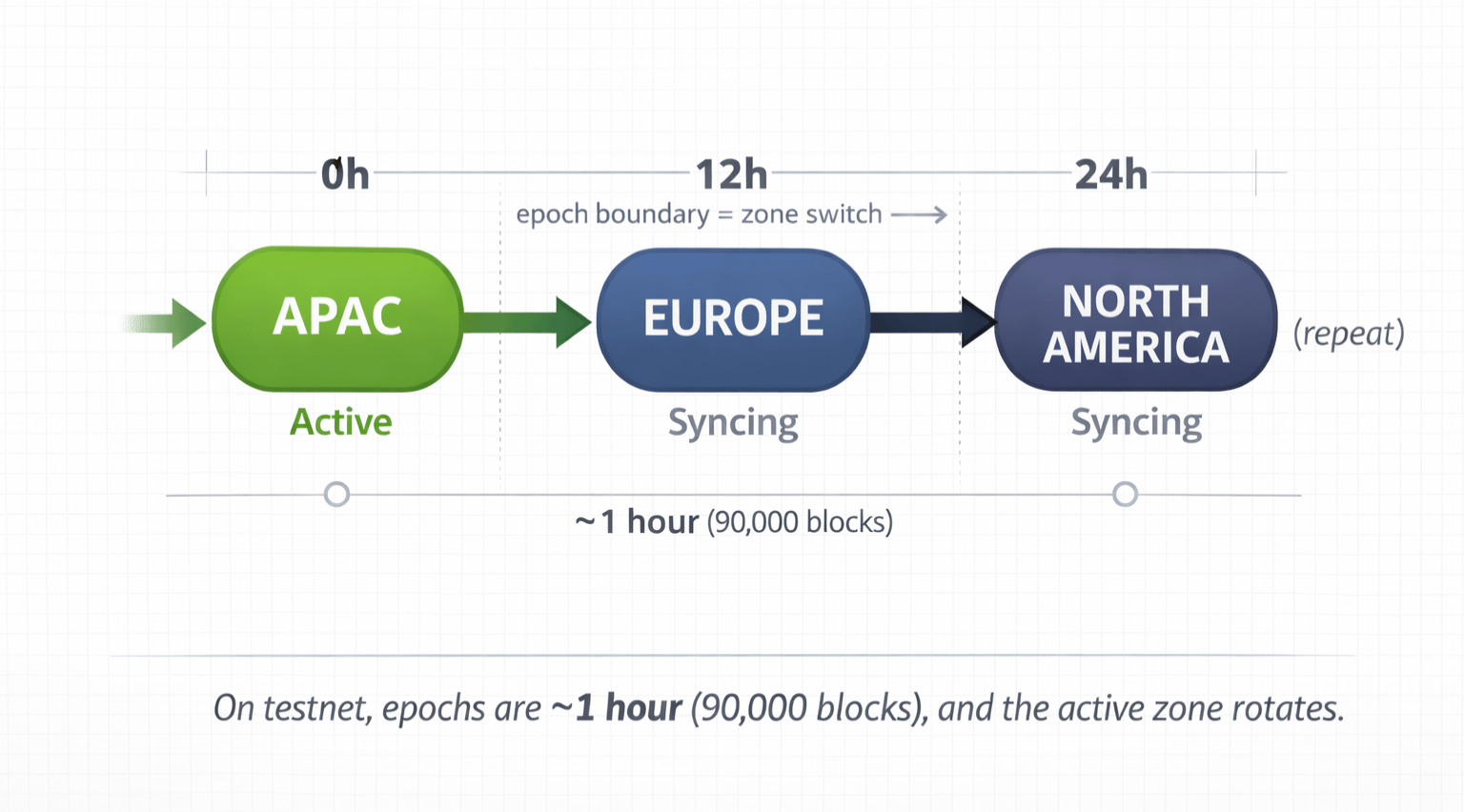
On Fogo Testnet, an epoch runs for 90,000 blocks, which is roughly one hour. When the epoch ends, the active zone switches to the next one.
The testnet targets 40 millisecond block times. Leadership rotates every 375 blocks, which comes out to about 15 seconds before the next leader takes over.
So instead of one region running consensus all day, the “active” region moves. As the world’s active hours move, consensus shifts too. Asia to Europe to North America, then around again.
Now the question is, why this can reduce latency?
This part is almost common sense.
If the validators who are voting are closer to each other, messages travel faster between them. Faster message travel means faster voting, and faster voting usually means quicker block confirmation.
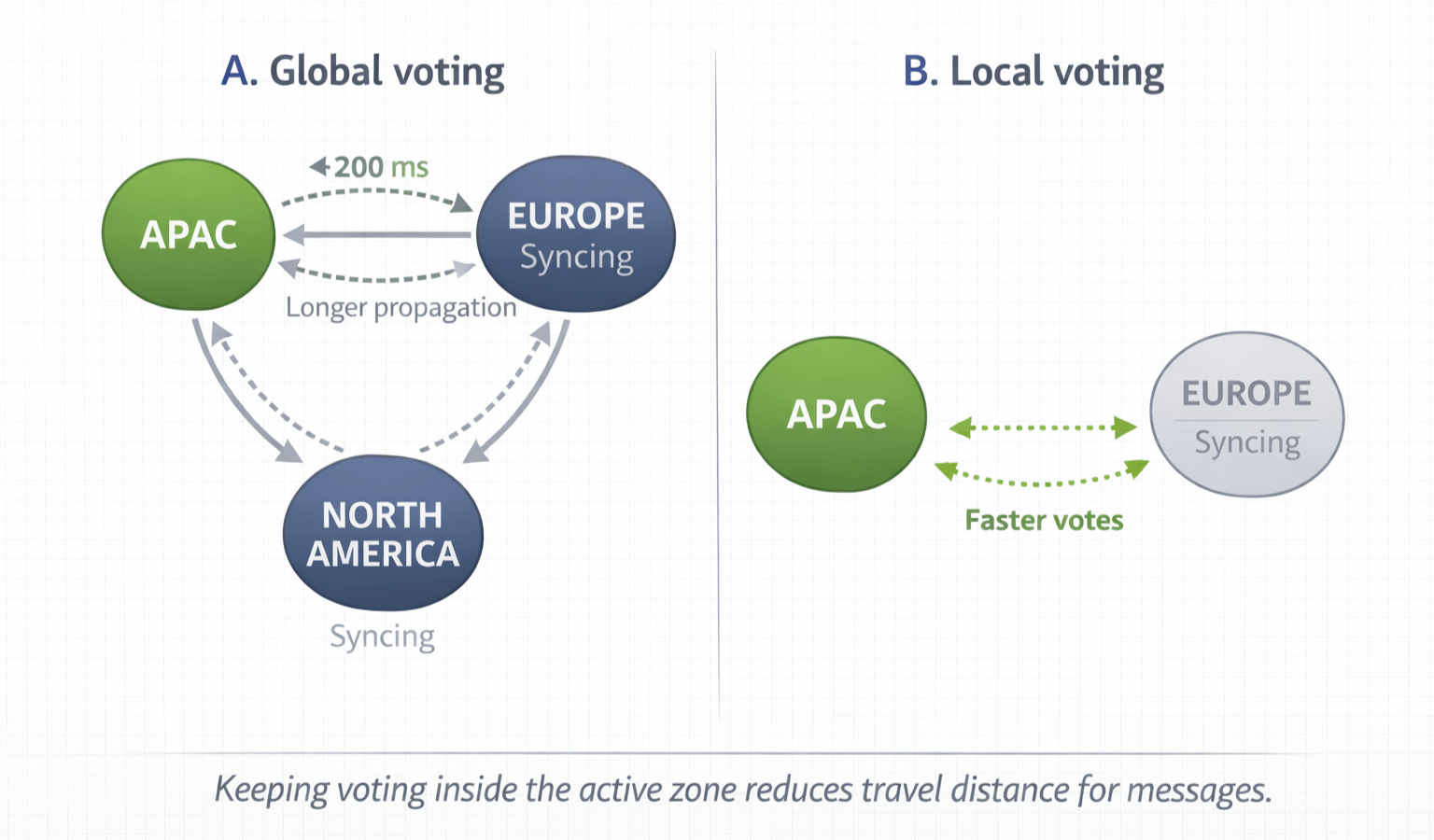
Fogo’s architecture docs describe an ideal setup where a zone is tightly coordinated, even within a single data center environment, so latency can get close to hardware limits. The design goal mentions sub 100 millisecond block times in optimal conditions.
It’s not only about speed. It’s also about how steady the chain feels.
Shorter paths can reduce communication hiccups, make forks less messy, and make confirmation time feel less jumpy.
I like that Fogo is being honest about what causes latency.
It’s not always software. A lot of it is geography.
Most networks keep the same global validator set all the time, then try to squeeze performance out of tuning.
Fogo takes a more structural approach, it changes which zone is active.
And yeah, 40ms blocks on testnet doesn’t automatically mean mainnet will feel the same. But the logic is clean. It’s not “fast because hype.” It’s fast because the active voters are closer when it matters.
Fogo’s zoned consensus with follow-the-sun epochs is built for a market that never sleeps. Three zones on testnet, one active at a time, about one-hour epochs, and a 40ms block target.
Simple goal, practical method: reduce distance, reduce delay.
And in a space where milliseconds can decide whether you win a trade or miss it, that design choice feels like it was made by someone who’s actually watched transactions lag in real time.