
🚨 Shocking Claim from Epstein’s Files: Genetics, Power, and the Future of Human Design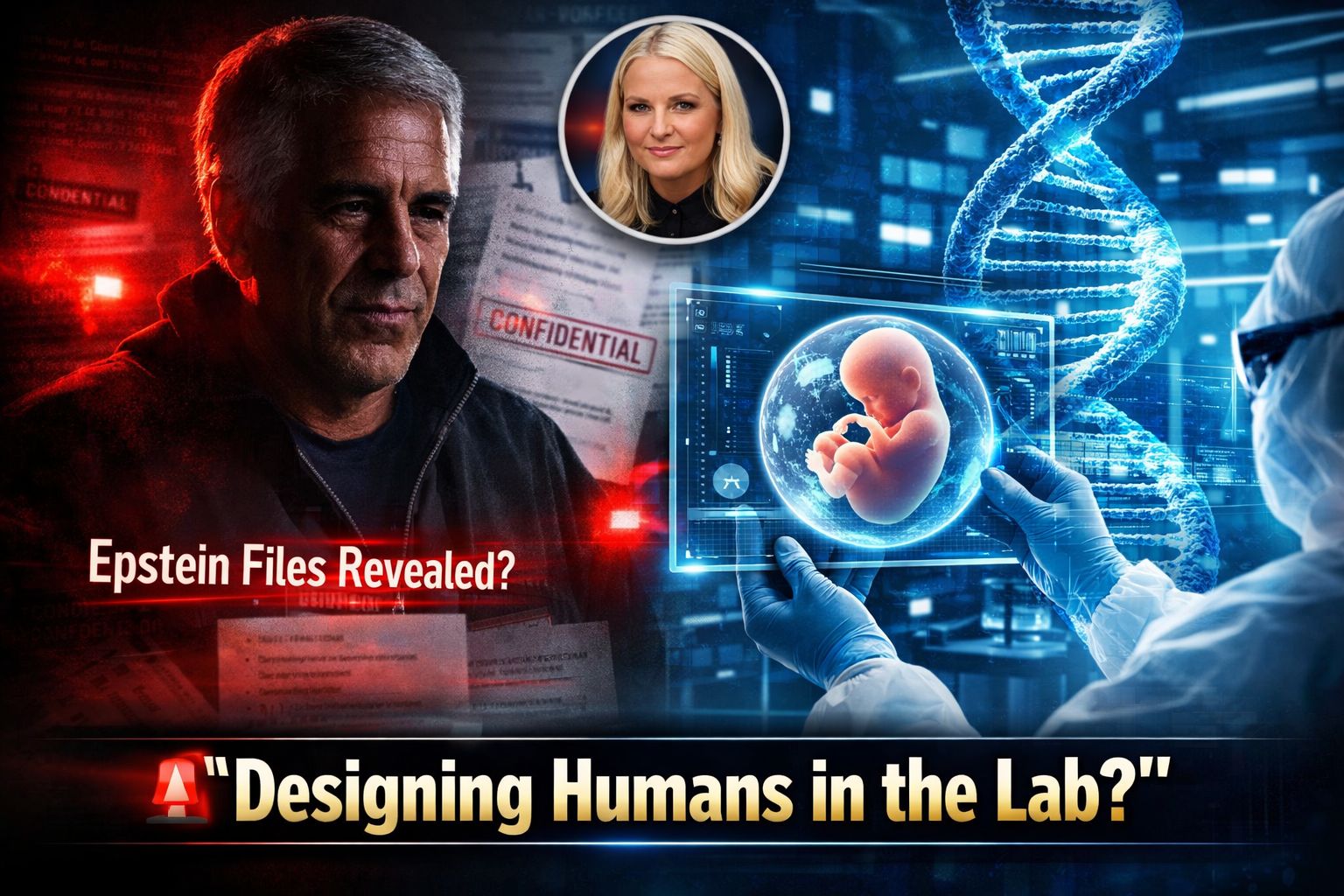 and the Future of Human Design
The release of documents connected to Jeffrey Epstein continues to generate headlines worldwide. Among the most debated claims circulating online is a reported 2012 note attributed to Princess Mette-Marit of Norway, which allegedly stated:
“Soon people will no longer be able to create new humans, and we will only be able to design them in the lab.”
While the authenticity and context of this statement remain subject to scrutiny, the claim has reignited global discussion about genetic engineering, bioethics, and the future of human reproduction.


$BTC The Broader Context: Epstein and Elite Scientific Circles
Before his arrest and subsequent death in 2019, Epstein cultivated relationships with influential figures in academia, technology, and global policy. He was known for hosting discussions involving scientists, investors, and thought leaders on cutting-edge subjects, including artificial intelligence, transhumanism, and biotechnology.
The alleged 2012 note—if genuine—would align with broader elite conversations taking place during that era about genetic modification and reproductive technology. However, it is important to distinguish between speculative futurism and documented policy direction. There is no verified evidence that global institutions have endorsed or planned any ban on natural human reproduction.
Genetic Engineering: Science Fiction or Emerging Reality?
The idea of “designing humans in a lab” evokes images of science fiction—but advancements in biotechnology have made some once-imaginary concepts technically possible.
Key developments include:
CRISPR gene-editing technology, allowing targeted DNA modifications
IVF (in vitro fertilization) advancements
Research into embryo screening for inherited diseases
Synthetic biology and lab-grown tissues
These technologies were originally developed to prevent genetic disorders and improve human health outcomes. However, they also raise profound ethical questions:
Where is the line between treatment and enhancement?
Who controls access to these technologies?
Could genetic “design” create inequality at a biological level?
The controversy intensified in 2018 when a Chinese scientist announced the birth of gene-edited babies, prompting global condemnation and regulatory crackdowns.
Ethical and Regulatory Safeguards
Despite dramatic headlines, international frameworks strongly restrict human genetic modification. Most countries prohibit heritable gene editing. Global institutions such as the World Health Organization and leading scientific academies emphasize strict ethical oversight.
The notion that humanity would soon “no longer be able to create new humans” naturally appears speculative. There is currently no mainstream scientific consensus or global initiative aimed at replacing natural reproduction with laboratory design.
Why This Matters Now
The resurfacing of such a claim highlights a broader trend: increasing public distrust in elite networks and opaque discussions around emerging technologies.
Three factors amplify the controversy:
Epstein’s connections to powerful individuals
Growing advancements in biotech and AI
Public concern over unchecked technological acceleration
In financial markets, biotech innovation remains a high-growth sector. Investors closely monitor companies working in gene therapy, fertility technology, and personalized medicine. However, ethical and regulatory risks remain central to long-term viability.
Separating Sensation from Substance
While the alleged note is provocative, it is critical to evaluate:
Has the document been independently verified?
What was the broader conversation in which the statement appeared?
Was it speculative futurism rather than policy advocacy?
Without clear authentication and context, the claim should be approached cautiously.
Final Thoughts
The Epstein document controversy underscores a larger truth: biotechnology is advancing rapidly, and society is still grappling with its implications.
Whether the alleged statement was literal, hypothetical, or misinterpreted, it forces difficult questions about the future of humanity:
How far should genetic science go?
Who decides the ethical boundaries?
And how do we ensure innovation serves humanity rather than divides it?
As markets, policymakers, and citizens navigate this frontier, transparency and accountability will remain essential.
In an era defined by exponential technological growth, the real debate is not whether science can change humanity—but whether humanity is prepared for the responsibility that comes with it.$BNB #BTCFellBelow$69,000Again #epstanfile