

If you’ve ever tried to place a trade during a fast market and watched the screen hesitate, you know the exact moment confidence slips. It’s small but sharp. Your brain is ready. Your money is ready. The network is not. That tiny delay turns into doubt. You start wondering if the system you rely on actually understands urgency. Fogo is built around that emotional gap. It isn’t chasing abstract performance numbers. It is trying to remove that split second where a user feels disconnected from their own intent.
This matters more now than it did a few cycles ago. Crypto is no longer just experimentation. Real capital is moving. Real strategies are running. DeFi isn’t a playground anymore; it’s infrastructure people depend on. The problem is that most chains still treat congestion as an occasional inconvenience instead of a core design issue. When activity spikes, systems slow down. Users feel it instantly. Trust is fragile in finance. Once someone feels friction a few times, they quietly reduce exposure. Fogo is responding to a simple but important need: execution that feels dependable even when pressure rises.
At the heart of Fogo is the decision to use the Solana Virtual Machine. In simple terms, that means developers don’t have to start from zero. Tools they already understand can work here. Programs that already run in the Solana ecosystem can move with less friction. That choice shows a practical mindset. Instead of trying to invent a new developer culture, Fogo is saying: bring what already works, and we’ll give it a tighter performance environment. For builders, that lowers fear. For users, it increases the chance that familiar applications appear faster instead of years later.
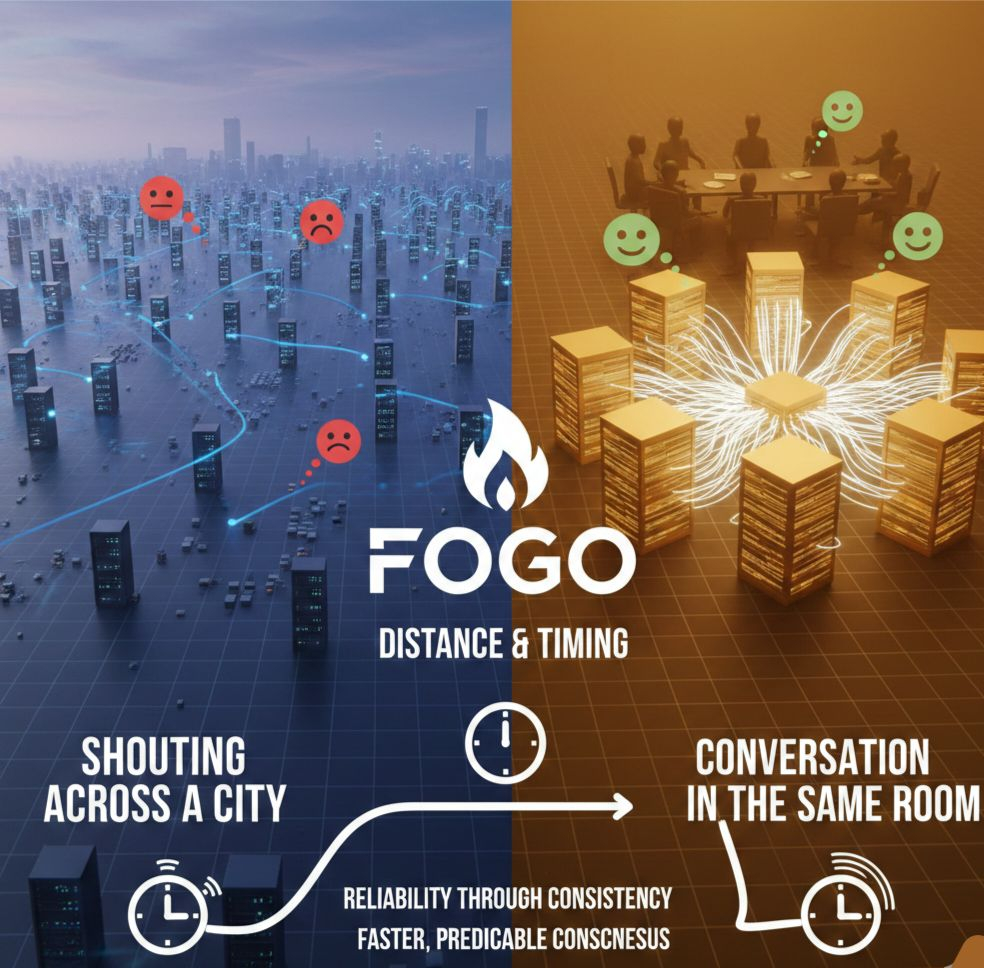
The deeper technical idea behind Fogo is about distance and timing. Networks are limited by physics whether people admit it or not. Data travels at a speed. Machines sit in places. Fogo leans into this reality instead of pretending it doesn’t exist. Validators are structured in geographic zones designed for close proximity. The goal is to reduce the physical delay between participants so consensus happens faster and more predictably. You can think of it like moving a conversation into the same room instead of shouting across a city. The result isn’t just speed; it’s consistency. And consistency is what traders emotionally interpret as reliability.
Performance alone does not create value if the token economy is careless. Fogo’s token structure follows familiar foundations: paying fees, staking for security, and participating in governance. That may sound ordinary, but ordinary is often safer than experimental when real money is involved. The real tension is supply versus adoption. Early-stage tokens often experience strong price swings because circulating supply grows faster than organic demand. Traders understand this instinctively. A beautiful architecture does not protect a chart from unlock pressure. What matters is whether network usage grows at a pace that absorbs supply. Until that balance appears clearly in data, volatility remains part of the landscape.
Ecosystem growth is where emotion meets proof. Compatibility with existing tools gives Fogo a head start, but migration only happens when developers feel a reason to move. That reason must be experiential. If applications feel smoother under load, if execution feels tight during busy sessions, word spreads quietly among serious users. Incentive programs can attract liquidity quickly, but they cannot fake long-term loyalty. After rewards fade, only genuine utility keeps people anchored. The question every trader eventually asks is simple: are users staying because they’re paid to, or because leaving feels like a downgrade?
From a market perspective, Fogo lives in a competitive neighborhood. There are already several chains promising speed. Solana is the obvious comparison because it set the tone for high-performance execution. Newer chains also compete for the same audience: developers who care about timing, throughput, and active financial applications. Fogo’s identity is narrower and more focused. It is not trying to be everything for everyone. It is positioning itself as infrastructure for environments where milliseconds matter. That clarity is a strength, but it also limits the narrative. A specialized tool wins deep loyalty from a specific group, not universal applause.
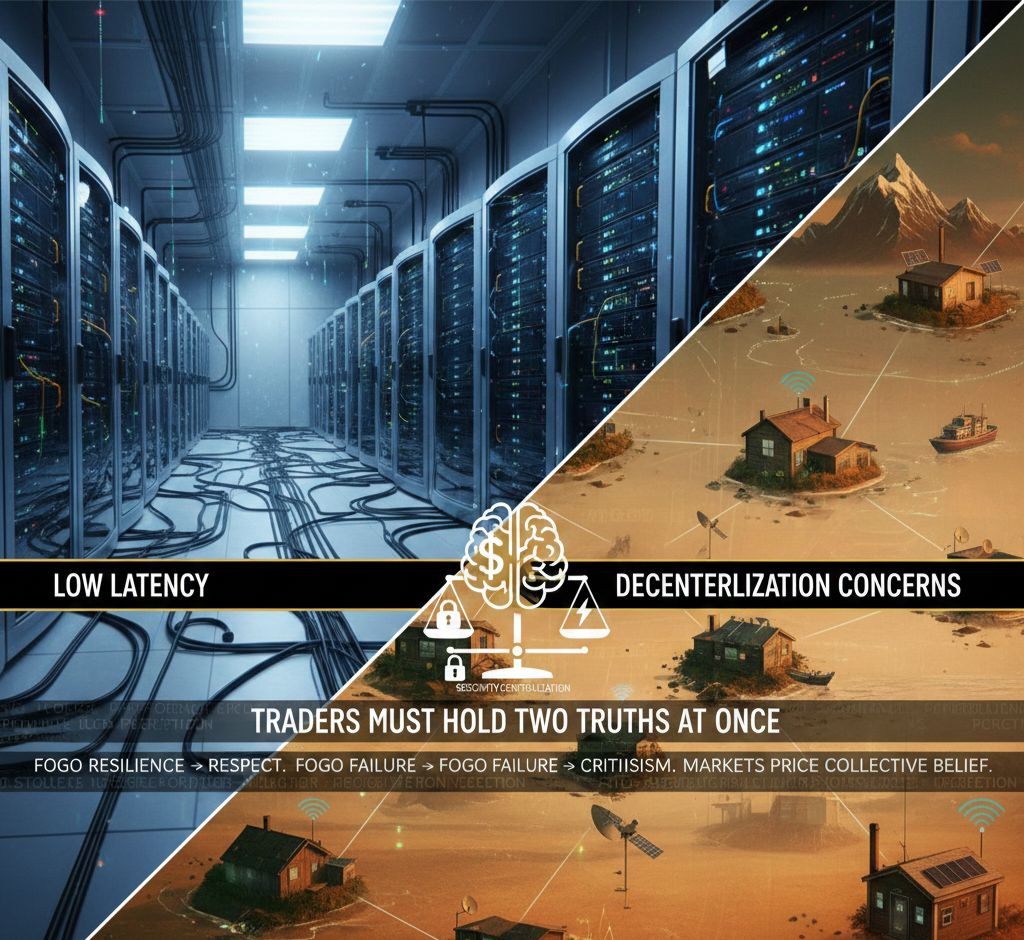
Here is the uncomfortable but honest insight: the same design choices that enable low latency will always raise decentralization concerns. Co-location and zone-based structures make some observers nervous. In crypto culture, decentralization is emotional, almost philosophical. Traders must hold two truths at once. First, performance demands trade-offs. Second, perception influences value as much as engineering. If Fogo proves resilient under real stress, skepticism softens into respect. If it fails visibly, critics gain confidence. Markets don’t just price technology; they price collective belief in that technology.
From a trader’s viewpoint, early assets behave like raw emotion. Liquidity rotates quickly. Narratives stretch and snap. Young tokens rarely move in clean trends. A patient approach is less about predicting the next spike and more about watching behavior. Does volume remain stable after the first excitement fades? Do price reactions show buyers defending clear zones? Does volatility compress into ranges instead of exploding randomly? These signals tell you whether an asset is maturing or still searching for identity. Accumulation, for longer-horizon participants, is usually about stepping in during quiet periods when attention drifts, not chasing loud candles when everyone suddenly cares.
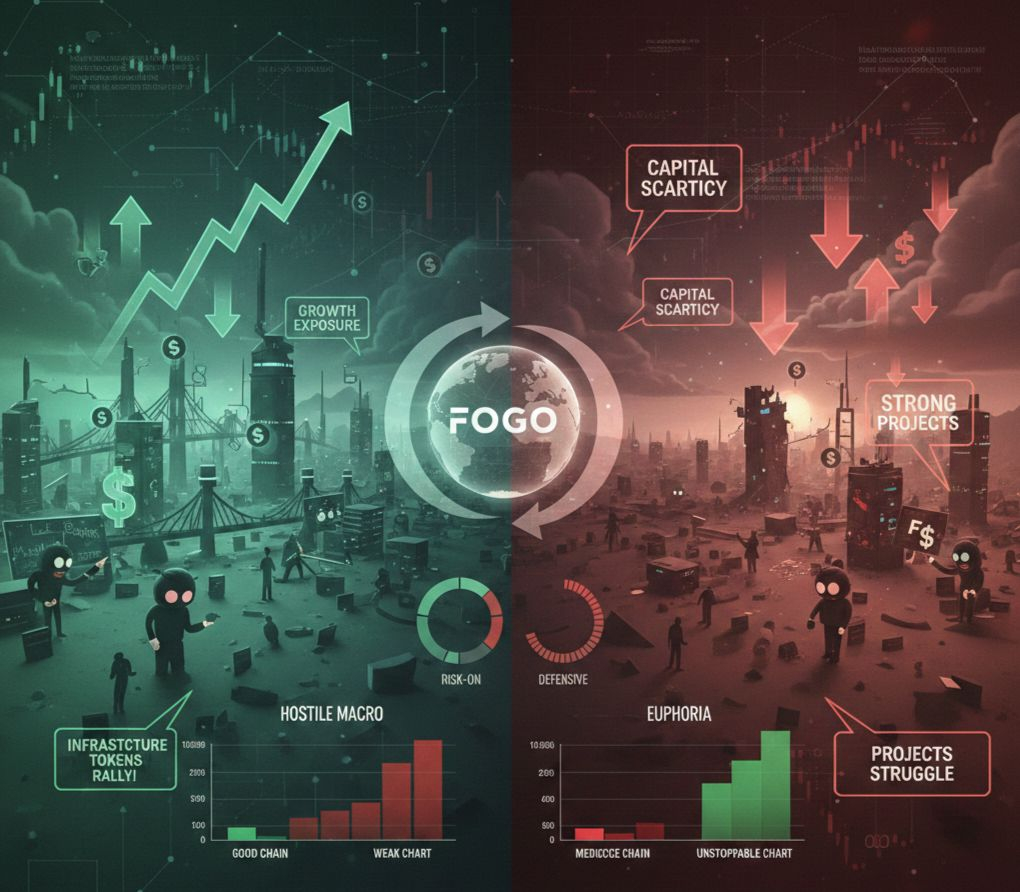
Macro conditions overlay everything. In risk-on environments, infrastructure tokens can rally hard because traders seek growth exposure. In defensive markets, even strong projects struggle to attract capital. Understanding Fogo means placing it inside that broader cycle instead of isolating it. A good chain launched in a hostile macro climate will look weak on the chart. A mediocre chain launched during euphoria can look unstoppable. Separating environment from fundamentals is part of emotional discipline.
The realistic outlook is neither pessimistic nor euphoric. Fogo is making a clear bet: that future on-chain finance will demand execution that feels instant and trustworthy. Its architecture is built around that belief. If real applications emerge that prove the experience advantage, adoption follows quietly. If the difference is invisible to users, the market will treat it like just another fast chain. Infrastructure projects earn their reputation slowly, through repeated proof under pressure. That process cannot be rushed by marketing.
A trader’s final reflection is simple. Fogo is not a story about hype. It is a story about systems trying to match human timing. When technology disappears into the background and users stop thinking about delays, that is when infrastructure has succeeded. If Fogo reaches that point, price becomes a lagging indicator of trust already formed. And trust, once earned in financial systems, tends to compound more quietly and more powerfully than excitement ever does.

