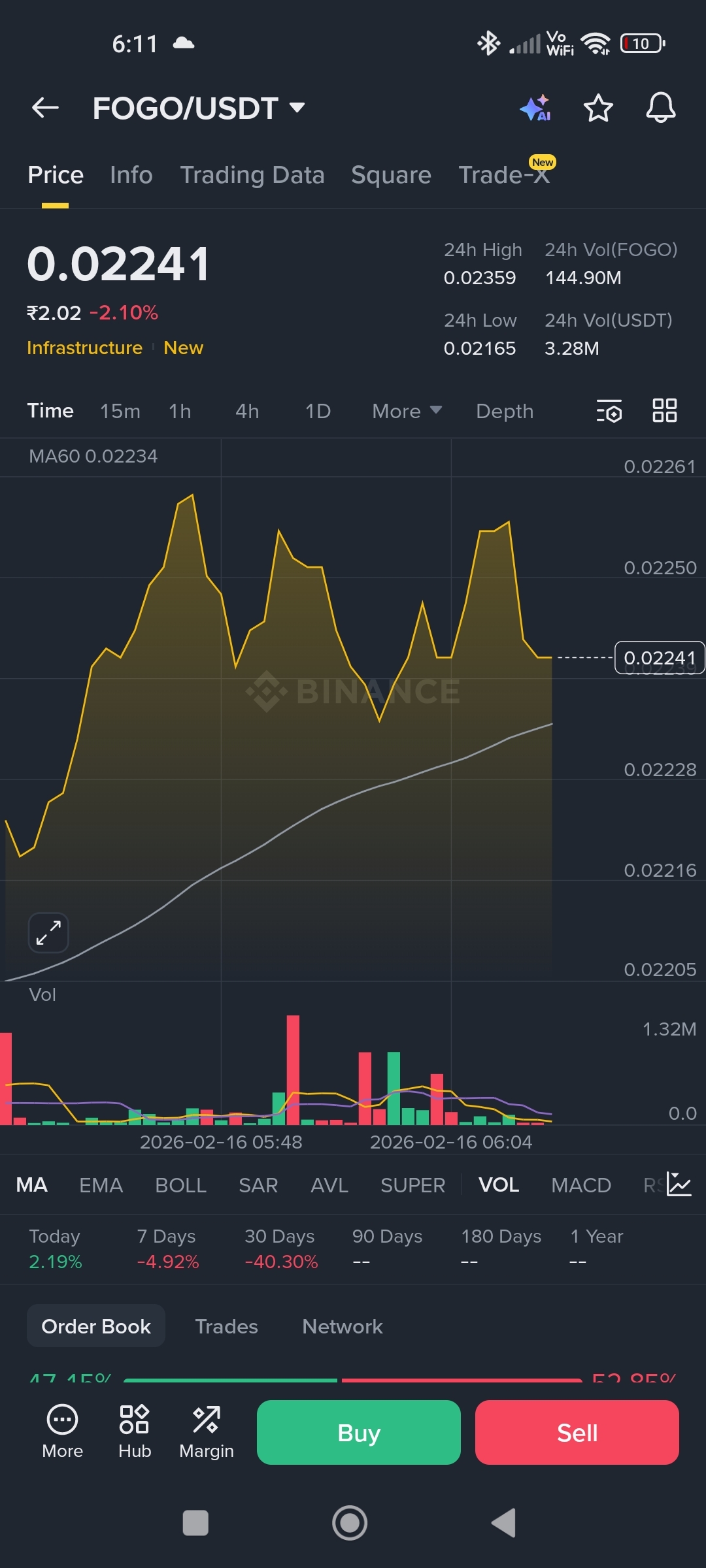
$FOGO is a high-performance Layer 1 blockchain network designed primarily for decentralized finance (DeFi) and high-speed trading applications. Unlike many general-purpose blockchains that try to support every possible use case, Fogo focuses strongly on performance, low latency, and real-time financial execution. Its architecture is built to reduce transaction delays and create an experience closer to centralized exchanges while maintaining the benefits of decentralization.
Vision and Purpose
The main goal of Fogo is to bridge the gap between traditional financial trading systems and decentralized blockchain infrastructure. In centralized exchanges, trades are executed in milliseconds with deep liquidity and efficient matching engines. However, many decentralized blockchains struggle with congestion, slower confirmation times, and inconsistent user experience. Fogo aims to solve these challenges by building a network optimized specifically for fast order execution and scalable financial applications.
Rather than competing as just another general smart-contract chain, Fogo positions itself as a performance-first blockchain where developers can build advanced trading platforms, derivatives markets, and complex financial tools.
Technology and Architecture
Fogo operates as a Layer 1 blockchain, meaning it has its own independent network and validator system. It is designed with extremely low latency in mind, targeting very short block times and quick transaction finality. This makes it suitable for high-frequency trading and real-time financial strategies.
The blockchain is compatible with the Solana Virtual Machine (SVM), which allows developers familiar with Solana’s ecosystem to migrate or deploy applications more easily. This compatibility lowers the barrier to entry for developers and helps bootstrap the ecosystem by reusing existing tools, libraries, and development frameworks.
A key technical advantage of Fogo is its focus on validator performance. The network uses high-performance validator clients and infrastructure designed to reduce bottlenecks. By optimizing how transactions are processed and propagated across the network, Fogo aims to minimize delays and improve execution reliability.
The FOGO Token
The native token of the network is called FOGO. It
serves multiple essential functions within the
ecosystem:
1. Transaction Fees: Users pay network fees in
FOGO when interacting with smart contracts
or sending transactions.
2. Staking: Validators and delegators stake FOGO
tokens to secure the network. In return, they
earn rewards for helping validate transactions
and maintain consensus.
3. Governance: Depending on the network's
governance structure, token holders may
participate in voting on protocol upgrades or
ecosystem decisions.
4. Ecosystem Incentives: Tokens are often
allocated for developer grants, liquidity
incentives, and com y 'nity growth programs.
#Fogo $FOGO #MarketRebound #CPIWatch #TrendingTopic