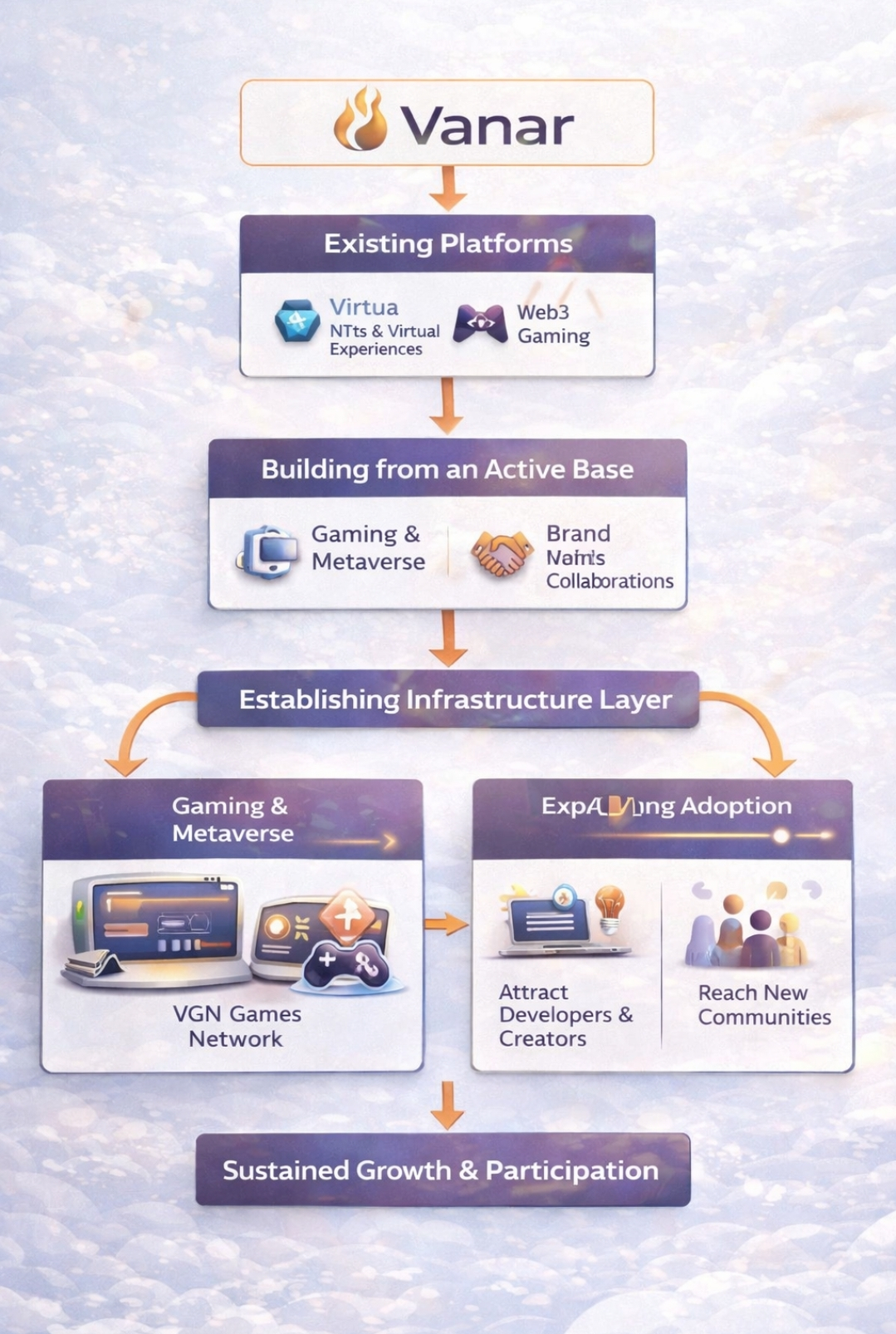
New blockchain networks often begin with big dreams, but often have very low, if any, real-world use. The difference with Vanar however is that Vanar was not created in a silo. Long before the VANRY token became popular, there were other platforms (Virtua and VGN Games Network) that provided users with some degree of engagement through the creation of NFTs, gaming environments, as well as branded products and services. In this way, Vanar has something that most other chains do not have when they start up - an existing user base that is using other platforms that built on the existing foundation.
Subsequently, rather than present itself as a future-dream looking for a development opportunity, Vanar looks and feels like a foundational infrastructure layer that connects products that are already being developed. This is a logical approach particularly for gaming and digital experiences where the user is much more concerned with the functional aspect of the product than they are with the technology supporting it. The user is concerned primarily with how seamless and effortless their connection is to the product, rather than the how or why behind the network that powers the product.
While having products and a user base is certainly important, it is only one ingredient for growth; the other ingredient is whether the ecosystem has the potential to grow beyond the users it currently has. The level of adoption must also be able reach out and attract new developers, creators and community members in order to sustain the growth of the ecosystem.
Vanar’s position suggests a different strategy: strengthening connections between existing platforms while gradually expanding outward. Its progress will depend on whether it can turn early activity into sustained growth and broader participation in the evolving Web3 landscape.