
On-chain trading has this annoying rhythm. You go to place a trade, your wallet jumps in, you sign. Then you tweak one tiny setting, you sign again. Move funds, sign again. It’s not complicated, it’s just… constant, and it knocks you out of the zone.
I’ve honestly missed good entries because I was still dealing with wallet prompts.
That’s why Fogo caught my eye.
On their main site they talk about sub-40ms block times and “gas-free sessions.” Those are not fluffy promises, they’re basically the two pain points traders complain about the most, speed and friction.
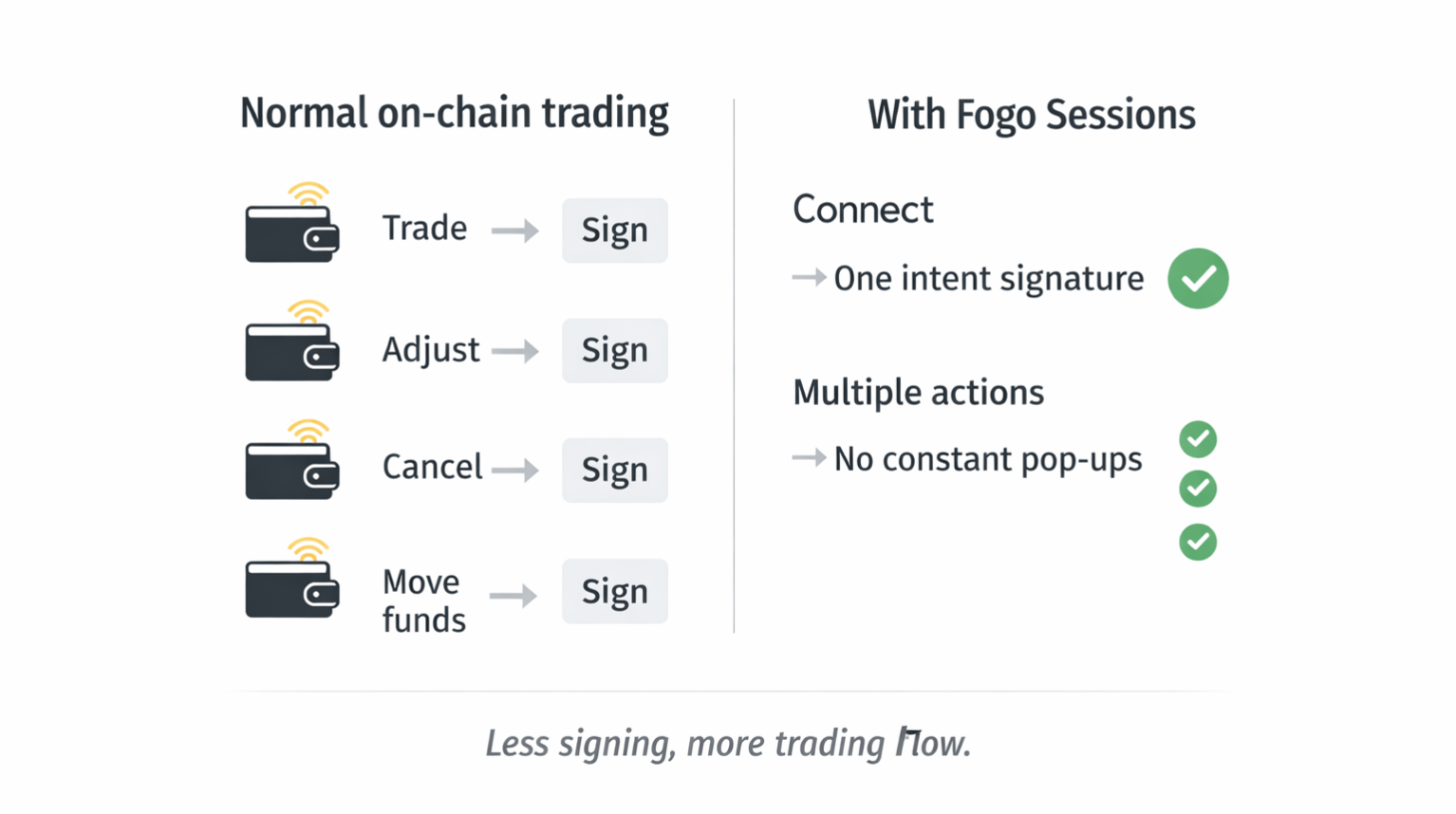
Fogo Sessions is a way to stop the “sign, sign, sign” loop. You connect once, approve a session once, and then you can keep using the app without being dragged back into approval popups for every single action.
Fogo explains Sessions as a mix of account abstraction plus paymaster infrastructure.
In normal words, the session gives the app limited permission to act for you, and the paymaster setup can cover fees so you’re not forced to hold gas just to use the product.
One detail that makes me trust the design more, Sessions are bounded. They only work with SPL tokens, and they don’t allow interacting with native FOGO. User activity happens with SPL tokens, while native FOGO is kept for paymasters and other low-level on-chain pieces.
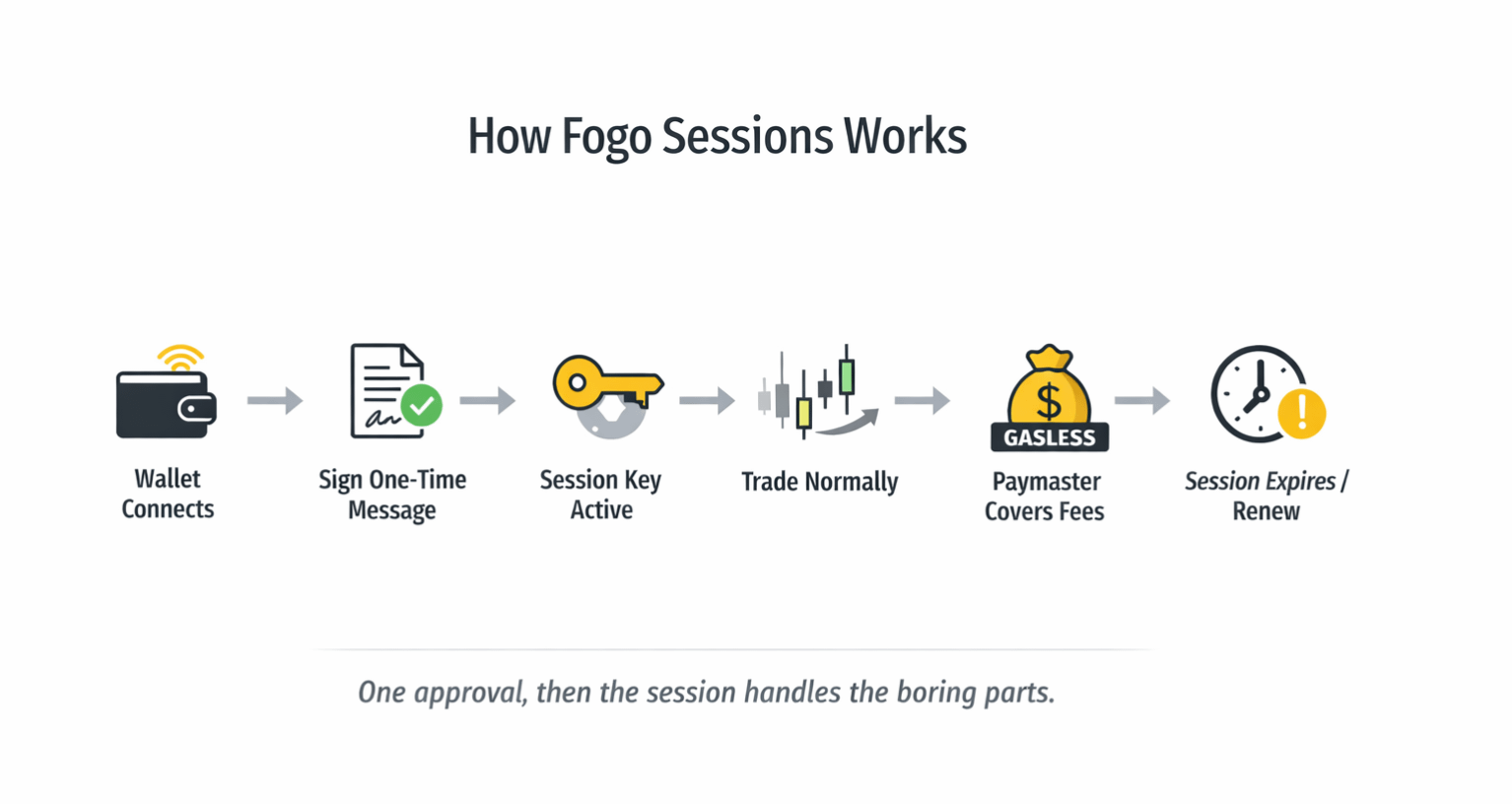
This is the part that feels nice in practice. It’s straightforward:
i. Connect your wallet, it can work with any SVM-compatible wallet for the one-time step.
ii. Sign a one-time intent message to start the session.
iii. Use the app normally, without signing every step.
iv. Trade gasless when the app sponsors fees using paymasters.
And yeah, I’m going to say it, fewer popups also means fewer chances to misclick something dumb when you’re moving fast.
That’s not a “tech feature,” that’s just sanity.
Account abstraction can sound like a buzzword until you see the mechanic. Instead of asking your wallet to approve every action, you sign a structured intent once. Then the system uses a temporary session key to sign allowed actions during that session.
Fogo’s docs also point out a few guardrails that matter:
• The intent message includes a domain field, meant to match the app’s real domain.
• Sessions can be scoped with token lists and limits, or broader if you choose.
• Sessions expire and need renewal, so permissions don’t hang around forever.
So it’s smoother, but it’s still controlled. You’re not handing over the keys to the whole wallet, you’re giving a short-lived pass with rules (that’s how I think about it, anyway).
“Gasless” doesn’t mean fees vanish. It means the user doesn’t have to keep gas around just to function.
With Fogo Sessions, paymasters can sponsor the fees so the user can keep trading and interacting without getting blocked by “you don’t have enough gas” at the worst moment.
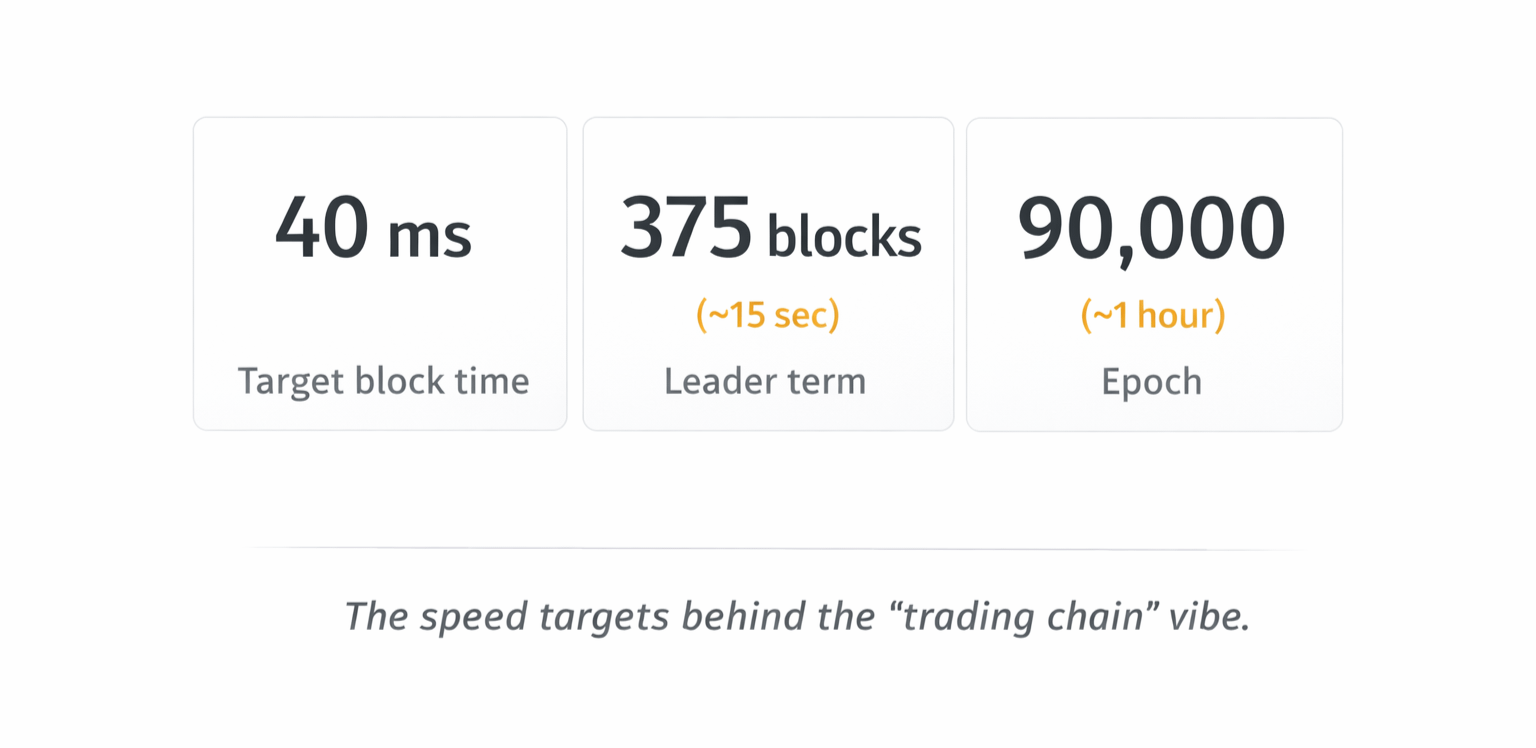
Fogo also backs the speed story with concrete testnet numbers. Their testnet targets 40 millisecond blocks. They note a leader term of 375 blocks (about 15 seconds at that pace) and epochs of 90,000 blocks (about one hour). Those numbers are very “trading chain” energy, and I mean that in a good way.
I like the direction in safety check. It’s a real UX upgrade, and it doesn’t pretend risk disappears just because the pop-ups are gone.
Before you sign the first intent message, do three quick checks:
i. Confirm the domain shown in the intent message matches the app you’re using.
ii. Start with limits when you test a new app, sessions can be scoped so you don’t give broad permissions on day one.
iii. Know the session window, how long it lasts and when it expires. Expiry keeps permissions from lingering.
The takeaway is simple.
Fogo Sessions aims to make trading feel like a modern app, one approval, smoother execution, fewer interruptions. Combine that with Fogo’s sub-40ms performance push, and Sessions starts to look less like a “nice extra” and more like a core part of how Fogo wants trading to work.