
I remember the first time I had to explain a token migration to someone who did not care about crypto culture. It was an ops lead, calm voice, sharp questions. What is the mapping. What changes in supply. What happens to inventory on day one. I opened the docs expecting to talk about vision, and instead I spent two hours hunting for the one thing that matters in a live system: continuity.
That is when I realized most migrations are not really branding events. They are accounting events. People argue about whether a new ticker is bullish, whether a reset is justified, whether the market will “like” it. But the real question is quieter. Does the team carry continuity forward cleanly, or do they take the chance to rewrite the ledger in ways that are hard to explain later.
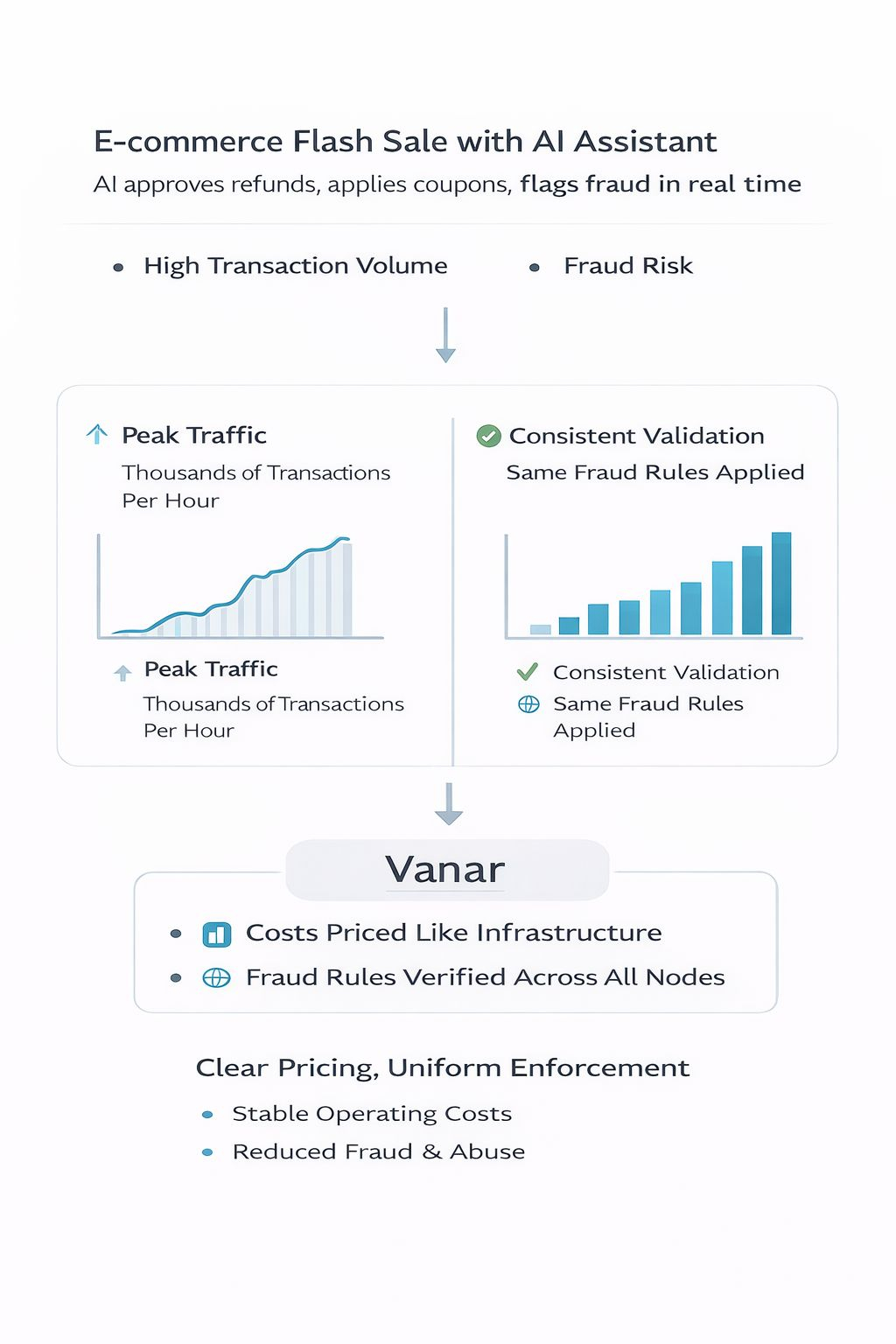
I explain VANRY to non crypto people with a scenario from the kind of workflow that actually breaks when incentives are vague. Imagine a mid-sized e-commerce platform in Germany running a weekend flash sale and using an AI assistant to approve refunds, apply coupons, and flag fraud in real time. At peak traffic, the AI is making thousands of calls per hour to check eligibility rules, write decisions to an audit log, and trigger payouts. If costs are not metered cleanly, the system either gets abused by spammy requests or finance shuts it down because the bill becomes unpredictable. If validators cannot enforce the same semantic rules consistently, the same customer can be approved on one path and rejected on another, which turns into chargebacks, disputes, and support chaos. Vanar’s value proposition is that this workflow can be priced and governed like infrastructure: each decision has a measurable cost, each state change leaves a trace, and the validator layer is accountable for enforcing the same policy logic so operations can scale automation without losing control of spend, behavior, or auditability.
When I read the TVK to VANRY migration design, I felt that rare sense of relief you get when something is simple for the right reasons. The 1:1 swap symmetry is not exciting, but it is clean. If you held one unit before, you hold one unit after. That single decision tells you a lot about intent. It signals that the project is trying to keep holder continuity intact and keep the supply story understandable without a long disclaimer.
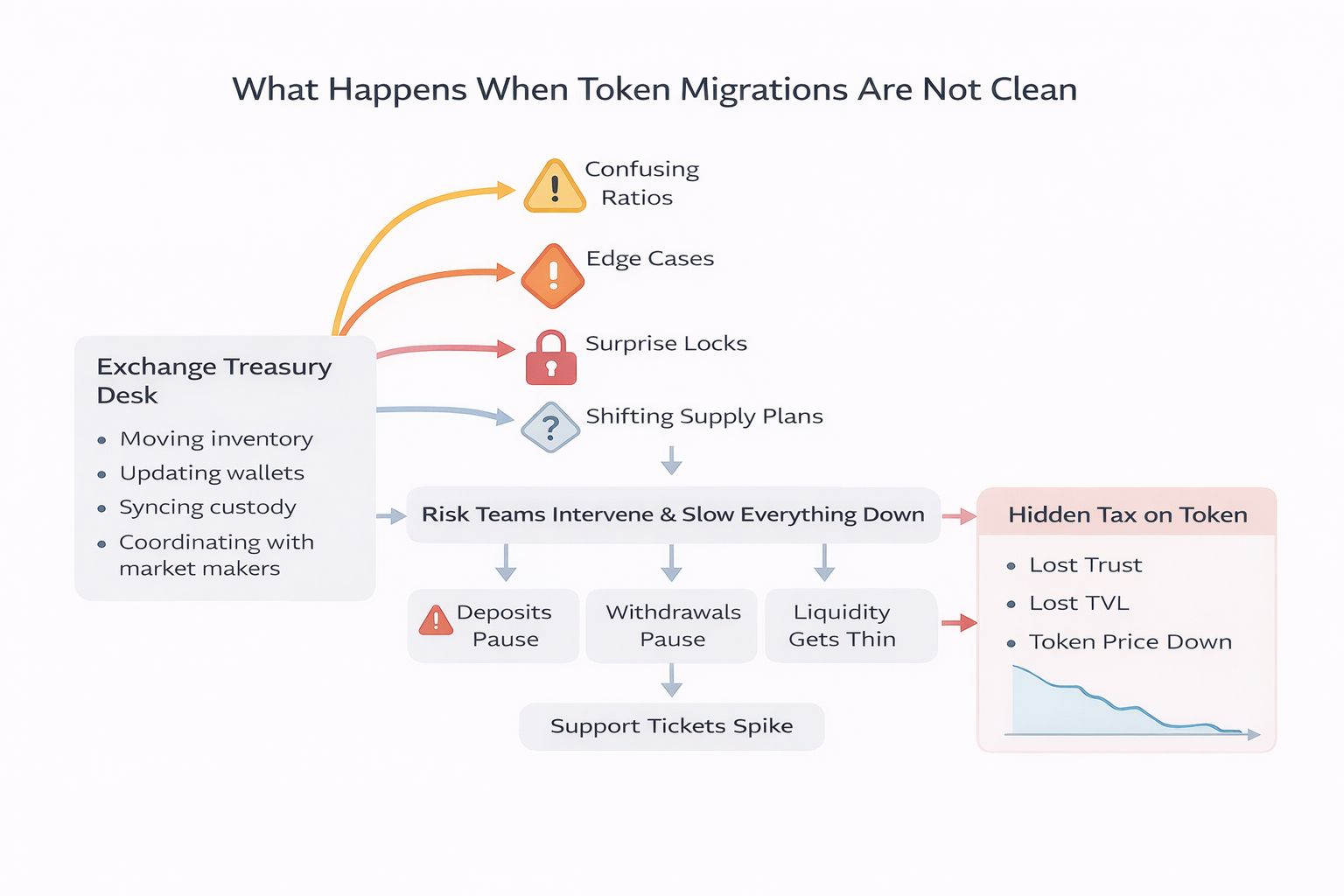
I have seen what happens when migrations are not clean. Picture a mid-sized exchange treasury desk during the changeover. They are moving inventory, updating wallets, syncing custody, coordinating with market makers, and trying to keep spreads tight. If the swap has confusing ratios, rounding edge cases, surprise locks, or a supply plan that shifts midstream, risk teams step in and slow everything down. Deposits pause. Withdrawals pause. Liquidity gets thin. Support tickets spike. The token ends up paying a hidden tax in the form of distrust.
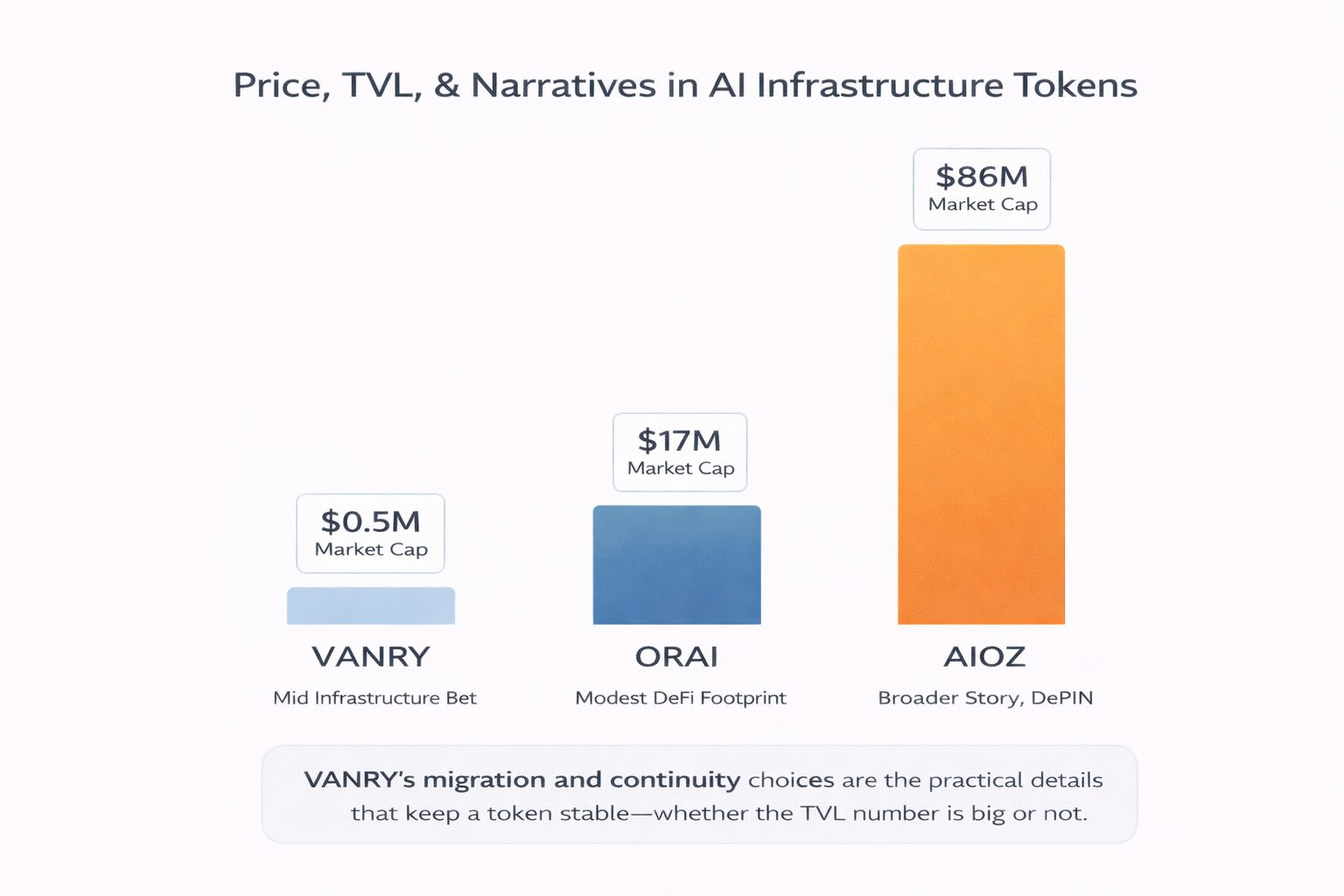
If I’m being honest, I only started caring about “price and TVL” after I watched how migrations break in the real world. $VANRY is still priced like an early infrastructure bet, sitting around half a cent with a market cap in the low teens of millions on the major trackers. AIOZ, which sells a broader DePIN-style compute and media story, is being valued meaningfully higher on those same dashboards, closer to the mid-$80M range recently. ORAI is smaller by market cap, and when you look at chain-level usage signals like Oraichain’s DeFi footprint on DeFiLlama, it’s modest, which is a good reminder that “AI infra” value often trades on narrative and positioning more than locked capital. The point for this article is not that one chart is better than another. It’s that VANRY’s migration and supply continuity choices are the kind of boring details that let a token survive the moment it gets treated like inventory by exchanges, custody, and treasury desks, whether the TVL number is big or not.
What Vanar seems to be warning against is that exact mess. The discipline they are building instead looks like grown-up infrastructure work: deterministic handoffs, clear supply mapping, distribution you can trace, and long-horizon issuance you can explain without hype. It is not designed to create a moment. It is designed to avoid a failure.
This is migration designed to keep systems and stakeholders aligned, not just excited.
The market can react coldly to that because it does not give traders a new trick. Symmetry is boring. But boring is often what exchanges, compliance teams, and serious allocators want, because boring means fewer surprises.
As listing committees get stricter and liquidity gets more selective, migrations will be treated less like rebrands and more like audits. The projects that win will be the ones whose transitions look clean on paper and stay clean in production.
In the end, the prize is institutional trust. And the more I see how these things break in real workflows, the more I respect the teams that design the boring parts like they matter.
