
I read through Fogo Sessions and what stuck with me was not the “gasless” pitch. It was the insistence that time bound, scoped permissions should be the default way users interact. One clean approval up front, then everything else has to stay inside rules you can verify onchain.
In a trading shop, you do not keep asking for approval every time a system nudges an order. You approve a mandate, you set limits, you set an end time, and then you let execution do its job inside guardrails.
The crypto UX debate still loops around account abstraction, smart wallets, and who should pay fees. Some teams optimize for speed of onboarding at any cost. Others optimize for custody purity even if it means constant prompts. The uncomfortable part is that a lot of “friction reduction” quietly adds a new trust assumption, and you only discover it when the system is under stress.
I ran into that tension building onchain flows that needed to feel normal on a phone. Product wants one tap. Risk wants something you can explain. Not vibes, not “the UI said so,” but a clear chain of authorization you can replay when support asks what happened.
FOGO Sessions feels like a practical compromise. The user signs a structured intent that defines scope, spend caps, and expiry. The app registers it onchain. After that, each action is checked against those constraints. Fee sponsorship can sit on top of this, but with rules, so covering fees does not turn into an open invitation for abuse.
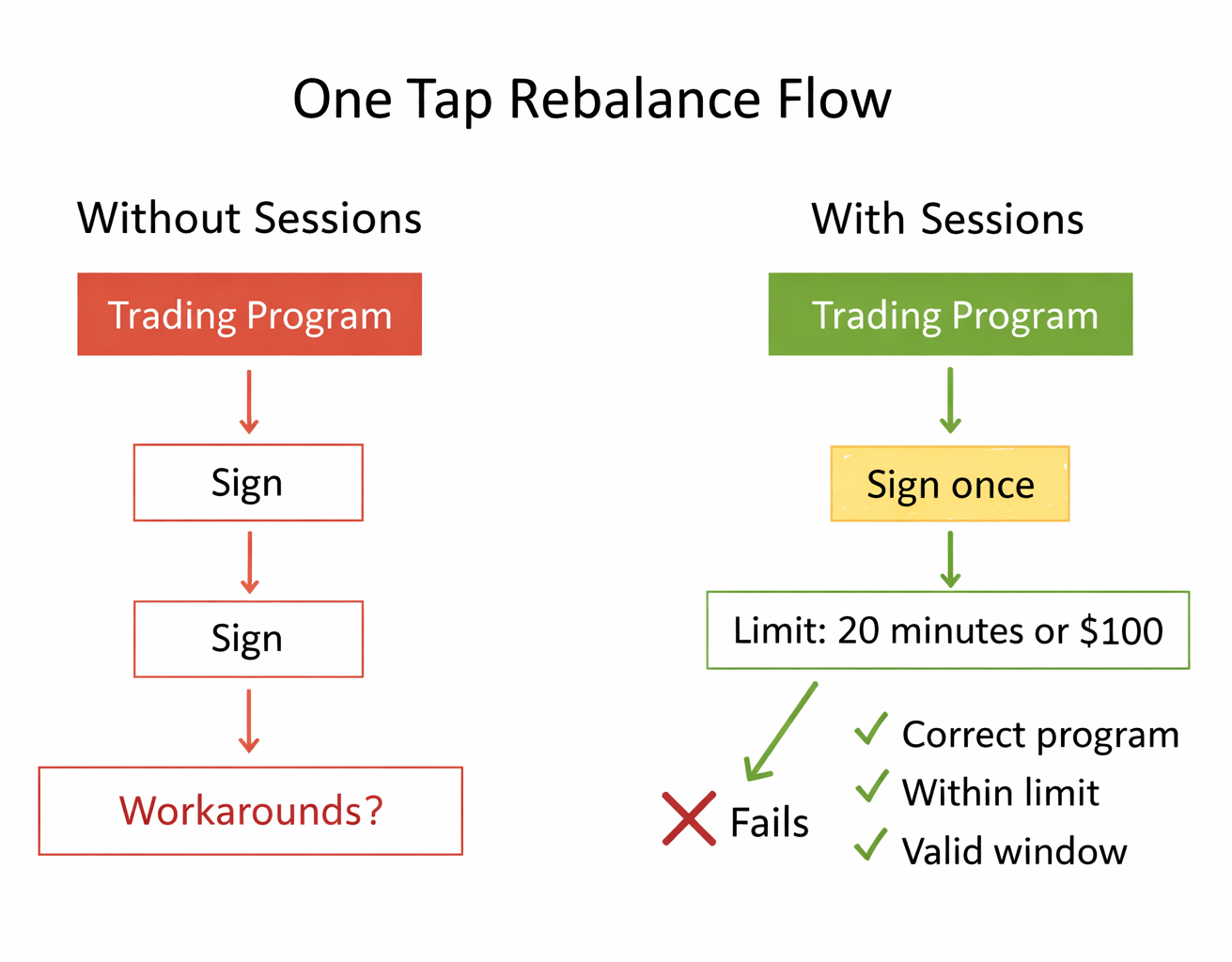
Here is where it got real for me. We were prototyping a one tap rebalance flow. Without scoped delegation, the user either signs repeatedly or you end up building workarounds that behave like custody, just hidden behind “convenience.” With FOGO Sessions, the user signs once to allow only a specific trading program, capped to a fixed spend limit, for a short window like 20 minutes. If a bug tries a different program, exceeds the cap, or runs after expiry, it fails onchain and the permission simply stops being valid.
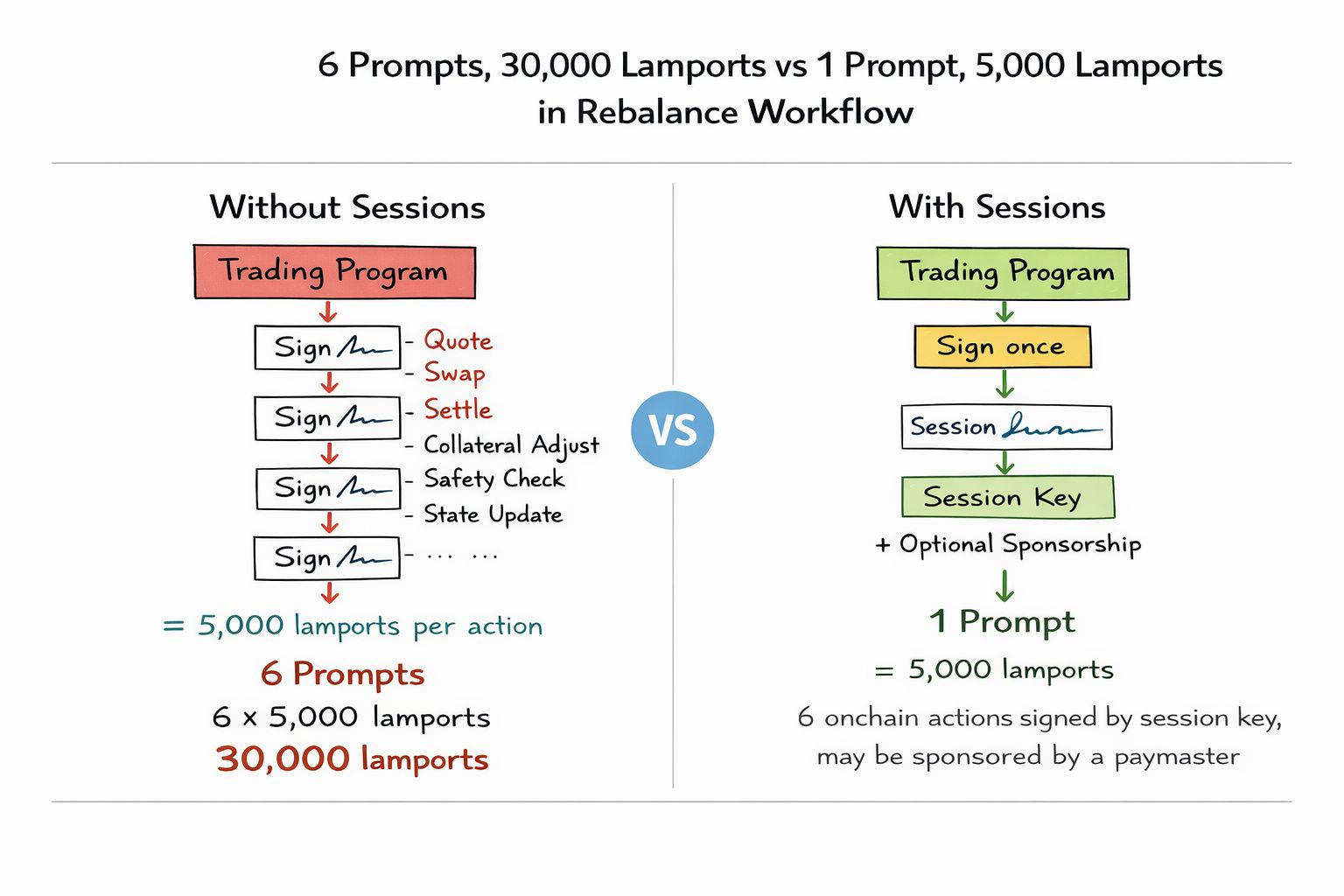
A simple way to quantify the difference is to count prompts and base fees in a typical multi step action. In the rebalance workflow I reviewed, the user path naturally breaks into six onchain actions: quote, swap, settle, collateral adjust, safety check, state update. On a Solana style fee model, a basic transaction with one signature is priced at 5,000 lamports, so six signed steps is 30,000 lamports in base fees before any prioritization tip. With FOGO Sessions, the user signs once to create the session, and the subsequent actions can be signed by the session key and even sponsored by a paymaster if the sponsor’s constraints allow it. In human terms, it is the difference between six interruptions and one clean “yes, for this, within these limits, for this long.”
Zooming out, the scope is bigger than making wallets feel less annoying. If Sessions becomes a common pattern on Fogo, permissions become composable. A user could authorize a short lived session that spans a trade, a collateral adjustment, and a bridge route with explicit caps and expiry, all anchored by an onchain session record that an ops team can actually work with.
It is useful to compare this posture with $SUI because the design bets are different. Sui pushes UX by changing the account surface with zkLogin, so onboarding can feel closer to a Web2 login flow. Mysticeti research reports extremely fast consensus commits and very high throughput in WAN experiments and notes integration into Sui, but that is research measurement, not a promise of day to day mainnet behavior. Pricing also reflects lifecycle differences, with Sui carrying a much larger market cap while $FOGO is priced like an earlier network. The contrast is not “who is faster.” It is where each system puts the trust boundary: identity centric onboarding versus explicit, time boxed delegation with sponsor constraints.
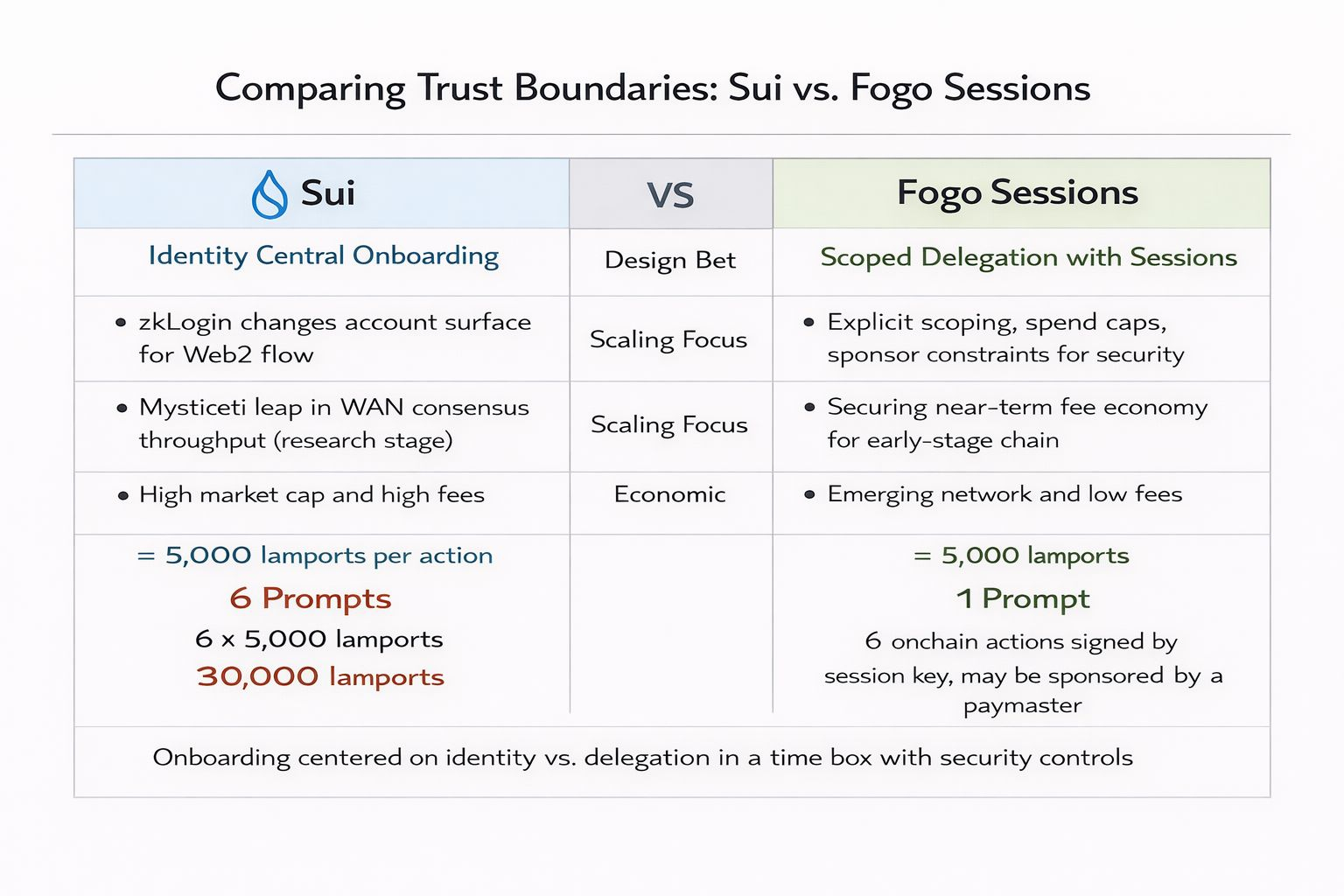
This is a transition from convenience as a UI trick to convenience as controlled delegation.
Markets usually react coldly to this because controls look like overhead. That reaction is normal. Guardrails feel boring right up until the day they save you from a very expensive incident.
In upcoming years, apps will be judged on permission hygiene the way they are judged on custody today. The winners will be the teams that can ship Web2 smoothness while keeping authority scoped, expiring, and provable.
The prize is not fewer signing popups. The win is a permission model that risk teams can approve, auditors can trace, and operators can run in production without improvising around custody. When the system is stressed, it should fail closed, stay within limits, and remain explainable. That is what turns a smooth demo into something institutions can actually rely on.
@Fogo Official
#fogo
$FOGO
