The global financial system is undergoing a profound transformation driven by blockchain technology. At the heart of this transformation are Layer 1 blockchains—the foundational networks that validate transactions, secure data, and power decentralized applications without relying on external infrastructure. As financial markets evolve toward greater transparency, efficiency, and accessibility, Layer 1 solutions are emerging as critical pillars of innovation. Projects such as @FOGO and its native token FOGO are contributing to this evolution by pushing the boundaries of performance, scalability, and decentralized finance. #fogo
What Are Layer 1 Blockchains?
Layer 1 blockchains are the base-layer protocols that process and finalize transactions directly on their own networks. Unlike Layer 2 solutions that operate on top of existing chains to improve scalability, Layer 1 blockchains handle consensus, security, and data availability natively. Examples of leading Layer 1 networks include Ethereum, Solana, Avalanche, and emerging next-generation chains like Fogo.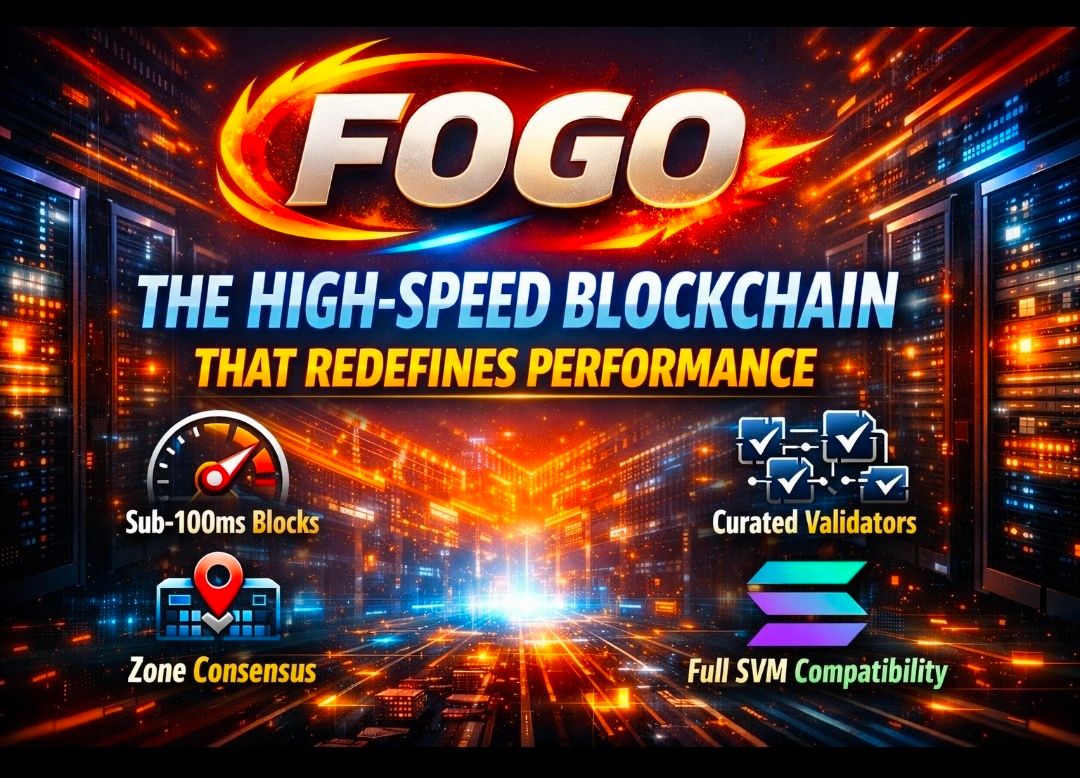
These networks provide the core infrastructure for decentralized finance (DeFi), tokenized assets, NFTs, and decentralized applications (dApps). Their architecture determines transaction speed, cost efficiency, decentralization level, and overall security—factors that directly influence adoption in global financial markets.
Key Features Driving Financial Innovation
Layer 1 blockchains are transforming financial markets through three primary strengths: scalability, decentralization, and security.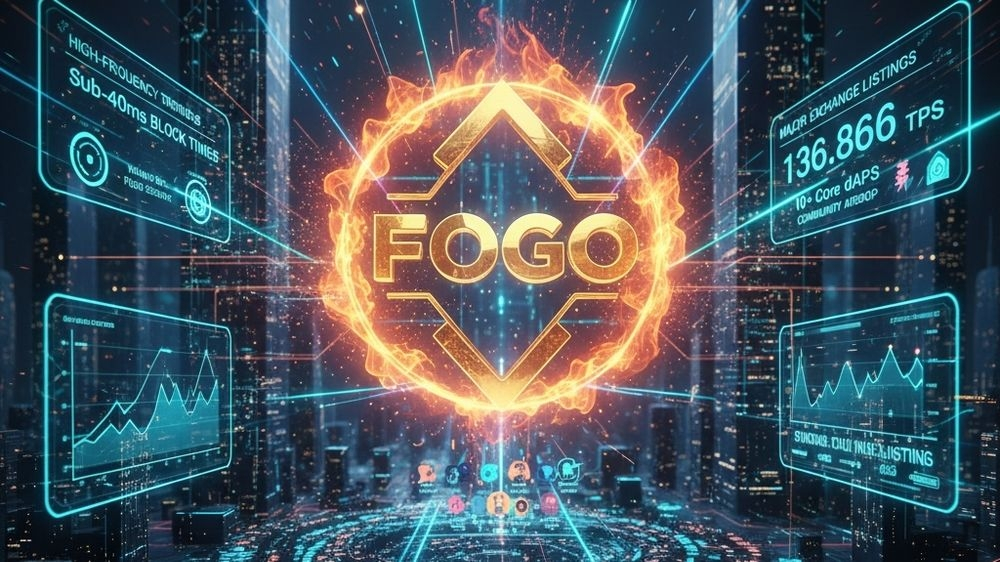
1. Scalability:
Modern financial systems process millions of transactions daily. Traditional blockchains initially struggled with congestion and high fees. However, innovative Layer 1 designs now incorporate improved consensus mechanisms, parallel execution, and optimized validator architectures to dramatically increase throughput. High-performance Layer 1 ecosystems like @undefined aim to deliver faster transaction finality and lower costs, making them suitable for high-frequency trading, payments, and DeFi applications.
2. Decentralization:
Decentralization removes reliance on central authorities and intermediaries. In traditional finance, clearinghouses, banks, and payment processors add friction and costs. Layer 1 blockchains distribute validation across independent nodes worldwide, ensuring censorship resistance and open access. This democratization is particularly powerful in regions where financial infrastructure is limited.
3. Security:
Security is fundamental in financial markets. Layer 1 networks use advanced cryptography and consensus models—such as Proof of Stake (PoS) or variations of it—to secure billions of dollars in digital assets. Strong validator networks and economic incentives protect against malicious attacks, making blockchain-based settlement increasingly viable for institutional use.
Enabling Decentralized Finance (DeFi)
Decentralized finance represents one of the most disruptive applications of Layer 1 blockchains. DeFi platforms allow users to lend, borrow, trade, and earn yield without traditional banks. Smart contracts automate financial agreements, reducing operational costs and counterparty risks.
Layer 1 infrastructure determines how efficient and secure these DeFi protocols can be. High gas fees and network congestion can hinder adoption, while scalable and cost-efficient networks expand participation. By supporting robust smart contract execution and high throughput, ecosystems like FOGO create fertile ground for next-generation DeFi innovation, including decentralized exchanges, derivatives markets, and algorithmic asset management.
Tokenization of Real-World Assets
One of the most promising developments in blockchain finance is the tokenization of real-world assets (RWAs). Real estate, bonds, equities, commodities, and even art can be represented as digital tokens on Layer 1 networks. This process enhances liquidity, enables fractional ownership, and simplifies cross-border investment.
Layer 1 blockchains provide the transparency and immutability required for tokenized asset registries. By recording ownership and transaction history on-chain, they reduce fraud risk and streamline settlement. As regulatory clarity improves, tokenized assets could bridge traditional finance and decentralized markets, unlocking trillions of dollars in value.
Cross-Border Payments and Remittances
Cross-border transactions remain slow and expensive within the legacy financial system. International wire transfers can take several days and involve multiple intermediaries. Layer 1 blockchains enable near-instant settlement with significantly lower fees.
For migrant workers sending remittances home, blockchain-based transfers can reduce costs dramatically. This is especially impactful in underserved regions where remittance fees consume a large portion of income. High-performance Layer 1 networks such as @undefined are designed to support efficient global payments infrastructure, providing a foundation for borderless financial services powered by FOGO.
Advancing Global Financial Inclusion
More than a billion people worldwide remain unbanked or underbanked. Layer 1 blockchains offer open access to financial tools using only a smartphone and internet connection. Users can store value, access lending services, and participate in global markets without relying on traditional banks.
By lowering entry barriers and enabling peer-to-peer financial systems, Layer 1 technology empowers individuals in emerging economies. Projects aligned with scalability and user accessibility—like #fogo—play a crucial role in expanding blockchain’s reach to communities historically excluded from financial systems.
Challenges Facing Layer 1 Blockchains
Despite their promise, Layer 1 networks face several challenges:
Scalability vs. Decentralization Trade-offs:
Improving transaction throughput can sometimes compromise decentralization if hardware requirements become too demanding. Sustainable growth requires balancing performance with open validator participation.
Regulatory Uncertainty:
Governments worldwide are still defining policies around digital assets. Clear regulatory frameworks are essential for institutional adoption and integration with traditional finance.
Security Risks:
While Layer 1 networks are secure by design, vulnerabilities in smart contracts or ecosystem applications can lead to exploits. Continuous auditing, improved development standards, and community governance are vital.
Interoperability:
Financial markets require seamless asset movement across chains. Cross-chain bridges and interoperability protocols must mature to prevent liquidity fragmentation.
Potential Solutions and Innovations
To address these challenges, many Layer 1 networks are implementing advanced consensus algorithms, modular architectures, and interoperability frameworks. Innovations such as sharding, parallel transaction processing, and improved validator coordination enhance performance without sacrificing decentralization.
Community governance also plays a key role. By enabling token holders—such as FOGO participants—to influence protocol decisions, Layer 1 ecosystems can adapt dynamically to market demands and regulatory developments.
Furthermore, collaboration between blockchain developers, financial institutions, and regulators can accelerate adoption while maintaining compliance standards.
Institutional Adoption and Long-Term Impact
Institutional investors are increasingly exploring blockchain infrastructure as part of diversified portfolios. Hedge funds, asset managers, and even sovereign entities recognize the efficiency and transparency benefits of on-chain settlement.
Layer 1 blockchains capable of handling enterprise-grade applications are particularly attractive. As scalability improves and compliance tools mature, more institutions are expected to integrate blockchain-based systems for asset issuance, custody, and settlement.
The rise of tokenized bonds, stablecoins, and on-chain treasury products demonstrates growing institutional confidence. Infrastructure-focused ecosystems like @undefined signal that the next phase of blockchain adoption will center on performance, reliability, and financial-grade architecture.
The Road Ahead
Layer 1 blockchains are not merely technological experiments—they are foundational infrastructure for a new global financial system. By enhancing scalability, decentralization, and security, they address long-standing inefficiencies in traditional finance .
.
From DeFi innovation to cross-border payments and tokenized real-world assets, the impact of Layer 1 technology is far-reaching. As networks like $FOGO continue to refine performance and expand ecosystem capabilities, the financial markets of tomorrow will likely be more transparent, accessible, and efficient than ever before.
The convergence of blockchain technology and institutional capital marks the beginning of a transformative era. With robust Layer 1 infrastructure and visionary projects such as #fogo , the crypto space is evolving beyond speculation into a mature, globally integrated financial ecosystem—one block at a time.#FogoChain