
Most people still measure blockchains by transactions per second. That sounds impressive on paper, but it misses the real issue. The real friction in DeFi has never been TPS. It has been time. The small delays between intention and execution. The wallet confirmations. The waiting. The uncertainty about whether something went through or not. Over time, traders adapt to that delay. They stop thinking about strategy and start thinking about timing mechanics.
That behavioral shift is the hidden tax of slow infrastructure.
When blocks confirm in around 40 milliseconds, the conversation changes. This is not about being “faster” in the marketing sense. It is about removing the window where interference happens. If execution is nearly instant, congestion does not have room to build. Front-running becomes structurally harder because there is no practical gap to exploit. The environment starts to feel continuous instead of fragmented.

What makes this possible is not a slogan but architecture. Firedancer, built by Jump Crypto, was designed with hardware efficiency in mind. It focuses on processing data in parallel and reducing bottlenecks at the engine level. Many chains optimize parameters. Very few redesign the engine itself. That difference matters under real load, not just in benchmarks.
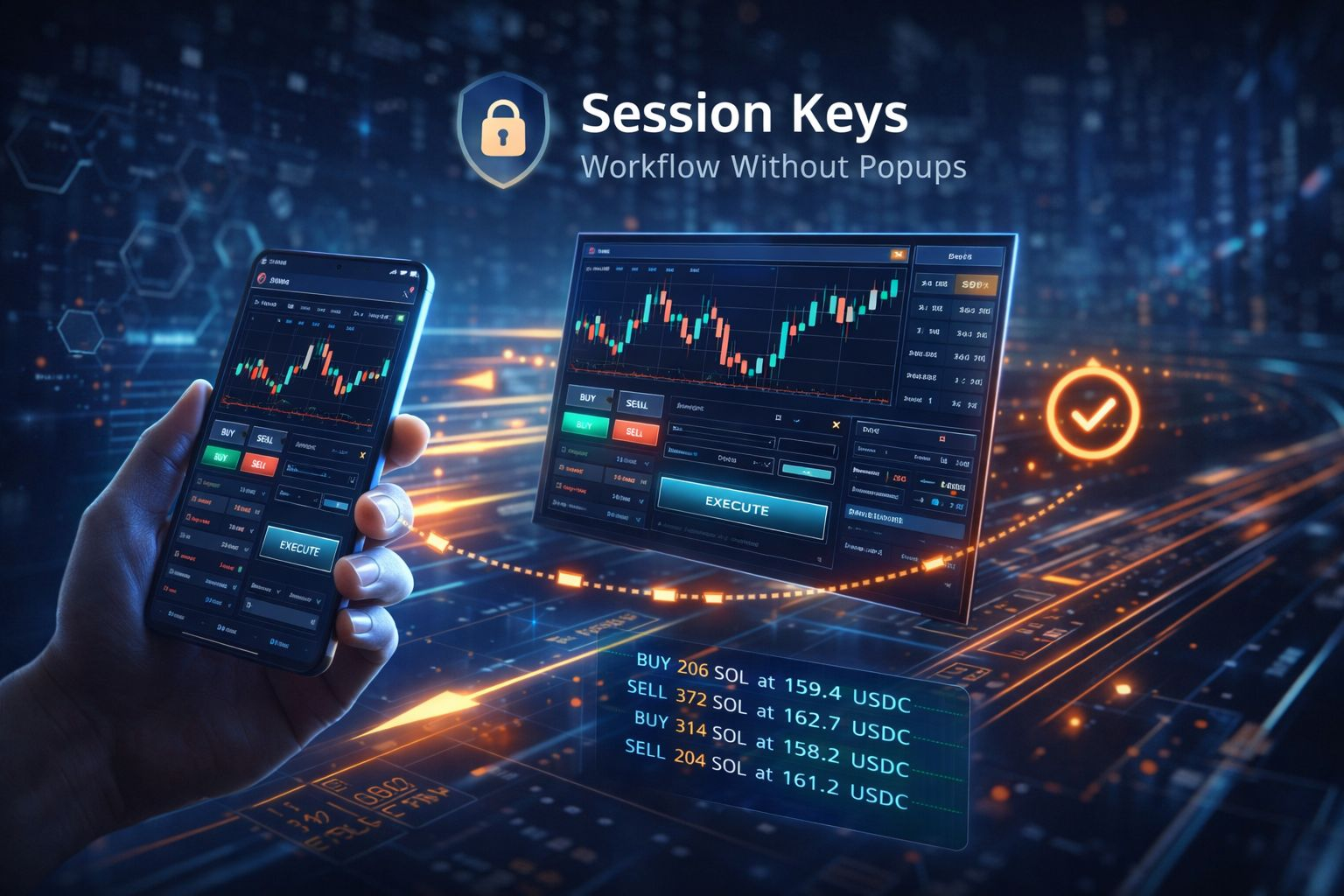
There is also a quieter shift happening with Session Keys. At first glance, it sounds minor. Allowing an application to execute limited actions for a defined period does not seem revolutionary. But after dozens of uninterrupted transactions, the workflow feels different. You are no longer stopping to confirm every micro-decision. You remain in flow. Control is still yours, but friction is reduced. That distinction is important.
None of this automatically guarantees dominance. Speed without sustainability is temporary. Infrastructure without ecosystem depth is incomplete. Those trade-offs still exist. The stronger question is whether traders value workflow efficiency enough to migrate toward it.
Fogo is not trying to prove that blockchain can match centralized exchange execution. It is showing that execution delay does not have to be the default assumption. The market now has to decide whether removing friction is a luxury — or a structural advantage.