
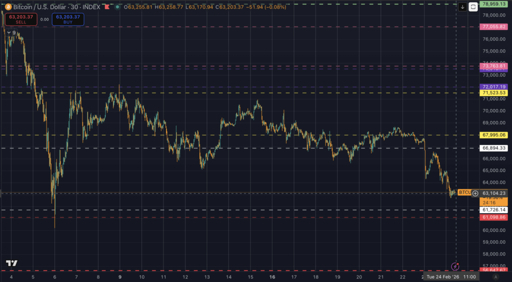
Bitcoin is approaching a critical juncture. After dipping to a two-week low near $62,696 and only recovering slightly to around $63,376, the broader trend continues to look uneasy for bullish traders.
On-chain analytics firm Alphractal has highlighted a concerning shift: **Reserve Risk indicators are turning downward**. Both the primary Reserve Risk metric and the VOCDD/MVOCDD ratio are losing momentum, signaling weakening conviction among long-term holders relative to price. Historically, when these indicators reverse, older coins begin to move—often a telltale sign that veteran investors are quietly taking profit.
The pattern adds weight to the concern. Since early 2024, these same indicators have flashed **four separate sell signals**, each followed by a notable BTC price decline. That record has analysts watching closely for the possibility of a breakdown below the **$60,000 support zone** should long-term holders ramp up distribution.
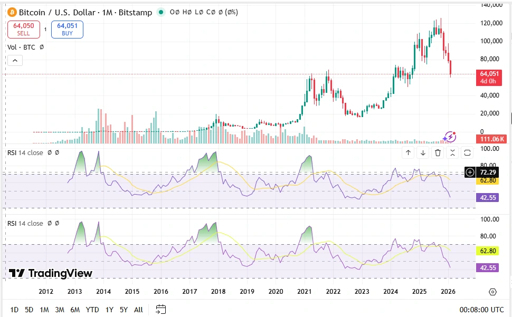
But the picture isn’t entirely bearish. Short-term holders—many of whom entered at higher prices—remain deeply underwater and appear reluctant to sell at a loss. The **Short-Term Sell-Side Risk Ratio** has continued to fall throughout February, suggesting this group is more likely to hold than add to selling pressure.

At the same time, retail wallets are quietly accumulating. Shrimp, Fish, and Crab cohorts have added **9.1k, 16k, and 6.2k BTC** respectively during the recent dip. Smaller investors, it seems, are doing much of the buying while larger, older holders hesitate.
This push-and-pull between cautious long-term holders and active retail accumulation may be what’s preventing a deeper selloff. If retail demand remains steady, a rebound toward **$68k–$72k** by month-end is still within reach. But if historical sell-signal patterns play out once again, the **$60k support level** could face its most serious test
yet.
