

BNB began as a utility token tied to Binance, the exchange that grew from a scrappy startup into one of the largest trading platforms in the world. In the early days, holding BNB meant discounted trading fees. That was the pitch. Simple, practical, easy to measure. Over time, the token expanded beyond fee discounts into the plumbing of a broader ecosystem—used for transaction fees on BNB Smart Chain, for token launches, for staking, for payments that most people outside crypto rarely see.
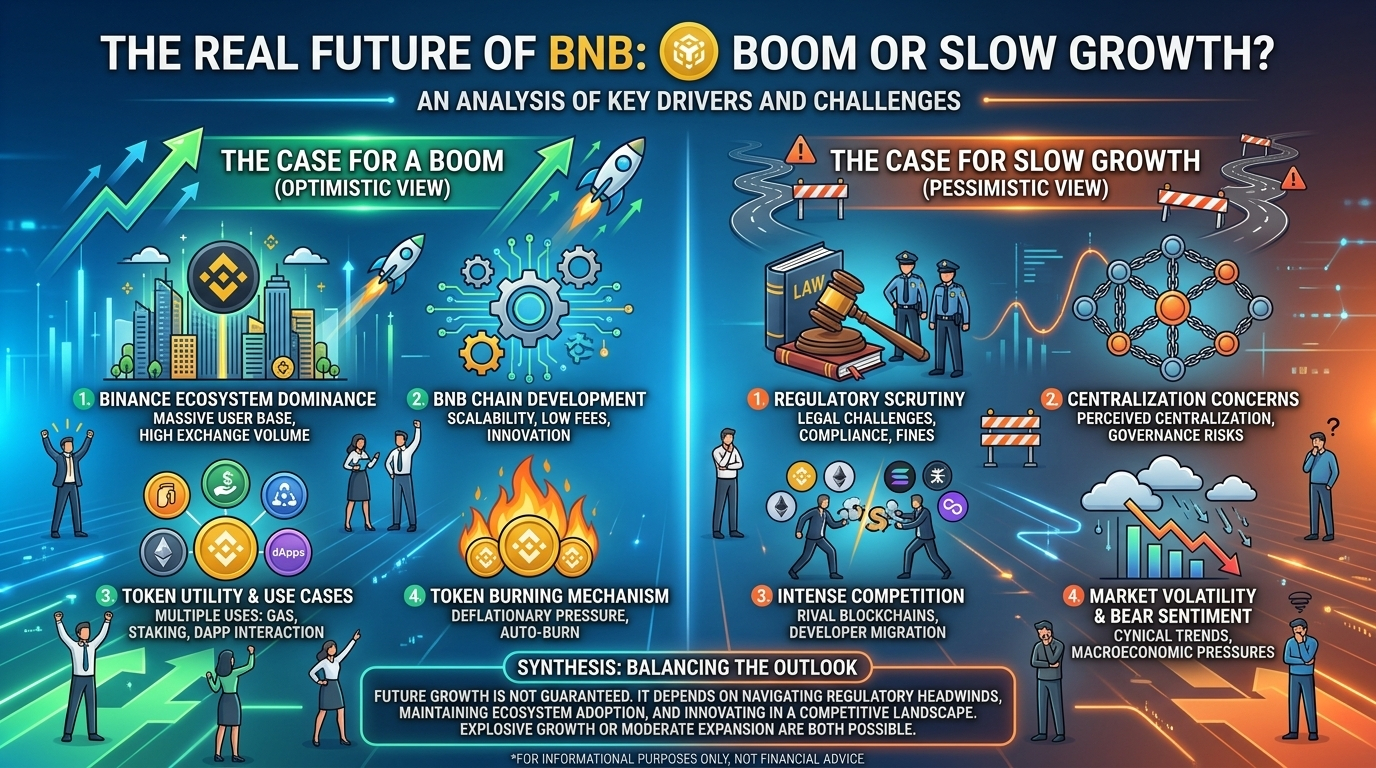
Spend an afternoon watching activity on BNB Smart Chain and the picture gets more concrete. Wallet addresses flicker in and out of block explorers. Small transfers of stablecoins. NFT trades. Smart contracts interacting in ways that are invisible unless you know where to look. The transaction fees are low, often just a few cents. That affordability has been one of the chain’s advantages, especially during periods when other networks became congested and expensive. Developers building decentralized exchanges or simple games have often chosen BNB Smart Chain because it was cheap and fast enough, even if it wasn’t the most philosophically pure.
But utility alone does not decide price. Leadership has shifted. Compliance teams have expanded. Each headline has landed differently depending on where you sit. For a short-term trader, it’s volatility to navigate. For a long-term holder, it’s a reminder that BNB is tied closely to a single corporate entity and the legal frameworks surrounding it.
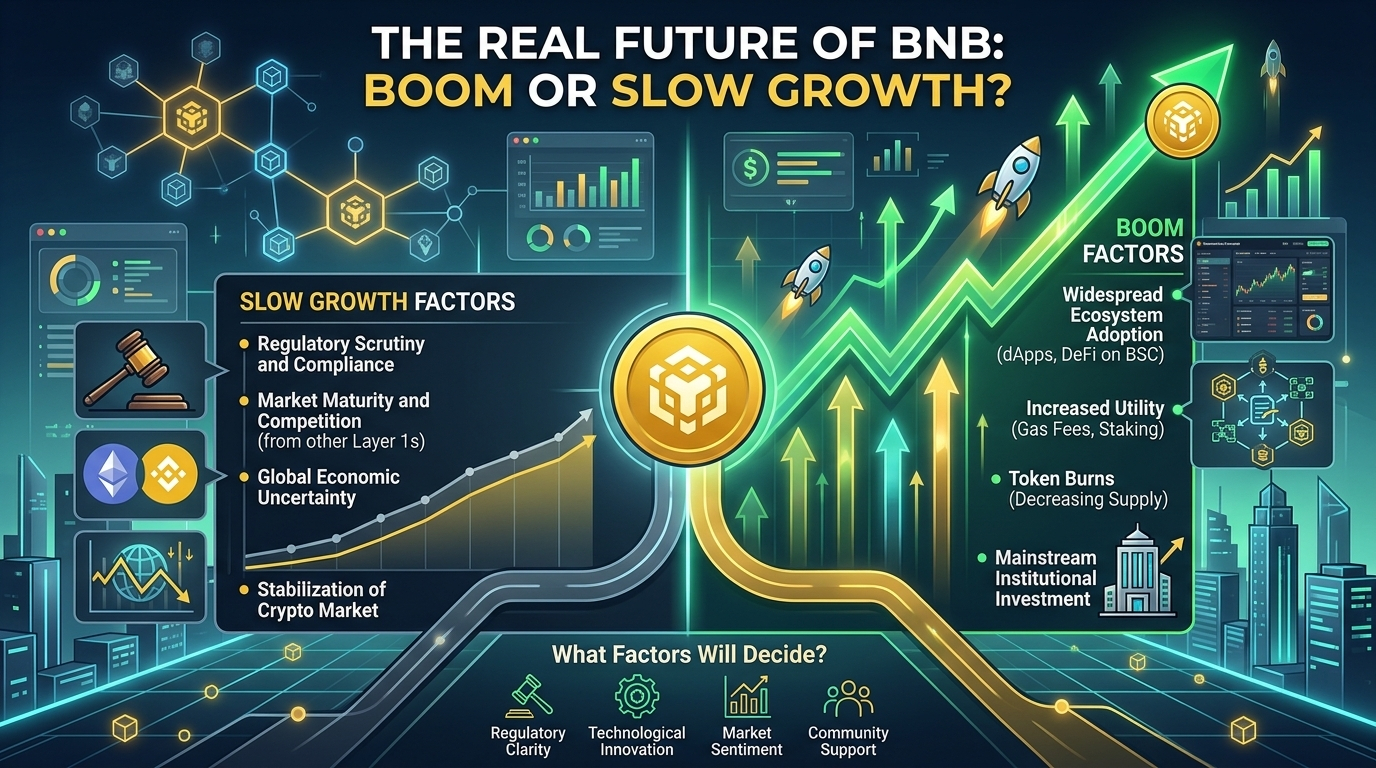
That concentration is both strength and weakness. When Binance launches a new feature, integrates a new payment partner, or promotes a launchpad project, BNB often benefits. The exchange still processes enormous daily trading volume. Fee discounts still matter to active traders. Token burns, funded by a portion of Binance’s revenue, continue on a predictable schedule, reducing total supply toward a fixed cap. These mechanics create a kind of slow gravitational pull under the price.
Yet reliance on one ecosystem introduces risk. If trading volumes shrink during prolonged bear markets, burn amounts decrease. If regulators limit services in major jurisdictions, demand can soften. The relationship is direct. You can see it in quarterly burn reports and on-chain data. It’s not abstract.
There is also the broader question of competition. Other blockchains have matured. Ethereum’s scaling solutions have reduced fees. New networks promise higher throughput and novel architectures. Developers are pragmatic. They go where users are, where liquidity sits, where tools are reliable.
Crypto has a habit of surprising those who assume it has settled down. A renewed bull cycle, driven by macro liquidity or new technological breakthroughs, tends to lift large-cap tokens first. BNB, by virtue of its size and integration into one of the largest exchanges, would likely be part of that tide. Speculative capital often flows where infrastructure already exists.
The deeper question is not whether BNB can rise sharply again. It is whether it can sustain relevance over a decade. That depends on quieter decisions: how Binance navigates compliance in the United States and Europe; whether BNB Smart Chain continues to attract developers building applications people actually use; how tokenomics evolve as the burn schedule progresses toward its cap. But they matter more than price predictions drawn with arrows on charts.
Walk through a typical day in crypto markets and you see both futures at once. A sudden spike in volume as traders react to a rumor. A steady drip of transactions as decentralized applications tick along. A burn announcement that trims supply by a measurable amount.
BNB’s real future likely sits somewhere between extremes. Not perpetual hypergrowth, not quiet irrelevance. A large, systemically important token tied to a powerful exchange, navigating scrutiny while serving practical functions inside its network. Price will move in cycles, as it always has. What endures is infrastructure: code that runs, markets that clear, users who return because it works.
For investors and observers, the challenge is patience. It is easier to bet on fireworks than on maintenance.