

As we know that Artificial Intelligence (AI) has revolutionized various industries, but its widespread use has come with significant challenges. One of the most pressing issues is the accuracy of AI outputs and the problem of “hallucinations,” where AI generates false or misleading information confidently. This issue has serious consequences in fields such as healthcare, finance, and law, where the stakes are high, and the need for accuracy is critical. Despite the immense potential of AI, these errors often undermine trust in the technology, posing risks to users and businesses alike.
To address these challenges, Mira Network introduces a decentralized verification protocol aimed at solving the issues of accuracy and hallucinations in AI outputs. By using blockchain technology, Mira Network ensures that the results generated by AI systems are trustworthy and transparent. Through a network of decentralized nodes, Mira Network verifies the AI-generated outputs, ensuring that they are accurate before being presented to the users. This system eliminates the need for a central authority, making the process more transparent and secure. This trustless verification process provides users with greater confidence in AI results, especially in critical areas where accuracy is paramount.
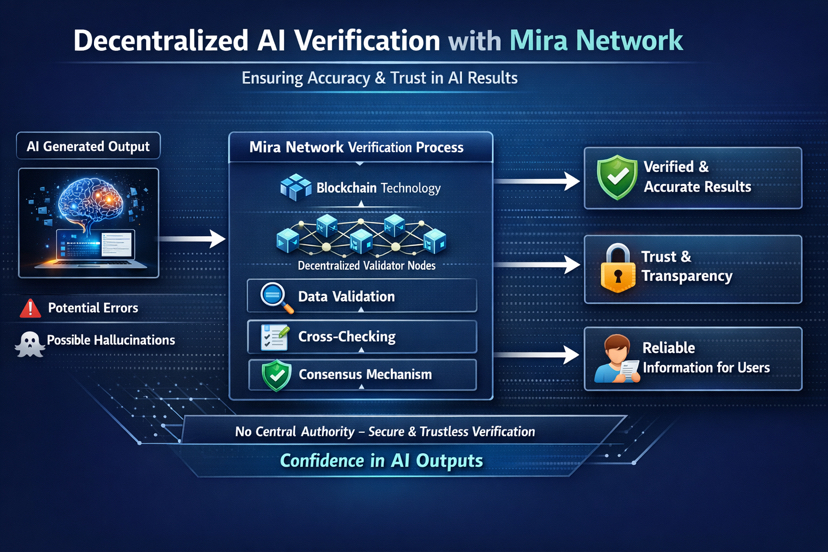
The problem of AI hallucinations can be better understood through real-world examples. In the healthcare industry, AI systems used for diagnosing diseases or recommending treatments can sometimes provide incorrect or harmful information that leads to death . If a diagnostic tool makes an error, it could lead to misdiagnoses, potentially endangering lives and ulterior death of innocent victims, as you know that robots are taking over the place . Similarly, in finance, AI models used for market predictions or risk assessments can produce unreliable data, leading to financial losses. These errors stem from the opaque nature of many AI systems, which are often built on black-box models that cannot easily explain how they arrived at their conclusions. This lack of transparency creates a barrier to trust and further complicates the widespread adoption of AI in critical industries.
Mira Network addresses these issues by providing a solution that relies on blockchain’s decentralized and transparent nature. Blockchain allows each AI output to be cross-checked and validated by independent nodes in the network, ensuring the integrity of the results. This decentralized verification mechanism reduces the chances of errors or bias, providing a more reliable and ethical framework for AI applications.
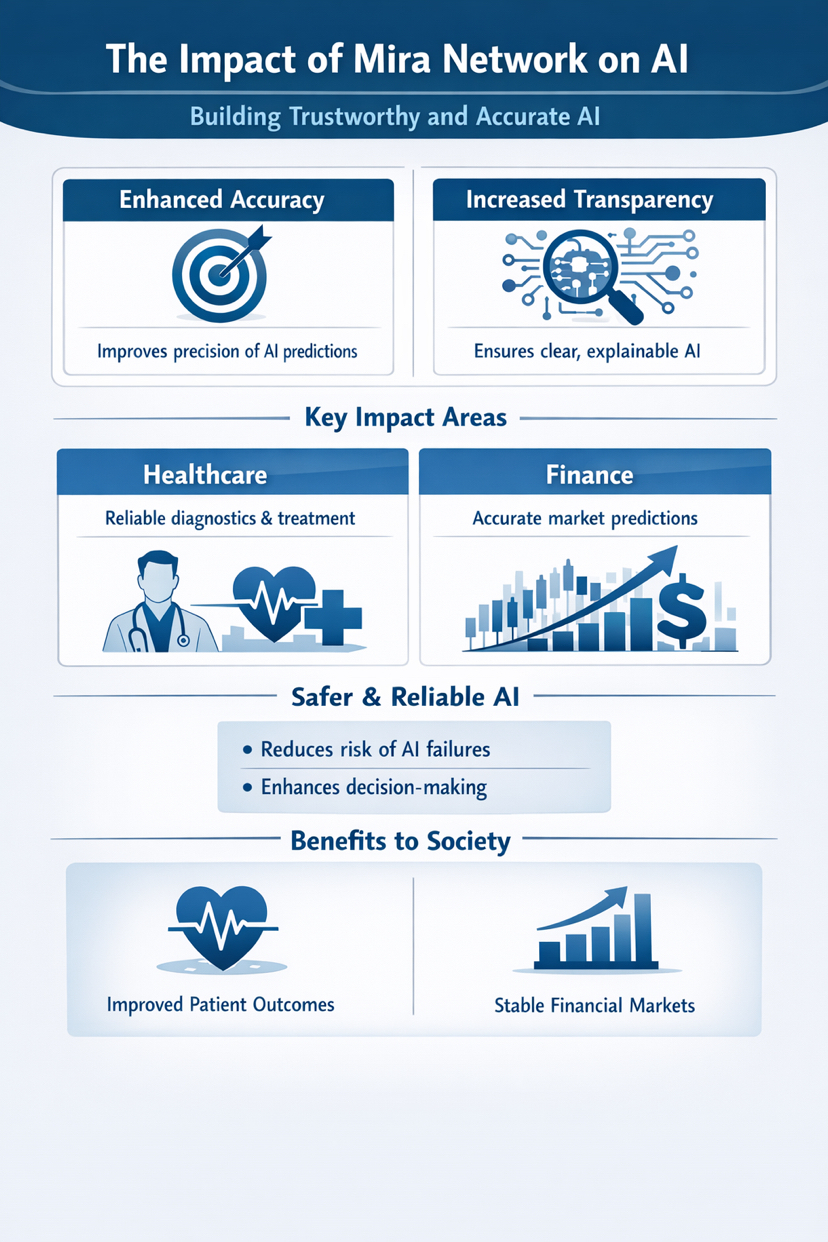
Mira Network’s approach is significant because it could reshape how AI is used in various industries. In the financial sector, AI’s predictive capabilities could be enhanced and made more reliable with Mira Network’s decentralized verification, reducing the risks of market manipulation or poor investment advice. Similarly, in healthcare, AI-driven diagnostic tools could be more trusted when their outputs are verified against trusted medical databases. Mira Network’s solution also benefits other sectors, such as education and law, where the accuracy of AI-generated information is essential.
Looking at the bigger picture, the use of decentralized verification could also pave the way for the development of more ethical AI models. With transparency built into the process, Mira Network helps address issues of bias, accountability, and fairness. As AI continues to evolve and integrate into more aspects of daily life, ensuring its reliability and trustworthiness becomes increasingly important. Mira Network provides a foundation for creating AI systems that are not only efficient but also ethical and accountable.
The impact of Mira Network on AI is far-reaching. By addressing the core challenges of accuracy and transparency, Mira Network ensures that AI can be trusted in high-stakes environments. This approach is crucial for industries like healthcare, where the consequences of inaccurate AI results can be life-threatening, and in finance, where AI predictions can significantly influence markets. Mira Network makes AI a safer, more reliable tool for decision-making, reducing the risks associated with AI failures and increasing its potential to benefit society.
Looking ahead, the future of Mira Network seems promising. As in this era, demand for trustworthy AI continues to grow and we people are increasingly seeing the need of it, its decentralized verification system could become a standard for AI applications across industries. Emerging trends in AI, such as federated learning and edge computing, could also benefit from Mira Network’s approach, making AI systems more resilient and secure. Additionally, as ethical AI governance frameworks take shape, Mira Network’s solution could play a critical role in shaping AI standards, ensuring that AI systems are not only accurate but also fair and transparent and this is the beneficiary output for all.
To conclude the discussion, It may say that Mira Network is a groundbreaking solution that tackles the significant issues of AI accuracy and hallucinations. By using blockchain technology to verify AI outputs, it offers a reliable, transparent, and ethical framework for AI applications. As AI continues to evolve, Mira Network could help ensure that these systems are trustworthy, accountable, and beneficial for users across various sectors. The future of AI is brighter with solutions like Mira Network, which focus on enhancing the transparency, reliability, and ethical implications of AI systems.