
If you talk to people building robots, you hear the same story over and over. Every robotics team builds its own walled garden: proprietary hardware, proprietary firmware and a narrow focus on one task. The machines do amazing things individually, but they live in silos. There’s no shared identity, no common language and certainly no way for a robot from one manufacturer to talk to a robot built by another. Pantera Capital – one of the earliest investors in the project – described this as the isolation problem, noting that almost all humanoid builders run closed ecosystems where different robots can’t coordinate or share intelligence
Without a shared trust layer the industry couldn’t scale because robots couldn’t co‑operate.
That frustration led Jan Liphardt, a Stanford professor with a background in bioengineering and distributed systems, to imagine a different world. He had spent his career across AI, biology and decentralized systems, and he saw the missing piece: if AI is the brain and robotics is the body, coordination is the nervous system
Liphardt co‑founded OpenMind, a robotics software company, and began sketching a protocol that would let robots verify who and where they are, prove that they had done some work and get paid for it without human intermediaries
. He believed that only an open, verifiable and decentralized network could unlock general‑purpose robots, because it would align incentives and allow any developer or hardware maker to participate.
OpenMind’s first step was OM1, an open‑source operating system for robots. The beta release in September 2025 promised something that sounded like science fiction: a hardware‑agnostic platform where robots could perceive, reason and act without proprietary limitations
OM1 integrated models from OpenAI, Gemini, DeepSeek and xAI and offered plug‑and‑play support for speech recognition, vision and emotion analytics. It ran on quadrupeds, humanoids and drones and shipped with pre‑configured agents for Unitree’s G1 humanoid and other platforms. Developers could simulate behaviours in Gazebo before deploying them to real hardware
By open‑sourcing OM1, OpenMind invited hackers and academics to build new skills and share improvements. Early users built voice‑controlled quadrupeds and simple humanoid companions, and the GitHub repository quickly gathered stars. The beta taught the team two hard lessons. First, even open‑source software needs a trust layer – robots need a way to know that they are talking to a genuine peer. Second, if you want a community to form, you have to make it easy to contribute.
Those lessons fed directly into FABRIC, the network protocol that makes OM1 a social system for machines. The team describes FABRIC as the digital nervous system for the world’s intelligent machines
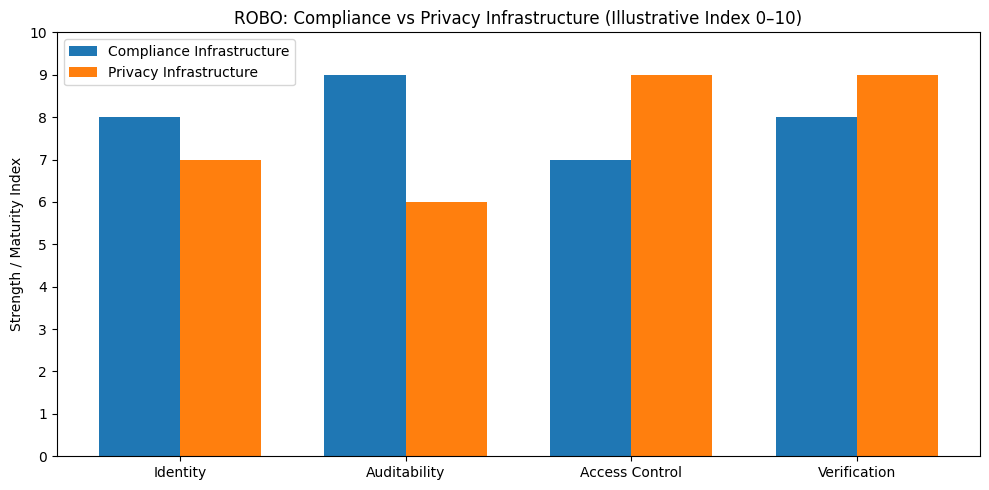
Each robot receives a cryptographically secure identity and can prove its physical location through a decentralized proof‑of‑location mechanism
Task verification ensures that a robot can prove it completed a job using signed sensor data, and a built‑in payment layer using stablecoins lets machines settle transactions in real time
The network goes far beyond the Internet‑of‑Things: it doesn’t just connect devices, it coordinates intelligent agents that can share skills and collaborate on work
When I read this, I felt as if we were witnessing robotics’ ChatGPT moment – a unifying layer that could transform a fractured field into a coherent ecosystem
Developers and robotics companies quickly rallied around the open‑source approach. The Robot Report noted that OM1 offered a shortcut to the future, enabling developers to prototype voice‑controlled quadrupeds in minutes and to deploy humanoid robots that integrate language models for natural interaction.
Chinese robotics manufacturers such as Unitree, UBTech, Fourier and others saw an opportunity to reach global customers. A Bitget news report from January 2026 revealed that OpenMind’s robot application store, built on OM1, went live with early applications focused on education, healthcare, elderly companionship and home security
The app store allowed developers to publish robot skills and owners to deploy them easily, opening the door to consumer robotics.
The community’s enthusiasm spilled over when the Fabric Foundation, the non‑profit steward of the protocol, announced a token sale to fund the network. The sale, hosted on the Kaito launchpad on 26 January 2026, was available only to the Fabric community and partner communities and sold just half a percent of the total supply. It was oversubscribed within five hours. A subsequent airdrop eligibility portal invited people to verify their wallets and social accounts, emphasising anti‑sybil measures and requiring participants to pick the blockchain on which they would claim
These events showed that there was pent‑up demand for a robot economy and gave early believers a stake in its success.
On 24 February 2026 the Fabric Foundation introduced ROBO, the protocol’s native utility and governance token. In the Foundation’s own words, ROBO is instrumental in the non‑profit’s mission to own the robot economy. All transaction fees for payments, identity registration and verification are paid in this token
Participants must stake tokens to access coordination units that control robot genesis; staking gives them priority in task allocation and allows them to participate in crowdsourced robot deployment. Developers and businesses that wish to build applications on Fabric must buy and stake a fixed amount of tokens, aligning their incentives with the network’s health
. Token holders also participate in governance, setting fees and operational policies to ensure the system remains safe and inclusive.
The total supply is fixed at ten billion tokens. A large share – almost thirty percent – is set aside for the ecosystem and community, with part unlocked at launch and the remainder vesting over forty months.
Investors receive just under a quarter of the supply but face a one‑year cliff and a three‑year vesting schedule. Team members and advisors receive a similar portion under the same conditions. The Foundation reserve holds eighteen percent with a portion unlocked at launch and the rest vesting over forty months.
Community airdrops, liquidity provisioning and the public sale account for the remainder.
Rewards for work come through the network’s Proof of Robotic Work mechanism, which ties token issuance to verifiable real‑world robotic activity rather than passive staking. A portion of protocol revenue is used to buy back tokens on the open market, creating long‑term demand.
From an investor’s perspective there are a handful of leading indicators that show whether the network is gaining real traction. The most important is how many robots are registered on Fabric and how many tasks they perform. Each registration requires identity verification and staking, so an increasing count signals real adoption and transactions should reflect real‑world work verified through Proof of Robotic Work. Developer participation is equally vital. Activity on the OM1 and Fabric GitHub repositories, the number of published robot skills in the app store and the diversity of participants matter. OpenMind’s release promised hardware‑agnostic capabilities and simulation support; growth in community contributions shows whether those promises are resonating. Ecosystem partnerships also matter. The number of robotics manufacturers and AI providers integrating with OM1 indicates how quickly the network is breaking down silos. Reports mention collaborations with Unitree, UBTech, Fourier, YunDeep and others and new partnerships should broaden use cases and bring in users across geographies. Investors watch the circulating supply relative to total supply and the proportion staked for access and governance. Because most investor and team tokens remain locked until 2027, a sudden increase in circulating supply could dampen price performance. Finally, eventual revenue from identity registrations, transaction fees and application fees will demonstrate whether a sustainable economy is emerging. The Foundation’s plan to reinvest a portion of revenue into buying ROBO on the open market links the health of the network to token demand.
Watching Fabric’s journey feels like watching a group of dreamers build a bridge to a world that doesn’t exist yet. The risks are obvious. The robot economy is nascent; there are very few general‑purpose robots in homes or workplaces today. It is possible that the technology remains stuck in pilot projects, that regulatory hurdles make autonomous machine payments difficult, or that better protocols emerge. The network’s success will depend on whether enough robots are built at reasonable costs and whether communities are willing to fund them through decentralized coordination pools. Moreover, tokens bring their own volatility and regulatory scrutiny; even a well‑designed vesting schedule can’t eliminate market risk
Yet when I read the whitepaper and talk to early contributors, I can’t help but feel hope. A network where machines can prove where they are, show that they have done what they were asked to do and receive payment without human intermediaries could transform logistics, healthcare, home assistance and education. It could democratize access to robotics by letting communities crowdfund fleets and by allowing small developers to sell skills directly to robot owners. It could create new jobs in oversight and maintenance and force companies to build transparent, auditable systems. Seeing children flock to a Unitree G1 robot in a San Francisco park, while people in Shanghai barely noticed, makes it clear that the cultural journey has barely begun. If Fabric’s open and verifiable infrastructure continues to grow, the line between science fiction and everyday reality may blur faster than we expect.
The story of Fabric Protocol is still being written. It started as a late‑night conversation about how to get robots out of their cages, grew into an open‑source operating system, and has now become an attempt to build a new economy for machines. The project’s success will depend not just on technology but on community, governance, and a commitment to align machine intelligence with human values. For now, I’m watching with cautious optimism, excited by the possibility that robots and humans can share a world built on trust.